Dry Eye Treatment: Effective Options, Causes, and What Really Works
When your eyes feel gritty, burning, or like they’re full of sand, you’re not just tired—you likely have dry eye syndrome, a common condition where your eyes don’t make enough tears or the tears evaporate too fast. Also known as keratoconjunctivitis sicca, it affects over 30 million people in the U.S. alone, and it’s not just an older person’s problem. Young adults staring at screens all day, people on certain medications, or those living in dry climates all get it too.
True dry eye treatment isn’t just grabbing any eye drop off the shelf. It starts with figuring out why your eyes are dry. Is your tear production low? That’s called aqueous-deficient dry eye. Or are your tears evaporating too fast because your oil layer is thin? That’s evaporative dry eye, often tied to blocked meibomian glands. These are two different problems needing different fixes. One might need prescription drops that boost tear production, while the other needs warm compresses and lid scrubs to unclog glands. Skipping this step means wasting time and money on drops that don’t touch the root cause.
Many people don’t realize that common meds like antihistamines, antidepressants, and birth control pills can make dry eye worse. So can environmental stuff—air conditioning, heaters, wind, and even prolonged screen time, which cuts your blink rate by half. And it’s not just discomfort. Left untreated, chronic dry eye can damage the surface of your eye, leading to infections or vision problems. That’s why simple remedies like artificial tears, lubricating eye drops designed to mimic natural tears are often the first step, but rarely the whole solution. For persistent cases, doctors may recommend punctal plugs to keep tears in longer, or newer treatments like intense pulsed light therapy to unblock oil glands.
What you’ll find in the posts below aren’t generic tips. You’ll see real-world connections: how tetracycline photosensitivity, a side effect of certain antibiotics that makes skin and eyes more sensitive to sunlight can worsen eye dryness, how inactive ingredients, fillers and preservatives in generic medications might trigger irritation in sensitive eyes, and why reporting side effects through systems like MedWatch, the FDA’s official channel for tracking adverse drug reactions helps improve treatment safety for everyone. These aren’t random posts—they’re linked by one truth: dry eye isn’t isolated. It’s shaped by your meds, your environment, and your overall health. The right treatment doesn’t just relieve symptoms—it addresses the bigger picture.
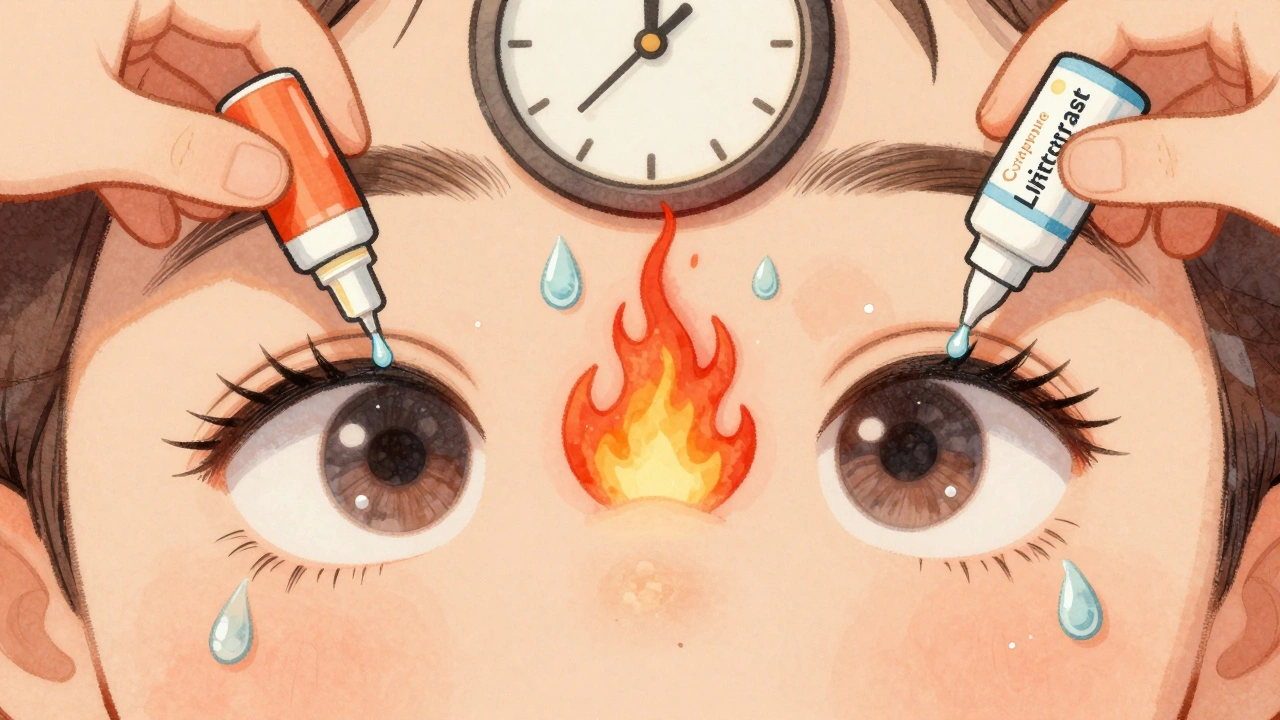
Dry Eye Treatments: Cyclosporine, Lifitegrast, and Plugs Explained
- Laura Ledas
- Dec, 2 2025
Learn how cyclosporine, lifitegrast, and punctal plugs treat dry eye differently-speed, effectiveness, side effects, and real-world results. Find out which option works best for your symptoms.
Learn More