
Medication Dizziness Risk Calculator
Assess Your Dizziness Risk Factors
Answer the questions below to understand how different factors contribute to medication-related dizziness.
Are you currently taking any of these high-risk medication classes?
Check all that apply:
That sudden wave of unsteadiness when you stand up, or the feeling that the room is tilting while you sit still-it’s unsettling. If you’ve been taking prescription drugs recently, your medication might be the culprit. Dizziness and lightheadedness are common adverse reactions to many medications, affecting balance, blood pressure, and inner ear function. According to data from the Mayo Clinic, these symptoms account for roughly 23% of all dizziness cases seen in primary care. It’s not just a minor annoyance; it’s a signal that your body is reacting to a chemical change.
You are not alone in this. About 15-20% of adults experience dizziness every year. For older adults, the stakes are higher. The CDC reports that 35% of people aged 65 and over fall at least once a year, often due to medication-induced instability. Understanding why this happens and how to manage it safely can prevent serious injuries and improve your quality of life.
The Science Behind the Spin
To fix the problem, we first need to understand the mechanism. Medications don’t just “make you dizzy” as a random side effect. They interfere with specific biological systems that keep you upright. There are three main pathways through which drugs cause this sensation.
First, some drugs affect your vestibular system, which is the part of your inner ear responsible for balance and spatial orientation. Certain antibiotics and chemotherapy drugs can damage the tiny hair cells in your inner ear. This isn’t always temporary. A study in the Journal of Clinical Pharmacy and Therapeutics found that prolonged use of gentamicin, an antibiotic, caused vestibular toxicity in 17-40% of patients. In severe cases, like with cisplatin chemotherapy, permanent damage occurs in up to 65% of users.
Second, many medications lower your blood pressure too quickly. When you stand up, gravity pulls blood down to your legs. Normally, your body compensates instantly. But if you’re on blood pressure meds, this compensation fails. This is called orthostatic hypotension, defined as a drop in blood pressure upon standing, leading to lightheadedness or fainting. The American Heart Association updated its criteria in 2024, noting that a drop of 20 mmHg systolic or 10 mmHg diastolic within three minutes of standing confirms this condition.
Third, some drugs alter brain chemistry. Antidepressants and antiepileptics change neurotransmitter levels. Dr. Timothy Hain, a neurology professor at Northwestern University, explains that these changes create a “sensory mismatch.” Your eyes see one thing, your inner ear feels another, and your brain gets confused, interpreting the conflict as dizziness.
High-Risk Medications: Who’s the Culprit?
Not all drugs carry the same risk. Some classes are notorious for causing dizziness. Knowing which category your medication falls into helps you discuss alternatives with your doctor.
| Medication Class | Common Examples | Dizziness Incidence Rate | Primary Mechanism |
|---|---|---|---|
| Antiepileptic Drugs | Carbamazepine, Pregabalin | 24% - 30% | CNS interference |
| Blood Pressure Meds | Lisinopril, Furosemide, Propranolol | 12% - 22% | Orthostatic hypotension |
| Antidepressants | Amitriptyline, Fluoxetine | 19% - 28% | Neurotransmitter shift |
| Aminoglycoside Antibiotics | Gentamicin | 17% - 40% (prolonged use) | Vestibular ototoxicity |
| Benzodiazepines | Diazepam, Lorazepam | Varies (high fall risk) | Sedation and muscle relaxation |
Antiepileptic drugs show the highest prevalence of dizziness, with carbamazepine affecting nearly 30% of users. Blood pressure medications vary by type; diuretics like furosemide cause dizziness in 22.1% of patients because they reduce fluid volume, lowering blood pressure further. Even common stomach acid reducers like omeprazole contribute to 3.2% of emergency department visits for dizziness, simply because so many people take them.
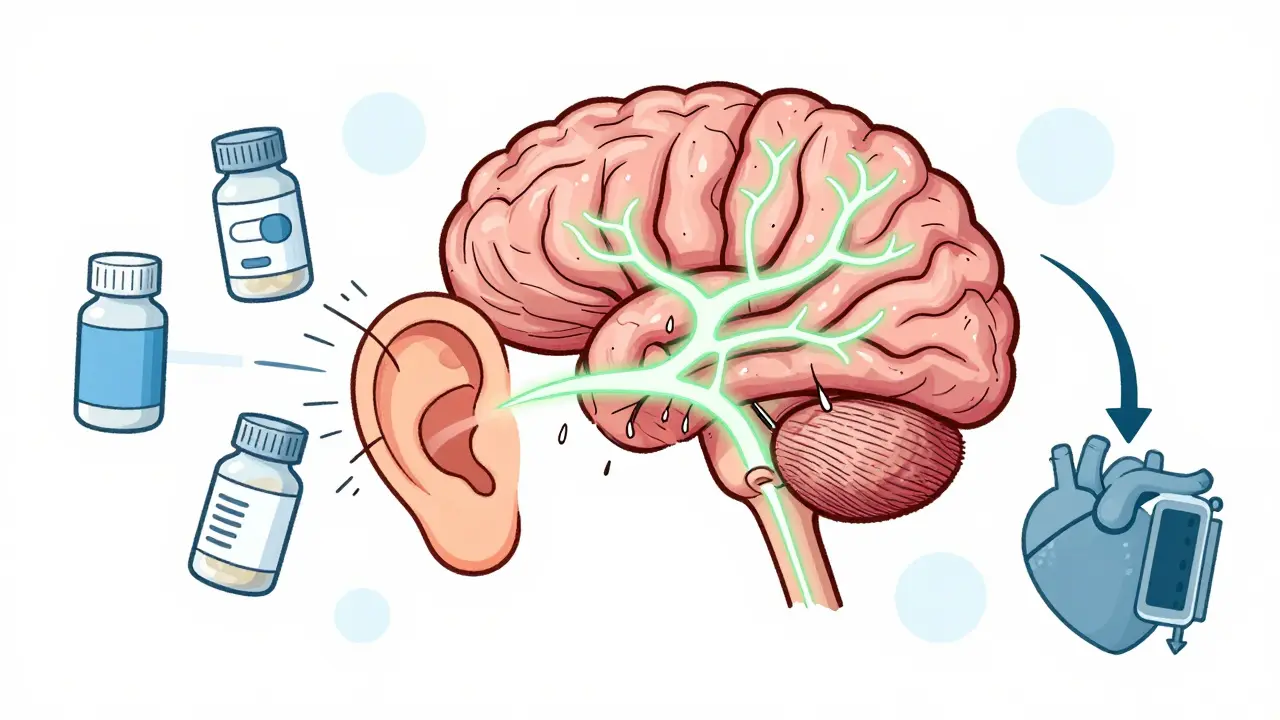
The Danger of Polypharmacy
If you take multiple medications, your risk multiplies. This phenomenon is known as polypharmacy, which refers to the concurrent use of multiple medications, increasing the likelihood of adverse interactions. A 2022 study in JAMA Internal Medicine involving over 12,000 older adults found that using five or more medications increased the risk of dizziness by 300% compared to taking just one.
This is particularly dangerous for seniors. The American Geriatrics Society’s Beers Criteria lists 17 high-risk medications for older adults specifically because of their dizziness and fall potential. Benzodiazepines increase fall risk by 50%, while first-generation antihistamines raise it by 42%. The combination of a blood pressure pill, a sedative, and an antidepressant creates a perfect storm for instability.
How to Manage Medication-Induced Dizziness
Feeling dizzy doesn’t mean you have to stop your treatment abruptly. Stopping certain drugs suddenly can be fatal or cause severe withdrawal. Instead, follow a systematic approach to manage the symptoms and work with your healthcare provider.
- Keep a Symptom Diary: Track when the dizziness happens. Is it right after you take the pill? Does it happen only when you stand up? MyHealth Alberta notes that 68% of medication-related dizziness cases have a clear time link to dosing. This data helps your doctor pinpoint the cause.
- Change Positions Slowly: If you suspect orthostatic hypotension, don’t jump out of bed. Sit on the edge for a minute, then stand slowly. Using compression stockings can reduce symptoms by 45%, according to a 2022 trial in the Journal of the American Geriatrics Society.
- Consult Before Quitting: Never stop seizure medications or beta-blockers on your own. Abrupt cessation of antiseizure drugs can increase seizure frequency by 300%. Harvard Health warns that stopping suddenly can be more dangerous than the dizziness itself.
- Ask for Alternatives: Doctors can often switch you to a drug with a lower vestibular impact. For example, switching from a tricyclic antidepressant to an SSRI might reduce dizziness rates from 28% to 20%.

When Therapy Helps: Vestibular Rehabilitation
If the dizziness persists even after adjusting medications, physical therapy can help. Vestibular rehabilitation therapy (VRT) is a specialized form of physical therapy designed to reduce dizziness and improve balance. Harvard Health Publishing states that VRT is 70-80% effective for persistent dizziness. It usually involves 6-8 weekly sessions with a certified therapist who teaches your brain to compensate for inner ear deficits.
Newer approaches are showing promise too. A 2023 randomized controlled trial in The Lancet Neurology found that virtual reality-based vestibular rehabilitation improved symptoms by 82% in patients with persistent medication-induced dizziness. This technology simulates balance challenges in a safe environment, retraining your neural pathways.
Future Directions: Personalized Medicine
We are moving toward a future where genetics guide medication choices. A 2023 study in Nature Communications identified 17 genetic variants linked to susceptibility to antihypertensive-induced dizziness. Soon, pharmacogenomic testing could tell your doctor which blood pressure pills will make you dizzy before you ever take them. The NIH’s All of Us Research Program is currently collecting data from one million participants to build predictive algorithms for these reactions.
Until then, awareness is your best defense. By understanding the link between your meds and your balance, you can advocate for safer prescriptions and proactive management strategies.
Can dizziness from medication be permanent?
In most cases, no. Dizziness from blood pressure meds or antidepressants usually resolves after dose adjustment or discontinuation. However, certain antibiotics (like aminoglycosides) and chemotherapy drugs (like cisplatin) can cause permanent damage to the inner ear's hair cells, leading to chronic vertigo. Early detection and monitoring are crucial to prevent irreversible harm.
What should I do if I feel dizzy after taking my medicine?
Sit or lie down immediately to prevent falling. Do not drive or operate machinery. Record the time of the episode and your last dose. Contact your healthcare provider to report the symptom. Never stop taking prescribed medication without medical advice, as abrupt cessation can lead to severe withdrawal or rebound effects.
Which blood pressure medications cause the most dizziness?
Diuretics (like furosemide) and beta-blockers (like propranolol) are commonly associated with dizziness due to their effects on fluid volume and heart rate. ACE inhibitors also contribute, though slightly less frequently. The risk is higher if doses are started too high or increased too quickly.
Is vestibular rehabilitation covered by insurance?
Coverage varies by provider and plan. Many insurers cover vestibular rehabilitation if diagnosed with a vestibular disorder or persistent dizziness. Check with your insurance company for pre-authorization requirements. Medicare often covers physical therapy services, including VRT, for eligible conditions.
How does polypharmacy increase dizziness risk?
Polypharmacy increases the chance of drug-drug interactions that amplify side effects. For example, combining a sedative with a blood pressure lower can synergistically drop your blood pressure and slow your reaction time. Studies show that taking five or more medications triples the risk of dizziness compared to taking one.