Did you know that while Generic medications are drugs containing the same active ingredient as their brand-name counterparts and must demonstrate bioequivalence within an 80-125% confidence interval range account for 90% of prescriptions filled in the United States, nearly a third of patients report experiencing side effects after switching? This perception gap between scientific evidence and patient experience can be confusing. You might feel like your new pill isn't working, or worse, it’s making you sick. But how do you know if it’s just your body adjusting, or if something is genuinely wrong?
The short answer is: pay attention to specific warning signs. While most generics are perfectly safe and effective, certain medications carry higher risks during a switch. Understanding these risks helps you protect your health without unnecessary panic.
Why Generics Might Feel Different
To understand why you might feel different on a generic, we need to look at what’s inside the pill. The active pharmaceutical ingredient-the part that actually treats your condition-must be identical to the brand-name version. However, the inactive ingredients, known as excipients, can vary. These include fillers, binders, preservatives, and coloring agents.
For most people, these differences don’t matter. But for some, they trigger adverse reactions. A 2016 study published in the Journal of the American Medical Association (JAMA) Internal Medicine found that 91% of Americans believe generic drugs are as effective as brand-name drugs, yet 28% report experiencing side effects after switching. This creates a significant disconnect. If you have sensitivities to certain dyes or gluten-based fillers, a change in manufacturer could mean a change in symptoms.
Furthermore, the FDA mandates that generic drugs deliver the same amount of active ingredient into your bloodstream in the same amount of time as the brand-name drug. They use a bioequivalence threshold of 80-125% for the area under the curve (AUC) and maximum concentration (Cmax). That 20% variance allowance is where things get tricky for specific types of drugs.
Narrow Therapeutic Index Drugs: The High-Risk Category
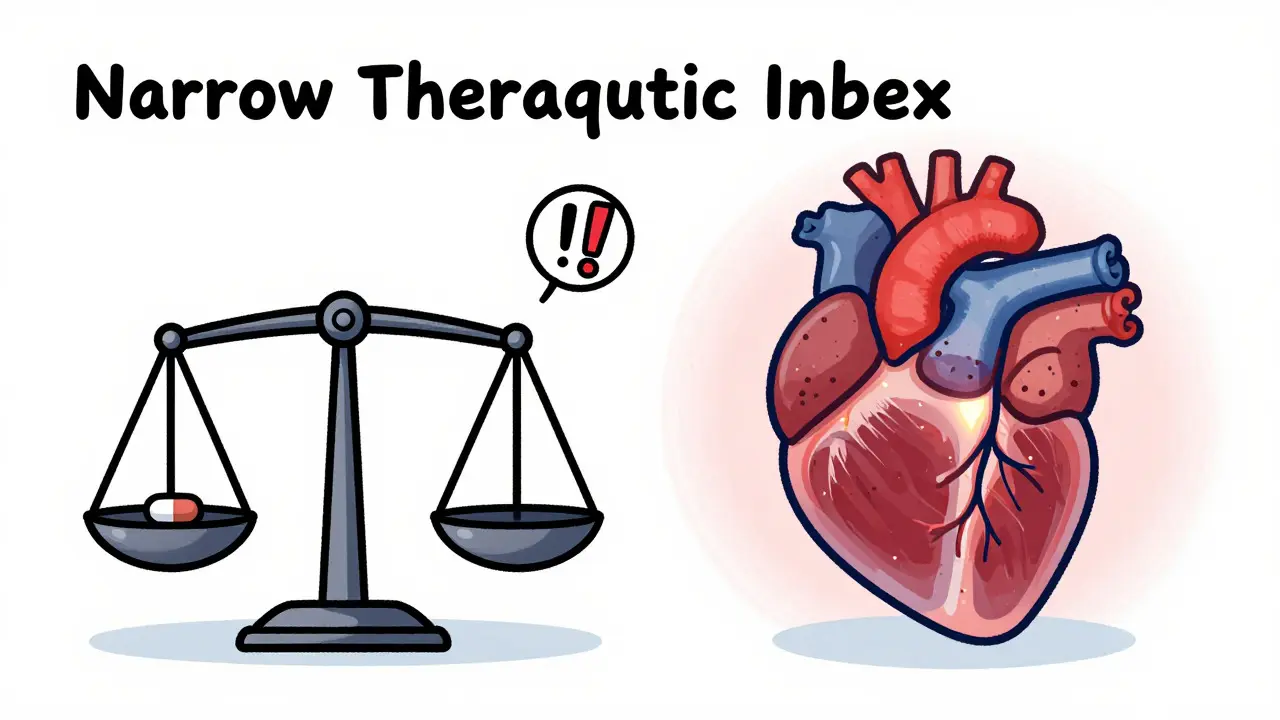
Not all medications are created equal when it comes to switching. Some drugs have a "narrow therapeutic index" (NTI). This means the difference between a helpful dose and a harmful one is very small. For these drugs, even slight variations in bioavailability can lead to clinically significant differences.
A 2019 analysis by the University of Maryland School of Pharmacy highlighted this risk. NTIs include:
- Warfarin (Coumadin): Used for blood thinning.
- Levothyroxine (Synthroid): Used for thyroid conditions.
- Phenytoin (Dilantin): Used for seizures.
- Lamotrigine: Used for bipolar disorder and epilepsy.
For instance, a 2017 study in Clinical Therapeutics documented that 15.3% of patients stabilized on brand-name levothyroxine experienced thyroid-stimulating hormone (TSH) level fluctuations outside the therapeutic range after switching to generic versions. If you take one of these medications, you should never assume a switch is seamless. Always consult your doctor before changing manufacturers.
| Drug Class | Example Medications | Switch Risk Level | Key Monitoring Metric |
|---|---|---|---|
| Narrow Therapeutic Index (NTI) | Warfarin, Levothyroxine, Phenytoin | High | Blood levels (INR, TSH, Serum drug levels) |
| Antiepileptics | Lamotrigine, Carbamazepine | High | Seizure frequency, Mood stability |
| Cardiovascular | Valsartan, Clopidogrel | Moderate | Blood pressure, Hospitalization rates |
| Common Chronic Conditions | Metformin, Lisinopril | Low | HbA1c, Blood pressure |
Specific Warning Signs to Watch For
If you’ve recently switched to a generic, keep a close eye on your body for the first two weeks. According to Mayo Clinic's Dr. James T. Li, a board-certified allergist, patients should contact their physician within 24 hours if they experience specific symptoms. Here is what to look out for:
- Skin Reactions: Rash, hives, or itching. Skin rash was reported in 14.3% of adverse event reports for generic switches according to FDA Adverse Event Reporting System data from 2022.
- Gastrointestinal Issues: Persistent nausea, vomiting, or diarrhea. These accounted for 8.7% of reports.
- Unexplained Fatigue: Feeling unusually tired or weak, which occurred in 7.2% of reports.
- Changes in Effectiveness: If your medication seems to stop working. Changes in effectiveness were noted in 12.1% of cases.
Real-world case studies highlight the importance of vigilance. In 2022, the Journal of Managed Care & Specialty Pharmacy documented a 54-year-old woman who experienced recurrent migraines after switching from brand-name sumatriptan (Imitrex) to a generic. Her symptoms only resolved when she returned to the brand version. Similarly, a 2023 case in Annals of Pharmacotherapy described a patient with bipolar disorder who experienced mania recurrence after switching from brand-name lamotrigine to a generic alternative, requiring hospitalization.
Emergency Symptoms: When to Call 911
While most side effects are manageable, some require immediate emergency care. If you experience any of the following after starting a new generic, call 911 or go to the nearest emergency room immediately:
- Throat Swelling: A sign of severe allergic reaction (anaphylaxis).
- Difficulty Breathing: Wheezing or shortness of breath.
- Hypotension: Systolic blood pressure dropping below 90 mmHg.
These symptoms occur in less than 0.05% of cases but can be life-threatening. The American College of Allergy, Asthma, and Immunology guidelines stress that speed is critical in these scenarios. Do not wait to see if it passes.
Monitoring Biomarkers for High-Risk Patients
If you are on a narrow therapeutic index drug, subjective feelings aren’t enough. You need objective data. The University of California San Francisco Medical Center's 2023 patient guide specifies that patients should monitor specific biomarkers after a switch:
- Warfarin Users: Monitor INR (International Normalized Ratio). Target range is typically 2-3.
- Levothyroxine Users: Monitor TSH (Thyroid-Stimulating Hormone). Target range is typically 0.5-4.5 mIU/L.
- Antiepileptic Users: Monitor serum drug levels. For phenytoin, the therapeutic range is 10-20 mcg/mL.
Dr. Aaron S. Kesselheim, Associate Professor of Medicine at Harvard Medical School, states: "For most medications, generics are perfectly fine, but for certain drugs with narrow therapeutic windows, even small variations can matter." Regular blood tests can catch issues before they become serious.
Regulatory Landscape and Patient Rights
You might wonder why these issues persist despite strict regulations. The FDA requires generic drugs to have the same therapeutic effect as brand-name versions. However, the regulatory environment is evolving. The FDA's 2022 Generic Drug User Fee Amendments (GDUFA III) implemented stricter manufacturing standards for complex generics. In 2023, 47% of new generic approvals involved complex products like inhalers and topical creams, which previously had higher variability issues.
In the United States, 28 states have laws restricting automatic substitution for narrow therapeutic index drugs. California's Senate Bill 1313, effective January 1, 2023, requires pharmacists to notify prescribers when substituting generics for 12 specified NTIDs. If you live in one of these states, your pharmacist may already be taking extra precautions.
However, if you are unsatisfied with a generic, you have rights. The American Medical Association's 2023 policy update recommends that physicians specifically document when brand-name medication is medically necessary. If you experience persistent side effects, ask your doctor to write "Dispense As Written" or "Brand Medically Necessary" on your prescription. This prevents future automatic substitutions.
Practical Steps for a Smooth Transition
Switching to generics doesn’t have to be stressful. Follow these steps to minimize risks:
- Track Your Symptoms: Keep a daily log for the first two weeks. Note energy levels, mood, digestion, and any physical changes.
- Check the Manufacturer: Ask your pharmacist which company makes the generic. Sticking with the same manufacturer can reduce variability.
- Consult Before Switching: If you take NTIs, talk to your doctor before accepting a generic. They may prefer you stay on the brand or a specific generic brand.
- Don’t Stop Abruptly: If you suspect the generic is causing issues, don’t just stop taking it. Consult your doctor to avoid withdrawal effects or disease flare-ups.
- Consider Pharmacogenomics: Emerging trends show increasing use of pharmacogenomic testing to predict individual responses to generic substitutions. Companies like Color Genomics launched targeted panels in Q2 2024 that assess genes involved in drug metabolism. This might be worth discussing with your healthcare provider if you frequently react poorly to medication changes.
Remember, generics are a cornerstone of affordable healthcare. They save billions annually and provide access to life-saving treatments for millions. But informed vigilance ensures that cost savings don’t come at the expense of your well-being. By knowing the warning signs and understanding your specific medication risks, you can navigate the switch with confidence and safety.
How long does it take for your body to adjust to a generic medication?
Most bodies adjust within 1 to 2 weeks. During this period, minor fluctuations in energy or digestion are common. However, if symptoms persist beyond two weeks or worsen, you should contact your doctor. For narrow therapeutic index drugs, monitoring should begin immediately and continue until blood levels stabilize.
Can I switch back to the brand-name drug if the generic causes side effects?
Yes, you can. If you experience adverse reactions to a generic, inform your doctor. They can prescribe the brand-name version by marking the prescription as "Dispense As Written" or "Brand Medically Necessary." Be aware that insurance coverage may differ, so check with your provider regarding potential out-of-pocket costs.
Are all generic drugs equally effective as brand-name drugs?
For most medications, yes. The FDA requires bioequivalence, meaning they deliver the same active ingredient in the same amount and time. However, for narrow therapeutic index drugs (like warfarin or levothyroxine), small variances can have clinical significance. Studies show equivalent efficacy for common drugs like metformin, but higher variability for complex biologics and NTIs.
What are the most common side effects after switching to generics?
The most commonly reported side effects include skin rashes (14.3% of adverse reports), gastrointestinal issues like nausea or diarrhea (8.7%), unexplained fatigue (7.2%), and perceived reduced effectiveness (12.1%). These are often linked to differences in inactive ingredients such as fillers or dyes.
Do I need blood tests after switching to a generic?
It depends on the medication. For narrow therapeutic index drugs like warfarin, levothyroxine, or antiepileptics, regular blood tests (INR, TSH, or serum levels) are crucial to ensure therapeutic ranges are maintained. For common medications like antibiotics or pain relievers, routine blood tests are usually not necessary unless symptoms suggest an issue.