Most people know how to lose weight. But far fewer know how to keep it off. The truth is, losing weight is only half the battle. Studies show that only about 25% of people who drop pounds manage to hold onto that loss for more than a year. The rest? They slip back - sometimes slowly, sometimes fast. And it’s not because they lack willpower. It’s because biology fights back.
Why Your Body Doesn’t Want You to Stay Thin
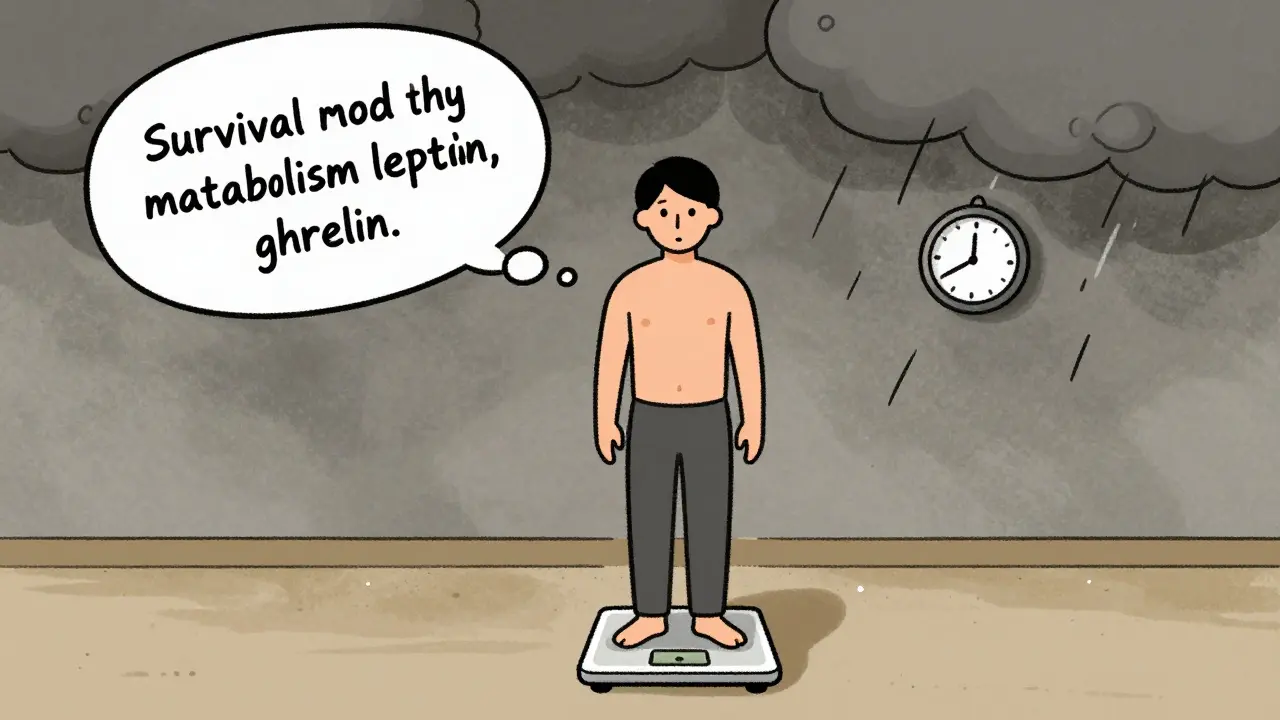
When you lose weight, your body doesn’t just shrug and say, “Good job.” It goes into survival mode. Your metabolism slows down - by 15% to 25% more than you’d expect based on your new, lighter frame. Hormones like leptin, which tell your brain you’re full, drop by nearly half. Meanwhile, ghrelin, the hunger hormone, spikes. You’re not lazy. You’re not weak. Your body is doing exactly what evolution designed it to do: protect you from starvation. This isn’t just theory. A 2016 study tracked people who lost significant weight and found their bodies kept burning fewer calories for years afterward. Even if they ate the same amount they did before losing weight, they still gained it back. That’s not a failure - it’s a biological fact.What Actually Works: The Real Habits of People Who Keep Weight Off
The National Weight Control Registry has tracked over 10,000 people who lost at least 30 pounds and kept it off for a year or longer. Their habits aren’t flashy. They’re simple. And they’re repeatable.- They weigh themselves at least once a week - and often daily. Not to obsess, but to catch tiny changes before they become big ones. One user on r/loseit called it the “Golden Rule.”
- They move every day. The average person in the registry burns about 2,800 calories per week through activity - roughly an hour of brisk walking or cycling daily.
- They eat breakfast. 78% of successful maintainers never skip it. It’s not about the food itself, but about setting a rhythm.
- They watch less TV. 75% limit screen time to under 10 hours a week. Less sitting means fewer mindless snacks.
- They plan ahead. 89% prepare meals in advance. They don’t wait until they’re hungry to decide what to eat.
These aren’t lucky breaks. They’re habits built over time. And they work because they’re low-effort, high-reward routines that fit into real life.
The Myth of the “Maintenance Phase”
Most diets treat weight loss and maintenance like two separate stages. Lose weight for 12 weeks. Then, switch to “maintenance mode.” But research shows that doesn’t work. A 2018 study found people started regaining weight the moment their program ended. That’s because the body doesn’t wait for permission to rebound. If you stop monitoring, stop moving, stop eating mindfully - even for a few days - your metabolism and hunger signals start shifting back toward your old weight. The better approach? Start maintenance on day one. When you’re cutting calories to lose weight, also start weighing yourself daily. Start scheduling walks. Start prepping meals. Don’t wait until you hit your goal. Build the habits while you’re still changing.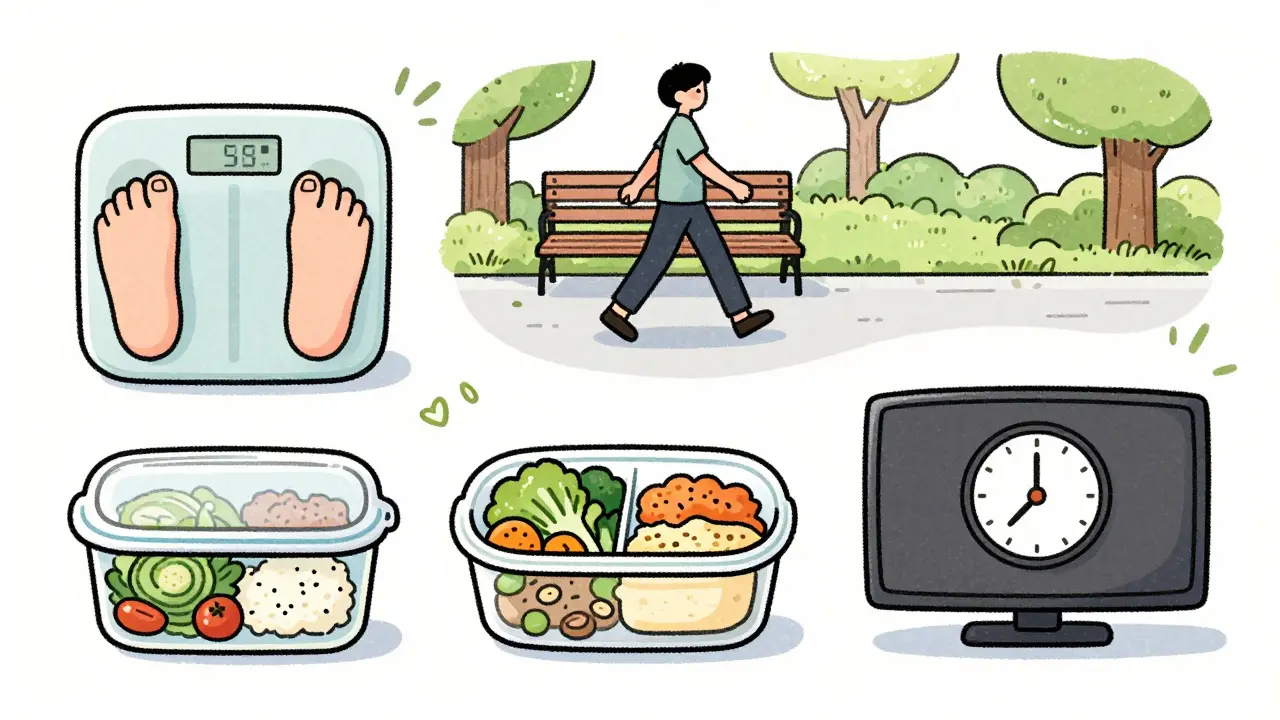
What About Diet Plans and Apps?
Commercial programs like Weight Watchers (WW) and Noom get a lot of attention. WW reports that 66% of users maintain their weight loss for six months. Noom has a 3.7 out of 5 rating on the App Store. But here’s the catch: these numbers include people who still use the app. Once they stop paying, many slip back. The real winners aren’t those who rely on apps or coaches forever. They’re the ones who use those tools to learn how to manage their own behavior - then step away. The goal isn’t to be a lifelong member of a program. It’s to become your own expert.How Food and Movement Really Work Together
Successful maintainers don’t count every calorie. They don’t follow rigid meal plans. Instead, they focus on consistency.- Calorie intake: Most stay around 1,800-2,000 calories a day. Not because that’s magic, but because it’s sustainable. Too low, and you’re constantly hungry. Too high, and you gain.
- Macros: Their diet is roughly 52% carbs, 19% protein, 28% fat. Protein helps with fullness. Carbs give energy. Fat makes food satisfying.
- Exercise: It’s not about burning 500 calories at the gym. It’s about moving enough to stay active. Walking, gardening, dancing, playing with kids - all count. The key is daily movement, not intense workouts.
One woman in the registry said, “I don’t track anything anymore. I just know how my body feels after a meal. If I’m sluggish, I eat less. If I’m hungry, I eat more.” That’s intuition built through experience - not restriction.
How to Handle Setbacks (Without Quitting)
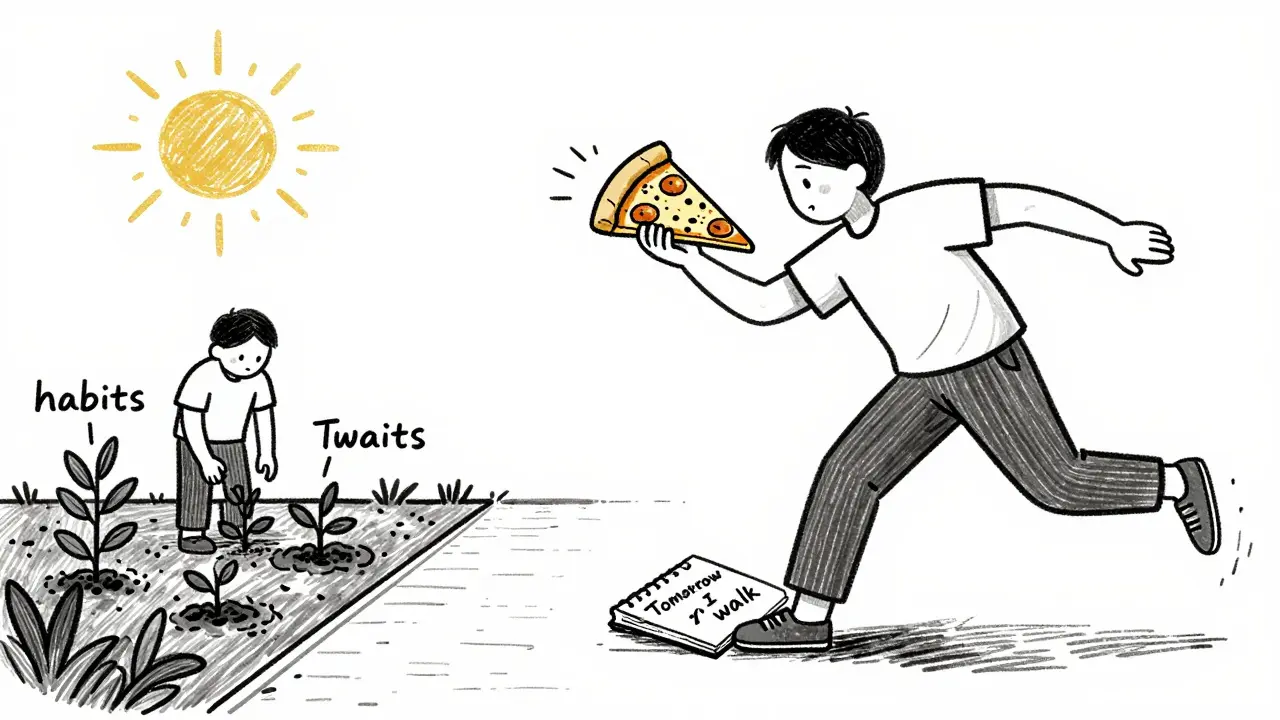
The biggest reason people give up? One slip becomes a collapse. “I had one slice of pizza. Then I ate the whole box.” “I went on vacation and gained 3 pounds. So I just stopped trying.” That’s the “all-or-nothing” trap. And it’s deadly. Successful people don’t avoid slips. They expect them. They plan for them.- Pre-plan for holidays. Eat a protein-rich breakfast before a big meal. Bring a healthy dish to share. Don’t fast beforehand - that just leads to overeating.
- Have a “slip recovery” script. “I had a rough day. Tomorrow, I’ll get back on track.” Not “I ruined everything.”
- Don’t wait for Monday. If you overate on Wednesday, don’t wait until next week. Adjust on Thursday.
Research shows people who have a plan for setbacks regain 1.7 kg less over time than those who don’t. That’s not luck. That’s strategy.
Medication: A Tool, Not a Cure
Drugs like semaglutide (Wegovy) and tirzepatide (Zepbound) are changing the game. In trials, people lost over 15% of their body weight. But here’s what no one talks about: if you stop the drug, you gain it back. Fast. These medications work by reducing hunger and slowing digestion. They’re powerful. But they’re not permanent. And at $1,300 a month, they’re out of reach for most people. They’re best used as a bridge - not a destination. Think of them like braces for your metabolism. They help you get into a better position. But you still need to learn how to walk on your own.What You Can Do Today
You don’t need a program. You don’t need a coach. You need three things:- Start weighing yourself daily. Use a simple scale. Don’t obsess over the number. Look for trends. If you see a 2-pound rise over 3 days, adjust your food or movement. Not tomorrow - today.
- Move every day. Even 20 minutes of walking. No gym required. Just get up, get moving.
- Plan your meals. Take 10 minutes on Sunday to plan your lunches. Pre-chop veggies. Portion out snacks. Make it easy to eat well when you’re tired.
That’s it. No magic. No detoxes. No 30-day challenges. Just consistent, small actions.
The Real Secret
The people who keep weight off aren’t perfect. They’re persistent. They don’t wait to feel motivated. They don’t wait for the “right time.” They show up - even when it’s hard. Even when they’re tired. Even when they’ve slipped. Weight maintenance isn’t about discipline. It’s about design. Build a life where eating well and moving regularly are the easiest choices. Not the hardest ones.It’s not about never falling off. It’s about getting back on - quickly.
12 Responses
Really appreciate this breakdown - especially the part about leptin and ghrelin dynamics. It’s not just willpower; it’s neuroendocrine recalibration. The body’s set point theory isn’t pseudoscience; it’s peer-reviewed physiology. What’s wild is how the hypothalamus retains a memory of prior adiposity. Even after years of maintenance, the neural circuits still favor the old weight. That’s why reversion is so common - it’s not a moral failure, it’s a biological echo.
Yeah, this tracks with what I’ve seen in clinical nutrition. The 2,800 cal/week movement threshold? That’s the sweet spot for metabolic adaptation without burnout. Most people go too hard on the gym and crash. Walking 45 mins a day is way more sustainable than HIIT three times a week. Also, breakfast isn’t about the food - it’s about circadian entrainment. Eating within an hour of waking resets your insulin sensitivity. Simple, but it works.
I’m from the South, and y’all ain’t gonna believe this - but I lost 60 lbs and kept it off for 8 years. No apps. No diet pills. Just three things: weigh myself every morning, walk after dinner no matter what, and always have hard-boiled eggs in the fridge. When I got lazy? I’d eat the eggs instead of chips. No drama. No guilt. Just habit. If you can make it automatic, you don’t need motivation.
OMG this is so true 😍 I’ve been doing the daily weigh-in thing since 2021 and it’s a game-changer. Like, one day I weighed 2.3 lbs up - didn’t panic, just swapped my evening snack for cucumber slices. Next day? Back to baseline. It’s like having a live feed on your metabolism. Also, TV = snack vortex. Cut it to under 10 hrs/week and suddenly you’re not eating because you’re bored. Mind blown 💥
I tried all this and it didn’t work. I gained back everything and now I’m worse than before. I hate my body. I hate diets. I hate myself. I just want to be happy. 😭
yo karianne i feel you. but hear me out - you don’t gotta fix everything at once. maybe stop hating your body for 24 hours and just go for a walk without your phone. no scale. no goals. just move. then come back here and tell us how you felt. i’m not saying this to fix you. just saying you’re not alone. we’ve all been there.
Love this. The real secret? You don’t need to be perfect - you need to be consistent. I used to think maintenance meant never eating pizza again. Turns out, it’s just knowing how to bounce back. One bad meal? Fine. One bad week? Okay. One bad month? Then you’ve got a problem. But you fix it on Tuesday, not Monday. That’s the difference between failure and longevity.
LOL this is so basic. Of course you’re gonna gain it back if you think ‘eating breakfast’ is the secret. The real issue? Big Pharma and the diet industry are LYING to you. They want you dependent on apps and scales. The truth? Your body wants to be fat. It’s not biology - it’s capitalism. Stop giving your power away to weight trackers and start trusting your instincts. Eat when hungry. Stop when full. That’s it. No numbers. No apps. Just you and your gut.
Andy, your comment is dangerously oversimplified. The ‘trust your gut’ narrative ignores neurobiology. Ghrelin doesn’t respond to ‘hunger cues’ - it responds to adipose mass. If you’ve lost weight, your ghrelin levels remain elevated for years. That’s not a ‘gut feeling,’ it’s a hormonal imbalance. You can’t ‘trust’ a system that’s actively screaming at you to eat more. That’s why behavioral scaffolding - like weighing, meal prep, movement - works. It compensates for biological drift. Ignoring it doesn’t empower you - it dooms you.
Let me be brutally honest - this entire framework is a neoliberal trap. The National Weight Control Registry? Funded by corporations with vested interests in weight-loss products. The ‘habits’ they promote? Designed to keep you consuming - scales, meal-prep containers, fitness trackers, protein bars. The real solution? Abolish weight stigma. Stop pathologizing fatness. The body doesn’t need ‘maintenance’ - society needs to stop treating thinness as moral superiority. Your metabolism isn’t broken. The system is. We’re all just trying to survive a culture that commodifies your flesh. The ‘15% metabolic slowdown’? That’s not biology. That’s capitalism in disguise.
Interesting take, Ryan. I get the critique, but I also think there’s value in practical tools even if the system’s flawed. Like, yeah, the registry is corporate-backed - but the data still holds. People who weigh daily *do* maintain better. People who move daily *do* keep weight off. The mechanism might be messy, but the correlation is real. Maybe the answer isn’t rejecting the tools, but using them while challenging the narrative. You can critique capitalism and still use a scale to avoid a heart attack.
Thank you for saying this. I’ve been doing this for 7 years. I’ve gained, lost, gained again. I used to think I was weak. Now I know I was just fighting biology. I don’t track anymore. I don’t weigh every day. But I still walk. I still prep meals on Sundays. I still eat breakfast. Not because I’m scared of fat - but because it makes me feel strong. And that’s enough. I’m not trying to be thin. I’m trying to be well. And that’s okay.