
It’s Friday night. You’ve stuck to your plan all week-low-sugar lunches, daily walks, no late-night snacks. But now? The weekend is here. Pizza. Wine. Dessert. A lazy Sunday brunch with pancakes and bacon. You tell yourself it’s just one night. But here’s the thing: that one night adds up. And it’s not just you. Research shows most adults gain weight over weekends-consistently, predictably, and quietly. It’s not a failure. It’s a pattern. And it’s the reason so many people hit a wall in their weight loss journey.
Why Weekends Are the Hidden Culprit
Weekend weight gain isn’t about bingeing. It’s about calorie creep. That’s the slow, almost invisible buildup of extra calories that sneaks in when you’re relaxed, distracted, or just letting go after a long week. A 2008 study from Washington University tracked 48 adults over a year and found that on Saturdays, people consumed 36% of their total daily calories from fat-up from under 35% on weekdays. That might sound small, but over time, it adds up to nearly 9 pounds a year.
And it’s not just food. People also move less. Fewer steps. Fewer gym sessions. More sitting. A 2023 study in JAMA Network Open followed 368 adults in Australia and found that weight typically rises by 0.3% each week, with the lowest point on Friday and the highest on Sunday. That’s not a fluke. It’s a rhythm. And if you’re trying to lose weight, this weekly swing cancels out your weekday progress.
Even people who exercise more on weekends aren’t safe. In that same Washington University study, one group was told to increase physical activity by 20%. They thought they’d burn off the extra food. Instead, they gained weight on weekends-because they ate more to compensate. Exercise alone doesn’t fix weekend eating. You have to fix the eating.
What Happens When You Ignore It
Most people think: "I’ll just lose it on Monday." But the body doesn’t work that way. Weight gain isn’t linear. It’s cumulative. That extra 200-400 calories a day over Saturday and Sunday? That’s 1,400-2,800 extra calories a week. One pound of fat equals about 3,500 calories. So if you’re gaining 1,800 extra calories weekly, you’re gaining about half a pound every two weeks. That’s 12 pounds a year.
And here’s the kicker: when you lose weight during the week and regain it on the weekend, your body starts to adapt. Your metabolism slows. Your hunger hormones get confused. Your willpower wears thin. You start seeing weekends as a "free pass," which makes it harder to return to discipline. It’s a cycle-and it’s why so many people say they’ve "tried everything" and still can’t lose the last 10 pounds.
What Actually Works: Evidence-Based Fixes
There’s no magic trick. But there are proven strategies-backed by data-that work better than willpower alone.
- Self-weigh every morning: Six studies show that people who weigh themselves daily, including weekends, are far more likely to maintain their weight. It’s not about obsession-it’s about awareness. If you see the scale creep up on Sunday, you notice it. And noticing changes your behavior.
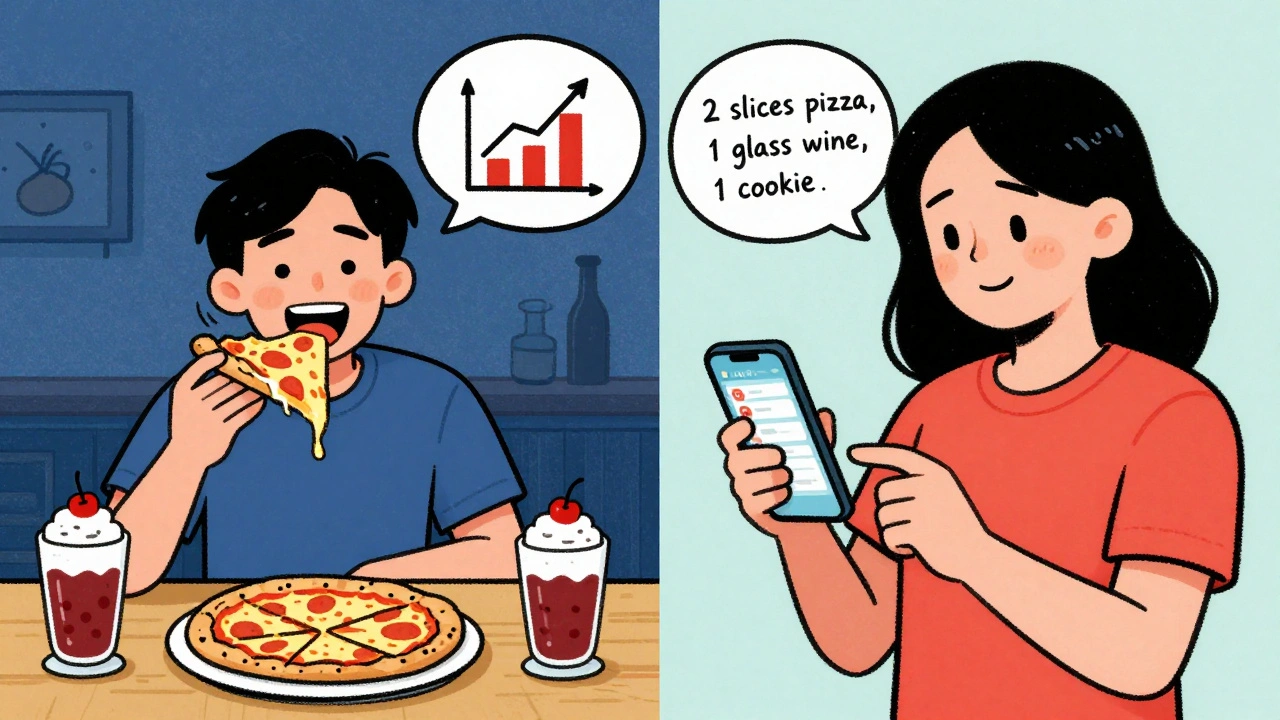
- Track before you eat: People who log their food-even just on weekends-eat 20-30% fewer calories. You don’t need an app. A simple note on your phone: "2 slices pizza, 1 glass wine, 1 cookie." Just writing it down cuts intake. Studies show a strong link (r = -0.41) between tracking and lower calorie consumption.
- Build in structure, not restriction: Don’t try to eat like a monk on Saturday. Instead, plan ahead. Decide: "I’ll have one dessert tonight, but I’ll skip the bread at dinner." Or: "I’ll go for a walk after lunch instead of napping." Small choices add up. A 2022 study found that people who used "small changes"-like adding 2,000 steps or cutting 100 calories daily-cut their risk of obesity in half over three years.
- Load up on veggies and fruit: Eating more fiber-rich foods (like broccoli, apples, berries) helps you feel full with fewer calories. Research shows a clear positive link (r = 0.35) between fruit/vegetable intake and weight stability. Keep a bowl of sliced apples or baby carrots on the counter. When you’re hungry, reach for that first.
- Watch the sugar: Added sugar is the silent saboteur. A single glass of orange juice, a latte with syrup, or a soda can add 150-250 empty calories. Cutting back on sugar is linked to lower weight gain (r = -0.33). Swap soda for sparkling water with lemon. Choose plain yogurt over flavored.
Why "Just One Day Off" Doesn’t Work
Some experts say you should allow yourself flexibility on weekends. "It’s more sustainable," they argue. And maybe it is-for some. But here’s the problem: flexibility often turns into abandonment. One slice of cake becomes two. One drink becomes three. One lazy afternoon becomes two days of no movement.
The science is clear: people who treat weekends as a free-for-all are more likely to gain weight long-term. A 2023 study from the University of Vermont found that those who kept consistent habits-even on weekends-had better weight maintenance after six months than those who relaxed their rules. It’s not about perfection. It’s about rhythm. Your body responds better to predictability than to chaos.
That doesn’t mean you can’t enjoy a beer or a dessert. It means you plan for it. You don’t let it sneak in.
Accountability Is Your Secret Weapon
Who do you text when you’re tempted? Who reminds you to walk after dinner? Social support isn’t fluffy advice-it’s a biological tool. Studies show people with strong social networks eat more fruits and vegetables (r = 0.35) and more fiber (r = 0.58). That’s because accountability changes behavior.
Try this: Text a friend on Friday evening: "I’m planning to eat clean this weekend. Want to check in Sunday night?" Or join a local walking group on Saturday mornings. Even a simple text exchange-"How was your walk?"-can keep you on track.
And if you’re alone? Use tech. Set a phone reminder: "Weekend meal check-in: 7 PM." Or use a free app like MyFitnessPal to log meals. Just the act of logging creates a mental pause. You think: "Do I really want this?"

What to Do on Friday Night (Before the Creep Starts)
The best time to stop weekend weight gain isn’t Sunday night. It’s Friday evening.
Here’s a simple 5-minute routine:
- Check your scale. Note the number.
- Decide: "What’s my one indulgence this weekend?" (One dessert. One glass of wine. One pizza.)
- Plan your meals: "I’ll have grilled chicken and veggies for dinner Friday. No bread. No sauce."
- Set a walk: "Saturday after lunch, I’m doing a 30-minute walk with my dog or a friend."
- Remove temptation: Don’t buy junk food on Saturday morning. If it’s not in the house, you won’t eat it.
This isn’t about deprivation. It’s about intention.
The Bigger Picture: It’s Not Just About Weight
Weekend weight gain isn’t just a number on a scale. It’s a sign of how you treat yourself. Are you giving yourself permission to rest, or are you using food to escape? Are you treating your body like a machine that needs fuel-or like something to punish and reward?
When you stop seeing weekends as a threat and start seeing them as a chance to practice balance, everything changes. You don’t need to be perfect. You just need to be aware. You don’t need to avoid fun. You just need to choose it wisely.
Think of it like this: You wouldn’t skip brushing your teeth for three days because you had a good week. You wouldn’t stop exercising because you had a stressful day. So why let your eating habits fall apart just because it’s Saturday?
Weight management isn’t about fighting cravings. It’s about building habits that last-not just through the week, but through the weekend, too.
Why do I gain weight only on weekends?
You gain weight on weekends because you consume more calories and move less. Research shows people eat up to 36% more calories from fat on Saturdays compared to weekdays. Even if you’re active, you often compensate by eating more. The pattern is so consistent that 70% of studies confirm weekend weight gain across different populations. It’s not laziness-it’s biology and behavior working together.
Can I still enjoy food on weekends without gaining weight?
Yes-but you need structure. Plan your treats. Pick one indulgence, not five. Eat slowly. Stop when you’re full. Fill half your plate with vegetables. Drink water before meals. These small steps let you enjoy food without the extra pounds. People who plan ahead gain 50% less weight over weekends than those who eat without thinking.
Is exercise enough to offset weekend eating?
No. A 2008 study showed people who increased exercise by 20% still gained weight on weekends because they ate more to compensate. Burning 300 calories at the gym doesn’t cancel out a slice of pizza and a dessert. You can’t out-exercise a bad diet. Weight loss happens in the kitchen, not the gym.
How many extra calories cause weekend weight gain?
As little as 100-200 extra calories per day over Saturday and Sunday can lead to a half-pound weight gain per week. That’s one extra snack, one sugary drink, or a larger portion at dinner. Over a year, that adds up to 10-15 pounds. The key isn’t drastic change-it’s consistency.
Should I weigh myself on weekends?
Yes. People who weigh themselves daily, including weekends, are more likely to maintain their weight. It’s not about obsession-it’s about awareness. Seeing the scale go up on Sunday helps you adjust before Monday. If you wait until Monday to check, you’ve already lost the chance to respond.
Do low-income people gain more weight on weekends?
Yes. Studies show low-income individuals experience 23% more weekend calorie creep than higher-income groups. This is often because healthier foods are more expensive or harder to access. Planning meals ahead, buying frozen veggies, and choosing cheaper protein sources like beans or eggs can help bridge the gap.
Next Steps: Start Small, Stay Consistent
You don’t need a complete overhaul. Pick one thing from this list and do it this weekend:
- Track your food on Saturday using a notes app.
- Take a 20-minute walk after dinner.
- Swap one sugary drink for water.
- Write down your one treat for the weekend.
- Step on the scale Friday night and Sunday morning.
Do that for three weekends. Then add another. Progress isn’t about big leaps. It’s about small, repeatable actions that add up over time. Weekend weight gain isn’t inevitable. It’s optional. And you have more control than you think.
12 Responses
Just started weighing myself on weekends like the article said. Saw a 1.2lb jump Sunday morning. Didn't panic. Just swapped my morning bagel for eggs. Lost it by Tuesday. Small shifts, man. It works.
There's something deeply human about this pattern-the weekend as a psychological release valve. We don't gain weight because we're weak; we gain it because we're tired. The body doesn't distinguish between stress-eating and celebration-eating. It just absorbs. Maybe the real fix isn't tracking calories, but reclaiming rest without guilt.
Did you know the scale is rigged by Big Pharma to make you feel bad so you buy more diet pills? They even programmed the algorithms to show higher numbers on Sundays. I checked my neighbor's scale-same thing. It's not you. It's the system.
It's amusing how this article presumes everyone has the luxury of planning meals, buying fresh vegetables, or owning a scale. Meanwhile, I'm working two jobs, surviving on gas station burritos, and my apartment doesn't even have a fridge. This isn't about willpower-it's about class. But sure, let's blame the weekend.
OMG I did the 5-min Friday routine last week and I swear I didn’t even think about pizza all weekend. Just wrote down my one treat (one cookie) and it felt like a gift, not a cheat. So much less guilt. Thank you for this.
Yessss this is so real!!! 😭 I thought I was the only one who ate 3 slices of pizza and then cried at 2am because I "ruined everything" 😭 But then I started walking after dinner with my dog and now I’m not crying anymore… just snacking less. 🐶💛
It’s wild how the body remembers every tiny indulgence like a ledger. I used to think "it’s just one drink"-until I realized my jeans were tighter not because of the alcohol, but because of the syrup in my coffee, the butter on my toast, the handful of chips I told myself were "just for flavor." It’s the thousand cuts, not the sword.
Let’s be honest-this whole weekend-weight-gain narrative is a capitalist distraction! The real issue is that our food system is engineered to make us crave sugar and fat, while corporations profit off our guilt! And now they’re selling you $12 apps to track your snacks? Wake up! The solution isn’t logging your wine-it’s dismantling the food-industrial complex! I’ve been living on wild berries and resistance training since 2018, and I’ve never weighed myself once!
In my culture, weekends are sacred-family meals, slow cooking, sharing food with laughter. We don’t "gain weight"-we build connection. Maybe the problem isn’t the weekend, but the idea that food must be controlled like a math problem. There’s joy in abundance. Balance isn’t restriction. It’s presence.
I’ve found that the most sustainable change isn’t about willpower, but about ritual. For me, it’s brewing a pot of tea on Saturday morning and sitting with it for ten minutes before deciding what to eat. That pause-just ten minutes-creates space between impulse and action. It’s not magic. It’s mindfulness.
What if we stopped seeing weekends as the enemy and started seeing them as feedback? The scale going up isn’t a failure-it’s data. It’s telling you something about your energy, your stress, your loneliness. Maybe the real question isn’t "how do I stop gaining?" but "what am I trying to soothe?"
Wait-so you’re telling me this isn’t just about food? That it’s about the government monitoring our eating habits through smart scales? My cousin works at Fitbit-they’re feeding data to the CDC to predict obesity trends and push vaccines. I saw a memo. They call it "Metabolic Surveillance." That’s why they want you to weigh yourself daily. Don’t be a lab rat.