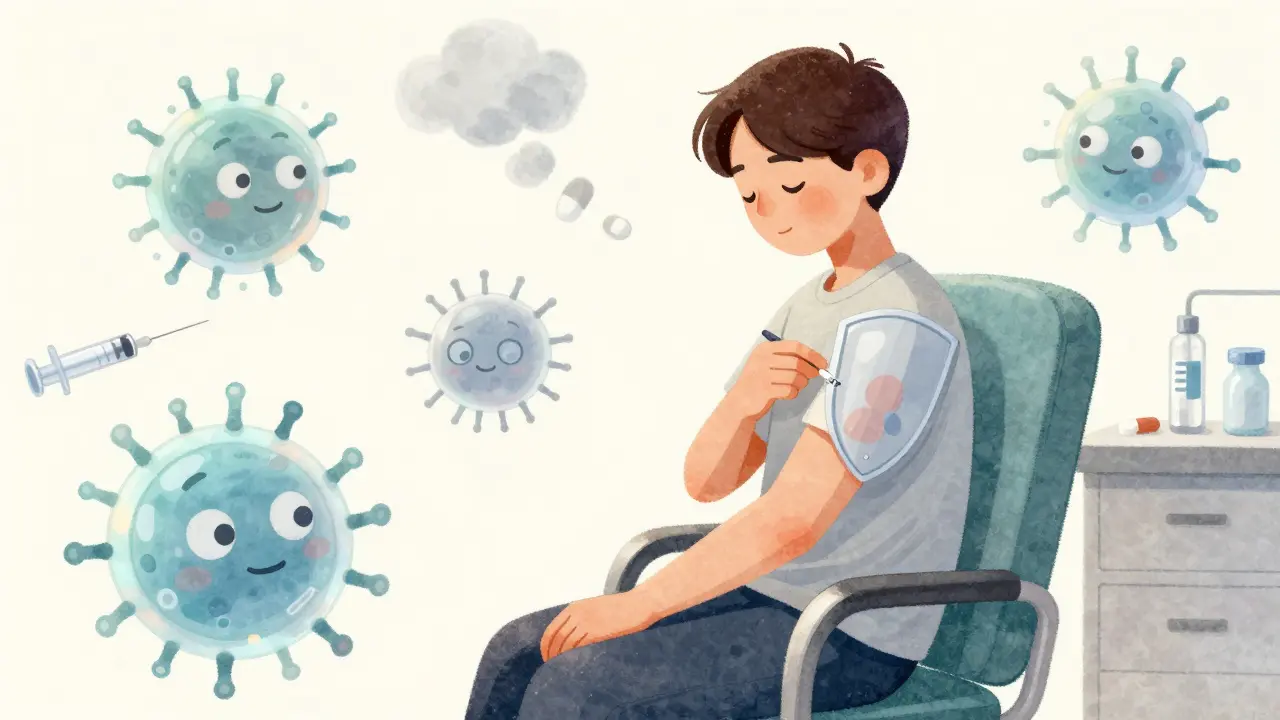
Getting vaccinated when you’re on immunosuppressive drugs isn’t like getting a shot for most people. It’s not just about showing up at the clinic. It’s about timing - vaccine timing - and understanding that your body might not respond the same way. For someone with rheumatoid arthritis, lupus, multiple sclerosis, or who’s had a kidney or liver transplant, vaccines can mean the difference between staying healthy and facing a life-threatening infection. But the same drugs that keep your immune system from attacking your own body also make it harder for vaccines to do their job.
Why Vaccines Don’t Work the Same Way
Think of your immune system like a security team. Vaccines are like showing that team a photo of a thief - so they know what to look for. But if you’re on drugs like rituximab, methotrexate, or high-dose prednisone, you’re basically putting that security team on leave. They’re not just sleepy - they’re gone. That’s why studies show people on these medications often produce 30% to 80% fewer antibodies after vaccination than healthy people. For example, a 2021 study from the Veterans Health Administration found that mRNA COVID-19 vaccines were 80.4% effective in people with inflammatory bowel disease on immunosuppressants - compared to 94.1% in the general population. That gap isn’t small. It’s the difference between being protected and being vulnerable. And it’s not just about antibodies. Your T-cells - the backup fighters - might still be working, even when antibodies are low. That’s why the CDC updated its guidance in late 2023 to say: even if your antibody test comes back low, getting the vaccine still matters. T-cells can still help prevent severe illness.When to Get Vaccinated Before Starting Treatment
The best time to get vaccinated? Before you start any immunosuppressive therapy. That’s the golden rule across all major guidelines - from the CDC to the American College of Rheumatology. If you’re about to begin treatment for an autoimmune disease or cancer, aim to get all your routine vaccines - flu, pneumonia, shingles (the non-live version), and COVID-19 - at least two weeks before your first dose of medication. Some experts, especially transplant teams, recommend 4 to 6 weeks if possible. Why? Because once you start drugs like azathioprine or mycophenolate, your immune system loses its ability to build a strong memory against pathogens. This isn’t just theory. A 2013 IDSA guideline, still referenced today, gave this advice a strong evidence rating. Real-world data from transplant centers shows patients who got vaccinated before their transplant had significantly better protection against infections in the first year after surgery.Timing Vaccines While on Immunosuppressants
If you’re already on treatment, timing becomes trickier - and it depends on what you’re taking.- Rituximab, obinutuzumab, and other B-cell depleting drugs: These wipe out the cells that make antibodies. The CDC says wait at least six months after your last infusion before getting a vaccine. But here’s the catch: some specialists at Memorial Sloan Kettering say nine to twelve months is better. Why? Because even at six months, up to 70% of patients still don’t respond well. If you’re in a high-risk situation - like during a major flu or COVID surge - experts say don’t wait. Get the vaccine anyway. The risk of infection outweighs the risk of a weak response.
- Methotrexate: For flu shots, hold your methotrexate for two weeks after vaccination. That’s the ACR’s clear recommendation. You won’t feel better during those two weeks - but your body will make more antibodies. For other vaccines, like shingles or pneumonia, the same rule applies. Talk to your rheumatologist before skipping your dose.
- Prednisone: If you’re on more than 20 mg daily, delay non-flu vaccines until your dose drops below that level. High-dose steroids suppress your immune system too much to respond properly. For flu shots, you can still get them even on high doses - but don’t expect full protection.
- Other biologics: Drugs like adalimumab or infliximab don’t wipe out B-cells like rituximab does. You can usually get vaccines while on them, but timing still matters. The CDC recommends getting them at least 14 days before your next infusion if possible.

Different Guidelines, Same Goal
You’ll hear different advice depending on who you ask. That’s because guidelines aren’t one-size-fits-all. The CDC says solid organ transplant patients should wait at least one month after transplant before getting vaccines. The Infectious Diseases Society of America (IDSA) says three months. Both are right - it’s about balancing risk. A transplant patient with no rejection signs can get vaccinated sooner. Someone still on high-dose steroids or with recent rejection? Wait. The National Comprehensive Cancer Network (NCCN) says for patients with chronic lymphocytic leukemia on rituximab: vaccinate whenever you can. Memorial Sloan Kettering says wait until your B-cells come back. Both are trying to solve the same problem - how to protect someone whose immune system is broken. The biggest shift came in February 2024, when IDSA updated its guidelines. They made it clear: when community transmission of COVID-19 is high (over 100 cases per 100,000 people), getting the vaccine right away matters more than waiting for the perfect timing. That’s a game-changer. It means your doctor shouldn’t delay your shot just because you’re due for rituximab next week. If the virus is spreading, get the vaccine now.What About the Flu, Pneumonia, and Shingles?
Don’t forget the basics. People on immunosuppressants are at higher risk for flu complications, bacterial pneumonia, and shingles. You need these vaccines every year - or every few years.- Flu shot: Get it every fall. Even if you’re on methotrexate or prednisone. Hold methotrexate for two weeks after if you can.
- Pneumococcal vaccine: Two types - PCV20 and PPSV23. You’ll likely need both, spaced at least one year apart. Ask your doctor which one to start with.
- Shingles vaccine: Only the non-live version - Shingrix. The old live version (Zostavax) is dangerous for you. Shingrix is safe, even on rituximab, but timing still matters. Get it when your B-cell count is highest - usually right before your next infusion.

Real-Life Challenges
Knowing the rules is one thing. Following them is another. Many patients juggle multiple doctors - a rheumatologist, an oncologist, a transplant team, and a primary care provider. Each has their own schedule. A 2022 study found nearly half of transplant centers didn’t follow the best timing guidelines because no one was coordinating care. Also, vaccine supply isn’t always reliable. If you’re told to wait six months after rituximab, but the clinic runs out of flu shots? Do you wait another month? Experts say no. Get it when you can. Don’t let perfect be the enemy of good. And don’t rely on antibody tests to tell you if the vaccine worked. Those tests aren’t standardized. A low number doesn’t mean you’re unprotected - your T-cells might still be fighting. A high number doesn’t guarantee you won’t get sick. They’re just one piece of the puzzle.What’s Next? Personalized Timing
The future of vaccination for immunosuppressed patients isn’t about fixed time windows. It’s about measuring your immune system. The NIH launched a $12.5 million trial in January 2024 to see if tracking CD19+ B-cell counts can tell doctors exactly when to give vaccines. Right now, we guess. In a few years, we might know. If your B-cells are above 50 per microliter, you’re likely ready. Below that? Wait. Until then, here’s the bottom line: talk to your doctor. Don’t assume you can’t get vaccinated. Don’t assume you’re safe just because you got the shot. Ask: When is the best time for me? Should I hold my methotrexate? Is my B-cell count high enough? Your immune system might be suppressed - but it’s not silent. With the right timing, vaccines can still give you protection. And that’s worth fighting for.Can I get the COVID-19 vaccine if I’m on rituximab?
Yes - but timing matters. Most guidelines recommend waiting at least six months after your last rituximab infusion. Some experts suggest waiting nine to twelve months for the best response. However, if there’s a major outbreak of COVID-19 in your area, getting the vaccine sooner is better than waiting. The risk of infection outweighs the risk of a weaker response.
Should I stop my methotrexate before getting the flu shot?
The American College of Rheumatology recommends holding methotrexate for two weeks after your flu shot. This helps your body make more antibodies. Don’t stop it without talking to your rheumatologist first - stopping too long could make your arthritis flare. But if you can safely pause it for two weeks, it’s worth it.
Are live vaccines safe for immunosuppressed patients?
No. Live vaccines - like the old shingles vaccine (Zostavax), MMR, or nasal flu spray - are not safe for people on immunosuppressants. They contain weakened forms of the virus that could cause infection in someone with a suppressed immune system. Always get the inactivated versions - like Shingrix for shingles or the flu shot (not the nasal spray).
Do I need more than one dose of the COVID-19 vaccine?
Yes. The CDC recommends that immunocompromised patients receive additional doses of the current season’s COVID-19 vaccine, depending on their vaccination history. Most people need at least three doses to start, followed by annual boosters. Your doctor will help you figure out how many you’ve had and how many you still need.
Can I get vaccinated after a transplant?
Yes, but you need to wait. Most guidelines say wait at least one to three months after transplant, depending on your recovery and whether you’re still on high-dose steroids or experiencing rejection. Your transplant team will guide you. Don’t rush - your immune system needs time to stabilize before it can respond to vaccines.
Do antibody tests tell me if the vaccine worked?
Not reliably. Antibody tests for vaccines like COVID-19 aren’t standardized, and low levels don’t always mean you’re unprotected. Your T-cells - which aren’t measured in these tests - may still be providing defense. Don’t skip future doses just because a test came back low. Follow your doctor’s advice on boosters.
What if I miss the ideal timing for a vaccine?
Get it anyway. There’s no perfect time for everyone. If you missed the window before starting treatment, or you’re in the middle of a drug cycle, don’t wait. Vaccines still offer some protection - even if it’s not as strong. The goal is to reduce your risk of severe illness, not to achieve 100% immunity.
10 Responses
You people are so naive. You think a vaccine is some magic bullet? It’s not. You’re on immunosuppressants - your body is a sitting duck. The CDC doesn’t know what they’re talking about. They’re just pushing shots because Big Pharma pays them. You think your T-cells are gonna save you? LOL. You’re just delaying the inevitable. Get real.
While I appreciate the clinical detail presented, I must emphasize the critical importance of adhering strictly to evidence-based timelines-particularly with regard to rituximab and methotrexate protocols. The American College of Rheumatology’s guidelines are not suggestions; they are consensus-driven standards. Deviating from them-even for convenience-may result in suboptimal seroconversion, increased risk of breakthrough infection, and potential long-term immune memory deficits. Please consult your immunologist before making any adjustments.
Y’all are overcomplicating this like it’s a Netflix documentary 😅. Get the shot. Hold the methotrexate if you can. Don’t wait for the ‘perfect’ moment-virus doesn’t care about your schedule. Shingrix? Yes. Zostavax? No. Flu shot? Always. And no, your antibody test doesn’t mean squat. Your T-cells are the real MVPs 🙌. Just don’t be that person who skips it because ‘I don’t feel sick.’ You’re not invincible.
For anyone feeling overwhelmed by all this info-you’re not alone. This stuff is confusing even for doctors. The key is to build a team: your rheumatologist, pharmacist, and PCP should all be on the same page. Write down your meds, your last vaccine dates, and your next infusion. Bring it to every appointment. Small steps add up. You’re not failing-you’re learning how to navigate a broken system. One shot at a time.
got the flu shot last week. held methotrexate for 2 weeks like they said. felt like crap but no flare. no idea if it worked but at least i tried. dont trust those antibody tests. my doc says t cells matter more. anyway, thanks for the post.
They tell you to wait six months after rituximab. But what if you’re dying of COVID in a hospital? Do you die waiting for a perfect immune system? Or do you take the shot and pray? There’s no ethics in guidelines when your life is on the line.
Wait. So you’re telling me the government tells you when to get a shot based on some arbitrary B-cell count? What if I don’t want to be a lab rat? What if I believe my body knows best? Maybe the drugs are the problem, not the timing. Maybe we should stop poisoning ourselves with chemicals and go back to nature. Or maybe… vaccines are just a tool for population control.
Big Pharma is running this whole show. They want you dependent. They don’t care if you live or die-they care if you keep buying boosters. That ‘NIH trial’? Paid for by Moderna. Antibody tests are fake. T-cells? A distraction. The real answer? Get off the drugs. Eat clean. Take vitamin D. Stop being a zombie on methotrexate. You’re not sick-you’re brainwashed.
I’ve been on biologics for 8 years. Got every shot. Missed some timing. Felt guilty. But I’m still here. And I’m not ‘defeated.’ I’m adapting. Vaccines aren’t perfect-but neither is life. If you’re scared, talk to someone who’s been there. Not a meme. Not a conspiracy. A real person. We’re all just trying to stay alive, one shot at a time 💛
Why are we letting foreigners dictate our health policy? We have the best doctors. We have the best science. Stop listening to the WHO. Just get the shot and move on.