Warfarin & Antibiotic Interaction Simulator
Patient Parameters
Projected Outcome
Note: This tool provides estimates based on average clinical data. Individual reactions may vary significantly due to genetics and health conditions.
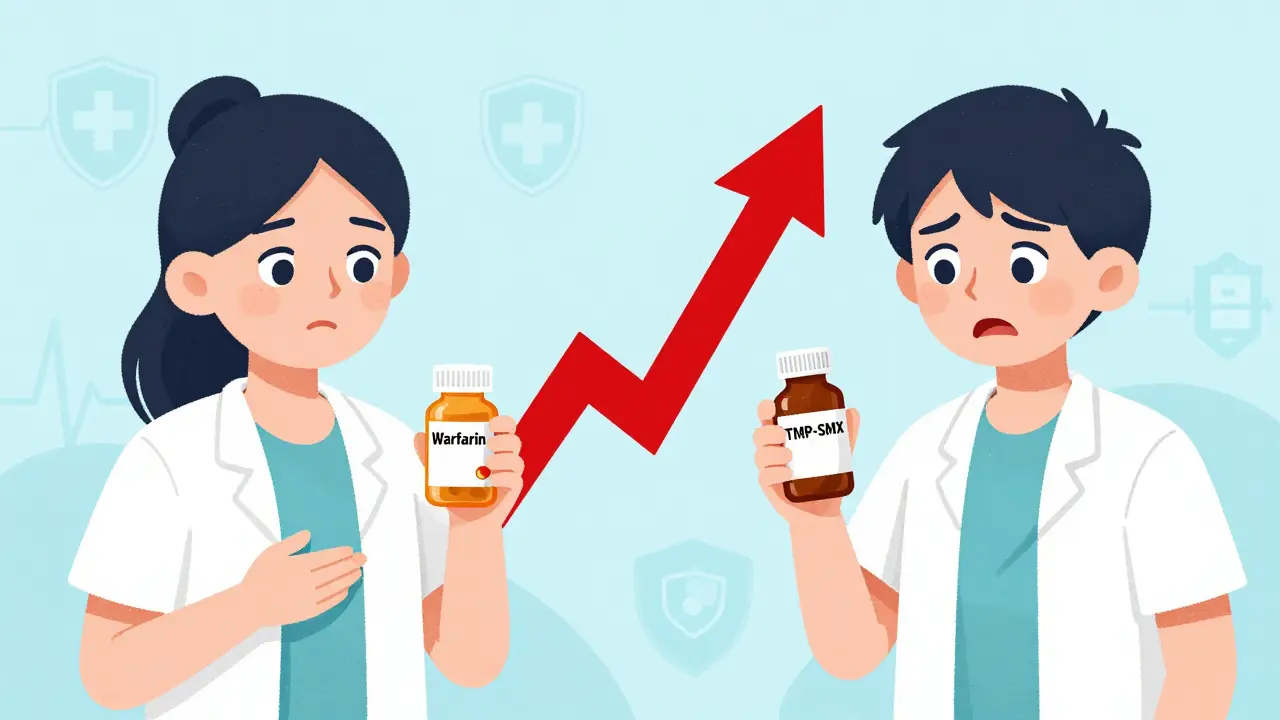
Imagine you’re taking Warfarin, a blood thinner that keeps your heart rhythm steady or prevents clots after surgery. You catch a urinary tract infection, so your doctor prescribes a common antibiotic called Bactrim (generic name: Trimethoprim-Sulfamethoxazole). It seems like a routine fix. But within three days, your body’s clotting ability changes drastically. Your International Normalized Ratio (INR)-the number that tells you how long it takes your blood to clot-skyrockets. Suddenly, a simple cut won’t stop bleeding, or worse, you might experience internal bleeding without obvious signs.
This isn’t a rare side effect. The interaction between Trimethoprim-Sulfamethoxazole (often abbreviated as TMP-SMX) and Warfarin is one of the most dangerous drug combinations in medicine. It doesn’t just slightly raise your INR; it can double or triple it, pushing you into a high-risk zone for hemorrhage. Understanding why this happens, who is most at risk, and exactly what steps to take if you need both medications is critical for your safety.
The Hidden Mechanism: Why These Two Drugs Clash
To understand the danger, we have to look at how these drugs work inside your body. Warfarin works by blocking vitamin K, which your liver needs to make clotting factors. It’s a delicate balance. If you have too much warfarin in your system, your blood becomes too thin. If you have too little, clots can form.
Trimethoprim-Sulfamethoxazole disrupts this balance in three specific ways:
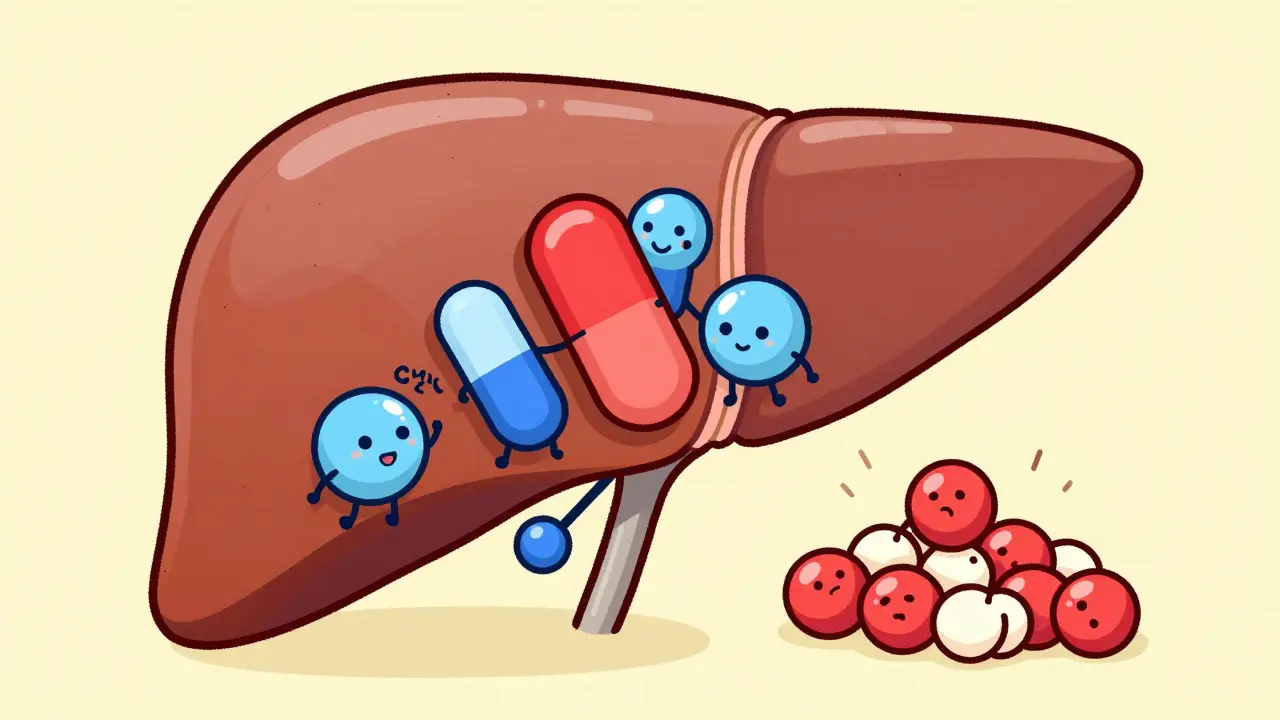
- Blocking Metabolism: This is the biggest factor. Warfarin comes in two forms, S-warfarin and R-warfarin. S-warfarin is the stronger one, responsible for 60-70% of the drug’s effect. Your liver uses an enzyme called CYP2C9 to break down S-warfarin. Trimethoprim blocks this enzyme. Studies show it reduces the clearance of S-warfarin by about 20-30%. Essentially, the antibiotic stops your liver from processing the blood thinner, causing it to build up in your bloodstream.
- Protein Displacement: Warfarin travels through your blood attached to proteins called albumins. About 97-99% of warfarin is bound this way, meaning only a tiny fraction is "free" to act on your clotting system. Sulfamethoxazole also loves to bind to albumin. When it enters the mix, it kicks warfarin off the protein. Now you have more free, active warfarin circulating, which spikes your INR.
- Gut Flora Changes: Your gut bacteria produce vitamin K naturally. Antibiotics kill these bacteria. Less vitamin K means your body has even less counterbalance against the warfarin, further increasing the anticoagulant effect.
- Men vs. Women: Men are approximately 9% more likely to experience significant INR elevation when combining these drugs compared to women.
- Age: Patients over 75 years old are far more sensitive. Their livers process drugs slower, and they often have other health conditions that complicate metabolism.
- Existing Health Conditions: People with liver disease, congestive heart failure, or poor nutrition are at greater risk. Their bodies are already struggling to maintain balance, so adding this interaction tips the scale dangerously.
- Genetics: Your genetic makeup plays a role. Variations in the CYP2C9 gene determine how efficiently you metabolize warfarin. If you have a variant that makes you a "slow metabolizer," adding TMP-SMX can be catastrophic.
- Preemptive Dose Reduction: Before you even take the first antibiotic pill, your doctor may reduce your warfarin dose by 20-30%. This acts as a buffer against the expected spike.
- Frequent Testing: You cannot rely on your usual testing schedule. You should check your INR:
- Baseline (before starting the antibiotic)
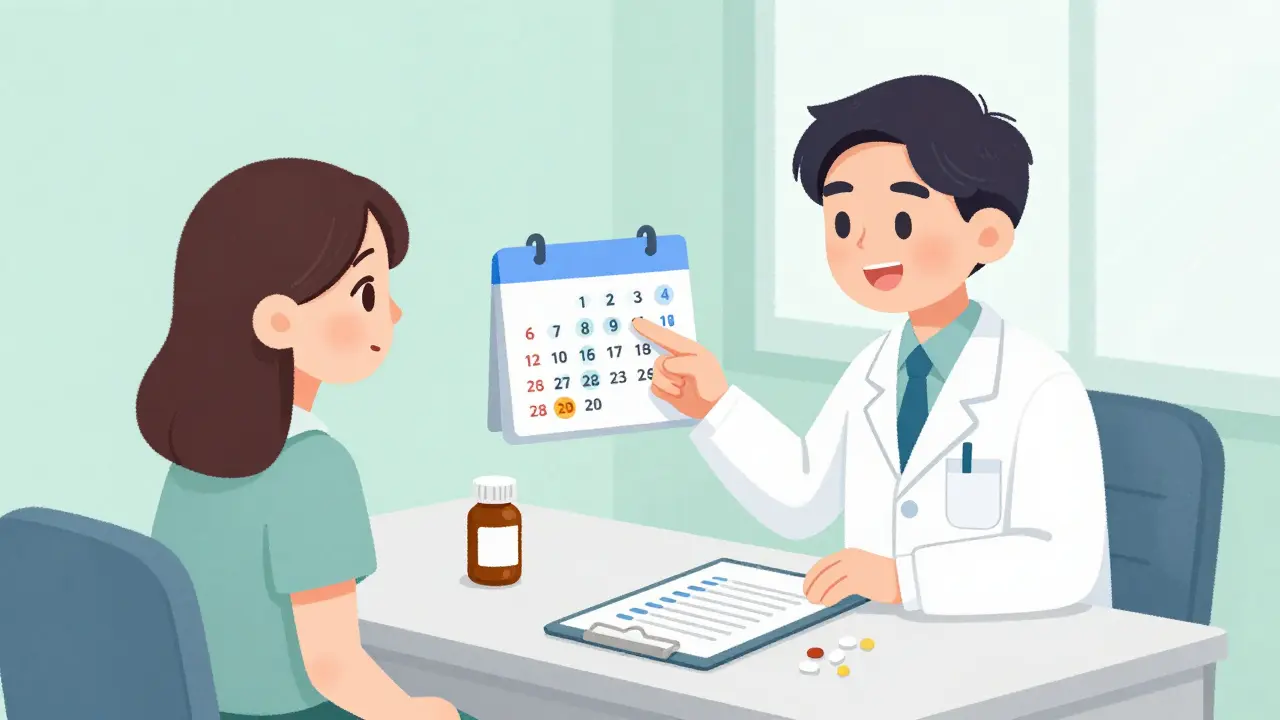
- 48-72 hours after starting the antibiotic
- Every 3-4 days while you are still taking the antibiotic
- Again 2-3 days after finishing the antibiotic course (because the interaction fades slowly)
- Watch for Symptoms: Be hyper-aware of signs of bleeding. These include unusual bruising, nosebleeds that won’t stop, blood in your urine or stool, coughing up blood, or headaches that feel different from normal migraines.
- Never self-medicate: Always tell any doctor or dentist that you are on warfarin before they prescribe anything, including over-the-counter cold medicines or herbal supplements.
- Ask for alternatives: If you have a minor infection, ask if a non-interacting antibiotic like nitrofurantoin or azithromycin is an option.
- Test early and often: If you must take TMP-SMX, expect to test your INR within 2-3 days. Don’t wait for your next scheduled appointment.
- Know the signs: Learn the symptoms of internal bleeding. Early detection saves lives.
The result? A perfect storm. Your body can’t clear the warfarin fast enough, there’s more active drug floating around, and you’re making less vitamin K to offset it. According to data from the FDA Adverse Event Reporting System, drug interactions with warfarin have an 88% higher chance of occurring than expected by chance alone.
How Fast Does It Happen?
You don’t have to wait weeks to see the effects. Because warfarin has a relatively short half-life for its components, the INR elevation typically starts within 36 to 72 hours after you take the first dose of TMP-SMX.
If you are already on a stable dose of warfarin and start the antibiotic, your INR could jump significantly in just two or three days. For example, a patient with a baseline INR of 2.5 might see it rise to 6.0 or higher. An INR above 4.0 is considered high risk for bleeding. Above 5.0, the risk rises sharply. At levels above 10, spontaneous bleeding can occur even without injury.
Who Is Most at Risk?
Not everyone reacts the same way, but certain groups face a much higher danger level. Research analyzing over 70,000 warfarin patients reveals clear patterns:
A study published in the *Journal of Clinical Anticoagulation* found that TMP-SMX increased INR by a mean of 1.8 units compared to baseline. In contrast, a common antibiotic like amoxicillin only raised it by 0.4 units. Fluoroquinolones, such as ciprofloxacin, sat in the middle with a 0.9 unit increase. This shows that not all antibiotics are equal-TMP-SMX is in the "high-risk" category.
What Should You Do If You Need Both?
First, know that doctors do prescribe this combination sometimes. TMP-SMX is very effective for certain infections, like severe UTIs or Pneumocystis pneumonia, where other antibiotics might not work. However, it requires strict management.
If your doctor decides you must take TMP-SMX while on warfarin, here is the standard safety protocol recommended by guidelines from the University of New Mexico Hospital and the American Heart Association:
Dr. Gregory Makris, a hematology expert, has stated that TMP-SMX should be considered contraindicated (avoided) in patients on warfarin unless absolutely necessary. He suggests looking for alternatives first. For a simple urinary tract infection, Nitrofurantoin is often a safer choice because it does not interfere with CYP2C9 or protein binding to the same degree.
Comparison of Common Antibiotics and Warfarin Interaction Risk
| Antibiotic Class | Example Drug | Interaction Severity | Average INR Increase | Primary Mechanism |
|---|---|---|---|---|
| Sulfonamides | Trimethoprim-Sulfamethoxazole (Bactrim) | High | +1.8 units | CYP2C9 inhibition + Protein displacement |
| Fluoroquinolones | Ciprofloxacin | Moderate | +0.9 units | Mild CYP inhibition + Gut flora reduction |
| Penicillins | Amoxicillin | Low | +0.4 units | Gut flora reduction (Vitamin K decrease) |
| Nitrofurans | Nitrofurantoin | Very Low/Negligible | ~0 units | No significant metabolic interference |
Managing an Elevated INR: Emergency Steps
If your INR does spike, panic helps no one. The treatment depends entirely on how high the number is and whether you are bleeding.
INR 4.0 to 5.0 (No Bleeding): The standard approach is to hold (skip) 1 or 2 doses of warfarin and then resume at a lower dose. No extra medication is usually needed. Your doctor will monitor you closely.
INR > 5.0 (Minor Bleeding or No Bleeding): You may need oral Vitamin K (1-2.5 mg). This helps reverse the effect of warfarin by providing the substrate your liver needs to make clotting factors again. It takes about 24 hours to work.
INR > 10 or Severe Bleeding: This is a medical emergency. Treatment involves intravenous (IV) Vitamin K (5-10 mg) plus a transfusion of Fresh Frozen Plasma (FFP) or Prothrombin Complex Concentrate (PCC). These provide immediate clotting factors to stop life-threatening bleeding.
Remember, reversing warfarin too aggressively can swing you back to being prone to clots. The goal is a careful, controlled return to your target range.
Long-Term Outlook and Alternatives
You might wonder, "Why am I still on warfarin when newer drugs exist?" Direct Oral Anticoagulants (DOACs) like apixaban or rivaroxaban are indeed safer regarding drug interactions. They don’t require frequent INR checks and have fewer food restrictions. However, warfarin remains essential for specific patients. If you have a mechanical heart valve, DOACs are not approved for use. There are about 1.2 million people in the U.S. with mechanical valves who must stay on warfarin for life.
Even with this limitation, awareness is improving. Recent studies show that nearly 19% of warfarin patients still receive interacting antibiotics within a 30-day window. This gap in care highlights the need for better communication between pharmacists, primary care doctors, and specialists.
New research is also looking at personalized medicine. Scientists are developing algorithms that combine your age, weight, and genetic markers (like CYP2C9 genotype) to predict exactly how your INR will react to antibiotics. While this technology isn’t fully mainstream yet, it promises a future where drug interactions are predicted and prevented before they happen.
Key Takeaways for Patients
How long does the interaction between Trimethoprim-Sulfamethoxazole and Warfarin last?
The interaction begins within 36-72 hours of starting the antibiotic. After you finish the TMP-SMX course, the inhibitory effect on your liver enzymes gradually wears off. However, your INR can remain elevated for several days to a week after stopping the antibiotic. Therefore, you should continue monitoring your INR every few days until it stabilizes back to your baseline range.
Can I take Bactrim if I am on Warfarin?
It is possible, but it is considered high-risk. Many experts recommend avoiding it if a safer alternative exists. If no alternative works for your infection, you can take it under strict medical supervision. This includes reducing your warfarin dose preemptively and checking your INR frequently (every 2-3 days) during and after treatment.
What are the symptoms of high INR caused by this interaction?
Symptoms of excessive anticoagulation include easy bruising, prolonged bleeding from cuts, nosebleeds, bleeding gums, red or brown urine, black or tarry stools, coughing up blood, severe headaches, dizziness, or weakness. If you experience any of these, seek medical attention immediately.
Why does Trimethoprim affect Warfarin more than other antibiotics?
Trimethoprim specifically inhibits the CYP2C9 enzyme, which is responsible for breaking down the most potent part of warfarin (S-warfarin). Additionally, sulfamethoxazole displaces warfarin from blood proteins. This dual mechanism causes a much sharper rise in active warfarin levels compared to antibiotics that only affect gut bacteria.
Are there genetic tests that can predict this reaction?
Yes. Genetic variations in the CYP2C9 and VKORC1 genes influence how your body processes warfarin. Patients with certain "poor metabolizer" genotypes are at significantly higher risk for severe INR spikes when taking interacting drugs. Pharmacogenetic testing is becoming more available and can help doctors tailor dosing strategies.