You have a prescription for a strong cream to clear up your eczema, but you're worried. You've heard stories about skin getting paper-thin, bruising easily, or developing stretch marks. Is that going to happen to you? The short answer is: probably not, if you follow the rules.
Topical steroids are medications applied directly to the skin to reduce inflammation and treat conditions like eczema, psoriasis, and dermatitis. They are the most commonly prescribed medications by dermatologists for outpatient treatment. When used correctly as directed by healthcare professionals, they are safe and effective treatments with rare side effects. However, misuse, overuse, or long-term use without supervision can lead to complications including skin thinning (atrophy). The key to safety isn't avoiding these drugs; it's understanding how to use them properly.
Key Takeaways
- Skin thinning is a real risk, but it usually happens only when high-potency steroids are used for too long or on sensitive areas.
- Potency matters: Match the strength of the steroid to the severity of the condition and the location on your body.
- Use the "fingertip unit" method to measure the correct amount of medication.
- Apply once daily for stronger steroids; twice daily for milder ones.
- Wait 20-30 minutes between applying moisturizer and the steroid to avoid diluting the medication.
Understanding Potency and Vehicle Types
Not all topical steroids are created equal. They are classified into seven potency categories, ranging from super-potent (Class I) to low-potency (Class VII). Choosing the right class is the first step in preventing adverse effects. For example, the palms of your hands and soles of your feet have thick skin, so they often require higher potency formulations. In contrast, the face, groin, and underarms have thin, delicate skin that requires only mild-potency products to avoid damage.
The form of the medication, known as the vehicle, also impacts its effectiveness. Ointments are the most potent due to their occlusive nature, making them ideal for dry, thickened skin. Creams are next in potency and work well for moist or weeping lesions. Gels and lotions are better suited for flexural areas (like behind the knees) and hair-bearing regions, while foams offer a cosmetically acceptable option for the scalp and body.
| Vehicle Type | Relative Potency | Best For |
|---|---|---|
| Ointment | Highest | Dry, thickened, scaly skin |
| Cream | Moderate-High | Moist or weeping lesions |
| Gel/Lotion | Moderate | Flexural areas, hairy skin |
| Foam | Variable | Scalp, cosmetically sensitive areas |
The Fingertip Unit: Measuring Your Dose
One of the biggest reasons patients experience issues is simply applying the wrong amount. Using too little prolongs the treatment time, which paradoxically increases the risk of side effects because you end up using the steroid for longer than necessary. Using too much increases absorption and local irritation. The standard way to measure this is the fingertip unit (FTU).
An FTU is the amount of ointment or cream squeezed from the tube onto the index finger from the crimp to the distal crease. While there is some variation in standards, one FTU generally equals approximately 0.25 grams. Here is a practical guide for dosing specific body parts:
- One hand (front and back): 1 FTU
- One arm: 3 FTUs
- One leg: 6 FTUs
- One foot: 2 FTUs
If you are treating both arms, you need 6 FTUs total. If you are treating the entire trunk, you typically need around 14-16 FTUs. It sounds complicated, but once you practice it a few times, it becomes second nature. This precision ensures you get the therapeutic benefit without exposing more skin than necessary to the active ingredient.

Application Frequency and Duration Limits
How often should you apply the medication? For super-potent to moderately potent corticosteroids (ranks 1-4), application once daily is sufficient. There is no beneficial evidence for applying these stronger formulations more than once daily; increased frequency only raises the risk of adverse effects. For potent to low-potency formulations (ranks 5-7), twice-daily application is recommended.
Duration is just as critical as frequency. High-potency steroids should generally not be administered for longer than two weeks without medical review. Total treatment duration should not exceed two to four weeks regardless of potency. If your condition persists beyond this window, it’s time to see your doctor to adjust the strategy rather than continuing the same regimen indefinitely. A common protocol is "step-down therapy": using a strong topical steroid for a few weeks to get symptoms under control, then stepping down to a lower strength steroid for maintenance.
Minimizing Skin Thinning Risks
Skin atrophy, or thinning, is the primary concern for many users. It occurs when the steroid suppresses collagen production in the dermis. To minimize this risk, follow these specific guidelines:
- Avoid Sensitive Areas with Strong Steroids: Only use mild-potency products on the face (especially eyelids), groin, and underarms. Stronger formulations belong on thicker skin like the back, legs, or arms.
- Wash Hands: Wash your hands before and after application to prevent accidental exposure to eyes or mucous membranes.
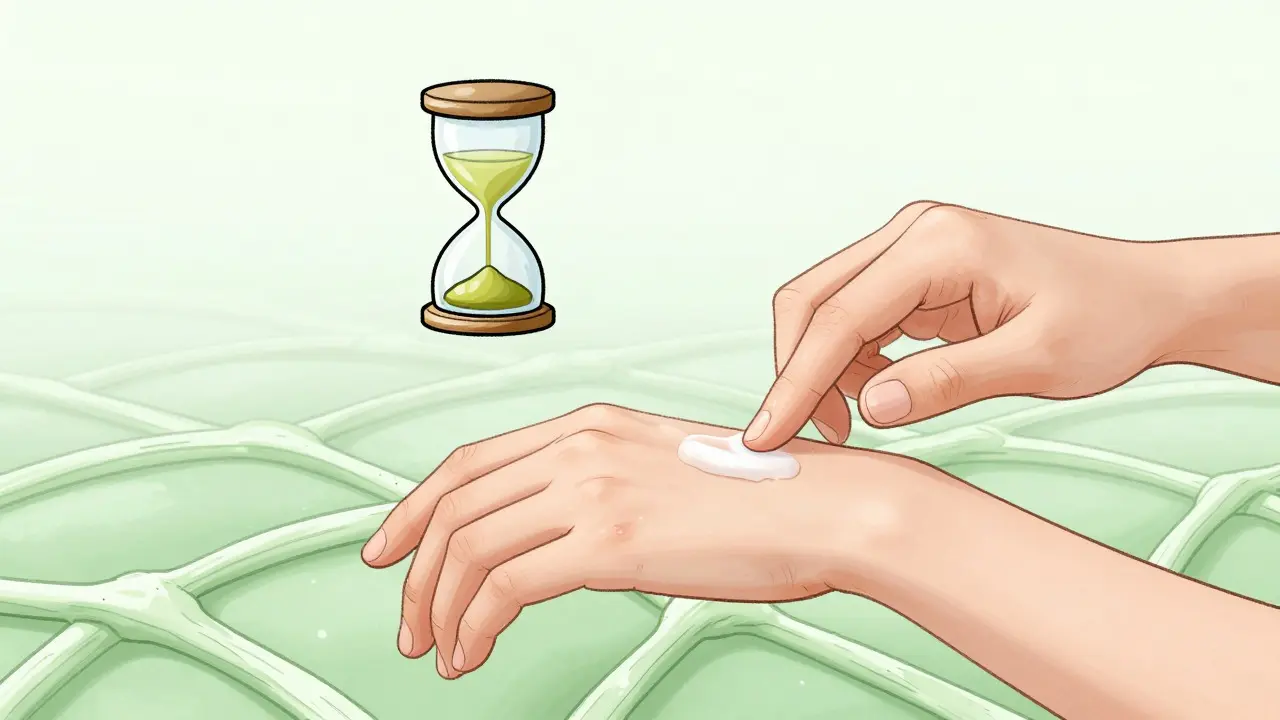
- Spacing with Moisturizers: If you use an emollient (moisturizer) alongside your steroid, wait 20-30 minutes between applications. Applying them together can dilute the steroid, reducing its effectiveness and potentially leading you to use more of it later.
- Monitor for Changes: Look for signs of striae (stretch marks), easy bruising, or visible blood vessels under the skin. These are early indicators of atrophy.
Facial application requires special caution. Prolonged use of steroids on the face can cause perioral dermatitis (a red rash around the mouth) or acne-like eruptions. Around the eyes, prolonged use can contribute to cataracts or glaucoma, so always keep the product away from the eye area unless specifically instructed otherwise by a specialist.
When to See a Doctor
While topical steroids are safe for most people when used correctly, certain situations require professional oversight. If you are self-treating chronic eczema with high-potency steroids for months, you are at high risk for withdrawal reactions and significant skin damage. Patients who follow step-down therapy protocols typically experience effective symptom control without significant side effects. However, if you notice your skin becoming thinner, redder, or more sensitive after stopping the steroid, you may be experiencing topical steroid withdrawal. This is a sign that the treatment plan needs adjustment, not that you should continue the current regimen.
Non-steroidal alternatives like calcineurin inhibitors (e.g., tacrolimus) or phosphodiesterase-4 inhibitors (e.g., crisaborole) are increasingly prescribed for facial and sensitive area treatment to avoid skin thinning entirely. While cost can be a barrier, these options provide a valuable alternative for long-term management in delicate areas.
Frequently Asked Questions
Can topical steroids cause permanent skin damage?
In most cases, skin thinning is reversible if caught early. However, severe or prolonged atrophy can lead to permanent striae (stretch marks) or telangiectasia (visible blood vessels). Adhering to potency limits and duration guidelines significantly reduces the risk of permanent changes.
Is it safer to use a strong steroid on a small area or a weak steroid on a large area?
Generally, it is safer to use a potent topical steroid on a limited area than to use systemic steroids. Skin cells metabolize corticosteroids before significant absorption occurs, reducing systemic risks. However, for large surface areas, doctors often prefer moderate potency to balance efficacy and safety.
How do I know if my eczema flare is bad enough for a high-potency steroid?
This is best determined by a healthcare provider. Generally, thick, lichenified (leathery) plaques on the arms or legs may require higher potency. Thin, red patches on the face or neck usually require mild potency. If unsure, start with what was previously prescribed or consult your GP or dermatologist.
Can I use topical steroids during pregnancy?
Yes, topical steroids are generally considered safe during pregnancy, especially low-to-mid potency formulations. Systemic absorption is minimal. Always inform your obstetrician and dermatologist to tailor the treatment plan to your specific trimester and condition severity.
What should I do if I accidentally put steroid cream in my eye?
Rinse the eye gently with water. One-time accidental exposure is rarely harmful. However, repeated exposure to the eyelids can increase intraocular pressure, leading to glaucoma or cataracts. Avoid applying creams near the eyes unless prescribed specifically for ocular use.