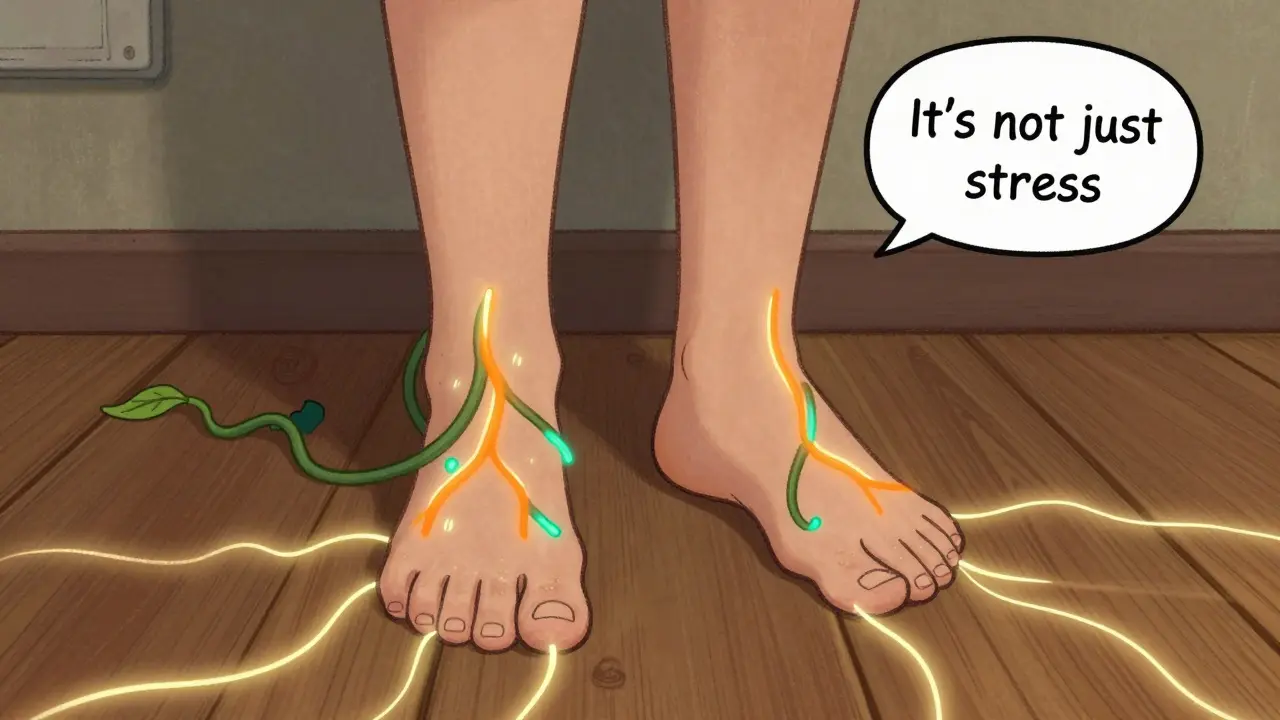
When you start a new medication, you expect side effects like a headache or upset stomach. But what about tingling in your toes or numbness in your fingers? These aren’t just random annoyances-they could be early signs of something more serious: medication-induced neuropathy. It’s not rare. In fact, up to 60% of people on certain cancer drugs experience it. And yet, most people ignore it until it’s too late.
What Does Medication-Induced Neuropathy Actually Feel Like?
It starts quietly. A faint buzzing in your left foot. A loss of feeling when you button your shirt. A cold sensation in your fingertips that doesn’t go away. These aren’t just "bad circulation" or "stress." They’re signals from your nerves saying something’s wrong. This is called peripheral neuropathy-damage to the nerves outside your brain and spinal cord. When it’s caused by drugs, it’s known as drug-induced peripheral neuropathy (DIPN). The symptoms follow a pattern: they begin in your feet and hands, then creep up like a glove or stocking. That’s why doctors call it the "glove and stocking" distribution. You might feel:- Tingling (like pins and needles)
- Numbness (like your limb is asleep)
- Burning or shooting pain
- Loss of balance or coordination
- Extreme sensitivity to touch
Which Medications Cause This?
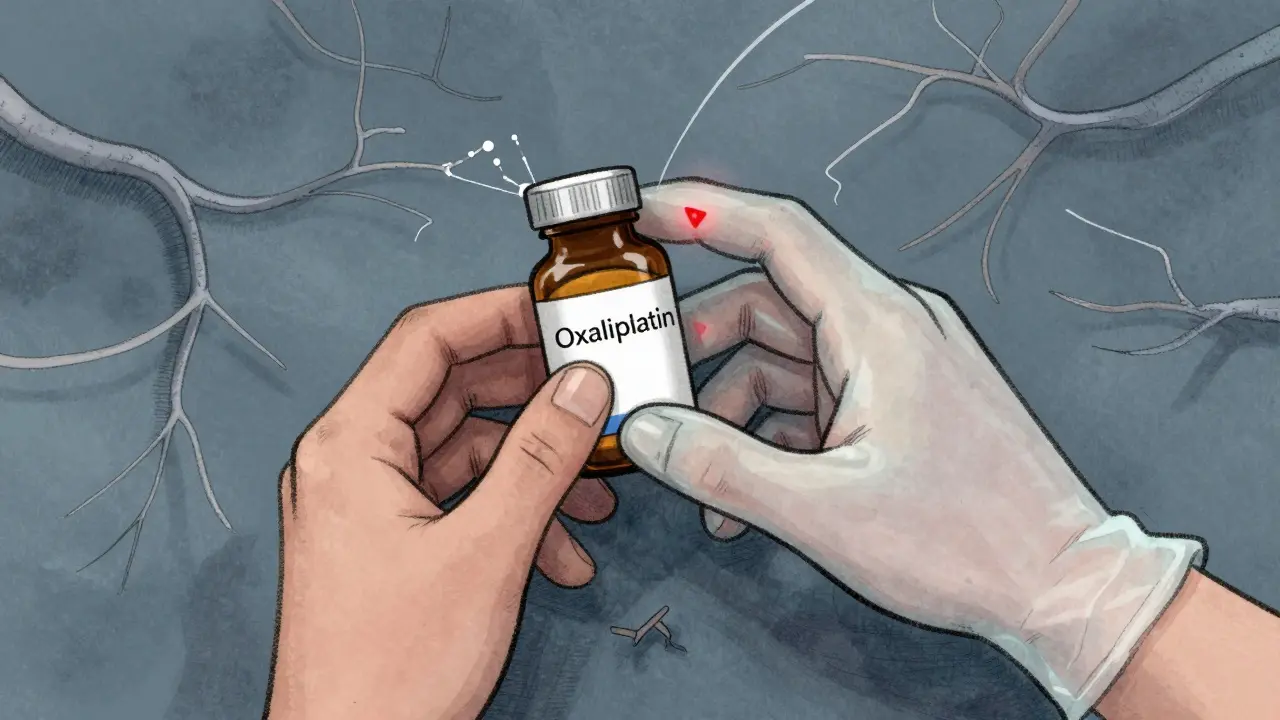
Not all drugs cause neuropathy. But some do-and often, they’re essential. Here are the big ones:- Chemotherapy drugs: Oxaliplatin (used for colon cancer) causes tingling in 9 out of 10 patients during treatment. Paclitaxel (for breast cancer) hits 60-70%. These aren’t side effects you can ignore-they’re built into the treatment risk.
- Antibiotics: Isoniazid (for tuberculosis) causes neuropathy in 10-20% of people. Metronidazole (for infections) can do the same after months of use.
- Antivirals: Stavudine (an older HIV drug) affects up to one-third of users.
- Heart medications: Amiodarone (for irregular heartbeat) can damage nerves over time, especially in long-term users.
- Seizure meds: Phenytoin has been linked to nerve damage, particularly if blood levels get too high.
Why Does This Happen?
Different drugs wreck nerves in different ways. It’s not random-it’s science.- Oxaliplatin and cisplatin mess with sodium channels in nerves, making them fire erratically. That’s why you get sudden, sharp tingling when you touch something cold.
- Paclitaxel and vincristine block the internal transport system of nerves. Think of it like a highway system where trucks (nutrients) can’t move. The nerve starves from the inside out.
- Isoniazid depletes vitamin B6, which nerves need to function. That’s why doctors give B6 supplements with this drug.
- Amiodarone damages the protective coating around nerves (myelin), slowing down signals like a frayed wire.
Early Detection Saves Nerves
Here’s the good news: if caught early, this damage can often be stopped-or even reversed. Dr. Norman Latov from Weill Cornell Medicine says it plainly: "Early recognition of mild sensory symptoms is critical because many drug-induced neuropathies are reversible if the offending agent is discontinued promptly." Studies show that patients who report tingling or numbness at the first sign have a 73% chance of full or near-full recovery within six months after adjusting their medication. But here’s the problem: 52% of patients wait three months or longer before telling their doctor. Why? Because they think it’s normal. "I thought it was just stress," one patient wrote on Inspire.com. Another said, "My oncologist said it was expected, so I didn’t push back." That’s the trap. What’s "expected" isn’t always harmless. Grade 1 neuropathy (the mildest level) means symptoms are mild and don’t interfere with daily life. But that’s exactly when you need to act-before it climbs to Grade 2 or 3, where you lose function.What Should You Do If You Notice Symptoms?
Don’t wait. Don’t assume it’ll go away. Take action:- Track it. Write down when it started, where it is, how bad it is (scale of 1-10), and what makes it better or worse.
- Call your doctor. Don’t wait for your next appointment. Say: "I’m having tingling/numbness in my hands/feet since I started [medication]. I’m worried it might be nerve damage."
- Ask about alternatives. Is there another drug with less nerve toxicity? Can your dose be lowered? Can you take breaks between cycles?
- Request testing. Ask for a simple neurological exam or a tool like the Total Neuropathy Score. Some clinics now use SudoScan-a quick, non-invasive device that measures nerve function in your palms and soles.
- Protect yourself. If your feet are numb, check them daily for cuts or blisters. Wear shoes indoors. Use handrails. Install nightlights. Falls are a real risk.
It’s Not Just About Stopping the Drug
You might think the only solution is to quit the medication. But that’s not always possible-or safe. For cancer patients, stopping chemo could mean the difference between life and death. The goal isn’t always to stop-it’s to manage. Studies show that 60-70% of patients can continue essential drugs with adjusted dosing. For example, doctors might shorten infusion times, lower the dose, or add breaks between cycles. Some even use cooling gloves and socks during oxaliplatin treatment to reduce nerve exposure. There’s also promising research on neuroprotective agents. A recent trial found acetyl-L-carnitine reduced paclitaxel-induced neuropathy severity by 40%. Vitamin B6 helps with isoniazid. But don’t self-prescribe supplements-talk to your doctor. Some can interfere with treatment.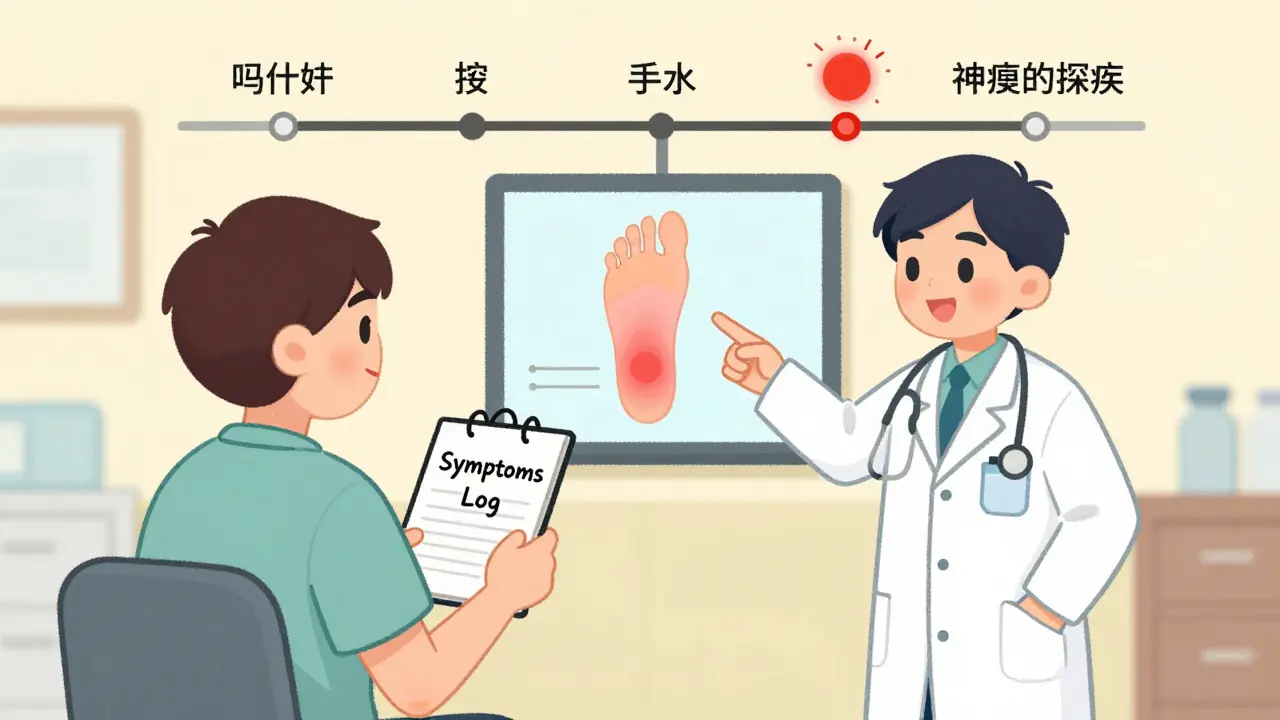
The Bigger Picture
Over 800,000 Americans have drug-induced neuropathy. That’s a lot of people living with pain, balance issues, and fear. And it’s growing. Chemotherapy use is projected to rise 45% by 2030. If we don’t get better at spotting these early signs, we’re headed for a hidden epidemic. Right now, only 35% of oncology clinics use formal screening tools-even though guidelines have recommended them since 2021. Academic hospitals are better at it (58% use them), but community clinics? Only 22%. That’s a gap in care that costs people their mobility, their independence, and their quality of life.You’re Not Alone-But You Have to Speak Up
If you’re on a medication and notice tingling or numbness, you’re not imagining it. You’re not overreacting. You’re the first line of defense against permanent nerve damage. The system isn’t perfect. Doctors are rushed. Patients are scared. But your voice matters. Document your symptoms. Ask questions. Push for answers. And if your doctor brushes you off, get a second opinion. Mild symptoms today can become disabling problems tomorrow. But they can also be stopped-before they take control.Can medication-induced tingling and numbness go away on its own?
Sometimes, yes-but only if the drug is stopped or adjusted early. If you keep taking the medication, symptoms often get worse. Studies show that 73% of people who acted at the first sign of tingling had full or near-complete recovery within six months. Waiting too long increases the chance of permanent damage.
Is neuropathy from statins real, or just a myth?
The evidence is weak. While some people report numbness after starting statins, large studies haven’t confirmed a direct link. Experts believe it’s more likely that people with other risk factors-like diabetes, aging, or vitamin deficiencies-are more likely to develop neuropathy and mistakenly blame the statin. Don’t stop your statin without talking to your doctor.
What tests can confirm if my symptoms are from a medication?
There’s no single blood test. Doctors rely on your symptom history, a neurological exam, and tools like the Total Neuropathy Score or SudoScan (a device that measures nerve function in your skin). Nerve conduction studies can show reduced signals in the sural nerve, which is often the first to be affected. These tests help rule out other causes like diabetes or vitamin deficiency.
Can I still take my cancer drug if I have tingling?
Often, yes. Many patients continue treatment with dose adjustments, longer breaks between cycles, or protective strategies like cooling gloves. The goal isn’t always to stop-it’s to balance fighting the disease with protecting your nerves. Your oncologist can help you find that balance.
How long does it take for symptoms to improve after stopping the drug?
It varies. For some, symptoms improve within weeks. For others, especially with platinum-based chemo like oxaliplatin, they can get worse for up to three months after stopping-then slowly improve over 6-12 months. Full recovery isn’t guaranteed, but early action gives you the best shot.
Are there supplements that help with medication-induced neuropathy?
Vitamin B6 helps with isoniazid-induced neuropathy. Acetyl-L-carnitine showed promise in trials for paclitaxel. But many supplements (like alpha-lipoic acid) have mixed results. Always talk to your doctor before taking anything-some can interfere with your treatment or cause side effects.
What can I do at home to protect myself if I have numbness?
Check your feet daily for cuts, blisters, or redness. Wear shoes-even indoors. Use handrails on stairs. Remove tripping hazards. Install nightlights. Avoid hot baths or heating pads-you might not feel burns. Keep your skin moisturized to prevent cracks. These steps reduce your risk of serious injury.
15 Responses
Been on oxaliplatin for 8 months now. First tingling in my toes? I thought it was just my socks. Then I couldn't button my shirt. Called my oncologist the next day. They adjusted my dose and gave me cooling gloves. Best decision I ever made. Don't ignore it. Your feet will thank you.
Also, the SudoScan thing? Game changer. Quick, no needles. My clinic just got one last month.
YESSSS this is so important!!! 😍 I almost didn't say anything about my numb fingers because my nurse said 'it's common'... but I pushed back and we switched meds. Now I can hold my coffee cup without dropping it 🙌 Don't let anyone gaslight you out of your own body!!
nerve damage bad
drugs do it
you feel it
say somethin
or lose your feet
It's fascinating how our bodies are these delicate bio-electrical systems, and drugs just... disrupt the signal. Like a corrupted data packet in a neural network. We treat symptoms like bugs, but the real issue is the architecture of toxicity. Why aren't we designing drugs that don't break the wires?
Also, I use acetyl-L-carnitine. Feels better. Not a cure, but a buffer.
🪄
People who ignore early neuropathy symptoms are literally gambling with their mobility. It’s not ‘stress.’ It’s not ‘aging.’ It’s your nerves screaming. If you wait until you can’t walk, don’t come crying to me when you’re in a wheelchair. You had chances. You blew them.
And yes, statin skeptics? You’re probably just diabetic. Stop blaming pills for your poor choices.
My doc said oxaliplatin tingling was 'normal' so I didn't say anything for 3 months. Turns out it was grade 2 by then. I'm still recovering. Just... please, if you feel weird, say something. Even if you think you're being dramatic. Better safe than sorry. I wish I'd known sooner.
Thanks for posting this.
Oh look, another article telling people to ‘speak up.’ How novel. The real problem? Doctors who don’t listen. I’ve had three oncologists tell me ‘it’s expected’ while ignoring my symptoms. So now I bring printed research, a symptom log, and a lawyer’s name. If you’re not prepared to fight, you’re not getting care-you’re getting dismissed.
And yes, I know exactly what you’re thinking. You’re wrong.
Wait, so if I have tingling from my statin, I shouldn't stop it? But what if I'm not diabetic? What if I'm 32 and healthy? I just started it last month and now my hands feel like I've been holding ice cubes for hours. Are you saying I should just suffer? What about my quality of life? Are you even listening to yourself?
Also, my cousin's aunt had this and now she uses a cane. So yeah, I'm worried. Don't tell me it's 'probably not the statin.' I don't care what your studies say.
India has very high rates of vitamin B12 deficiency-this makes neuropathy risk worse with drugs like metronidazole or isoniazid. Many patients here are not tested for deficiencies before starting long-term meds. We need mandatory screening protocols, especially in rural clinics. This isn’t just a Western problem.
Also, cooling gloves? We don’t have them here. But we have ice packs and cotton socks. Sometimes, simple works.
My mom had chemo for breast cancer. She started having numb toes and said nothing for 6 weeks. By the time she told the doctor, she was stumbling in the house. We had to install grab bars. She’s 72 now and still has balance issues. Don’t wait. Don’t be polite. Say: ‘I need help now.’ Your life depends on it.
Oh sweetie, you think this is bad? Try being a nurse in Mumbai who has to explain to a diabetic patient with stage 3 neuropathy that their TB meds are making it worse… while they’re also hungry and have no insurance. Your ‘early detection’ is a luxury. Not everyone gets to ‘call their doctor.’
But hey, at least you have a smartphone.
Had paclitaxel last year. Tingling in my fingers on day 3. Logged it in my phone. Showed my oncologist the timeline. They lowered my dose by 20% and added a week break. No loss of treatment efficacy. No permanent damage. Just spoke up early. Seriously, keep a log. It’s not hard. It saves your hands.
And yeah, the acetyl-L-carnitine helped. Took it for 3 months after chemo. Felt better.
I can’t believe people still think this is ‘normal’!!!
MY GRANDMA LOST HER FEET BECAUSE SHE DIDN’T SAY ANYTHING!!!
AND NOW SHE’S IN A WHEELCHAIR AND CAN’T HOLD HER GRANDKIDS!!!
IT’S NOT ‘JUST SIDE EFFECTS’-IT’S A WAR ON YOUR NERVES!!!
WHY AREN’T WE TALKING ABOUT THIS IN EVERY CLINIC???
WE NEED A MOVEMENT!!!
Let me be very clear: if you're experiencing tingling or numbness while on medication, you are not being dramatic. You are not overreacting. You are not being difficult. You are being observant, and you are being responsible. Your body is giving you data. Ignore it at your peril. And if your doctor doesn't take you seriously? Get a second opinion. And a third. And write a letter to the hospital board. This is not a minor issue. It's a silent crisis-and it's preventable. Don't let your silence become someone else's tragedy.
Also, for anyone asking about statins: I had mild numbness too. Got tested. Turned out I had low B12. Took supplements, numbness went away in 3 weeks. Statin was fine. So don’t just assume it’s the pill. But also don’t assume it’s nothing. Get checked.
And yes, I still take my statin. My heart thanks me.