Have you ever stared at a prescription label and wondered if that tiny note about food actually matters? It feels like small print designed to confuse you, but it’s one of the most critical parts of your treatment plan. Whether you take your pills with a full breakfast or right after finishing dinner can change how much of the drug reaches your bloodstream, how fast it works, and whether you’ll feel sick afterwards. Getting this wrong doesn’t just make the medicine less effective; in some cases, it can turn a safe dose into a toxic one.
Here is the bottom line: prescription medicine instructions regarding food are not suggestions-they are pharmacological requirements based on how your gut processes chemicals. About 40% of all new drugs approved by the FDA now come with specific food-related directions, up from 62% in 2018, showing that scientists understand this better than ever before. If you ignore these labels, you might be fighting a losing battle against your own digestion.
Why Food Changes How Drugs Work
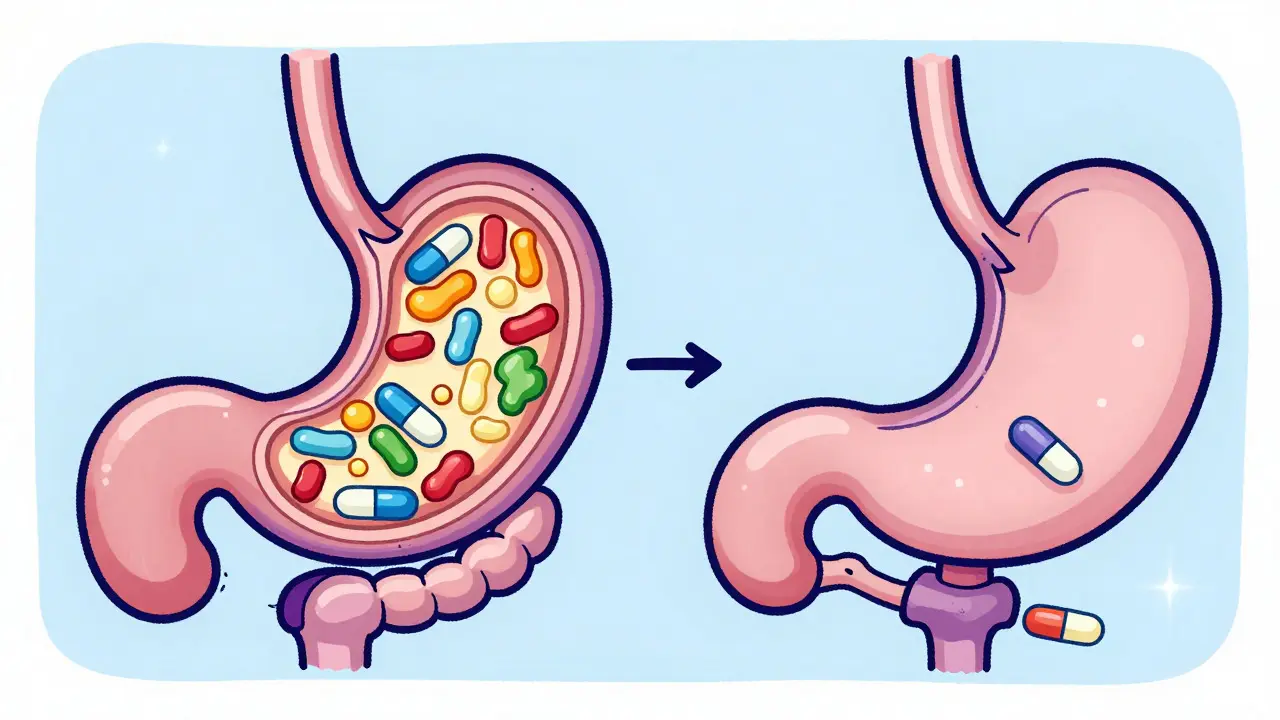
Your stomach isn’t just a bag for holding food; it’s a chemical factory that changes its environment based on what you eat. When you consume a meal, your body produces more gastric acid, releases bile, and speeds up or slows down movement through the intestines. These physical changes act like gates that either open wide for certain drugs or close them off completely.
For example, some medications need an acidic environment to dissolve properly. If you eat something that neutralizes your stomach acid, those drugs might pass through your system without being absorbed at all. On the other hand, high-fat meals can slow down how quickly your stomach empties. This gives the drug more time to break down and enter your blood steadily, which is great for consistency but bad if you need immediate relief. A 2015 study found that for common painkillers like ibuprofen and aspirin, taking them with food delayed their peak effect by 1.3 to 2.8 times longer than taking them on an empty stomach.
Medications That Need Food to Be Safe
Some drugs are harsh on the lining of your stomach. Taking them on an empty stomach is like pouring lemon juice directly onto raw skin-it burns. For these medications, food acts as a protective cushion.
- NSAIDs (Non-Steroidal Anti-Inflammatory Drugs): Ibuprofen, naproxen, and aspirin are classic examples. They reduce inflammation but also strip away the natural mucus layer that protects your stomach. The UK National Health Service explicitly advises taking these after eating to minimize the risk of ulcers and irritation. If you have a history of gastritis, this step is non-negotiable.
- Certain Antibiotics: Amoxicillin/clavulanate (often known by the brand name Augmentin) is notorious for causing nausea. A 2021 study showed that taking it with food reduced the incidence of nausea by 20%. Nitrofurantoin and rifabutin also work better when taken alongside a meal because it helps extend the time the drug stays active in your system.
- HIV Medications: Some antiretroviral drugs, like ritonavir, are very likely to cause severe nausea if taken alone. Patients report that pairing these with a small, high-fat snack reduces nausea significantly. In fact, self-reported data from HIV patient communities shows that nausea dropped from 45% to 18% when patients added a small fatty snack to their routine.
When You Must Take Meds on an Empty Stomach
This is where things get tricky. "Empty stomach" usually means no food for at least one hour before taking the pill and waiting two hours after before eating again. Why such strict timing? Because food ingredients often bind to the drug molecules, preventing them from entering your blood.
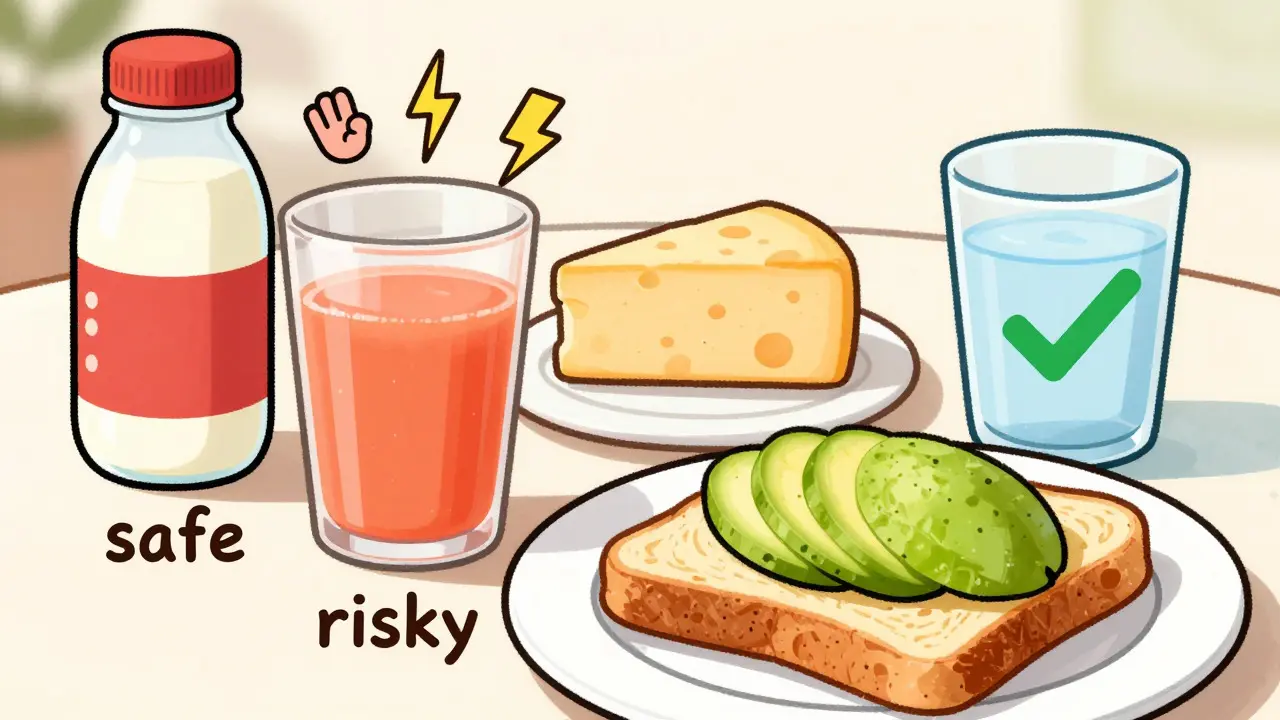
- Tetracycline Antibiotics: Drugs like doxycycline bind tightly to calcium. Milk, cheese, yogurt, and even fortified cereals contain calcium. If you take doxycycline with milk, up to 50% of the drug can be blocked from working. You need plain water and a clear stomach.
- Levothyroxine: Used for hypothyroidism, this hormone replacement requires precision. Food can reduce its absorption by 20% to 55%. Most endocrinologists recommend taking it 30 to 60 minutes before breakfast, with only water allowed during that window. Coffee, tea, and supplements should wait until after you’ve eaten.
- Didanosine: This older HIV medication is destroyed by stomach acid. To keep it intact long enough to be absorbed, it must be taken when the stomach is relatively quiet and acidic, which happens on an empty stomach.
The Gray Area: High-Fat Meals and Specific Fruits
Not all food is created equal. Sometimes the *type* of food matters more than just having *some* food.
High-Fat Meals: Certain drugs, particularly lipid-soluble ones, absorb better when there is fat present. For example, saquinavir (an HIV protease inhibitor) sees its absorption increase by up to 40% when taken with a high-fat meal. If your label says "take with a high-fat meal," a piece of toast won't cut it. You need avocado, nuts, eggs, or dairy.
Grapefruit Juice: This fruit contains compounds that inhibit CYP3A4, an enzyme in your intestines that breaks down many drugs. Drinking grapefruit juice can cause drug levels to spike dangerously high. It’s not just about food; it’s about specific chemical interactions. Always check if your medication interacts with citrus juices, as this is a common but dangerous oversight.
Practical Strategies to Get It Right
Knowing the science is one thing; remembering it while rushing out the door is another. Here are practical ways to ensure you follow the label correctly every single day.
- Use Color-Coding: Many pharmacies now use color-coded stickers or labels. Red often means "empty stomach," green means "with food," and yellow might indicate "high-fat meal." Ask your pharmacist if they offer this service. It turns abstract instructions into visual cues.
- Set Specific Alarms: Don’t just set a reminder for "take meds." Set alarms for "1 hour before breakfast" or "2 hours after dinner." Precision prevents guesswork.
- Keep Water Handy: Dehydration can affect how pills dissolve. Keep a bottle of water next to your medication box. For empty-stomach meds, drink a full glass of water to help move the pill down without food interference.
- Ask the "Why": Studies show that patients who understand *why* they need to take a med with food are 44% more likely to comply. If you don’t know why, ask your pharmacist. Knowing that milk blocks doxycycline makes it much easier to remember to skip the latte.
Common Mistakes to Avoid
Even careful patients make errors. Here are the most frequent pitfalls and how to fix them.
| Medication Type | Common Mistake | Correct Action | Potential Consequence |
|---|---|---|---|
| Doxycycline | Taking with milk or yogurt | Take with water, 1 hour before or 2 hours after food | Reduced antibiotic effectiveness, treatment failure |
| Ibuprofen | Taking on an empty stomach daily | Take with a meal or snack | Stomach irritation, increased ulcer risk |
| Levothyroxine | Taking with coffee or calcium supplements | Take first thing in morning, wait 30-60 mins before eating/drinking | Inconsistent thyroid levels, fatigue or weight gain |
| Saquinavir | Taking with low-fat diet | Take with a high-fat meal | Sub-therapeutic drug levels, viral resistance |
Another subtle mistake is assuming "with food" means a heavy meal. For many drugs, a small snack like a banana or a few crackers is sufficient to protect the stomach without significantly delaying absorption. However, if the label specifies a "high-fat meal," a cracker won’t do. Read the fine print carefully.
Frequently Asked Questions
What does "take on an empty stomach" exactly mean?
It typically means taking the medication 1 hour before a meal or at least 2 hours after a meal. During this time, you should avoid eating solid food. Small sips of water are usually acceptable unless specified otherwise.
Can I take my pills with milk if the label says "with food"?
Be cautious. While milk counts as food, it contains calcium which binds to certain antibiotics like tetracyclines and quinolones. Unless your pharmacist confirms it’s safe, stick to non-dairy foods like bread, fruit, or vegetables for general "with food" instructions.
Does grapefruit juice interact with all medications?
No, but it interacts with a significant number of drugs, including statins, some blood pressure medications, and immunosuppressants. It inhibits enzymes that break down drugs, leading to higher concentrations in your blood. Always check with your pharmacist if you enjoy grapefruit juice regularly.
Is it okay to take multiple medications with different food requirements at once?
It depends. If one drug needs an empty stomach and another needs food, you generally cannot take them together. You may need to stagger their times. For example, take the empty-stomach drug first, wait the required buffer period, then eat and take the second drug. Your pharmacist can create a schedule that minimizes conflicts.
How long does it take for food to leave the stomach?
Gastric emptying varies, but a standard mixed meal takes about 2 to 5 hours to fully leave the stomach. High-fat meals take longer, potentially up to 6 hours. This is why "2 hours after eating" is a common guideline for empty-stomach dosing-it ensures the bulk of the previous meal has moved on.