Urinary Tract Infections: Causes, Treatments, and What You Need to Know
When you feel that burning sensation when you pee, or keep running to the bathroom with little result, you’re likely dealing with a urinary tract infection, a bacterial infection that affects any part of the urinary system, including the bladder, urethra, kidneys, or ureters. Also known as UTI, it’s one of the most common infections people experience—especially women, who are up to 30 times more likely to get one than men. It’s not just about discomfort; untreated UTIs can spread to the kidneys and cause serious damage.
Antibiotics, the standard treatment for bacterial UTIs, are often the first step—but not all are the same. Some, like nitrofurantoin or trimethoprim-sulfamethoxazole, target the most common bacteria like E. coli. Others, like ciprofloxacin or fosfomycin, are used when infections are resistant or more severe. But antibiotics aren’t the whole story. Many people don’t realize that urinary tract health, how well your body resists and recovers from infection depends on hydration, bathroom habits, and even what you wear. Tight clothing, holding urine too long, or wiping backward can all increase your risk.
And while UTIs are often seen as a simple, one-time problem, they can become recurring. About 25% of women who get one UTI will have another within six months. Why? Sometimes it’s anatomical. Sometimes it’s antibiotic resistance. Other times, it’s something hidden—like a kidney stone, diabetes, or even a structural issue in the urinary tract. That’s why understanding the full picture matters. You need to know when to push for more testing, when to ask about preventive options like low-dose antibiotics or cranberry supplements (which help some, but not all), and when to rule out something more serious.
What you’ll find here isn’t just a list of articles. It’s a collection of real, practical insights—from how certain medications can trigger UTI-like symptoms, to why generic antibiotics sometimes fail due to inactive ingredients, to how gut health might influence your urinary system. These aren’t theory pieces. They’re written for people who’ve been through it: the late-night bathroom runs, the fear of another flare-up, the frustration when a treatment doesn’t work. We’re not here to scare you. We’re here to give you the clear, no-fluff facts so you can talk to your doctor with confidence—and get real relief.
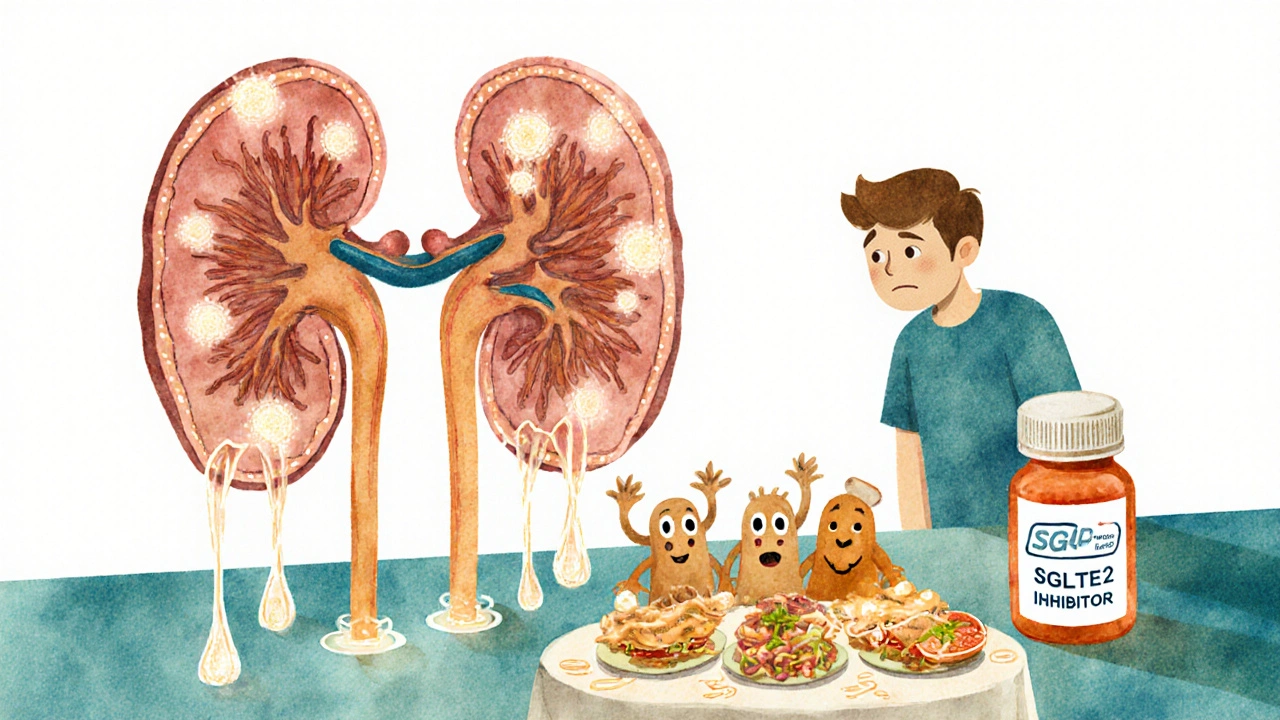
SGLT2 Inhibitors and Yeast Infections: What You Need to Know About Urinary Complications
- Laura Ledas
- Nov, 26 2025
SGLT2 inhibitors help lower blood sugar and protect the heart, but they increase the risk of yeast infections and serious urinary tract complications. Learn who’s most at risk and how to stay safe.
Learn More