SGLT2 Inhibitors: How They Work, Who They Help, and What You Need to Know
When you hear SGLT2 inhibitors, a class of oral diabetes medications that lower blood sugar by making the kidneys remove glucose through urine. Also known as gliflozins, they’re not just sugar-lowering pills—they’re one of the few diabetes drugs proven to protect the heart and kidneys, too. Unlike older meds that force your body to make more insulin, SGLT2 inhibitors work differently: they block a protein in your kidneys called SGLT2, which normally reabsorbs sugar back into your blood. When that’s turned off, extra glucose flows out with your pee. It’s not magic—it’s biology. And it’s why these drugs don’t usually cause low blood sugar on their own.
Three names come up most often: empagliflozin, a drug shown in trials to cut heart failure hospitalizations by 30% in people with type 2 diabetes and heart disease, dapagliflozin, which reduces kidney decline in patients with chronic kidney disease, even without diabetes, and canagliflozin, linked to lower risk of heart attack and stroke in high-risk patients. These aren’t just pills—they’re tools that change disease trajectories. Many people on these drugs lose a few pounds, see lower blood pressure, and feel less bloated because they’re flushing out extra fluid. That’s why doctors are now prescribing them for heart failure and kidney disease, even in folks who don’t have diabetes.
But they’re not without trade-offs. Because they make you pee out sugar, you might get more yeast infections or urinary tract infections. Dehydration is a risk if you’re not drinking enough, especially in hot weather or during exercise. And while rare, there’s a small chance of a serious condition called ketoacidosis—even when blood sugar looks normal. That’s why it’s important to know your body and talk to your doctor before starting or stopping. These drugs work best when paired with lifestyle changes, not as a substitute for them.
What you’ll find in the posts below isn’t just a list of drug facts. It’s real-world insights from people managing chronic conditions, side effects, and complex medication mixes. You’ll see how SGLT2 inhibitors interact with other drugs, how generics affect cost and access, and why some patients benefit more than others. Whether you’re newly prescribed one of these meds, considering switching, or just trying to understand why your doctor recommended it, this collection gives you the clear, no-fluff answers you need.
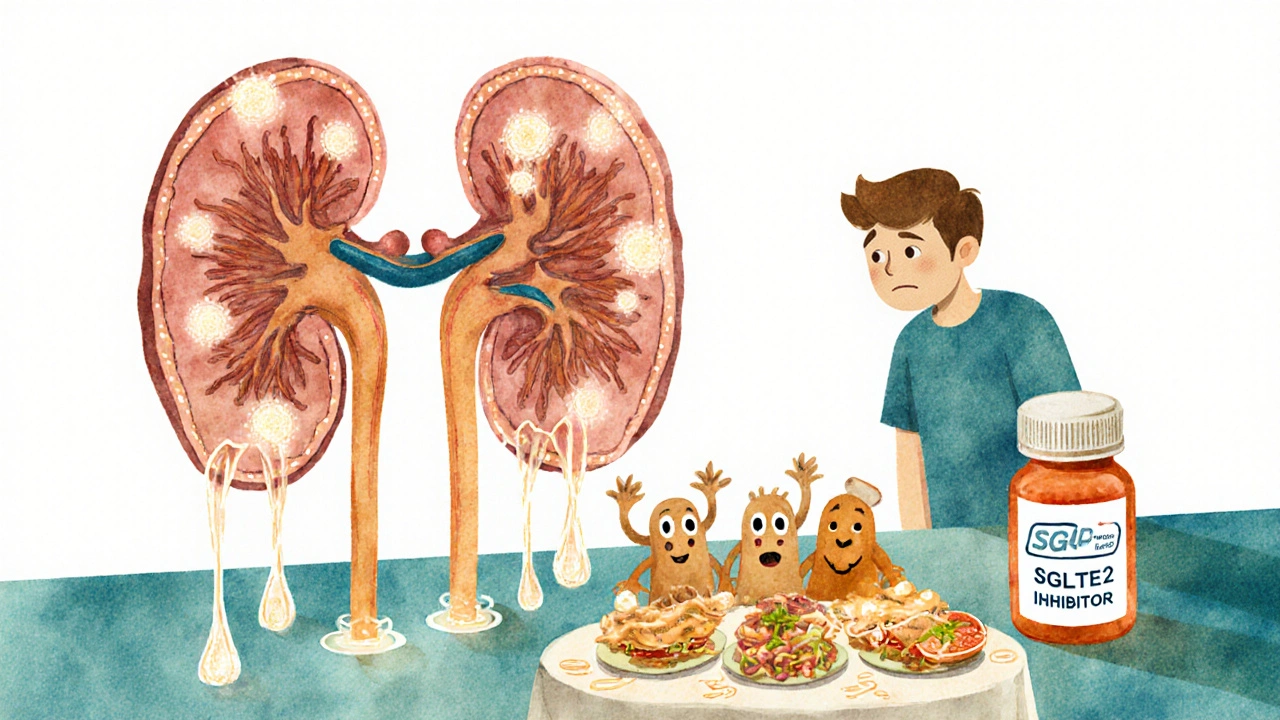
SGLT2 Inhibitors and Yeast Infections: What You Need to Know About Urinary Complications
- Laura Ledas
- Nov, 26 2025
SGLT2 inhibitors help lower blood sugar and protect the heart, but they increase the risk of yeast infections and serious urinary tract complications. Learn who’s most at risk and how to stay safe.
Learn More