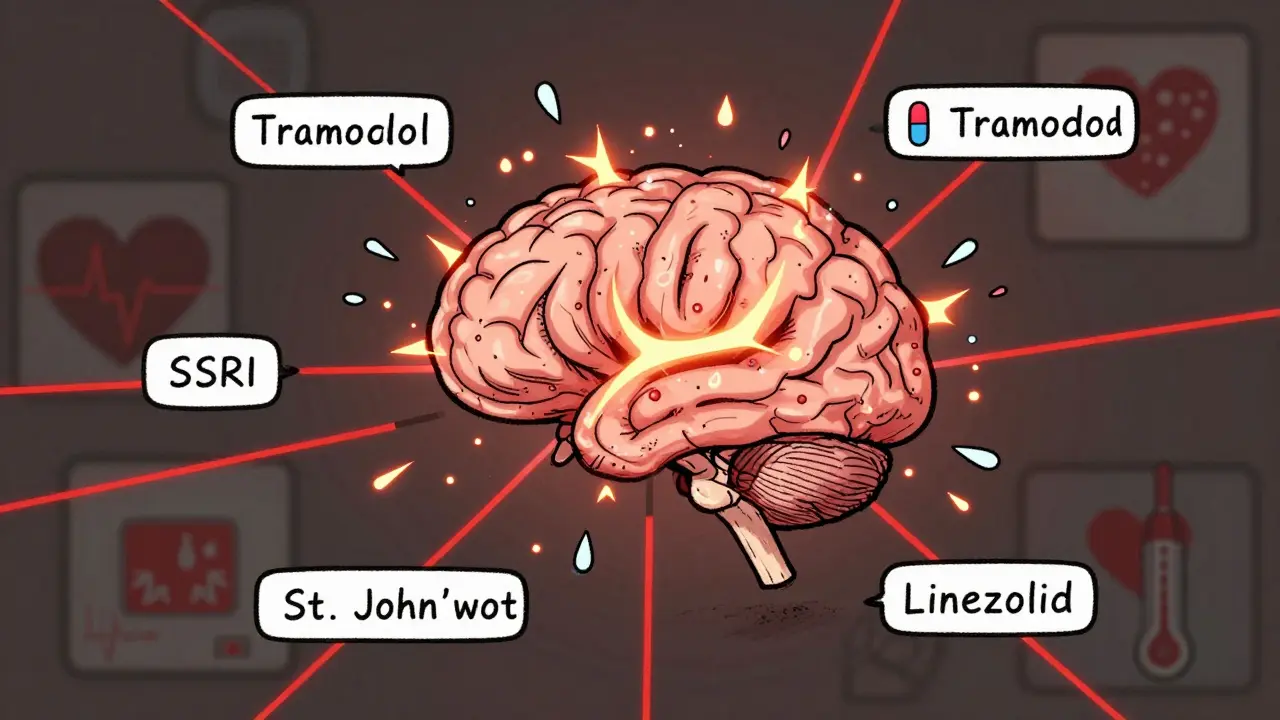
More than 1 in 8 Americans take an SSRI antidepressant. That’s over 30 million people. And for many, these medications work well - lifting mood, easing anxiety, helping them get through the day. But there’s a hidden danger most people never hear about until it’s too late: serotonin syndrome. It doesn’t happen often, but when it does, it can kill you. And the biggest cause? Not overdose. Not misuse. It’s what happens when SSRIs mix with other common medications, supplements, or even painkillers you didn’t think were risky.
What Exactly Is Serotonin Syndrome?
Serotonin syndrome isn’t just a side effect. It’s a medical emergency. Your brain needs serotonin to function - it helps regulate mood, sleep, and even how your muscles move. But too much serotonin? That’s when things go wrong. Your nervous system goes into overdrive. Your body can’t shut off the signals. And that’s when symptoms start.
You might feel shivering, sweating, or muscle stiffness. Your heart rate spikes. Your temperature climbs. You get confused, agitated, or even have seizures. In the worst cases, your muscles lock up, your organs start to fail, and you can die within hours. The good news? Most people catch it early. The bad news? Many doctors miss it. Symptoms look like the flu, heatstroke, or even a panic attack. That’s why it’s underdiagnosed so often.
The Hunter Criteria - the gold standard doctors use today - says you have serotonin syndrome if you have one of these: spontaneous muscle spasms, clonus (involuntary jerking) with fever or sweating, or tremors plus high reflexes and a temperature over 38°C. If you’re on an SSRI and suddenly feel like this, don’t wait. Go to the ER.
Which SSRIs Are Riskiest?
Not all SSRIs are the same. Some stick around in your body longer. Some block serotonin reuptake more strongly. That changes your risk.
Fluoxetine (Prozac) has the longest half-life - up to 15 days. That means if you stop it, the drug is still in your system for weeks. If you switch to another antidepressant too soon, you’re playing Russian roulette with your brain chemistry.
Paroxetine (Paxil) is the strongest serotonin blocker. It shuts down 95% of serotonin reuptake. That’s why it’s more likely to cause problems when mixed with other drugs.
Escitalopram (Lexapro) and sertraline (Zoloft) are the most common today. They’re generally safer - but only if you’re not combining them with other serotonergic drugs. Even these can trigger serotonin syndrome if paired with the wrong medication.
The Worst Culprits: What You Should Never Mix With SSRIs
Here’s the hard truth: some combinations are deadly. And they’re not rare. They happen every day.
- MAOIs - Monoamine oxidase inhibitors like phenelzine or selegiline. Mixing these with SSRIs is a hard no. This combo has killed people. The risk is so high it’s been called a "pharmacological bomb." Even a 2-week gap between stopping an SSRI and starting an MAOI isn’t always enough - especially with fluoxetine. You need 5 weeks.
- Linezolid - This antibiotic is used for tough infections like MRSA. Most people don’t realize it’s a weak MAOI. A 2022 study found patients over 65 on linezolid and SSRIs had nearly 3 times the risk of serotonin syndrome. It’s rare, but it’s real.
- Tramadol, Dextromethorphan, Pethidine - These are common painkillers and cough medicines. Tramadol is especially dangerous. It’s an SSRI-like drug on its own, plus it blocks serotonin reuptake. Combine it with sertraline or fluoxetine? You’re stacking two serotonin boosters. The FDA says this combo is high-risk. One Reddit user described being hospitalized after taking tramadol with sertraline - his temperature hit 104.2°F. He had muscle rigidity and couldn’t move his legs.
- St. John’s Wort - This herbal supplement is sold as a "natural antidepressant." But it’s not safe with SSRIs. It works the same way - more serotonin. A user on Drugs.com said she got uncontrollable shaking and confusion after just three days of combining it with Prozac. ER doctors confirmed serotonin syndrome.
- SNRIs - Venlafaxine (Effexor), duloxetine (Cymbalta). These are antidepressants too, but they hit both serotonin and norepinephrine. Taking them with SSRIs doubles your serotonin levels. A 2023 study found this combo increased serotonin syndrome risk by over 3 times.
Even "low-risk" opioids like oxycodone or morphine can be dangerous if you’re on a high-dose SSRI or have liver problems. Your body can’t clear the drugs fast enough. And if you’re over 65? Your metabolism slows. Your risk goes up.
Who’s Most at Risk?
You might think this only happens to people who take too many pills. But that’s not true.
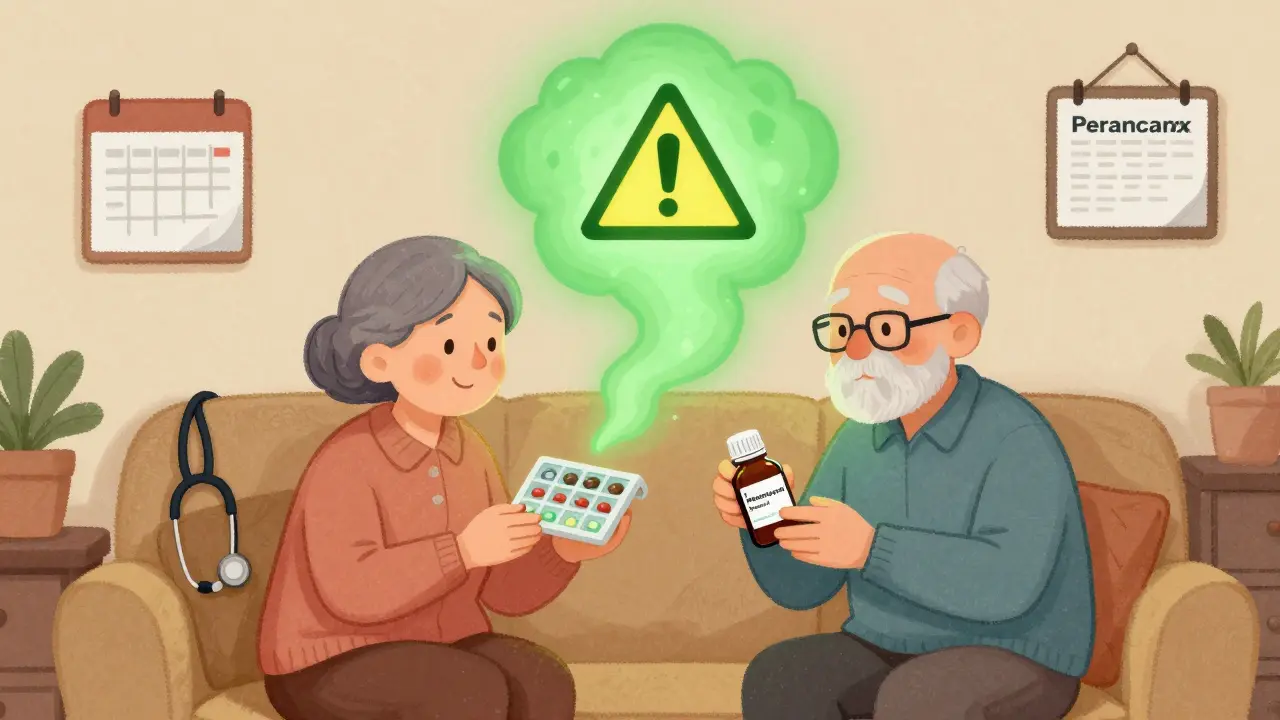
Most cases happen in people who are on two medications they were told were safe. A 68-year-old woman on sertraline for depression and oxycodone for arthritis. A 55-year-old man on fluoxetine and tramadol for chronic back pain. A 70-year-old on escitalopram and linezolid after surgery.
Older adults are the most vulnerable. One in five Americans over 60 takes an SSRI. One in six takes an opioid. And nearly half take five or more medications daily. That’s a perfect storm. Your liver and kidneys can’t keep up. Drug interactions pile up. And your brain becomes a tinderbox.
Pharmacists see this all the time. A 2023 study found that pharmacist-led reviews cut serotonin syndrome risk by 47% in Medicare patients. Why? Because pharmacists ask questions doctors don’t have time for: "Are you taking anything else? Even herbal stuff? What about that cough syrup?"
What Should You Do?
If you’re on an SSRI, here’s what you need to do - right now:
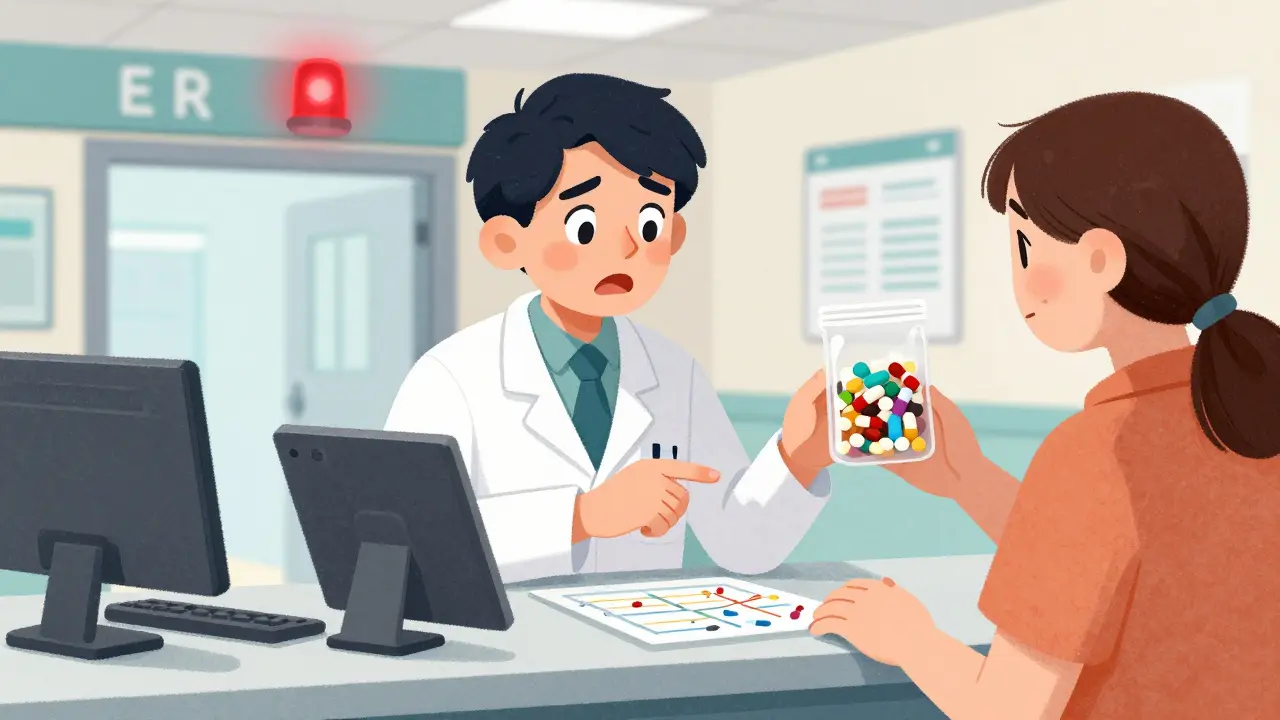
- Make a full list of everything you take. Not just prescriptions. Include supplements, OTC meds, herbal teas, even recreational drugs. Write it down. Bring it to every appointment.
- Ask your doctor: "Could this interact with my SSRI?" Don’t assume they know. They’re not always told about every drug you’re on.
- Never start a new medication without checking. Even if it’s "just a painkiller" or "natural."
- Know the 5 S’s: Shivering, Sweating, Stiffness, Seizures (rare), Sudden confusion. If you get any of these after starting a new drug - go to the ER. Don’t wait. Don’t call your doctor first. Go.
- If you’re switching antidepressants, wait. For fluoxetine: 5 weeks. For others: at least 2 weeks. Rushing this can kill you.
Electronic health records now have alerts for high-risk combinations. But they’re not foolproof. You’re your own best defense.
The Bigger Picture
The number of SSRI prescriptions in the U.S. jumped to 276 million in 2022. Tramadol prescriptions rose 5.7% in the same year. That’s not coincidence. It’s a ticking time bomb. The average hospital stay for serotonin syndrome costs nearly $29,000. And it’s preventable.
The FDA added black box warnings in 2006. The CDC updated opioid guidelines in 2024 to specifically warn against tramadol and dextromethorphan with SSRIs. The European Medicines Agency is testing a blood test that could diagnose serotonin syndrome by 2026. But until then, the only real tool you have is awareness.
SSRIs saved lives. But they’re not harmless. They’re powerful. And when they mix with other drugs, the consequences can be sudden, severe, and deadly. You don’t need to stop your medication. But you do need to know what you’re mixing it with.
Can serotonin syndrome happen with just one SSRI?
Rarely, but yes. It’s most common with drug combinations, but very high doses of a single SSRI - especially in people with liver problems or older adults - can trigger it. Cases have been reported with doses over 100 mg of sertraline or 60 mg of escitalopram. Still, over 90% of cases involve mixing SSRIs with other serotonergic drugs.
How long does it take for serotonin syndrome to develop?
Usually within hours. Most cases start within 6 to 24 hours after adding a new drug. Some reports show symptoms as early as 30 minutes after taking tramadol with an SSRI. If you feel sudden shivering, sweating, or muscle tightness after starting a new medication, don’t wait. Act fast.
Is serotonin syndrome the same as an SSRI overdose?
No. An overdose is when you take too much of one drug. Serotonin syndrome is about drug interactions - even normal doses can cause it when combined. You can have serotonin syndrome on prescribed doses of two different medications. That’s why it’s so tricky.
Can I take ibuprofen or acetaminophen with my SSRI?
Yes. Regular painkillers like ibuprofen (Advil) and acetaminophen (Tylenol) do not increase serotonin levels. They’re generally safe. But avoid cold and flu medicines that contain dextromethorphan or tramadol. Always check the label.
What should I do if I think I have serotonin syndrome?
Go to the emergency room immediately. Do not wait. Do not call your doctor first. Turn off all serotonergic drugs if you can - but don’t delay care. Treatment involves stopping the drugs, cooling the body, and sometimes giving a serotonin blocker like cyproheptadine. Time matters. The sooner you get help, the better your chances.
14 Responses
My mom was on sertraline and got prescribed tramadol for a knee injury. She didn’t tell her doctor about the SSRI because she thought it was "just a painkiller." She ended up in the ER with a 103°F fever and muscle rigidity. Took three days to stabilize. This post saved her life - I’m sharing it with everyone I know.
lol i thought st johns wort was safe like green tea or smth. guess not. thanks for the heads up. i was about to mix it with my zoloft. lol.
So let me get this straight - we’re telling people to avoid every drug that isn’t ibuprofen and acetaminophen, but the system still lets doctors prescribe 8+ meds to a 72-year-old? This isn’t awareness. This is a systemic failure.
The tragedy here isn’t just the lack of public awareness - it’s the institutional abandonment of pharmacological literacy. We’ve outsourced risk assessment to algorithms that flag only the most egregious combinations, while ignoring the slow accumulation of serotonergic burden across polypharmacy regimens. The elderly aren’t just vulnerable - they’re statistically inevitable casualties of a healthcare model that prioritizes volume over vigilance. We medicate first, question later - and then wonder why people die in quiet hospital rooms with their charts full of green checkmarks.
Thank you for outlining this with such clarity. As a healthcare professional in the UK, I see these interactions daily - often because patients don’t realize supplements count as "medications." I’ve started handing out printed checklists to my patients. Simple. Effective.
I had a friend who got serotonin syndrome after taking dextromethorphan with fluoxetine. He thought it was just a bad cold. He spent a week in ICU. Never took OTC meds without checking again. This stuff is real.
So if you’re on an SSRI and your doctor says "take this antibiotic," you’re supposed to argue with them? Good luck with that. Most docs don’t even know linezolid is an MAOI. This isn’t your fault - it’s the system’s.
Just remember: if it says "serotonin" on the label, don’t mix it with your antidepressant. Simple. No guesswork.
It’s wild how we treat mental health meds like they’re vitamins - no side effects, no rules. But give someone a painkiller and suddenly everyone’s a pharmacist. SSRIs are powerful tools. They deserve respect, not fear - but also not ignorance.
As someone from India where herbal remedies are common, I’ve seen this too. People take ashwagandha with SSRIs thinking it’s "natural stress relief." Same mechanism. Same risk. Education needs to cross borders.
This is why we need mandatory pharmacist consultations before filling any new script for SSRI users. No more assumptions. No more "I didn’t think it mattered." We can fix this.
...and yet, the pharmaceutical industry continues to fund "awareness" campaigns that omit the most dangerous interactions... while simultaneously lobbying against mandatory electronic alerts... and the FDA still allows tramadol to be sold OTC in 37 states... this is not negligence... this is profit-driven malfeasance... and you’re being manipulated... by design...
Of course they don’t warn you - because if people knew how many drugs interact dangerously, they’d stop taking them all... and then where would Big Pharma be? Wake up.
The existential paradox of modern pharmacotherapy lies not in the chemistry of serotonin reuptake inhibition, but in the epistemological vacuum of patient agency. We are told to trust the system, yet the system is constructed upon fragmented data, incomplete training, and economic incentives antithetical to holistic care. To navigate this landscape is not merely to be informed - it is to become a de facto pharmacologist, armed with nothing but a smartphone and a prayer.