Hyponatremia Risk & Monitoring Tool
Risk Assessment Result
Low RiskRecommended Monitoring Plan:
Imagine starting a common medication for anxiety or blood pressure, only to find yourself suddenly confused, nauseous, or even slipping into a coma. This isn't a rare movie plot; it's a dangerous medical reality called severe hyponatremia is a critical electrolyte imbalance where serum sodium levels drop below 135 mmol/L, with severe cases plummeting below 120 mmol/L. When your sodium levels crash due to a drug reaction, your brain cells literally swell with water. If you don't catch it fast, you're looking at seizures, permanent brain damage, or death.
The Warning Signs: From "Flu-Like" to Life-Threatening
The scary part about medication-induced sodium loss is how it sneaks up on you. Many people mistake the early signs for a common cold or just "feeling off." You might start with a mild headache or a bit of nausea. However, as the sodium level drops, the neurological symptoms escalate quickly. About 68% of severe cases involve profound confusion. You might forget where you are or struggle to hold a conversation.
Once sodium levels dip below 115 mmol/L, the risk spikes. Around 22% of these patients experience seizures. This happens because the osmotic pressure in the brain is completely disrupted. In the worst-case scenarios, this progresses to a coma. The window between feeling slightly confused and having a grand mal seizure can be as short as 6 to 8 hours. This is why treating it as a medical emergency is non-negotiable.
Which Medications Trigger the Crash?
Not every pill carries this risk, but several common classes of drugs are notorious for throwing off your water-sodium balance. The most frequent culprit is SIADH, or the Syndrome of Inappropriate Antidiuretic Hormone secretion, where the body holds onto too much water and dilutes the sodium in your blood.
- Diuretics: These "water pills" are the leading cause, accounting for 28% of medication-related cases.
- SSRIs: Selective Serotonin Reuptake Inhibitors (like sertraline or citalopram) are responsible for about 22% of cases. They are particularly risky for older adults.
- Antiepileptics: Drugs like carbamazepine and oxcarbazepine have a high relative risk, with carbamazepine being one of the most dangerous in this category.
- Others: MAOIs, ACE inhibitors, and even certain illicit substances like MDMA can trigger the drop.
| Medication Class | Estimated Case Contribution | Primary Mechanism | Typical Onset |
|---|---|---|---|
| Diuretics | 28% | Direct sodium loss/Water retention | Days to Weeks |
| SSRIs | 22% | SIADH Trigger | 1-4 Weeks |
| Antiepileptics | 18% | Renal sodium wasting | Weeks |
The Danger of "Correcting Too Fast"
When a doctor finds a patient with a sodium level of 110 mmol/L, the instinct is to pump sodium back into the system immediately. But here is the catch: if you fix the balance too quickly, you can cause a second, equally devastating disaster called Osmotic Demyelination Syndrome (ODS). ODS is a condition where the protective myelin sheath around nerve cells is destroyed due to rapid shifts in osmotic pressure.
This happens in about 9% of cases where the correction rate is too aggressive. To avoid this, nephrologists generally limit the sodium increase to 4-8 mmol/L within a 24-hour window. While some guidelines allow for slightly more in extreme emergencies, the goal is a slow, steady climb. If the brain is forced to adapt too fast, the resulting damage can leave a patient permanently paralyzed or in a vegetative state.
Who Is Most at Risk?
While anyone can experience this, certain demographics are hit much harder. Women make up about 57% of severe cases, and people over 65 represent a staggering 61%. Why? Because older adults often have a diminished ability to regulate fluids and are more likely to be taking multiple medications that interact with each other.
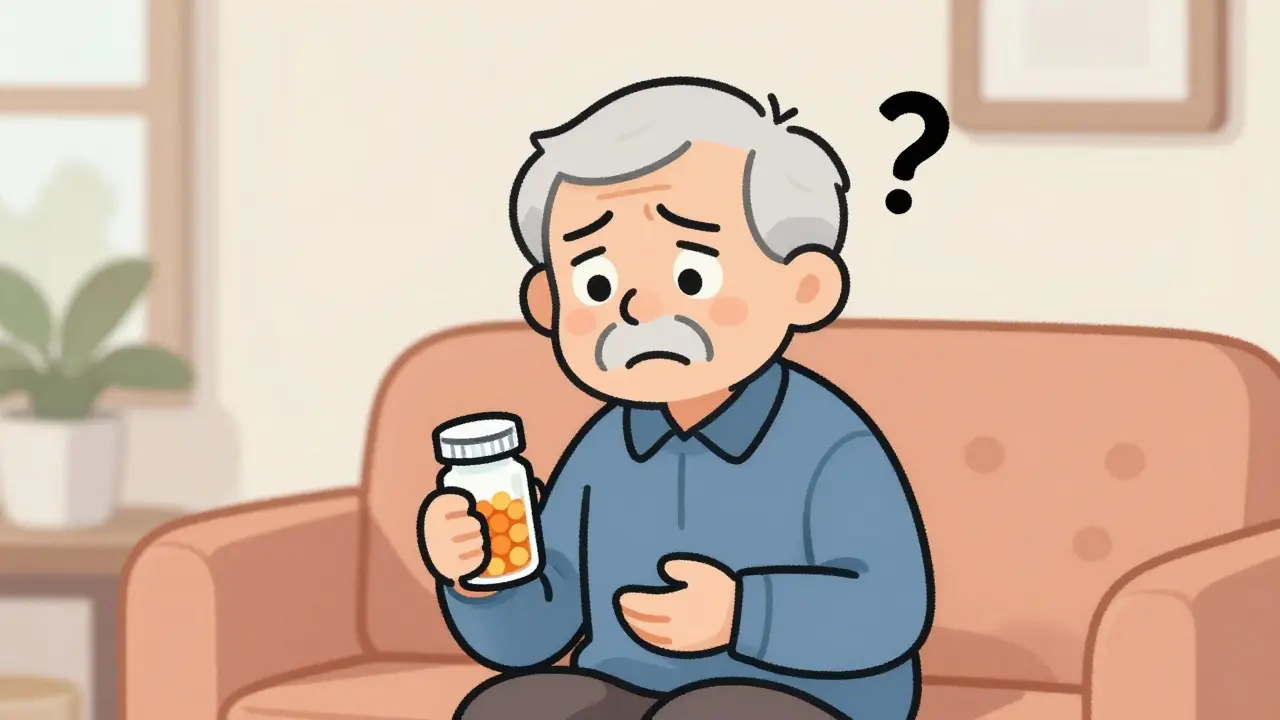
A common tragedy is the misdiagnosis of these symptoms. Because confusion and memory loss are common in the elderly, doctors sometimes mistake severe hyponatremia for early-onset dementia or a psychiatric break. This mistake can be fatal. If you've recently started a new medication and you (or a loved one) seem suddenly confused, don't assume it's "just old age." Get a blood test for serum sodium immediately.
How to Prevent a Sodium Crisis
The best way to survive this is to never let it happen. If you are starting a high-risk drug-especially if you are over 65-you need a monitoring plan. Don't wait for symptoms to appear; by then, the brain is already swelling.
- Baseline Testing: Get your sodium levels checked before starting the medication.
- The 7-Day Check: Request a blood test within the first week of starting the drug.
- The First Month Window: Since 73% of severe cases develop within the first 30 days, testing every 3-5 days during the first month is the safest bet.
- Pharmacist Consultation: Ask your pharmacist to screen for interactions. Some pharmacists can spot the risk of oxcarbazepine or SSRIs before you even leave the store.
New treatments are emerging to help. The FDA recently approved tolvaptan, which can reduce the time it takes to correct sodium levels safely. Additionally, AI-driven monitoring is being piloted at institutions like the Mayo Clinic to predict these crashes 72 hours before they happen by analyzing health records.
Can I just drink salt water to fix low sodium?
Absolutely not. In severe cases, attempting to self-treat with salt water can lead to dangerously rapid sodium shifts, which may trigger Osmotic Demyelination Syndrome. Severe hyponatremia requires intravenous saline and constant monitoring in a hospital setting.
How quickly do symptoms appear after starting a drug?
Most cases develop within 1 to 4 weeks after initiating the medication. However, some patients can see a drop in sodium within just 10 days, especially if they are elderly or taking multiple diuretics.
Is the brain damage from hyponatremia reversible?
If treated within 24 hours, the recovery rate is about 92%. However, if treatment is delayed beyond 48 hours, the recovery rate drops to 67%. Once ODS or permanent brain lesions occur, the damage is often irreversible.
What is the difference between drug-induced and other types of hyponatremia?
Drug-induced cases tend to present with more acute neurological symptoms and a clearer timeline linked to medication start dates. They often resolve quickly (about 78% of the time) once the drug is stopped, though recurrence is higher if the drug is essential and must be restarted.
Why are SSRIs linked to low sodium?
SSRIs can trigger the release of antidiuretic hormone (ADH). This hormone tells your kidneys to hold onto water instead of flushing it out. The extra water dilutes the sodium in your blood, leading to hyponatremia.