QR Code Accessibility Check
QR Code Accessibility Check
Answer these questions to find out if you can use QR codes for real-time drug safety updates.
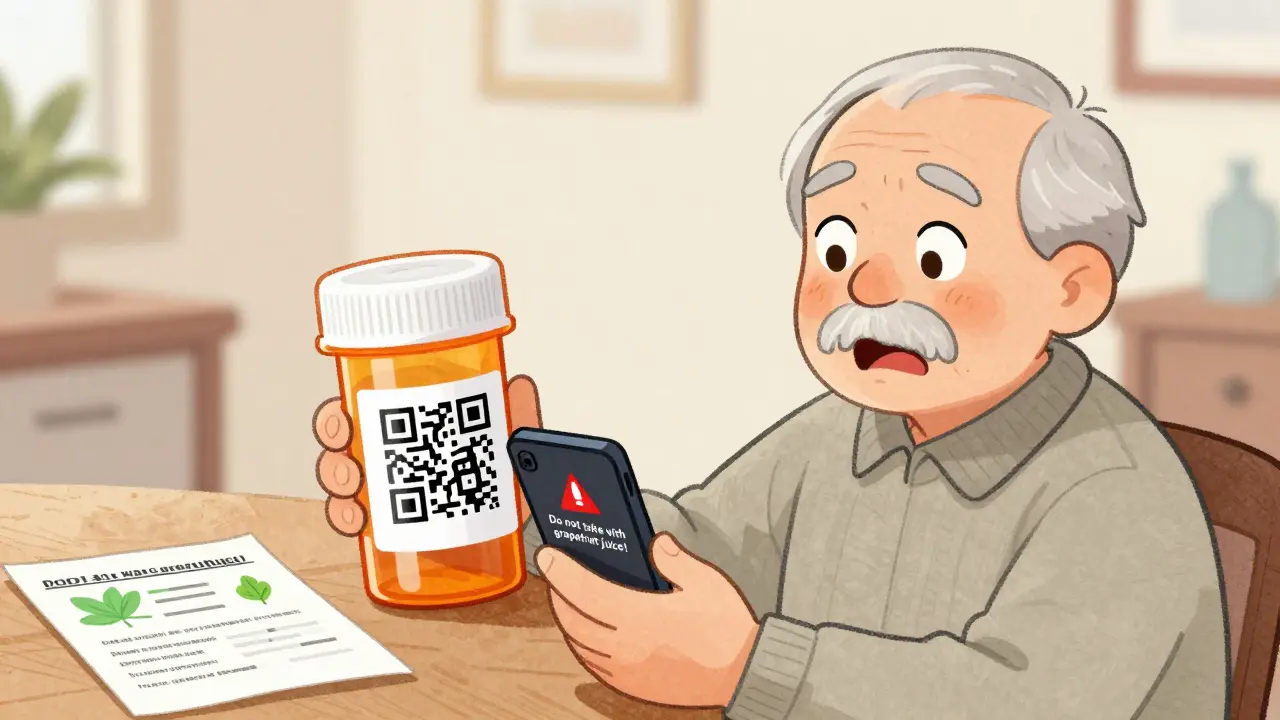
Imagine this: you’re at home, holding a bottle of your new prescription. You scan the QR code on the label with your phone. In seconds, you see a bright red alert: "Do not take with grapefruit juice. Risk of severe muscle damage." You hadn’t even read the tiny print on the paper insert. That’s not science fiction-it’s happening now in pharmacies across Europe and the U.S.
Why QR Codes Are Changing How We Get Drug Info
For decades, drug labels were printed on paper. Once a bottle was made, the info was fixed. If a new safety warning came out-say, a drug causes dangerous heart rhythms in certain patients-it could take months, even years, for that update to reach every pharmacy shelf. That delay cost lives. In one decade, over 225 black box warnings (the strongest safety alerts the FDA issues) were issued globally. Most patients never saw them until it was too late. QR codes on drug labels fix that. Instead of static text, they link to a live webpage hosted by the drugmaker. When a safety update is approved by regulators, the website updates instantly. Every scan after that shows the latest info. No new labels. No recalls. No waiting. This isn’t just convenient. It’s a safety revolution. In Spain, where QR codes were first legally allowed on drug packaging in 2021, pharmacists report fewer medication errors. In the UK, the Association of the British Pharmaceutical Industry (ABPI) updated its rules in 2024 to officially allow QR codes on promotional materials and packaging. Now, the same digital system that shows you how to take your blood thinner can also tell you about a new drug interaction discovered last week.How It Actually Works Behind the Scenes
These aren’t simple barcodes. They’re dynamic QR codes-meaning the link can change without touching the physical label. That’s critical. Drug safety updates happen constantly. One study found that nearly 1 in 5 prescription drugs gets a new safety notice within the first year after launch. Here’s how it works: When a pharmaceutical company discovers a new risk, they update their central content system. That system pushes the change to every QR code linked to that drug worldwide. Within hours, a patient in London, a nurse in Chicago, or a pharmacist in Madrid sees the same updated warning. The system is built to be secure. QR codes don’t just link to a website-they connect to encrypted, authenticated databases. Scanning a code verifies the drug’s lot number and expiration date, helping stop counterfeit medicines. Every scan is logged, so regulators can track who accessed what info and when. That’s huge for compliance. The tech stack is simple but powerful: a secure cloud server, an API that talks to the company’s pharmacovigilance system (the system that tracks drug side effects), and integration with electronic health records. Platforms like DosePacker’s CareCommunityOS already let pharmacies pull QR code data directly into patient charts.Real Benefits: Less Errors, Faster Alerts
The results are clear. A hospital in Manchester started using QR codes on discharge medications in early 2024. Within six months, patient understanding of complex drug regimens improved by 40%, according to their internal surveys. Why? Because patients weren’t guessing what the tiny print meant. They were watching a video showing how to use an inhaler correctly or reading a plain-language explanation of why they shouldn’t drink alcohol with their medication. Emergency responders benefit too. Freyr Solutions documented cases where paramedics scanned a QR code on a patient’s pill bottle during a cardiac arrest and instantly accessed the drug’s contraindications, dosage limits, and antidotes-information that used to require calling the pharmacy or waiting for a chart. Pharmacists love it. A 2024 study found that 85% prefer digital reporting of side effects via QR code-linked forms over paper. Why? It’s faster, more accurate, and automatically sends data to safety databases. No more lost forms or illegible handwriting.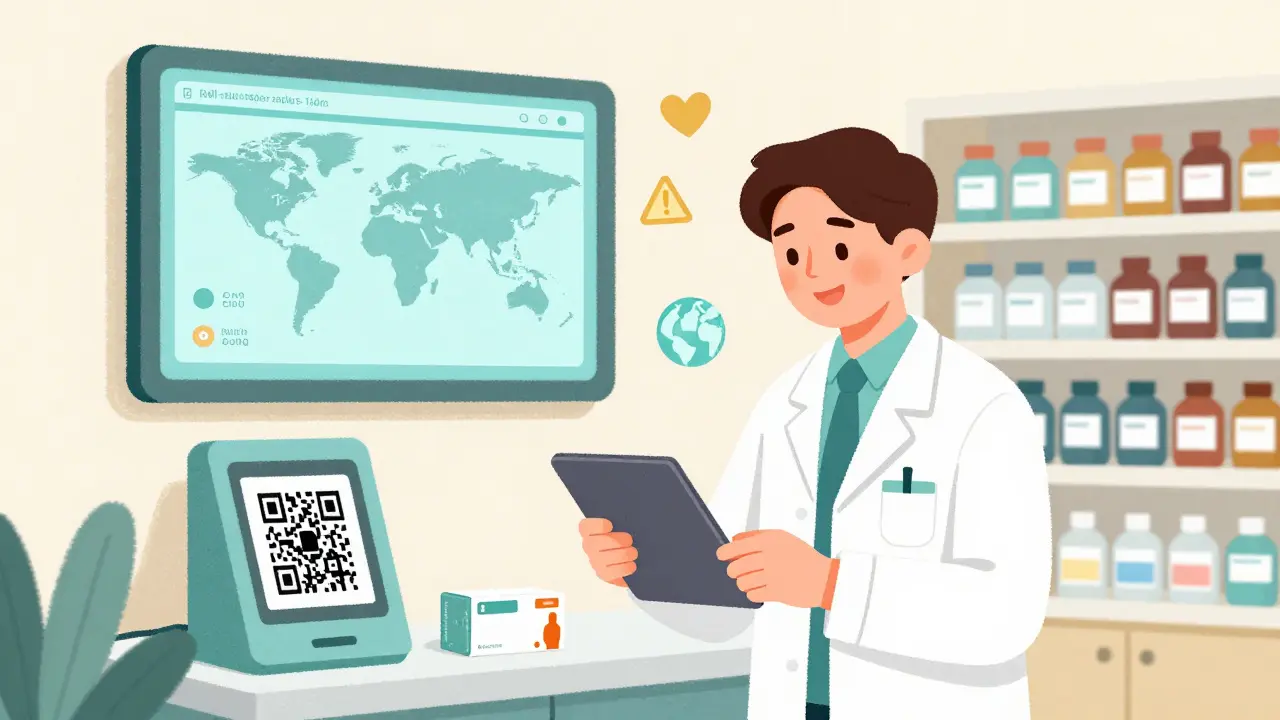
The Flip Side: Who Gets Left Behind?
But here’s the problem: not everyone has a smartphone. Or reliable internet. Or knows how to scan a code. In rural clinics across the UK and U.S., many elderly patients can’t use QR codes. One Reddit user reported visiting three rural clinics last month-60% of the elderly patients couldn’t access the safety info because they didn’t own a smartphone or didn’t know how to use one. This isn’t a small issue. It’s a fairness issue. Dr. Maria Sanchez of the Global Health Institute warned in 2023: “QR code implementation risks creating a two-tier medication information system where digitally disadvantaged populations receive inferior safety information.” That’s why smart companies don’t replace printed info-they add to it. DosePacker, for example, prints a short summary on the label with a note: “Scan for full safety info.” Pharmacies are training staff to scan codes for patients who need help. Some even have QR code kiosks in waiting rooms. The goal isn’t to eliminate paper. It’s to make paper the backup, not the only option.Global Adoption: Who’s Leading?
Spain was first. The UK followed. The U.S. military started using QR codes on prescriptions in 2022 to cut down on printed materials and improve accuracy. Canada and Australia are testing pilot programs. But Europe is still waiting for a unified rule. The European Federation of Pharmaceutical Industries and Associations (EFPIA) hasn’t formally adopted QR codes across all member countries. That means companies have to navigate 27 different rules-which slows adoption. In Asia and Africa, infrastructure gaps make rollout harder. Power outages, limited internet, and low smartphone ownership mean QR codes aren’t always practical. But where the tech exists, the demand is growing. India’s drug regulator is studying QR code pilots for high-risk medications like insulin and anticoagulants.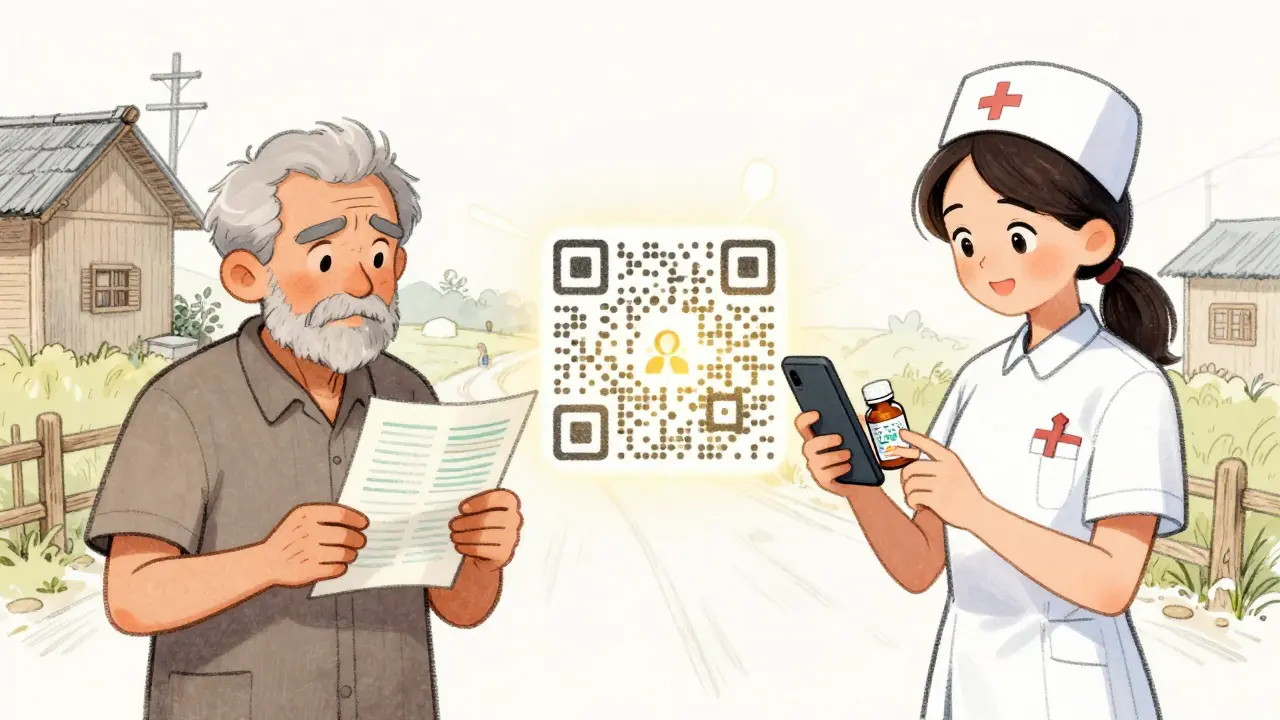
What’s Next? AI, Apps, and Global Standards
The next wave is even bigger. QR codes are becoming the bridge between pills and digital health tools. DosePacker’s MyDoses app lets you scan a code, then it adds the drug to your personal medication list, sets reminders, and alerts you if a new warning is posted. Artificial intelligence is joining the mix. Systems are being trained to detect safety signals faster-like spotting a pattern of liver damage from a new batch of a drug, then triggering an automatic QR code update within days, not months. By 2025, regulators are pushing for mandatory e-labeling. That means QR codes won’t be optional. They’ll be required on most new drugs. The goal? A global system where a safety update in Germany reaches a patient in Brazil in under 90 days. And it’s not just drugs. Unique Device Identifiers (UDIs)-QR-like codes on medical devices like pacemakers and insulin pumps-are following the same path. The future is connected.What You Need to Know as a Patient
If you’re prescribed a new medication, look for the QR code. It’s usually on the box or the outer label. Scan it with your phone’s camera-no app needed. You’ll get:- Full prescribing information (in plain language)
- Video instructions for taking the drug
- Real-time safety alerts
- How to report side effects
- Drug interaction checkers
What You Need to Know as a Pharmacist or Provider
If you’re in healthcare, QR codes are now part of your job. Train your staff to scan and explain them. Make sure your pharmacy’s Wi-Fi is reliable. Keep printed copies available. Document how many patients use the QR code-this data helps prove its value. You’re not just dispensing pills anymore. You’re guiding patients through a digital safety net.Are QR codes on drug labels safe to scan?
Yes. QR codes on legitimate drug labels link only to secure, encrypted websites hosted by the manufacturer. They don’t download apps or collect personal data. The code simply directs your phone to a web page with updated safety information. Always check that the website URL matches the drugmaker’s official domain-never scan codes from unknown sources or third-party packaging.
Can I still get printed information if I don’t have a smartphone?
Absolutely. Regulations in the UK, EU, and U.S. require that printed patient information leaflets remain available alongside QR codes. Pharmacies must provide printed copies on request. If you’re elderly, have vision issues, or don’t use smartphones, ask your pharmacist for the paper version. The QR code is an extra tool-not a replacement.
What if the QR code doesn’t work or leads to a broken link?
If the QR code doesn’t scan or the page is down, contact the pharmacy or drug manufacturer directly. Most companies list a customer service number on the packaging. Report the issue-it helps them fix broken links. In the meantime, use the printed leaflet. This is a rare glitch, not the norm. Most systems are tested across hundreds of phone models and network conditions.
Do QR codes replace the need to talk to my doctor or pharmacist?
No. QR codes give you information, but they don’t replace human advice. Your doctor knows your medical history. Your pharmacist knows your other meds. Use the QR code to understand the label better, then ask questions. For example: “I saw this warning about kidney risk-does that apply to me?” Always follow up with a professional.
Is this technology being used in the U.S.?
Yes. The U.S. military started using QR codes on prescriptions in 2022. Major pharmacy chains like CVS and Walgreens are piloting them in select regions. The FDA hasn’t mandated them yet, but they’re watching closely. Many U.S. drugmakers are adopting QR codes voluntarily because they reduce liability and improve patient safety.
How do I know the QR code is from the real drugmaker and not a fake?
Legitimate QR codes link to official domains like www.[drugmaker].com/patientinfo or [brandname].safetyinfo.com. Never trust links that look odd-like short URLs or domains with misspellings. If you’re unsure, call the number on the box or visit the drugmaker’s official website directly. Many QR systems also verify the drug’s lot number and expiration date during scanning, which helps confirm authenticity.
11 Responses
I scanned my blood pressure med’s QR code last week and it popped up a warning I’d never seen on the paper insert-something about potassium levels. I called my pharmacist and they said it was added two days prior. Mind blown. This is the future, and honestly, I’m glad I didn’t have to guess.
While the tech is impressive, let’s not pretend this solves everything. I’ve seen QR codes that lead to 404s, slow-loading pages, and sites that require you to log in with a patient portal you don’t even have. It’s a nice add-on-but not a replacement for clear, printed warnings. And don’t get me started on the elderly. My grandma still uses a flip phone. She’s not scanning anything.
This is just another way Big Pharma is pushing responsibility onto patients while dodging accountability. You think they care about safety? No. They care about avoiding lawsuits. If you don’t scan the code and you die? Well, you were too lazy to read the QR. That’s their new defense. And now they’re getting rid of paper inserts? No thanks. I’ll keep my 12-page booklet thank you very much.
As someone from India, I’ve seen how tech can help-but also how it can exclude. In rural areas, many people don’t have smartphones, or their phones can’t scan QR codes properly. But here’s the thing: we can still make this work. Train community health workers to scan for patients. Put QR kiosks in village clinics. Make videos in local languages. The tech isn’t the problem-it’s the rollout. We don’t need to leave anyone behind. We just need to design with empathy, not just efficiency. This isn’t just about drugs-it’s about dignity.
My mom’s on five meds. She can’t read the tiny print. I scan the QR for her every time she gets a new prescription. She says it’s like having a doctor in her pocket. I just wish more pharmacies would offer to scan it for you without making you feel like you’re asking for a favor. It’s just kindness, really.
QR codes are the future. Stop complaining. If you can’t use them, ask for help. Pharmacies have staff for a reason. And if your phone can’t scan it, upgrade your phone. It’s 2025. This isn’t rocket science.
Okay, but what if the QR code gets hacked? What if some hacker changes the warning to say ‘take 10x dose’? I mean, we’re talking about life-or-death info here. One glitch, one breach, and suddenly Grandma’s in the ER because some script kiddie thought it was funny. And now we’re supposed to trust a QR code more than a printed label? That’s not innovation-that’s Russian roulette with pills.
Oh wow, what a brilliant idea-let’s make patients responsible for their own safety by forcing them to become tech-savvy pharmacists. Because clearly, the solution to decades of medical negligence is to make the sick do more work. And let’s not forget: the same corporations that profit off these drugs are also the ones hosting the ‘secure’ websites. Trust me, if the algorithm says ‘safe,’ it’s probably because the profit margin says so. This isn’t progress-it’s corporate theater wrapped in a QR code.
My cousin in Jakarta just got a new diabetes med. She scanned the code and it showed a video in Bahasa Indonesia with subtitles and a voiceover explaining how to inject. She cried. She said it was the first time she felt like the medicine was made for her, not just sold to her. This isn’t just tech. It’s connection.
Just scan the damn code. It’s not hard. And if you can’t? Ask. Your pharmacist isn’t judging you-they’re there to help. This isn’t about being tech-savvy. It’s about being safe. And if you’re too proud to ask, that’s on you-not the system.
So we’ve replaced the printed word with a digital one… but who wrote the digital word? Who decides what’s ‘important’ enough to update? And what if the algorithm misses something? We’re outsourcing our health to a server farm in Ohio while pretending it’s progress. The real question isn’t whether QR codes work-it’s whether we’ve forgotten how to be careful without them.