Kernicterus Risk Calculator
Medication Risk Assessment
Result: Please enter values and click 'Calculate Risk' to see assessment
Every year, a small number of newborns suffer permanent brain damage from a condition that should never happen - kernicterus. It’s not caused by a birth defect or genetic disorder. It’s not inevitable. It’s often the result of a simple, preventable mistake: giving the wrong medication to a jaundiced baby.
What Is Kernicterus and Why Does It Matter?
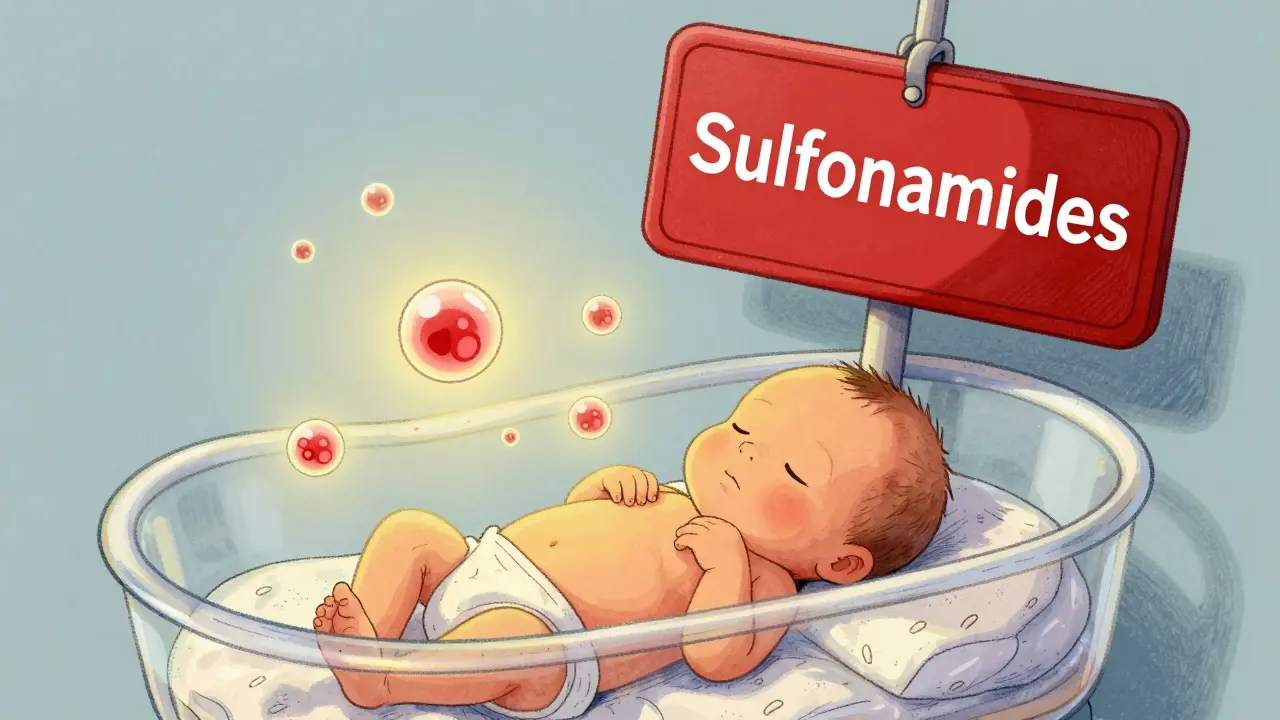
Kernicterus happens when too much bilirubin - a yellow pigment made when red blood cells break down - builds up in a newborn’s brain. In most babies, the liver clears bilirubin without trouble. But in newborns, especially those born early or with feeding issues, the system gets overwhelmed. When bilirubin levels rise too high, it crosses the blood-brain barrier and stains areas like the basal ganglia. That’s kernicterus. And once it happens, the damage is permanent.Think of it like rust inside a machine. You can’t undo it. Babies who survive may develop cerebral palsy, hearing loss, or intellectual disabilities. The good news? It’s almost always preventable. The bad news? Medications like sulfonamides can push a baby over the edge - even if their bilirubin level looks "normal."
How Sulfonamides Trigger the Risk
Sulfonamides - drugs like sulfisoxazole and sulfamethoxazole-trimethoprim - are antibiotics once commonly used in newborns. Today, they’re rarely first-line choices. But they’re still used in some places because they’re cheap. And that’s where the danger lies.Here’s the science: bilirubin normally sticks to albumin, a protein in the blood. That keeps it from entering the brain. Sulfonamides compete for the same binding spots. At therapeutic doses, they can displace 25-30% of bilirubin from albumin. Suddenly, free bilirubin spikes. Even a baby with a bilirubin level of 14 mg/dL - which might seem manageable - can cross into the danger zone within hours after receiving sulfonamides.
Studies show sulfonamides increase the risk of severe hyperbilirubinemia by more than three times compared to safer antibiotics like amoxicillin-clavulanate. One case documented in a Texas NICU showed a baby’s bilirubin jumping from 14.2 mg/dL to 22.7 mg/dL in just 12 hours after a single dose of sulfisoxazole. That baby needed emergency phototherapy and nearly required an exchange transfusion.
Other High-Risk Medications
Sulfonamides aren’t the only offenders. Ceftriaxone, a common IV antibiotic, displaces about 15-20% of bilirubin. Aspirin and other salicylates do the same. Even furosemide, a diuretic sometimes used for fluid overload, can worsen the problem.Here’s the catch: these drugs don’t just raise bilirubin levels. They make the brain more vulnerable. The newborn blood-brain barrier is still developing. Acidosis, dehydration, or low albumin levels make it even easier for bilirubin to slip in. That’s why a baby with a "borderline" bilirubin level - say, 13 mg/dL - and a low albumin of 2.8 g/dL is at far greater risk than a healthy term infant with the same number.
The American Academy of Pediatrics (AAP) updated its guidelines in 2023 to be crystal clear: avoid these drugs if bilirubin is above 75% of the phototherapy threshold. That number changes with the baby’s age in hours. For a 48-hour-old infant, that threshold might be 15 mg/dL. Give a sulfonamide at 14 mg/dL, and you’re playing Russian roulette with their brain.
Who’s Most at Risk?
Not all newborns are equally vulnerable. Preterm babies are at higher risk because their livers are even less mature. Babies with G6PD deficiency - which affects about 7% of people globally - are especially dangerous candidates for sulfonamides. These drugs can trigger massive red blood cell breakdown, causing bilirubin to surge.Also at risk: babies who aren’t feeding well. Poor feeding means less stooling, which means less bilirubin is being excreted. Dehydration thickens the blood, reducing albumin’s ability to bind bilirubin. And in low-resource settings, where testing is limited and antibiotics are chosen for cost, not safety, these babies often slip through the cracks.
One 2022 study found that 43% of kernicterus cases had no clear medical reason for the bilirubin spike. That means the cause wasn’t a rare disease - it was a missed opportunity to prevent it. Often, that missed opportunity was giving a high-risk drug without checking bilirubin levels properly.
What Should Clinicians Do?
There’s a five-step safety checklist used in leading neonatal units:- Check bilirubin before giving any drug. Never assume it’s low. Always test - especially if the baby is jaundiced, premature, or feeding poorly.
- Check albumin levels. If albumin is below 3.0 g/dL, the risk of displacement skyrockets.
- Screen for G6PD deficiency. In populations with high prevalence (Southeast Asia, Africa, Mediterranean regions), this should be routine.
- Calculate free bilirubin if possible. Total bilirubin alone isn’t enough. Free bilirubin above 10 mcg/dL is dangerous.
- Choose safer alternatives. Amoxicillin-clavulanate, penicillin, or cephalosporins (except ceftriaxone) are far safer. Even if they cost more, they prevent lifelong disability.
Many hospitals now have electronic alerts built into their systems. Epic Systems, for example, blocks sulfonamide orders in neonates when bilirubin exceeds a set threshold. That’s not a luxury - it’s a necessity.
Why This Still Happens
Despite clear guidelines, cases still occur. Why?One reason: miscommunication. A pediatrician prescribes sulfamethoxazole for a urinary tract infection, assuming the baby is fine because they’re "just jaundiced." The nurse doesn’t check the bilirubin report because it’s not flagged. The baby gets the dose. Two hours later, they’re lethargic. By then, it’s too late.
Another reason: resource gaps. In rural hospitals, rapid bilirubin testing isn’t available. Staff rely on visual assessment - which is unreliable. A baby with a bilirubin of 16 mg/dL can look like one with 10. Without a test, you’re guessing.
And then there’s cost. In some countries, sulfonamides cost $0.05 per dose. Amoxicillin-clavulanate is $2.50. When budgets are tight, the cheaper drug gets chosen. But the cost of one case of kernicterus? An average malpractice settlement is $4.2 million.
What’s Changing?
The tide is turning. In 2007, the FDA added a black box warning to sulfonamide labels: "Avoid use in neonates and infants under 2 months." Since then, usage has dropped from 28% of neonatal antibiotic prescriptions in 1990 to less than 2% in 2022.More hospitals are adopting automated alerts. The AAP’s free Bilirubin Exposure Risk Calculator now includes medication risk factors. And in February 2023, the NIH awarded $2.4 million to develop point-of-care devices that measure free bilirubin - a game-changer for clinics without lab access.
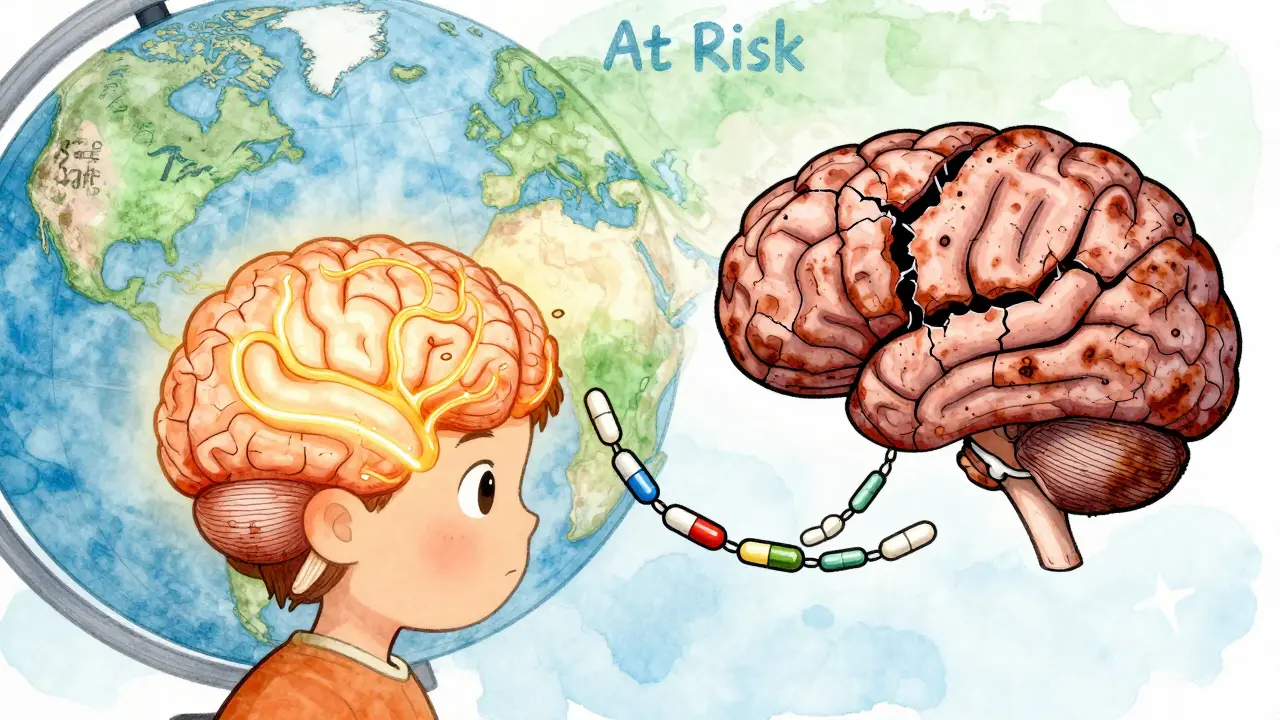
But progress isn’t universal. In parts of Africa and South Asia, sulfonamides are still used routinely in newborns. Global health systems need to prioritize safe alternatives - not because they’re fancy, but because they save brains.
What Parents Should Know
You don’t need to memorize drug names. But you should ask:- "Is my baby’s bilirubin level being monitored?"
- "Is this antibiotic necessary? Are there safer options?"
- "Has the team checked for G6PD deficiency?"
If your baby is jaundiced and needs antibiotics, push for amoxicillin or penicillin. If they’re being given sulfonamides, ask why - and whether bilirubin levels were checked after the dose. Your questions might prevent a lifetime of consequences.
Final Thought
Kernicterus isn’t a medical mystery. It’s a system failure. We know how to prevent it. We have the tools. We have the guidelines. What’s missing is consistent application.A baby doesn’t need a miracle. They need someone to check the numbers before giving the pill. One test. One question. One moment of caution. That’s all it takes to keep a child’s brain safe.
15 Responses
Man, I read this and just sat there for a full minute. I had no idea a simple antibiotic could do that to a baby’s brain. It’s not just about the drug-it’s about the system failing at every level. One test. One question. One moment of pause. That’s all it takes to avoid a lifetime of suffering. We’re talking about human beings here, not cost centers.
Bro in India we still use sulfonamides like it’s 1995. Cost matters, yeah, but not more than a kid’s future. My cousin’s baby got kernicterus in a rural hospital-no bilirubin test, just ‘he’s jaundiced, give him sulfa.’ Now he can’t walk. No one got fired. No one even apologized. We need to stop pretending money is more important than brains.
One sentence: If your hospital doesn’t have an automated alert blocking sulfonamides in neonates, demand it. Now.
There’s a deeper philosophical fracture here. We treat medicine like a spreadsheet-optimize for cost, efficiency, volume-but we forget that the human body, especially a newborn’s, is not a machine that can be calibrated. It’s a fragile ecosystem. Bilirubin isn’t just a number-it’s a silent scream. And when we ignore it, we’re not just making a clinical error. We’re committing a moral failure disguised as pragmatism. The fact that we still debate whether to use $0.05 antibiotics over $2.50 ones says everything about how broken our values have become.
It is imperative that all neonatal care units implement standardized protocols aligned with the 2023 AAP guidelines. Failure to adhere to evidence-based pharmacological precautions constitutes a breach of the standard of care and may result in legal and professional liability.
Actually, the AAP guidelines are outdated. The 2023 update didn’t include free bilirubin thresholds as mandatory-only as optional. And ceftriaxone displacement is way less than what’s claimed here. The Texas case? Anecdotal. You’re overreacting. Also, G6PD screening isn’t routine in the US because it’s not cost-effective. Stop fearmongering.
They’re not just giving sulfonamides-they’re poisoning babies on purpose. The pharmaceutical companies know. The FDA knows. The hospitals know. But they let it happen because they’re making money off the lifelong care. That $4.2 million settlement? They budget for it. It’s cheaper than changing the drug. This is a genocide of infants disguised as healthcare.
It’s incredible how much we’ve learned about bilirubin metabolism in the last two decades. The fact that we now understand albumin displacement and free bilirubin dynamics means we have no excuse for letting this happen. We have the science. We just need the will. And that starts with every clinician asking the right questions before prescribing.
Oh wow, so you’re telling me doctors aren’t perfect? Shocking. I’m sure the parents who didn’t read the 17-page discharge pamphlet are to blame too. Maybe if they’d just googled ‘neonatal jaundice’ they could’ve prevented this. But no, let’s blame the $0.05 antibiotic. What a tragedy. 🙄
Every time we treat a human like a data point, we lose a little of our soul. This isn’t about antibiotics or bilirubin-it’s about whether we still believe in the sanctity of the vulnerable. A baby can’t speak. So we have to speak for them. Or we become the problem.
Check bilirubin. Always.
I’ve worked in three NICUs. The ones with automated alerts? Zero kernicterus cases in five years. The ones without? Two in three years. It’s not complicated. The tech exists. The will doesn’t. That’s the real story.
As a pediatric nurse for 22 years, I’ve seen the aftermath. The parents never forget. The children never recover. This is preventable. And yet, we still let it happen. It’s not just about protocols-it’s about culture. We need to stop normalizing risk.
Wait so if a baby has low albumin AND is dehydrated AND gets sulfonamide AND bilirubin is borderline… it’s basically a death sentence? But what if they’re just a little jaundiced? Like… is that even real? I mean, my cousin’s baby was yellow but fine? So maybe this is overblown? I’m confused now
They’re hiding something. Why did the FDA add the black box warning in 2007 but still allow it in some states? Why is ceftriaxone still used? Why is there no public database of kernicterus cases? Someone’s covering this up. The same people who told us smoking was safe. The same people who said lead paint was fine. This is a cover-up. And they’re doing it to babies.