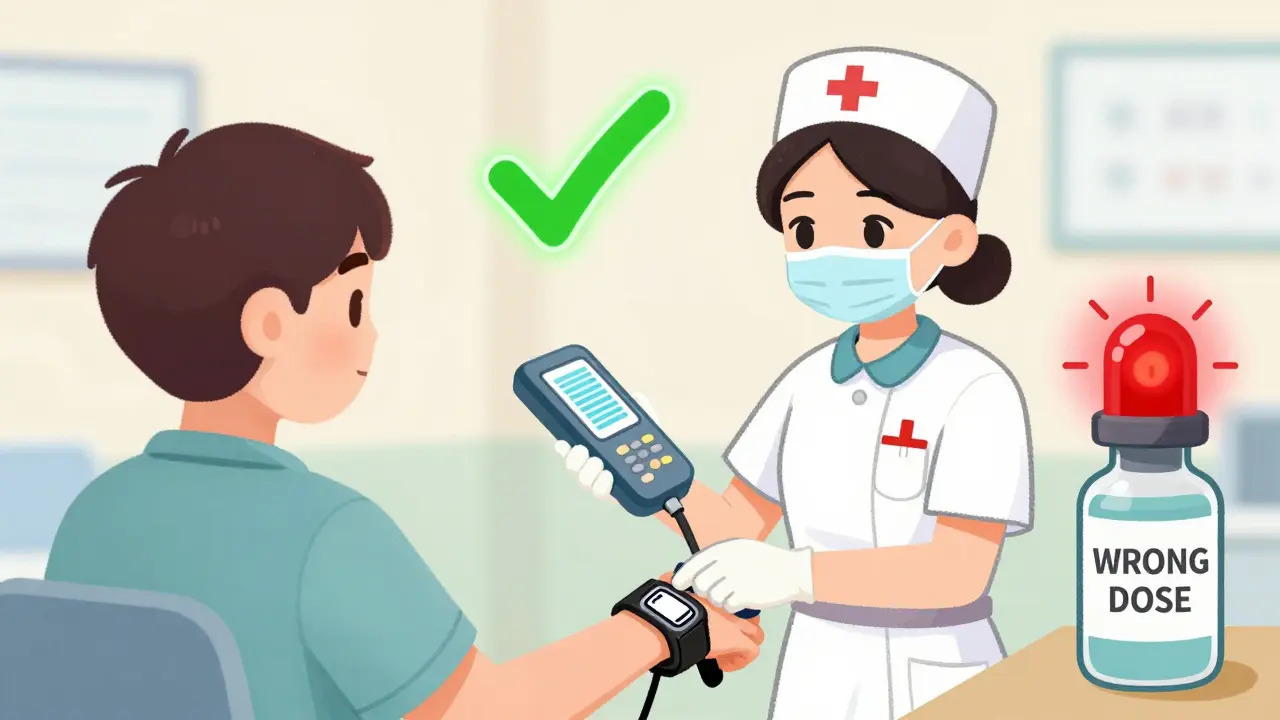
Every year, hundreds of thousands of patients in U.S. hospitals suffer harm because of medication errors. These aren’t rare mistakes-they’re preventable, systemic failures that happen in plain sight. One wrong dose, one misread label, one missed double-check-and a patient’s condition can spiral. The truth is, medication safety isn’t just about following rules. It’s about building systems so strong that even when humans slip up, the system catches it.
What Exactly Counts as a Medication Error?
A medication error isn’t just giving the wrong drug. It includes giving the right drug at the wrong time, in the wrong dose, to the wrong patient, or through the wrong route. The American Society of Health-System Pharmacists defines it as any preventable event that could lead to inappropriate use or harm. Think: a diabetic patient getting insulin instead of a blood pressure pill. Or a child receiving an adult dose of acetaminophen. Or a patient getting methotrexate daily instead of weekly-something that can be fatal.
Back in 1999, the Institute of Medicine shocked the medical world by revealing that between 44,000 and 98,000 people die each year in U.S. hospitals due to preventable errors. Medication errors alone were responsible for about 7,000 of those deaths. That’s more than car accidents. And the financial cost? Around $21 billion annually. These aren’t abstract numbers. They’re real people-parents, grandparents, workers-who never should have been harmed in a place meant to heal them.
The High-Risk Medications You Can’t Afford to Get Wrong
Not all drugs carry the same risk. Some are so dangerous that even small mistakes can kill. The Institute for Safe Medication Practices (ISMP) calls these high-alert medications. They include insulin, opioids, anticoagulants, chemotherapy agents like vinca alkaloids, and concentrated electrolytes like potassium chloride.
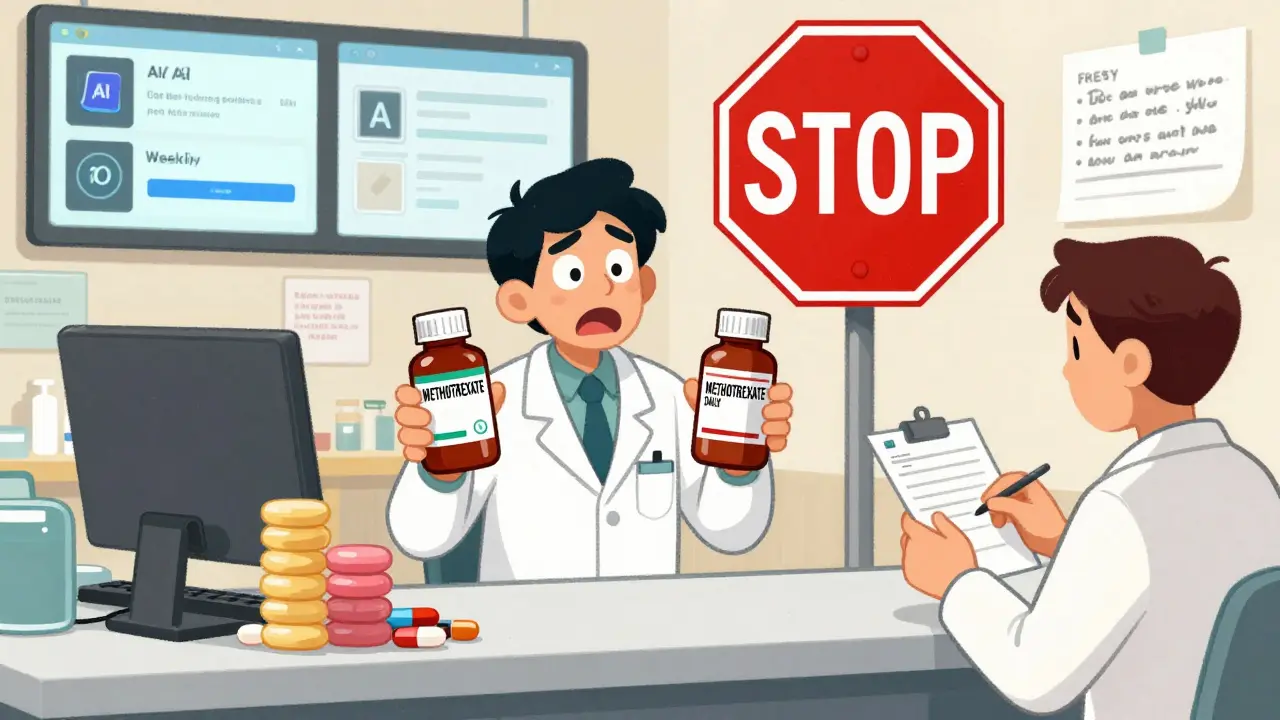
Take methotrexate. It’s used for cancer, autoimmune diseases, and sometimes ectopic pregnancies. But if a patient gets it daily instead of once a week, bone marrow suppression can lead to death. The ISMP’s 2020-2021 Targeted Best Practices require hospitals to do three things: (1) set the default in electronic systems to weekly dosing, (2) build a hard stop that requires a second confirmation if someone tries to order it daily, and (3) give patients written and verbal instructions they can’t miss. One hospital reported preventing three near-misses in the first month after implementing this. That’s three lives that didn’t need to be saved because they were never put at risk.
Insulin is another big one. Too much? Hypoglycemia. Too little? Diabetic ketoacidosis. The solution? Standardized concentrations, automated dose range checks, and independent double-checks by two staff members before administration. No exceptions. No shortcuts.
Technology That Actually Works
Electronic health records (EHRs) aren’t magic. But when they’re built right, they’re the best safety net we have. Barcode medication administration (BCMA) systems-where nurses scan the patient’s wristband and the medication’s barcode before giving a drug-cut serious errors by 55%, according to a 2019 AHRQ study. That’s not a small gain. That’s life-or-death.
But here’s the catch: 63% of hospitals say their EHR vendors won’t let them build hard stops for high-risk drugs. Why? Because the systems are old, rigid, or too expensive to update. So what do hospitals do? They create workarounds. Pharmacists manually review orders. Nurses carry printed checklists. Teams hold extra huddles before shift changes. These aren’t ideal-but they’re necessary until the tech catches up.
By 2025, Gartner predicts 75% of U.S. hospitals will use artificial intelligence to catch errors in real time. Imagine a system that flags: “This patient has kidney failure. This dose of vancomycin is 3x higher than safe.” That’s not science fiction. It’s coming. And it’s already being tested at places like Mayo Clinic and Johns Hopkins.
Who’s Responsible? Everyone
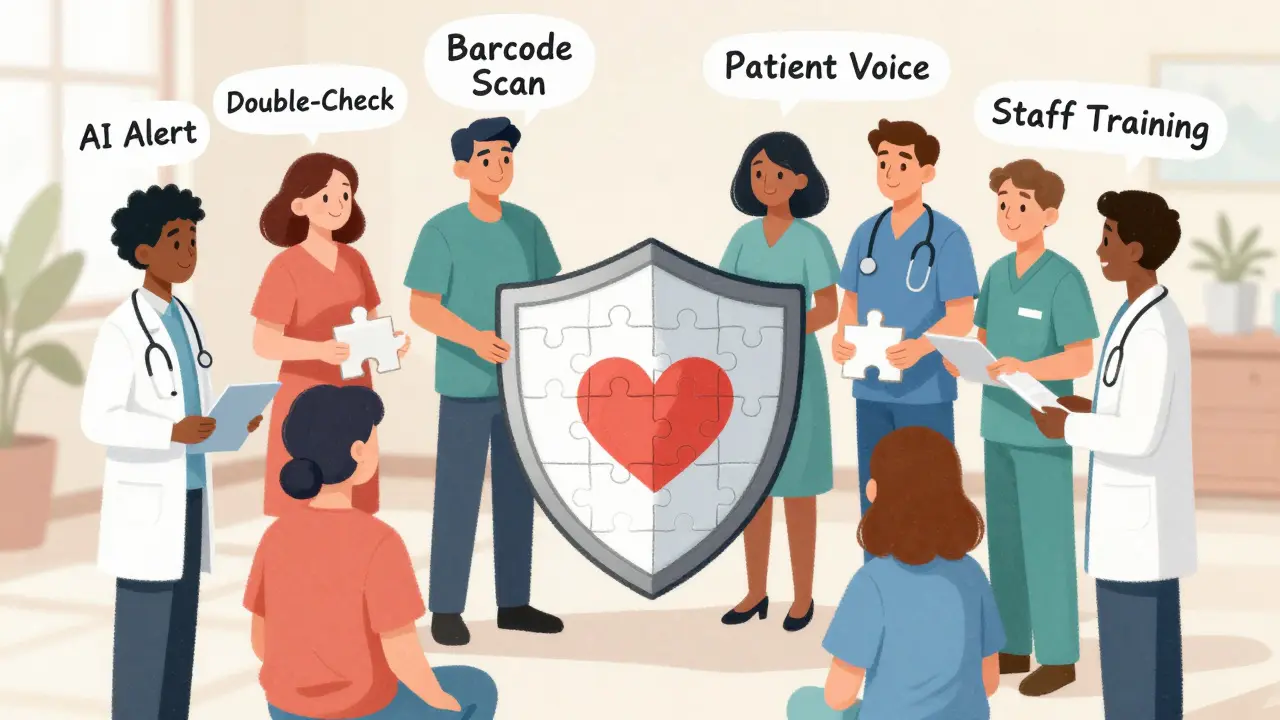
Medication safety isn’t the pharmacist’s job alone. It’s not the nurse’s job alone. It’s not the doctor’s job alone. It’s everyone’s job. A 2022 study in the Journal of Patient Safety found hospitals that fully implemented ISMP’s best practices saw a 37% drop in preventable harm-compared to those following only Joint Commission standards. Why? Because ISMP’s guidelines are specific. They don’t say “be careful.” They say: “Do this. Do that. Don’t do this.”
For example:
- Never store glacial acetic acid in a hospital-people have confused it with water for injections.
- Always verify the patient’s full name, date of birth, and wristband before giving any drug-no exceptions.
- Don’t allow oral methotrexate to be dispensed without a pharmacist-led counseling session.
And it’s not just about policy. It’s about culture. A nurse in a rural hospital posted online that requiring both written and verbal discharge instructions for methotrexate created delays during staffing shortages. That’s real. Frontline staff aren’t ignoring safety-they’re stretched thin. The solution isn’t more rules. It’s better staffing, smarter workflows, and listening to the people doing the work.
Why Some Hospitals Succeed-and Others Don’t
There’s a big gap between academic medical centers and small community hospitals. In 2022, 78% of big teaching hospitals fully implemented ISMP’s best practices. Only 42% of community hospitals did. Why? Resources. Training. Time. A 2020 report from the Healthcare Financial Management Association found it costs an average of $285,000 per hospital to upgrade systems and train staff. For a small hospital with a $5 million annual budget? That’s a huge chunk.
But here’s what’s worse: regulatory pressure. The Centers for Medicare & Medicaid Services (CMS) now tie hospital payments to safety performance. If you have too many errors, you get penalized. The Joint Commission can even threaten accreditation. So hospitals are forced to act-but often, they do the minimum. They check the box. They don’t change the culture.
Meanwhile, outpatient clinics are falling behind. Between 2018 and 2022, medication errors in ambulatory settings rose by 47%. Patients are getting prescriptions filled at pharmacies, managing multiple drugs at home, and seeing different providers-all without consistent safety checks. That’s why ISMP is planning to expand its best practices to include outpatient care in 2024-2025.
What Patients Can Do
Patients aren’t powerless. A 2022 survey by the National Council on Aging found that 68% of adults 65+ felt safer when hospitals used the “Right Patient Check”-verifying name, birth date, and wristband before every dose. That’s a simple thing. But it’s not always done.
Here’s what patients can ask:
- “What is this medicine for?”
- “How often should I take it?”
- “What side effects should I watch for?”
- “Can I see my medication list?”
Many patients don’t ask because they’re scared, tired, or think doctors know best. But when they do, errors drop. At Mayo Clinic, adding patient feedback into safety protocols improved error detection by 32%. That’s proof that patients aren’t just recipients of care-they’re part of the safety team.
The Future Is Here
The medication safety market is worth $4.7 billion and growing at 8.2% a year. New tools are arriving fast: AI-powered alerts, smart infusion pumps that adjust dosing in real time, and mobile apps that let patients report adverse reactions instantly. The FDA’s 2023 Safe Use Initiative now requires clearer labeling for high-concentration electrolytes. By the end of 2024, all hospitals must comply.
The AHRQ’s 2023 National Action Plan aims to cut opioid-related adverse events by 50% by 2027. That’s ambitious. But doable-if we stop treating safety as a checklist and start treating it as a culture.
There’s no single fix. No magic bullet. But we know what works: standardized systems, hard stops, double-checks, staff training, and patient involvement. The question isn’t whether we can do better. It’s whether we have the will to.
11 Responses
Just saw this and had to share: last month my mom got discharged after a 10-day hospital stay, and the nurse actually sat with her for 15 minutes going over every med on her list. No rush. No jargon. Just clear, calm explanations. That’s the kind of care that sticks with you. Not because it’s rare-but because it’s right.
It’s not about fancy tech. It’s about people taking the time to make sure someone else doesn’t get hurt. And yeah, that takes culture. Not just policy.
Also-patients asking questions? YES. Always. Even if you’re scared. You’re not bothering them. You’re helping them.
I’ve worked in hospital pharmacy for 14 years, and let me tell you-this post nails it. The real problem isn’t that people are careless-it’s that the systems are designed to fail. I’ve seen nurses scan a barcode, get a warning pop-up about a 3x overdose, and just click ‘override’ because they’re behind by 4 hours and the patient’s family is waiting. No one’s evil. No one’s lazy. The system just doesn’t give them room to breathe.
And the tech vendors? They’re not evil either. But they’re building software for billing, not safety. Hard stops cost money to implement, and hospitals don’t pay enough for customization. So we’re stuck with workarounds that work… until they don’t.
That methotrexate example? I’ve seen that near-miss. A nurse ordered it daily. The system flagged it. She called me. We caught it. But the next day? Another one. And the day after that. We’re fighting a tide with a teaspoon. We need funding. We need pressure. We need leadership that doesn’t treat safety like an audit checklist.
man i wish more hospitals did the barcode thing. i had a cousin who got the wrong med because the nurse just 'knew' what was right. she was on a ventilator. it was terrifying. bcma saved my uncle's life last year. scan the wristband, scan the med, boom-no mistakes. why is this not everywhere yet??
also i swear every hospital has one guy who thinks he's too experienced for double-checks. please stop. we're all human.
Wow another feel good story about how hospitals are perfect and we just need to trust them more. Right. Because clearly the 98k deaths a year are just from people forgetting to wash their hands. I bet the next article is titled 'Why Eating Vegetables Is the Key to Ending Cancer'.
In India we don’t even have 10% of the resources these US hospitals have. But we still manage to avoid these kinds of errors because we rely on trust, not technology. A nurse knows the patient. A pharmacist knows the family. No barcode needed. You people overcomplicate everything with machines. Sometimes simple is better.
OH MY GOSH. I JUST READ THIS. I'M CRYING. THIS IS SO IMPORTANT. I HAD A FRIEND WHO ALMOST DIED BECAUSE OF A MED ERROR. IT WAS INSANITY. WHY ISN'T THIS ON THE EVENING NEWS?! WHY ISN'T EVERY HOSPITAL REQUIRED TO DO THIS?! I'M SO MAD RIGHT NOW. I'M GOING TO CALL MY REPRESENTATIVE. I'M TELLING EVERYONE. THIS IS A CRISIS. A CRISIS. A CRISIS.
This is actually one of the most hopeful things I’ve read all year. We talk about healthcare like it’s broken beyond repair-but this? This is proof we can fix it. Not with grand gestures. Not with new laws. Just with smart, simple, consistent steps. Barcode scans. Double checks. Patient questions. These aren’t flashy. But they’re everything. Keep pushing for this. The change is already happening-it just needs more people to show up.
I’ve been in this field too long to believe any of this. You think a hard stop on methotrexate will stop errors? You think scanning barcodes will fix a system that’s been rotting since the 80s? You’re ignoring the real issue: hospitals are businesses. Profit comes before safety. They’ll use AI to cut staff, not prevent errors. And don’t get me started on EHRs-those systems are nightmares designed by people who’ve never held a syringe. The only thing that matters is trust. And we don’t have any left.
One cannot help but be profoundly moved by the systemic dissonance that permeates the American healthcare apparatus as it pertains to pharmaceutical stewardship. The tragic confluence of human fallibility and institutional inertia-manifested in the chillingly routine misadministration of high-alert agents-demands not merely procedural revision, but a radical ontological reorientation of care itself.
One must ask: when the very architecture of clinical workflow is predicated upon commodification rather than compassion, can any algorithm, however sophisticated, truly serve as a bulwark against the entropy of negligence? The answer, in my considered opinion, is unequivocally no.
It is not the nurse who errs. It is not the pharmacist who fails. It is the system-the entire edifice-that has lost its moral compass.
We don’t need more rules. We need fewer hospitals. Let the good ones survive. The rest should shut down. America’s healthcare system is a bloated, inefficient mess. If you can’t afford to do this right, you shouldn’t be in the business.
I think this is all part of the globalist agenda. The government and big pharma are pushing all this tech so they can track everyone. Soon they’ll put chips in your meds. Then they’ll control when you take them. And who you are. This is how they make you dependent. Don’t trust the scanners. Don’t trust the barcodes. Trust yourself.