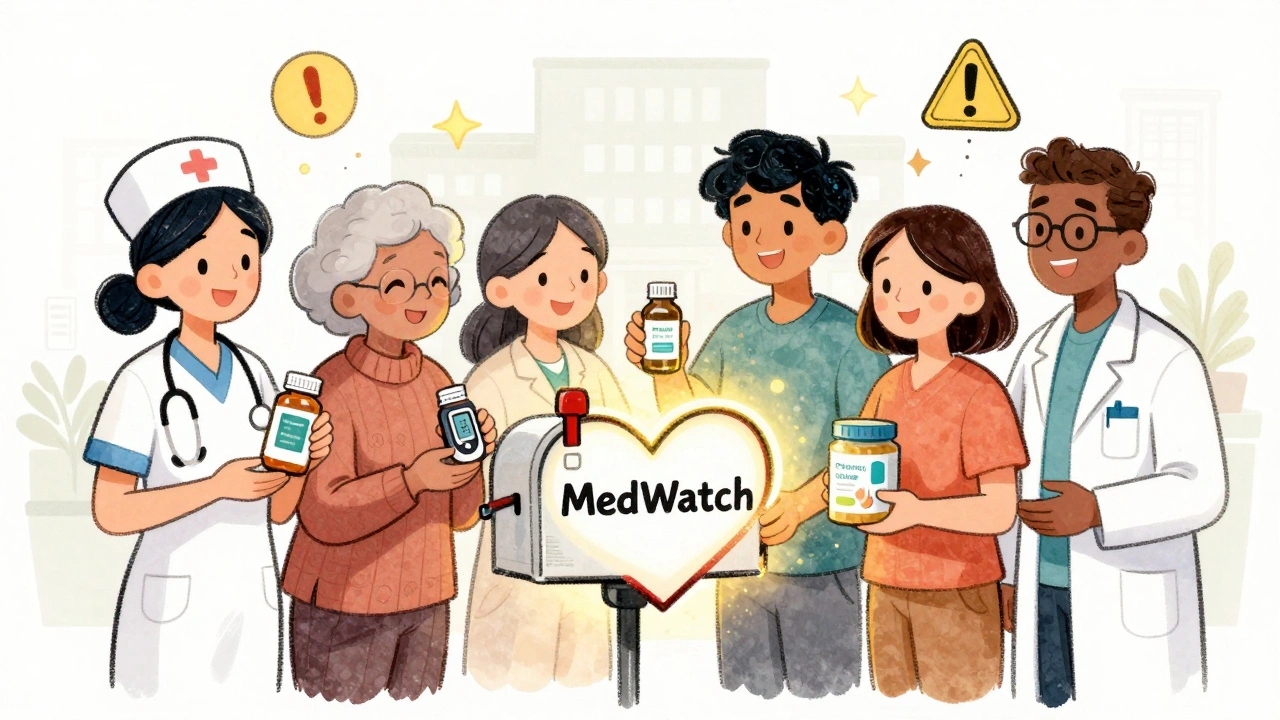
Every year, millions of people take prescription drugs, over-the-counter medicines, and dietary supplements without a problem. But for some, a medication can cause serious harm - from a rare allergic reaction to a life-threatening side effect. The problem? Most of these incidents never get reported. That’s where MedWatch comes in.
What Is MedWatch and Why It Matters
MedWatch is the U.S. Food and Drug Administration’s official system for collecting reports about serious problems with medical products. It’s not a customer service line. It’s not a complaint portal. It’s a public health early warning system. Started in 1993, MedWatch lets doctors, nurses, pharmacists, patients, and caregivers report dangerous side effects, product failures, and use errors. These reports help the FDA spot safety issues that didn’t show up during clinical trials. For example, the link between the diabetes drug rosiglitazone and increased heart attack risk was first flagged through MedWatch reports in 2007 - leading to major label changes and warnings. The program covers way more than just pills. It includes biologics (like gene therapies), medical devices (including glucose monitors and pacemakers), dietary supplements, cosmetics, and even infant formula. In 2022, MedWatch received over 1.4 million reports. About 65% were about drugs and biologics, 30% about devices, and the rest about other regulated products. Without MedWatch, many dangerous side effects would go unnoticed until dozens or hundreds of people are harmed. It’s one of the few tools the FDA has to catch problems after a product hits the market.Who Can Report and How to Do It
Anyone can report a problem to MedWatch - whether you’re a healthcare provider or a patient who had a bad reaction. The process is free, confidential, and available 24/7. There are three main ways to report:- Online: The easiest way is through the MedWatch Online portal. It walks you through the form step by step and takes about 15-20 minutes to complete.
- Phone: Call 1-800-FDA-1088. A representative will help you fill out the report over the phone.
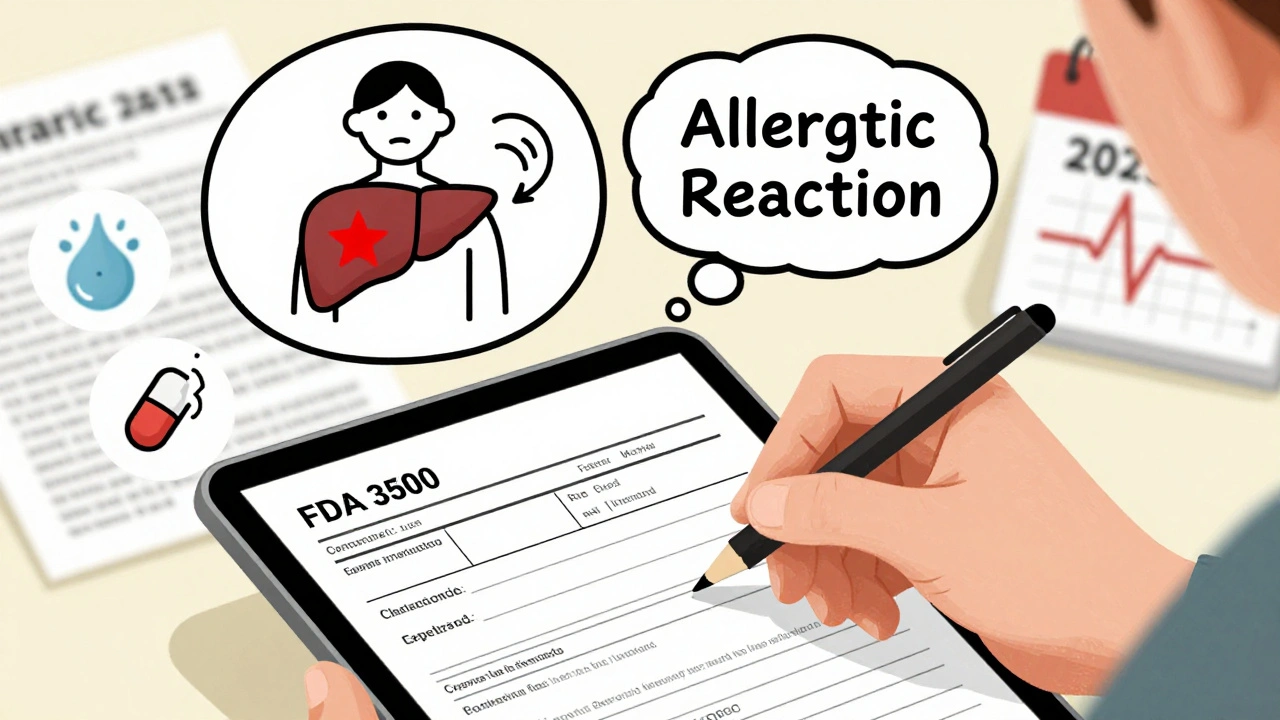
- Mail or fax: Download Form FDA 3500 or 3500B and send it in. Forms are available in English and Spanish.
Different Forms for Different Reporters
Not all reports are the same. The FDA uses different forms depending on who’s reporting:- Form FDA 3500 - For healthcare professionals (doctors, nurses, pharmacists). This form asks for detailed clinical info like lab results, medical history, and timing of the reaction.
- Form FDA 3500B - For patients and consumers. It’s shorter and written in plain language. You don’t need medical training to use it. Just describe what happened, what product you used, and when.
- Form FDA 3500A - For manufacturers, distributors, and importers. These are mandatory reports. If a company learns of a serious problem with their product, they must submit it within 15 days.
What Counts as a Reportable Event
You don’t need to be sure something is dangerous to report it. If you think a medication, device, or supplement caused a problem - report it. The FDA defines a serious adverse event as one that results in:- Death
- Hospitalization
- Permanent disability
- Birth defect
- Life-threatening condition
- Required medical or surgical intervention to prevent harm
- Unexpected side effects - even if they’re not listed on the label
- Product contamination or broken packaging
- Medication errors - like getting the wrong dose or wrong drug
- Therapeutic failures - like a blood pressure pill that suddenly stops working
What Information You Need to Provide
You don’t need to be a medical expert to report, but the more details you give, the more useful your report becomes. Here’s what helps:- Product name - Brand and generic name (e.g., “Lipitor” or “atorvastatin”)
- Product ID - Lot number, expiration date, and barcode (if available)
- Adverse event description - What happened? When did it start? How long did it last?
- Timing - When did you start taking the product? When did the problem begin?
- Outcome - Did you go to the ER? Were you hospitalized? Did you recover?
- Other meds - List all other drugs, supplements, or treatments you were using
- Your contact info - Your name and phone/email (optional but helpful for follow-up)
Real Stories, Real Impact
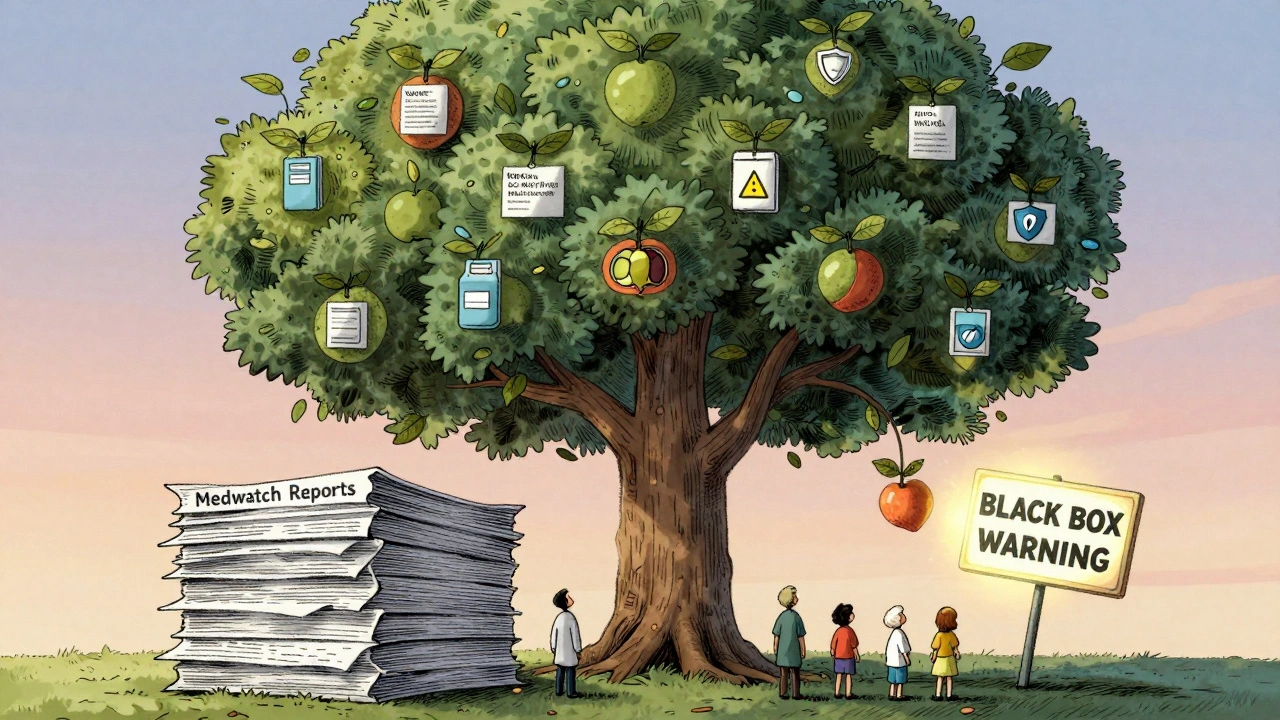
A 2023 Reddit post from a California nurse described how she reported a severe allergic reaction to a new biologic drug used for rheumatoid arthritis. The reaction - swelling, trouble breathing, and a rash - wasn’t listed in the drug’s safety profile. Her report was one of five similar ones received within two weeks. The FDA issued a safety alert two months later, adding a black box warning to the drug’s label. Another example: a grandmother in Ohio reported that her grandson’s infant formula caused bloody stools and vomiting. She didn’t know what to do - until she found MedWatch. Her report, combined with others, led to a recall of that formula batch in early 2023. These aren’t rare cases. According to the FDA’s 2021 annual report, MedWatch data contributed to 18 label changes, 7 public safety alerts, and 3 product withdrawals. That’s real action - and it started with someone taking five minutes to report a problem.Why So Few People Report
Despite its importance, only 1% to 10% of serious adverse events are ever reported to MedWatch. A 2022 Government Accountability Office report found that most patients don’t know MedWatch exists. In a 2022 survey, 78% of Americans had never heard of it. Even among doctors, reporting rates vary. Oncologists report 78% of serious events, while primary care doctors report only 42%. Why? Many think someone else will report it. Or they assume the drug company will handle it. Or they don’t have time. Patients often feel powerless. One user on the FDA’s public comment portal said: “I reported my reaction. I never heard back. I felt like I was shouting into a void.” That’s a real problem. The FDA doesn’t send confirmations or updates unless you ask. There’s no tracking number. No portal to check the status. That’s frustrating - but it doesn’t mean your report didn’t matter.How the FDA Uses Your Reports
Your report doesn’t go into a black hole. It goes into a database that’s analyzed daily. Trained reviewers look for patterns: Is the same side effect popping up with the same drug? Is it happening more often in older adults? Are certain brands linked to more problems? MedWatch works alongside the FDA’s Sentinel Initiative - a system that scans electronic health records from 300 million patients. Together, they give a fuller picture: MedWatch catches rare, unexpected events; Sentinel spots trends in large populations. When a pattern emerges, the FDA can:- Update drug labels with new warnings
- Require new safety studies
- Issue public alerts
- Restrict who can use the drug
- Remove the product from the market
What’s New in MedWatch (2025)
The system is getting better. In January 2023, the FDA launched a redesigned MedWatch Online portal with:- Mobile-friendly design
- Real-time error checking (so you don’t miss a required field)
- Faster submission
What You Can Do Right Now
You don’t need to wait for a crisis. Here’s what to do today:- Know it exists - MedWatch is the only official channel for reporting medication problems to the FDA.
- Keep a record - Write down the name of any medication you take, the dose, and when you started.
- Report anything unusual - Even if you’re not sure. One report might be the key that saves someone else.
- Share the info - Tell friends, family, and your doctor about MedWatch. Most people still don’t know about it.
Frequently Asked Questions
Do I need to be a doctor to report to MedWatch?
No. Anyone can report - patients, caregivers, family members, or even pharmacists. The FDA encourages patient reports because they often catch side effects doctors miss. Use Form FDA 3500B, the consumer version, which is written in plain language and available in Spanish.
Will the FDA contact me after I report?
Usually not. The FDA does not send confirmations or updates unless you provide contact information and specifically ask for follow-up. This is a known frustration, but your report is still valuable even without a reply. Thousands of reports are reviewed daily, and your input helps build the data that leads to safety actions.
Is reporting to MedWatch anonymous?
You can choose to remain anonymous. But providing your contact info helps the FDA if they need more details. Your personal information is protected under federal privacy laws and is not shared publicly. The FDA only uses it to clarify your report.
Can I report a side effect from a supplement or cosmetic?
Yes. MedWatch accepts reports for dietary supplements, cosmetics, infant formula, and other FDA-regulated products. Even though supplements aren’t approved by the FDA before sale, serious reactions still need to be tracked. If a supplement caused liver damage or an allergic reaction, report it.
How long does it take for a report to lead to a safety change?
There’s no set timeline. Some reports trigger alerts within weeks if many similar cases appear. Others take months or years to build enough evidence. For example, the link between certain blood pressure drugs and cancer risk took over three years of accumulated reports before the FDA acted. Patience is part of the process - but your report is part of the evidence.
What if I report a problem and nothing happens?
Nothing happening doesn’t mean your report didn’t matter. The FDA reviews every report, even if no action is taken. Sometimes, a single report helps rule out a connection. Other times, it adds to a pattern that only becomes clear after dozens of similar reports. Your input helps fill the gaps in safety data - and that’s how public health improves.
19 Responses
I reported my dad's reaction to his new blood pressure med last year. Didn't hear back, but I felt better knowing it was in the system. Maybe it'll help someone else avoid the dizziness he got. 🙏
This whole thing is a joke. The FDA doesn't care. They're just collecting data to sell to pharma companies. I reported my son's anaphylaxis to a supplement and got a robot email that said 'Thank you for your submission.' Like, wow. Thanks for the auto-reply, robot.
I'm a nurse, and I report every single weird reaction I see-especially if it's not on the label. I know it feels like shouting into the void, but I've seen three cases where a pattern emerged from just a few reports. It matters. Even if you don't get a reply, you're part of the safety net. Seriously. Do it.
Look, I get it, reporting feels pointless. I've been doing this for 12 years as a pharmacist, and I've seen the same damn things over and over. People think if it's on the market, it's safe. But no. It's not. I've seen patients lose limbs from a single dose of a 'safe' antibiotic because the label didn't mention necrosis. The system is broken, but if you don't report, you're part of the problem. The FDA doesn't have magic eyes-they need your eyes. Stop waiting for someone else to do it.
I don't trust this. I read somewhere that MedWatch is just a front for Big Pharma to bury bad data. The FDA is in bed with them. Why do you think they only update labels after 3 years? That's not safety-that's profit protection. And don't get me started on the AI pilot. They're automating the truth. The real side effects? The ones that cause suicide, psychosis, or infertility? They're all coded as 'mild anxiety' in the system. You're being used.
You people are adorable. You think a 20-minute form is going to change anything? The FDA has 12 analysts for 1.4 million reports. That's 116,000 per person. You're not saving lives-you're doing their paperwork for free. And the 'consumer form'? It's designed to look accessible so you feel good about wasting your time. The real system is closed. The data is classified. You're a cog.
It is imperative that we acknowledge the structural inadequacies inherent in the current pharmacovigilance paradigm. The MedWatch system, while ostensibly well-intentioned, operates within a framework that is fundamentally incompatible with the epistemological demands of modern clinical epidemiology. One must ask: Is the aggregation of anecdotal, unverified, non-standardized reports truly conducive to the advancement of public health? Or is it merely performative compliance? The answer, I submit, lies in the absence of longitudinal feedback mechanisms, which renders the entire endeavor a form of epistemic theater.
I know this sounds wild, but I swear I saw a Reddit thread from 2021 where someone said the FDA uses your reports to train AI models that predict which drugs to pull. And then they sell the AI to the same pharma companies that made the drugs. So you're basically helping them figure out which side effects to hide next time. I’m not saying it’s true… but why haven’t they fixed the no-feedback thing? Why not send a confirmation? It’s too convenient. And the Spanish version? That’s just PR. They don’t care about non-English speakers-they just want to look good.
I reported my wife's stroke after a statin. I got zero response. Then I saw the same drug had 17 other stroke reports in the last month. The FDA did NOTHING. They don’t act unless it’s a PR nightmare. And now? My wife’s on a different med. She’s fine. But the company? They just added a tiny footnote. That’s it. You’re not helping. You’re giving them cover. They want you to think you’re making a difference. You’re not.
I used to think reporting was useless too. Then I got a call from the FDA last year. They had 12 similar reports about a new migraine med causing memory loss. They wanted to verify details. I gave them my wife’s records (anonymized). Two months later, the label changed. I didn’t expect it. But it happened. So yeah, it’s slow. But it works. Don’t give up.
Honestly, if you're going to report, you need to do it right. You can't just say 'I felt weird.' You need SNOMED CT codes, proper temporal sequencing, and a differential diagnosis. Otherwise, you're just adding noise. And if you're a layperson? You shouldn't be reporting at all. That's why we have clinical decision support systems. Your anecdote isn't data. It's noise. Save your energy for something that matters.
I’ve been reviewing MedWatch submissions as part of my pharmacovigilance gig. The real bottleneck isn’t the number of reports-it’s the lack of structured data. Most consumer reports are written in free text, no ICD-10, no temporal alignment. We’re drowning in unstructured narratives. The SNOMED CT rollout in 2026? Long overdue. Until then, we’re just doing pattern recognition with duct tape and hope.
If you’ve ever taken a pill and felt something off-don’t ignore it. I’m not a doctor, but I reported my weird heart palpitations after a new probiotic. It turned out three other people had the same thing. The FDA flagged it. Now it’s got a warning. You think that’s nothing? That’s one person who won’t have a panic attack because you spoke up. Do it. For the next person.
I always tell my patients: if it feels wrong, it probably is. I’ve had patients come in with rashes, fatigue, brain fog-all from supplements they thought were 'natural.' I walk them through the 3500B form. Takes 10 minutes. They’re usually shocked they can do it. And honestly? The best part isn’t the report-it’s them feeling heard. That’s power. Don’t underestimate it.
The system is a mirror of human arrogance. We create drugs to fix nature, then blame nature when they fail. Reporting is just guilt management. The real problem? We believe medicine can control life. It cannot.
I reported my daughter's seizures after a flu shot. Got zero response. Then I found out the same batch had 8 other reports. The FDA quietly added a warning in a PDF no one reads. So I went to the media. Now the company’s being sued. Sometimes you have to break the system to fix it. MedWatch? It’s a Band-Aid on a bullet wound.
As someone who works with real-time pharmacovigilance dashboards, I can tell you: MedWatch is the canary in the coal mine. Most signals start here-before Sentinel even picks them up. That 2023 biologic case? Started with three reports on MedWatch. One nurse. One patient. One grandmother. That’s how it works. Don’t think small. Think systemic.
So let me get this straight. You're asking people to spend 20 minutes filling out a form so the FDA can… what? Add a tiny footnote to a drug label three years later? Brilliant. Next you'll tell me to mail my complaints to the postal service.
They don't want you to report. They want you to think you're helping. It's the oldest trick in the book. Make the victim feel useful while the system stays broken. I've seen the internal memos. The FDA prioritizes reports that match their funding goals. Your grandma's formula reaction? Ignored. Your corporate drug's liver damage? Prioritized. This isn't safety. It's politics.