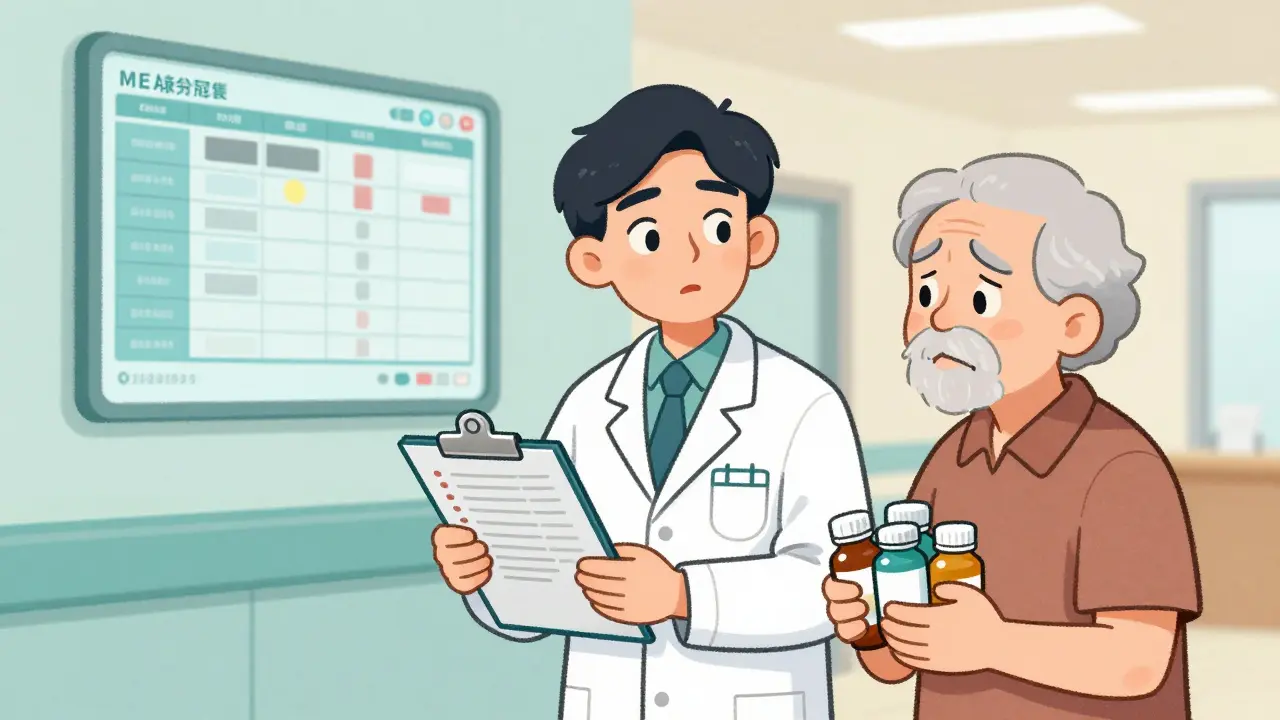
Every year, tens of thousands of patients in the U.S. are harmed because their medication list gets lost or mixed up when they move from one care setting to another. A patient goes to the hospital, gets discharged, visits their primary doctor, then fills a new prescription - and somewhere along the way, a pill gets dropped, doubled, or mislabeled. This isn’t a rare mistake. It happens in 50-70% of care transitions. And about 20-30% of those errors lead to real harm - falls, kidney damage, internal bleeding, even death.
What Medication Reconciliation Actually Means
Medication reconciliation isn’t just double-checking a list. It’s a formal, step-by-step process to make sure a patient’s medication history is accurate at every handoff - whether they’re being admitted to the hospital, moved to a rehab unit, discharged home, or seen in the ER. The goal is simple: prevent mistakes like giving someone a drug they’re already on, missing a critical medication, or prescribing the wrong dose. The process was officially defined by the Institute for Healthcare Improvement in 2005 and later adopted as a national safety standard by The Joint Commission in 2006. Today, it’s required at every major care transition. That includes hospital admission, discharge, transfers between units, emergency visits, and even outpatient clinic appointments. It’s not about convenience. It’s about survival. Adverse drug events - bad reactions caused by medication errors - account for 6.5% of all hospital admissions. For patients already hospitalized, that number jumps to 19%. Reconciliation cuts those numbers down. Facilities that do it right reduce medication errors by 67%.The Five Steps That Save Lives
There’s no guesswork in a proper reconciliation. It follows five clear steps:- Get the full list. This means every drug the patient is taking - prescriptions, over-the-counter painkillers, vitamins, herbal supplements, even traditional remedies. Don’t assume. Ask. Dig. Check.
- Build the new list. What is the care team planning to prescribe now? This could be different from what the patient was taking before.
- Compare the two. Side by side. Look for mismatches: missing drugs, duplicate doses, wrong strengths, dangerous combinations.
- Fix the gaps. Decide what to keep, stop, change, or add. Not just based on what’s easiest, but what’s safest for the patient.
- Communicate clearly. Update the medical record. Tell the patient. Tell the pharmacist. Tell the next provider. No one should be left guessing.
Who Does This Work?
Many hospitals still try to hand this off to nurses or clerks. That’s a mistake. Pharmacists are the experts here. The American Society of Health-System Pharmacists says it plainly: pharmacists are the medication experts. Their training lets them spot interactions, dosing errors, and therapeutic duplications that others miss. Studies show pharmacist-led reconciliation cuts error rates by 47% compared to nurse-only models. At Mayo Clinic, their pharmacist team prevented over 1,200 adverse drug events in a single year. At Johns Hopkins, they reduced discrepancies by 72% in 18 months by hiring dedicated reconciliation technicians. But it’s not just about who does it - it’s about how much time they have. The Institute for Healthcare Improvement recommends 15-20 minutes per admission and 10-15 minutes per discharge. In reality? Many staff get 5 minutes. A hospital pharmacist in a Reddit thread said discharge reconciliation takes 45-60 minutes per patient because systems don’t talk to each other. That’s why workarounds happen. And workarounds mean errors.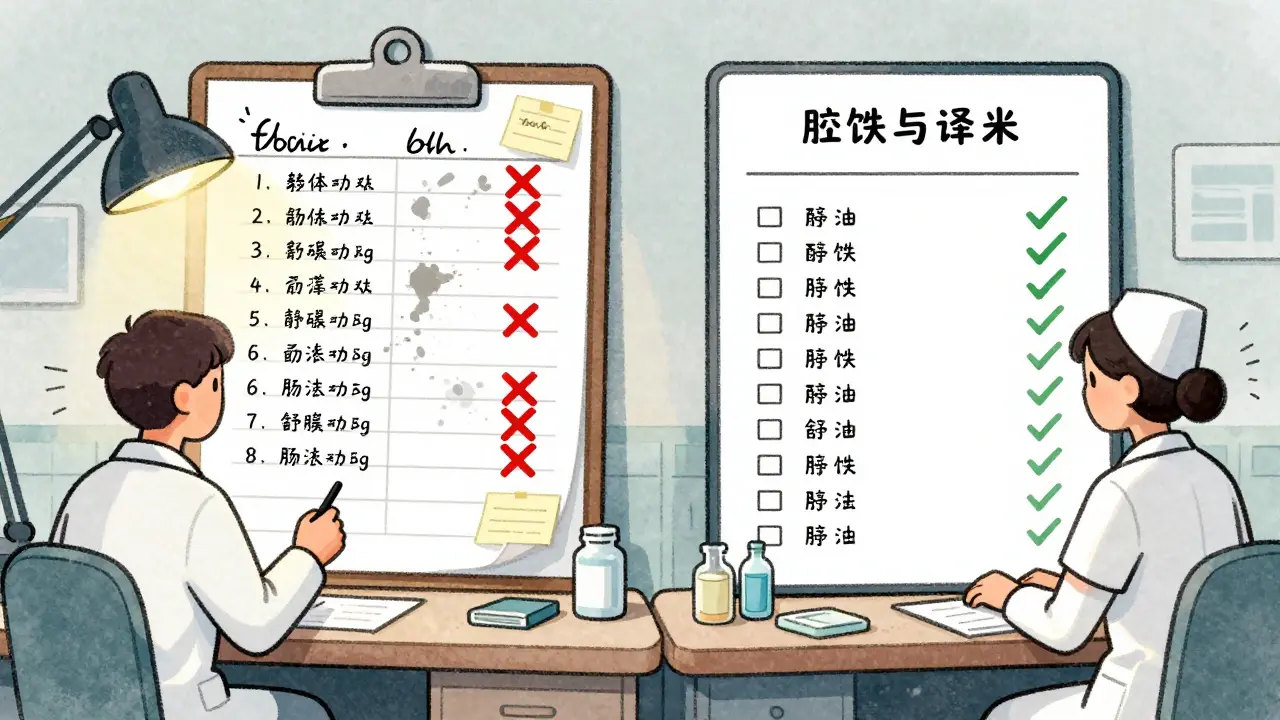
Technology Helps - But Doesn’t Fix Everything
Electronic health records (EHRs) like Epic have built-in reconciliation tools. They can pull data from pharmacies via Surescripts, flag potential interactions, and auto-generate lists. That’s great. Epic’s tools cut reconciliation time by 22%. Standalone platforms like MedsReview hit 37% higher accuracy in community settings. But here’s the problem: tech can’t replace human judgment. A 2021 study in JAMA Internal Medicine found that 31% of reconciliation errors still happen even with electronic tools. Why? Because the systems are fragmented. The data is incomplete. And too often, reconciliation becomes a checkbox - click, sign, move on. Surescripts connects 90% of U.S. pharmacies, but still misses 18-22% of medication records. CMS audits show only 43% of discharge summaries include complete medication lists. And 68% of nurses say they sometimes skip full reconciliation because they’re rushed.What Patients Can Do
You don’t have to wait for the system to fix itself. Patients can protect themselves. - Keep a written or digital list of every medication you take - name, dose, why you take it, and how often. Update it every time your doctor changes something. - Bring that list - and the actual bottles - to every appointment, ER visit, or hospital admission. - Ask: “Did you compare my old list with what you’re prescribing?” - If you’re discharged, ask for a printed copy of your updated medication list. Don’t rely on memory. One study found that patients who used a medication diary had 27% higher reconciliation accuracy. Yet only 33% of hospitals even ask for them. And here’s the harsh truth: 61% of patients leave the hospital confused about their meds. 28% change or stop a drug on their own within the first week because they didn’t understand the changes.Why This Still Isn’t Done Right
Even though it’s required by law and backed by decades of data, reconciliation is still poorly implemented. Why? - Time. 63% of providers say they don’t have enough time to do it right. - Systems don’t talk. 76% of hospitals report fragmented health IT systems. - Patient literacy. 80 million Americans have trouble understanding health info. Many elderly patients can’t name their own drugs. - No reimbursement. Hospitals lose money doing this. The Healthcare Financial Management Association found 61% of reconciliation programs run at a net loss. Regulators are trying. CMS now counts reconciliation in hospital star ratings. The 21st Century Cures Act demands better data sharing. ONC’s USCDI Version 4, launched in January 2023, now includes standardized medication reconciliation fields to make cross-system transfers smoother. But real progress comes from culture - not compliance. When a hospital treats reconciliation like a safety priority - not a paperwork task - outcomes change.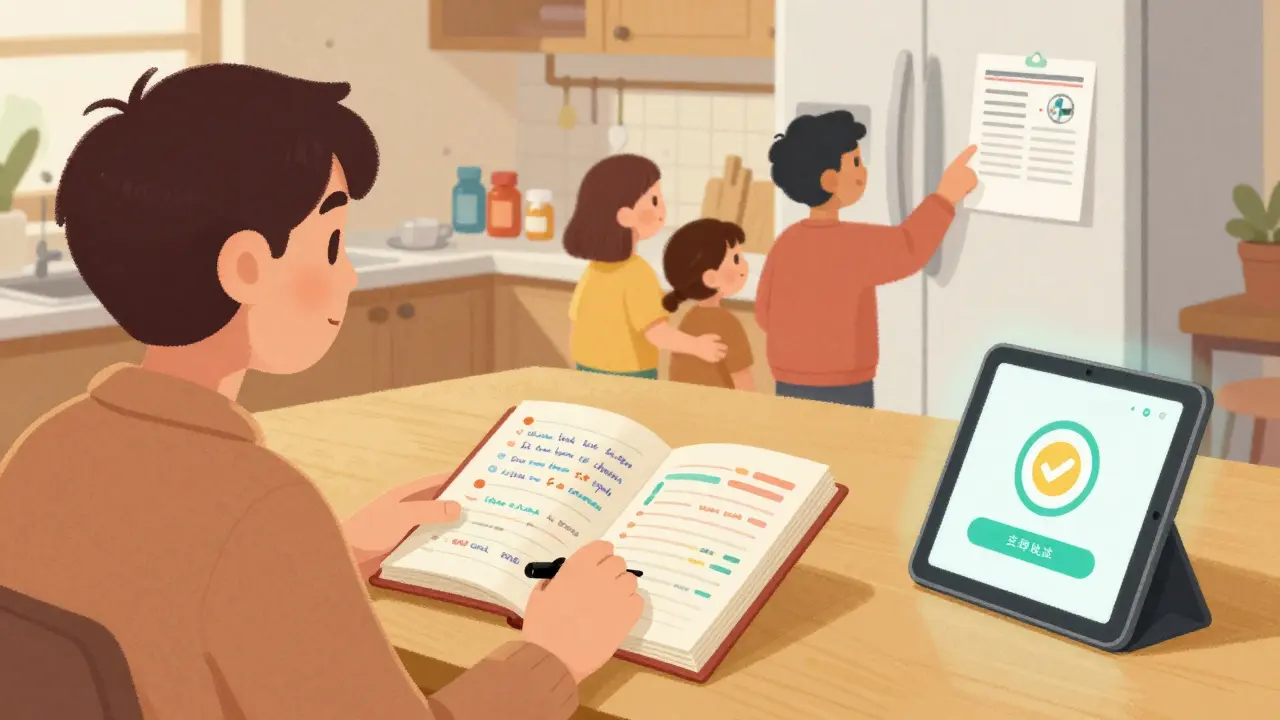
The Future: AI and Human Judgment
New tools are emerging. Google’s DeepMind Health tested an AI tool at Moorfields Eye Hospital that predicted medication discrepancies with 89% accuracy. But even that needed human review to hit 100%. The American Hospital Association warns: technology must support, not replace, clinical judgment. The future isn’t fully automated reconciliation. It’s smarter systems that give pharmacists better data faster - so they can spend more time talking to patients, not clicking screens.What Success Looks Like
At Mayo Clinic, they cut 30-day readmissions by 18%. At Johns Hopkins, they slashed medication errors by 72%. At a community hospital in Ohio, they reduced adverse events by 41% in one year by assigning a pharmacist to every discharge. These aren’t miracles. They’re systems. They’re time. They’re trained staff. They’re patients who know their meds. If your loved one is going into the hospital, ask: “Who will reconcile their medications? Will it be a pharmacist? Will they have time to do it right?” If the answer is vague - push. Because someone’s life might depend on it.What You Should Know Now
- Medication reconciliation is not optional. It’s a safety standard. - It’s not just about hospital stays. It happens at every transition - ER, clinic, rehab, home. - The most accurate list comes from combining patient input, pharmacy records, and provider data - not just one source. - Pharmacists are the best people to lead this process. - Technology helps, but human verification is still essential. - Patients who keep and bring their own medication lists are safer. - If reconciliation is rushed, errors happen. And errors kill. This isn’t about paperwork. It’s about making sure the right drug gets to the right person at the right time. Every time.What is medication reconciliation and why is it important?
Medication reconciliation is the process of comparing a patient’s current medication list with new prescriptions during care transitions - like hospital admission or discharge. It’s designed to catch errors like missing drugs, duplicate doses, or dangerous interactions. It’s critical because medication errors cause 6.5% of all hospital admissions and up to 19% of inpatient adverse events. Proper reconciliation reduces these errors by up to 67%.
Who is responsible for performing medication reconciliation?
While nurses and doctors may start the process, pharmacists are the most qualified to lead it. Their training in drug interactions, dosing, and therapeutic alternatives makes them the best choice. Studies show pharmacist-led reconciliation reduces errors by 47% compared to nurse-only models. Many hospitals now hire dedicated reconciliation technicians trained by the Commission for Certification in Pharmacy Informatics and Technology (CCPIT).
What medications should be included in the list?
The list must include all prescription drugs, over-the-counter medications (like ibuprofen or antacids), vitamins, supplements, herbal remedies, and traditional or alternative medicines. Many patients don’t think of these as “medications,” but they can interact dangerously with prescriptions. The Joint Commission now requires reconciliation of all these types as of 2023.
How accurate are electronic health records in medication reconciliation?
EHRs help, but they’re not perfect. Systems like Epic reduce reconciliation time by 22%, and tools like MedsReview improve accuracy by 37%. However, data gaps remain - Surescripts, which connects most U.S. pharmacies, still misses 18-22% of medication records. Even with tech, 31% of reconciliation errors persist due to poor implementation, incomplete data, or staff treating it as a checkbox task.
What can patients do to improve medication reconciliation?
Patients should keep an updated list of all their medications - including names, doses, reasons, and frequency - and bring it to every appointment or hospital visit. They should also bring the actual pill bottles. Ask the provider: “Did you compare my list with what you’re prescribing?” After discharge, request a printed copy of the updated list. Patients who use a medication diary improve reconciliation accuracy by 27%.
Why do some hospitals fail at medication reconciliation?
Common reasons include time pressure - many staff get only 5 minutes per patient instead of the recommended 15-20 - fragmented electronic systems that don’t communicate, poor patient health literacy, and lack of reimbursement. Sixty-one percent of hospitals report operating reconciliation programs at a net loss. Without dedicated staff and proper workflow integration, reconciliation becomes a paperwork exercise, not a safety tool.
Is medication reconciliation required by law?
Yes. The Joint Commission requires it at every care transition as part of its National Patient Safety Goals. CMS mandates it under Meaningful Use Stage 2 and includes it in hospital star ratings. Failure to comply can lead to reduced Medicare payments - up to 2% in some cases. The 21st Century Cures Act and ONC’s USCDI Version 4 also enforce interoperability standards that support reconciliation.
15 Responses
Let’s be real-this isn’t about ‘reconciliation,’ it’s about systemic neglect dressed up as protocol. You can’t fix a broken system with checklists when the people running it are overworked, underpaid, and treated like administrative ghosts. Pharmacists? Sure, they’re the ‘experts,’ but they’re also the ones getting blamed when the EHR crashes at 3 a.m. and the discharge summary is just a PDF with half the meds missing. This isn’t safety-it’s performative compliance.
And don’t get me started on ‘patients bringing pill bottles.’ As if a 78-year-old with dementia and three caregivers can reasonably be expected to haul 17 bottles into the ER while their son is crying in the waiting room. This is moral grandstanding masquerading as patient advocacy. We don’t need more burdens on the vulnerable-we need better infrastructure. Or are we just fine with people dying because we’d rather lecture them than fix the damn system?
Okay, but have you ever tried reconciling meds in a rural hospital where the EHR doesn’t talk to the pharmacy, the pharmacist works 3 shifts a week, and the patient’s ‘list’ is written on a napkin from Denny’s? I’ve seen it. It’s chaos. Epic’s tool says ‘aspirin 81mg daily’-but the patient’s been taking Bayer PM because they can’t sleep. The system doesn’t know that ‘PM’ means diphenhydramine. So now we’ve got a guy on a sedative he didn’t need, and his anticoagulant got dropped because ‘no record.’
Tech helps, yeah-but it’s like giving a chainsaw to someone who’s never held a saw. You need training, time, and someone who actually cares. Not just a checkbox. I’ve seen pharmacists cry over discharge paperwork because they knew they missed something. And nobody noticed.
Also-herbal supplements? I once had a patient on warfarin who took ‘ginseng tea’ because his cousin said it ‘boosts immunity.’ Turns out, ginseng thins blood. Like, *really* thins it. We caught it because his daughter brought the tea bag. Not the EHR. Not the pharmacy. A tea bag.
Well, I must say-this is one of the most cogent, well-researched pieces I’ve read on this topic in years. Truly impressive. The data is meticulous, the structure logical, and the urgency palpable. I particularly appreciated the breakdown of the five steps-so clear, so actionable. And the emphasis on pharmacists? Spot on. Their role is criminally undervalued.
That said, I wonder-have you considered the impact of linguistic barriers? In my own practice (UK-based), we see a lot of non-native speakers who simply cannot articulate their meds-even with interpreters. The ‘pill bottle’ strategy? Often useless. We’ve started using pictorial medication charts-images of pills with labels-and it’s cut errors by nearly 30%.
Also-why no mention of AI-assisted voice recognition? Imagine a patient saying, ‘I take the blue one for my heart, the white one for pain, and that green one from the guy at the market’-and the system transcribes, cross-references, flags? We’re not far off. Just… needs funding. And will.
Ugh. Another ‘pharmacists are heroes’ sanctimonious manifesto. Let’s be honest-most pharmacists are just glorified cashiers who don’t even know what a beta-blocker does. They’re trained to count pills, not think critically. And don’t get me started on ‘medication diaries.’ Who has time for that? My aunt’s 89 and thinks ‘vitamin D’ is a brand of cereal. She takes three different ‘heart pills’ and calls them ‘the red ones.’
This whole thing is a bureaucratic nightmare designed to make administrators feel good while patients die quietly in the background. The real solution? Stop prescribing so many damn drugs. Reduce polypharmacy. Stop letting primary care docs act like drug pushers. That’s the root cause. Not ‘reconciliation.’
Also-why is no one talking about Big Pharma’s role in this? They’re the ones flooding the market with 47 different versions of the same drug. Of course the list is messy. It’s designed to be.
EHRs suck. Pharmacist? Maybe. But they dont have time. Patients forget. Systems dont talk. Done. ✅
It is both regrettable and intellectually dishonest to frame medication reconciliation as a matter of ‘time’ or ‘technology.’ The issue is fundamentally one of professional hierarchy and institutional cowardice. Hospitals prioritize revenue-generating procedures over life-preserving protocols because, in the American healthcare paradigm, value is measured in procedure codes-not outcomes.
Pharmacists are not merely ‘experts’; they are the only clinicians with doctoral-level training in pharmacotherapeutics. To delegate reconciliation to nurses or clerks is not negligence-it is malpractice by proxy. The Joint Commission’s standards are not suggestions; they are mandates. And yet, institutions continue to violate them with impunity because liability is externalized onto the patient.
One must ask: if a surgeon operated with a dirty scalpel because ‘he was rushed,’ would we accept that? Then why do we accept medication errors under the same rationale? The answer is simple: because the victims are invisible. The elderly. The poor. The non-English-speaking. And so, we do nothing.
Until we treat medication safety with the same moral gravity as surgical sterility, this will never change.
Okay, but have you heard about the secret government program that makes hospitals *want* patients to mess up their meds? 😏
It’s called ‘MedWatch 2.0’-they use AI to predict which elderly people are ‘likely to die soon’ so they can redirect their Medicare funds to new patients. 🤫
That’s why the EHRs glitch. That’s why the pharmacist has 5 minutes. That’s why your grandma gets 12 new pills after a hospital stay-so she’ll need a ‘follow-up’ next month. 💉
They don’t want you to live. They want you to *consume*. And if you die? Well… that’s just ‘natural causes’ on the chart. 😇
Bring your pill bottles. Record every pill. Take a video. And if your doctor says ‘it’s fine’-ask them if they’ve ever taken a statin. 👀
#MedicationReconciliationIsAScam #BigPharmaKills #IWatchedTheDocumentary
Man, I grew up in a small town in Texas where the pharmacist knew everyone’s name, their dog’s name, and what meds they were on-even if they didn’t. Now? You walk into a CVS and the guy behind the counter doesn’t even look up. We’ve lost something real here.
My abuela used to keep her meds in a shoebox with Post-its. One said ‘blue for heart, red for pain, green for sleep.’ She didn’t know the names. But she knew what they did. And when she went to the hospital, my cousin took the shoebox. The nurse asked if it was ‘official.’ We said yes. She took it. And they got her list right.
Maybe the answer isn’t more tech. Maybe it’s more humanity. More listening. More remembering people instead of scanning barcodes.
Let’s not sugarcoat this: the entire system is rigged. The Joint Commission? They’re funded by hospital associations. The 67% error reduction stat? It’s from a study funded by Epic. The ‘pharmacist-led’ model? Only happens in fancy academic hospitals that get federal grants. Meanwhile, rural clinics? They’re using Excel spreadsheets. And the patients? They’re the ones getting the wrong dose because no one had time to check.
And don’t tell me about ‘patients bringing pill bottles’-what about the ones who can’t afford to keep their meds? Who throw out half their prescriptions because the co-pay is $150? Who don’t have transportation to the pharmacy? Who are too tired to remember? This isn’t about ‘patient responsibility.’ It’s about poverty. It’s about racism. It’s about a system that doesn’t care if you live or die-as long as the billing code gets entered.
And now they want to add AI? Please. The same AI that flags Black patients as ‘less likely to benefit’ from kidney transplants? Yeah. Let’s trust that.
Wow. This is the kind of post that makes me believe change is possible. I work in a community clinic, and we just started a pharmacist-led reconciliation pilot last month. We didn’t have a budget-we borrowed time from the ER pharmacist, trained a nursing assistant to help with intake, and started asking patients to bring their meds in a ziplock bag. We’ve already caught 14 dangerous interactions in 6 weeks.
It’s not perfect. The EHR still glitches. The receptionist still forgets to remind people. But we’re trying. And the patients? They’re actually *talking* to us now. One woman said, ‘No one’s ever asked me what I take for my nerves before.’
Small wins matter. Keep pushing. We’re not alone.
Great breakdown. I’ve been doing this for 12 years. The key isn’t the checklist-it’s the conversation. I don’t care if the EHR says ‘Lisinopril 10mg.’ I ask: ‘When was the last time you took it? Did you skip it last week because you felt dizzy?’ That’s where the truth lives.
And yes-pharmacists should lead this. But they need support. Not just time. Training. Teamwork. A culture that says, ‘This matters.’
One tip: Always ask about alcohol. People forget to mention it. And mixing warfarin with whiskey? That’s not a mistake. That’s a death sentence.
Every single statistic here is cherry-picked. The 67% error reduction? That’s from a single-center study with cherry-picked patients. The 47% drop with pharmacists? They had 20-minute windows and no other duties. Real-world hospitals? 5 minutes. 10 patients. No help.
And ‘patients bringing pill bottles’? That’s a fantasy for people who’ve never seen a homeless person with 12 different pill bottles from 7 different pharmacies, all expired, all labeled ‘for pain.’
This isn’t a safety issue. It’s a poverty issue. And you’re all just pretending it’s fixable with better checklists.
Medication reconciliation isn’t about drugs. It’s about identity. When you lose your meds, you lose your sense of self. ‘I take the blue one for my heart’-that’s not a prescription. That’s a ritual. A lifeline. A way to say, ‘I’m still here.’
And when the system ignores it? When the nurse says, ‘We’ll just start you on this new one,’ you’re not just getting a wrong dose-you’re being erased.
It’s not a protocol. It’s a grief process. Every time a pill is dropped, a piece of the patient dies. And no one’s talking about that.
They want to automate it. To digitize it. To make it efficient.
But efficiency doesn’t heal. Presence does.
This is the most honest thing I’ve read about healthcare in years. But let’s go deeper. Why do we think ‘reconciliation’ is a *task*? Why not a *relationship*?
What if every discharge came with a 15-minute video call from the pharmacist-not just a printed list? What if your primary care doc had a ‘medication continuity’ bonus tied to readmission rates? What if pharmacies were legally required to flag discrepancies to the prescribing provider?
We don’t need more steps. We need more accountability. More consequences. More shame for the institutions that treat human lives like data points.
And yes-patients should bring their lists. But the system should *earn* that trust. Not demand it as a burden.
Wow. Someone finally said it. The ‘patient brings the pill bottle’ narrative is the most insidious myth in healthcare. It’s not about empowerment-it’s about shifting blame. You want patients to be responsible? Then give them a system that works. Not a checklist. Not a PDF. Not a ‘thank you for your cooperation.’
Give them a digital, auto-updating, cross-system medication record that follows them like a credit score. Give them access. Give them control. Give them dignity.
Until then, stop pretending this is about patient education. It’s about institutional failure. And we’re all complicit.