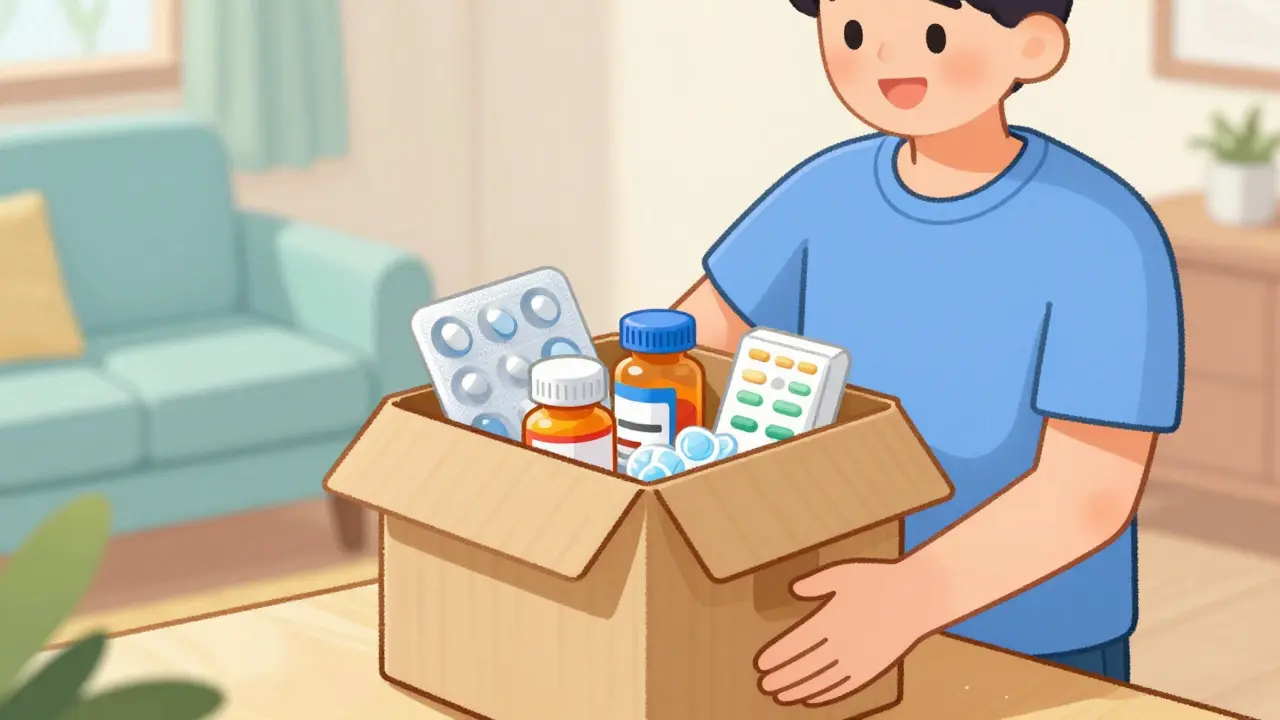
Imagine receiving a box of your monthly medications right at your doorstep. It’s convenient, sure, but have you ever wondered if those pills arrived in perfect condition? When it comes to generic drugs sent via mail, the journey from warehouse to your home is critical. The quality of these medications doesn’t just depend on how they were made; it depends heavily on how they are stored, packed, and shipped. For millions of Americans relying on mail-order pharmacies, which handle roughly 30% of all prescriptions in the U.S., understanding the quality practices behind the scenes is essential for peace of mind.
The Foundation of Generic Drug Quality
To understand why mail-order generics are safe, we first need to look at what makes a generic drug acceptable in the first place. A generic drug is a medication that contains the same active ingredients as its brand-name counterpart but costs significantly less. In fact, generics typically cost 80-85% less than brand names, according to FDA data from 2023. But cheaper doesn’t mean lower quality.
The Food and Drug Administration (FDA) enforces strict bioequivalence standards. This means a generic must perform in the body almost exactly like the brand-name version. Specifically, the 90% confidence interval for the ratio of absorption rates between the generic and the brand must fall within 80-125%. In reality, most variations are much smaller-often within 4%. Dr. Aaron S. Kesselheim from Harvard Medical School notes that these standards ensure therapeutic equivalence. So, before a pill even leaves the manufacturer, it has already passed rigorous scientific hurdles.
However, the challenge shifts once the drug enters the distribution chain. Mail-order pharmacies act as large-scale distributors. They must maintain the integrity of these drugs while handling massive volumes. This requires adherence to Current Good Manufacturing Practices (cGMP), outlined in 21 CFR Parts 210 & 211. These regulations mandate strict oversight from the moment raw materials arrive until the final package is sealed. Every step is designed to prevent contamination and ensure purity.
Temperature Control: The Silent Guardian
One of the biggest risks in shipping medications is temperature fluctuation. Most generic medications are stable when stored at room temperature, specifically between 20-25°C (68-77°F). Refrigerated products, such as certain insulins or biologics, require a colder range of 2-8°C (36-46°F).
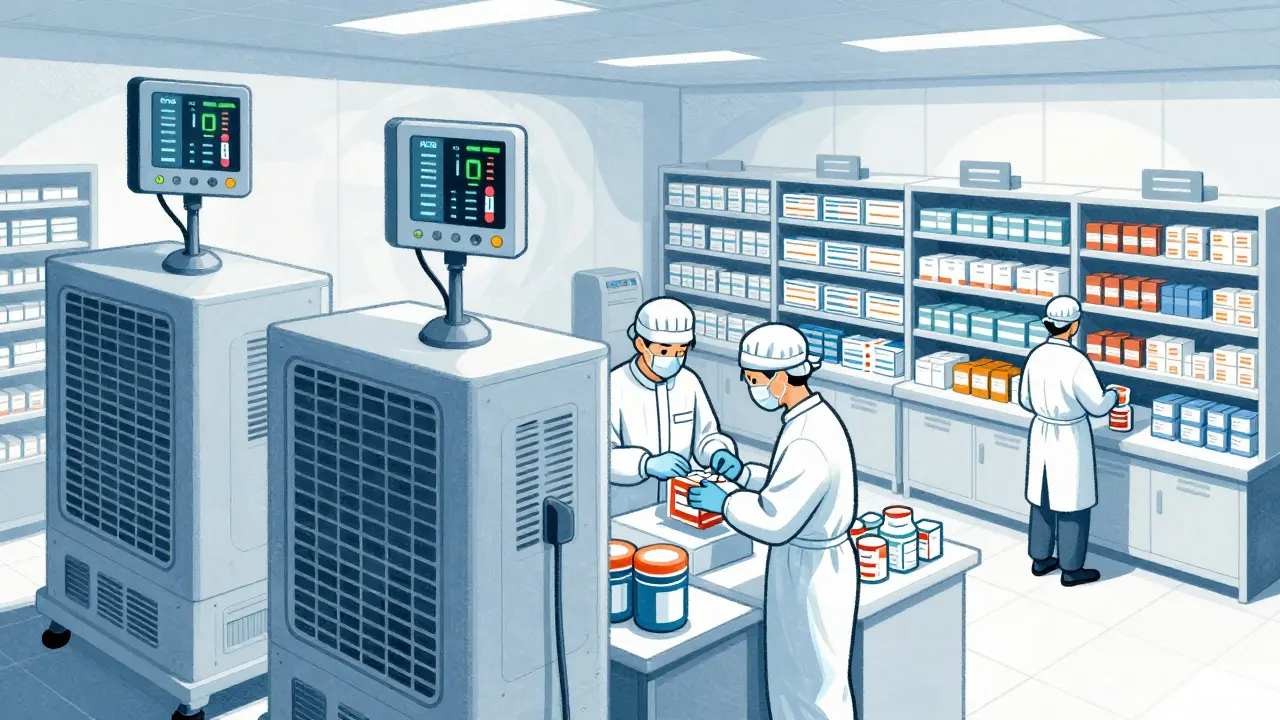
Mail-order facilities take this seriously. Unlike local retail pharmacies, which might experience wider temperature swings, centralized mail-order warehouses use sophisticated environmental controls. They maintain temperature variations of only ±1°C, compared to ±3°C in many retail settings. This precision is crucial for sensitive drugs like levothyroxine, where slight degradation can impact effectiveness.
But how do they protect your meds during transit? It’s not just about the warehouse. The packaging itself is engineered for survival. Shipping containers are tested to maintain temperature integrity for at least 72 hours. Some advanced systems use phase-change materials inside insulated boxes that keep temperatures stable for 7-10 days. This is a significant upgrade from standard retail bags, which often only protect meds for a few hours. If you live in an area with extreme heat or cold, this extra layer of protection is vital.
| Feature | Retail Pharmacy | Mail-Order Pharmacy |
|---|---|---|
| Temperature Stability | ±3°C variation | ±1°C variation |
| Monitoring Frequency | Periodic checks | Every 15 minutes |
| Packaging Protection | Standard bags (2-4 hours) | Insulated/Phase-change (7-10 days) |
| Verification Steps | Single verification | Double verification for high-alert drugs |
Tracking and Verification Systems
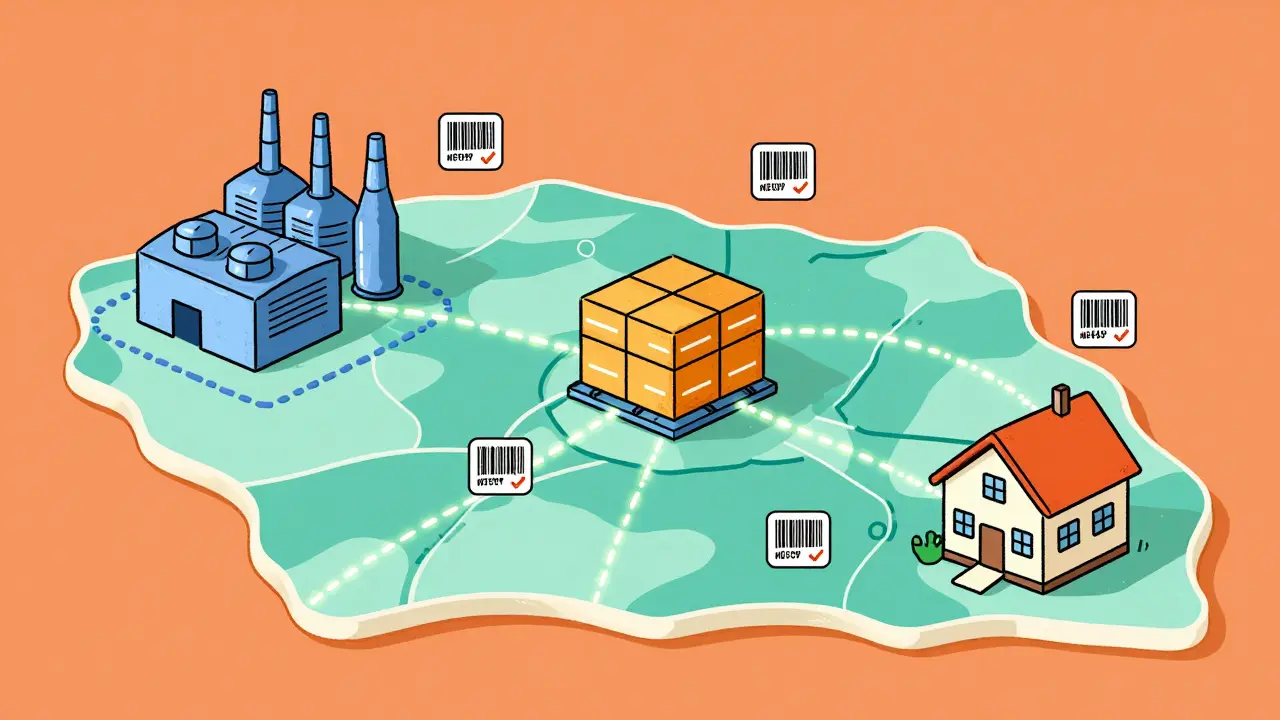
Quality isn’t just about temperature; it’s also about accuracy and traceability. You want to be sure you’re getting the exact drug prescribed, and that it hasn’t been tampered with. Mail-order pharmacies use serialized National Drug Codes (NDCs) to track every single unit. This system complies with the Drug Supply Chain Security Act (DSCSA), which mandates full electronic track-and-trace capabilities.
Inside the facility, barcode scanning happens at multiple stages: receiving, picking, packing, and shipping. This multi-point verification helps achieve order accuracy rates of 99.98%, according to internal metrics from major providers like Express Scripts. For high-alert generics, such as warfarin or insulin, accredited facilities often require double verification by pharmacists to prevent dangerous errors.
Documentation is another key pillar. Each prescription generates extensive records, including temperature logs and verification signatures. These electronic records are retained for a minimum of six years, as required by federal law. This paper trail ensures that if any issue arises, investigators can trace the problem back to its source quickly.
Accreditation and Oversight
Not all mail-order pharmacies are created equal. While all must meet FDA standards, many seek additional accreditation to prove their commitment to quality. The URAC (Utilization Review Accreditation Commission) Mail Service Pharmacy Accreditation is a gold standard in the industry.
Achieving URAC accreditation involves a rigorous process that takes up to six months. It requires implementing over 30% more quality control checkpoints than standard practice. Facilities must train staff extensively-approximately 200 hours for full compliance-and demonstrate proficiency in handling complex logistics. As of recent surveys, 78% of accredited facilities require their pharmacists to complete 15 hours of annual continuing education focused specifically on generic drug standards.
The FDA also plays a direct role in oversight. The Office of Pharmaceutical Quality conducts thousands of inspections annually, with a specific focus on mail-order operations. In 2023, the agency issued several warning letters for quality violations, showing that enforcement is active. This regulatory pressure keeps companies accountable and ensures that subpar practices don’t slip through the cracks.
User Experiences and Real-World Concerns
How does this translate to your actual experience? Generally, satisfaction is high. Surveys indicate that 87% of users believe their mail-order generics are of equal quality to brand-name versions. On platforms like Trustpilot, major providers score around 4.1 out of 5 stars for medication quality. Users frequently praise the consistency of their meds-noting that the imprint, color, and size remain the same refill after refill.
However, there are concerns. About 34% of users express worry about whether medications maintain quality during shipping, particularly in extreme weather. Reviews occasionally highlight issues with temperature-sensitive drugs arriving warm during summer months. For example, some users reported sticky capsules or degraded performance in biologics. While rare, these incidents underscore the importance of choosing a provider with robust thermal packaging.
Another practical consideration is waste. Because FDA regulations prohibit restocking dispensed medications, returns result in higher waste rates. Mail-order pharmacies see approximately 7% waste due to returns, compared to 2-3% in retail settings. This is a trade-off for the convenience of bulk dispensing, but it’s worth noting for environmentally conscious consumers.
Future Trends in Quality Assurance
The landscape of mail-order pharmacy quality is evolving. One exciting development is the integration of blockchain technology for supply chain verification. Pilot programs have shown a 40% reduction in counterfeit medication incidents by creating an immutable record of each drug’s journey. Additionally, the FDA is pushing for real-time GPS and temperature tracking for all temperature-sensitive generics, which would provide patients with live updates on their medication’s condition during transit.
Climate change poses a new challenge. Analysts predict a 15-20% increase in temperature-related quality incidents by 2035 if current packaging technologies aren’t upgraded. In response, companies are investing in next-generation thermal solutions that can maintain stability for up to 14 days. These innovations aim to future-proof the delivery of life-saving medications against increasingly unpredictable weather patterns.
Are generic drugs from mail-order pharmacies as effective as brand-name drugs?
Yes. The FDA requires generic drugs to be bioequivalent to brand-name drugs, meaning they must have the same active ingredients, strength, and dosage form. Studies show that variations in absorption are typically within 4%, ensuring they perform the same way in the body.
How do mail-order pharmacies protect medications from temperature changes during shipping?
They use specialized insulated packaging with phase-change materials that can maintain stable temperatures for 7-10 days. Warehouses themselves are tightly controlled at ±1°C variation, and continuous monitoring systems record temperature data every 15 minutes to detect any deviations.
What is URAC accreditation, and why does it matter?
URAC (Utilization Review Accreditation Commission) accreditation is a voluntary certification that signifies a pharmacy meets high standards for quality and safety. It requires more frequent quality checks, extensive staff training, and rigorous documentation, providing an extra layer of assurance beyond basic FDA regulations.
Is it safe to receive narrow therapeutic index drugs via mail-order?
Generally, yes, but caution is advised. Drugs like levothyroxine or warfarin have a small margin for error. Mail-order pharmacies implement double-verification processes for these high-alert drugs. However, some experts suggest monitoring blood levels closely when switching manufacturers or channels to ensure consistent therapeutic outcomes.
Can I return unused generic medications to a mail-order pharmacy?
No. Federal FDA regulations prohibit the restocking of dispensed medications for safety reasons. Any returned medication must be destroyed, which leads to higher waste rates compared to retail pharmacies. It is important to manage refills carefully to avoid unnecessary disposal.
11 Responses
The thermal packaging specs mentioned here are actually pretty standard for high-volume distributors, but most people don't realize that the phase-change materials are single-use or have a limited lifespan. If you see your box arrive with the gel packs frozen solid in summer, it means they didn't melt during transit, which is good, but if they're liquid warm, your meds might be compromised. Always check the temperature indicator strip if provided.
Oh great, another article telling me my cheap pills are just as good as the expensive ones because 'science says so.' Sure, Jan. I'll just trust that the warehouse guy didn't leave my insulin in his truck while he went to grab a coffee. Thanks for nothing.
This is absolutely terrifying!!! How can we trust these systems when there are clearly loopholes?? The FDA is supposed to protect us, yet they allow this waste?? It’s morally bankrupt!! 🚫💊 We need stricter regulations immediately!!
One must consider the epistemological implications of relying on centralized distribution models for critical healthcare commodities. The bioequivalence standards, while statistically sound within the 80-125% confidence interval, fail to account for individual pharmacokinetic variances that may arise from excipient differences in generic formulations. Furthermore, the reliance on serialized NDCs assumes a level of technological integrity in the supply chain that is often overstated by corporate entities seeking to minimize liability through bureaucratic compliance rather than genuine quality assurance protocols.
omg this is soo helpful! i was always worried about my meds getting ruined in the mail esp in the summer. its crazy how much tech goes into keeping them cool. makes me feel way better knowing they check temp every 15 mins! thanks for sharing this info!!
I appreciate the detailed breakdown of the verification steps. As someone who manages medication for elderly relatives, the double verification for high-alert drugs like warfarin gives me significant peace of mind. It's reassuring to know that human oversight is still integrated into the automated processes, especially given the narrow therapeutic index of those specific medications.
You’re all naive. Trusting big pharma logistics is stupid.
It’s wonderful to see such transparency in how these pharmacies operate. Knowing that there are strict controls and regular inspections helps alleviate the anxiety many of us feel about switching to mail-order services. It’s a step forward in making healthcare more accessible and reliable for everyone!
I’ve been using mail-order for years and never had an issue, but I did notice once that my box arrived slightly crushed. The meds were fine, but it made me wonder about the handling process. Maybe the packaging could be sturdier?
Thanks for posting this. I was curious about the waste aspect since I try to be environmentally conscious. It’s sad that we can’t return unused meds, but I guess safety comes first. I’ll make sure to manage my refills better to avoid throwing anything away.
Why are we even discussing foreign practices? American pharmacies should be setting the standard, not relying on some global supply chain nonsense. Keep our meds in the country where they’re made and controlled by Americans.