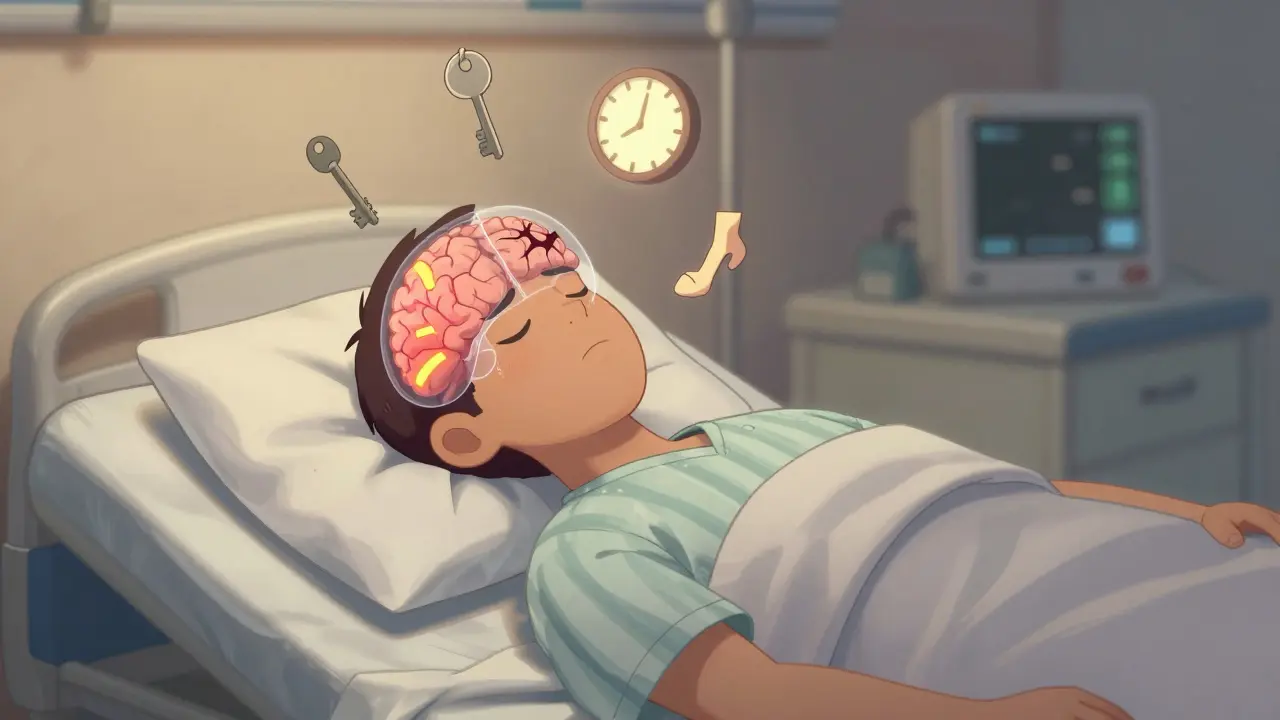
When someone survives a medication overdose, many assume they’re out of danger. But the real story doesn’t end at the hospital door. For thousands of people each year, an overdose isn’t just a crisis-it’s the start of a lifelong health battle. Even if they wake up breathing, their body and brain may already be carrying invisible scars.
Brain Damage Isn’t Always Obvious
The most serious long-term damage from a medication overdose happens in the brain. When drugs like opioids or benzodiazepines slow breathing too much, the brain doesn’t get enough oxygen. Just four minutes without oxygen can start killing brain cells. That’s faster than most people realize.Survivors often don’t know they’ve been hurt until weeks or months later. They might forget where they put their keys, struggle to follow a conversation, or suddenly lose balance walking down the stairs. Studies show that 63% of overdose survivors have lasting memory problems. Half have trouble concentrating. Nearly a third can’t make simple decisions anymore. These aren’t temporary side effects-they’re permanent changes in how the brain works.
It’s not just about memory. Some lose the ability to speak clearly. Others can’t hear well anymore. Motor skills get shaky. One patient on Reddit said, “Two years later, I still can’t remember conversations from 10 minutes ago.” That’s not normal forgetfulness. That’s brain injury.
How Different Drugs Hurt in Different Ways
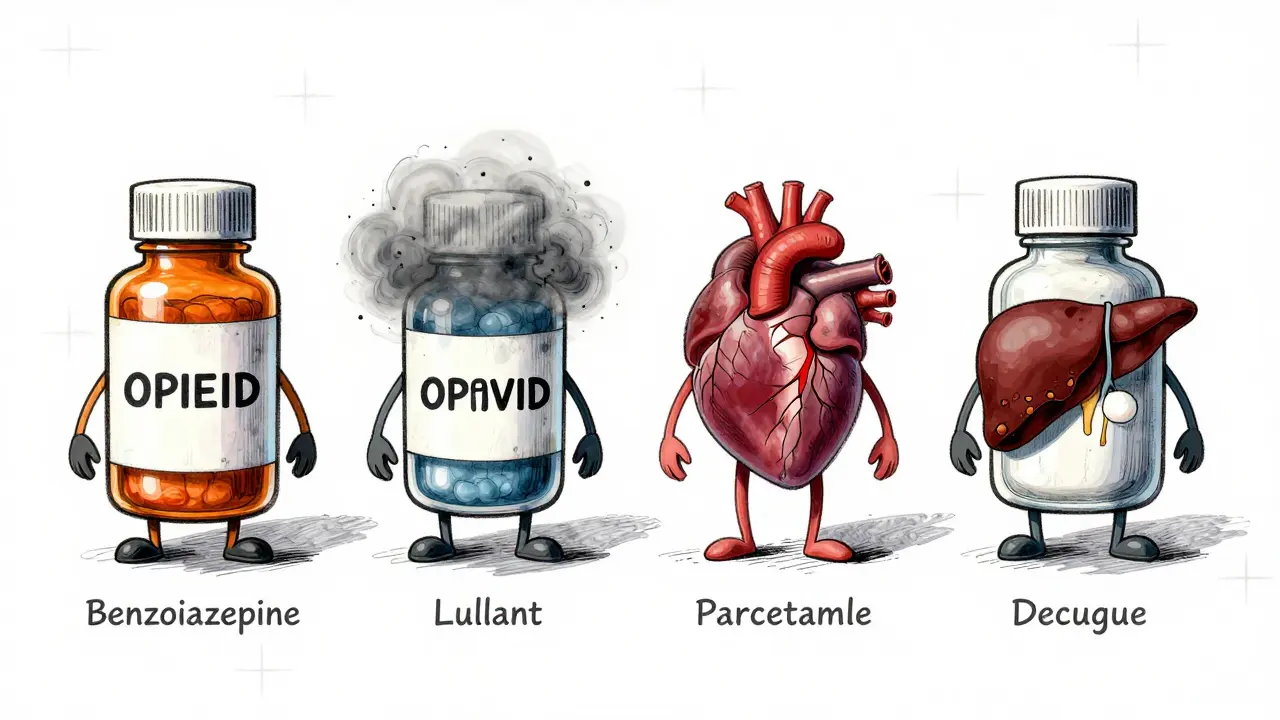
Not all overdoses are the same. The drug involved changes the kind of damage you’re likely to face.Opioids like oxycodone, fentanyl, or tramadol cause breathing to stop. That leads to oxygen loss, which affects the whole body. About 22% of survivors end up with kidney damage. 18% develop heart problems. 15% get fluid in their lungs. And because vomiting during overdose is common, many end up with pneumonia from inhaling stomach contents.
Benzodiazepines-drugs like Xanax or Valium-shut down the central nervous system. Survivors often describe it as “walking through fog.” 27% still have trouble thinking clearly 18 months later. Simple tasks like paying bills or planning meals take hours. One person wrote, “I used to be a manager. Now I can’t decide what to eat for lunch.”
Stimulants like Adderall or Ritalin, when taken in excess, do the opposite. They overwork the heart. 31% of survivors develop chronic high blood pressure or irregular heart rhythms. 19% end up with anxiety or even psychosis that doesn’t go away.
Paracetamol (acetaminophen) is especially sneaky. You might feel fine for two days after taking too much. But by then, your liver is already dying. 45% of those who don’t get treatment within 8 hours end up with permanent liver damage, including cirrhosis. There’s no warning. No pain. Just silent destruction.
The Hidden Mental Health Crisis
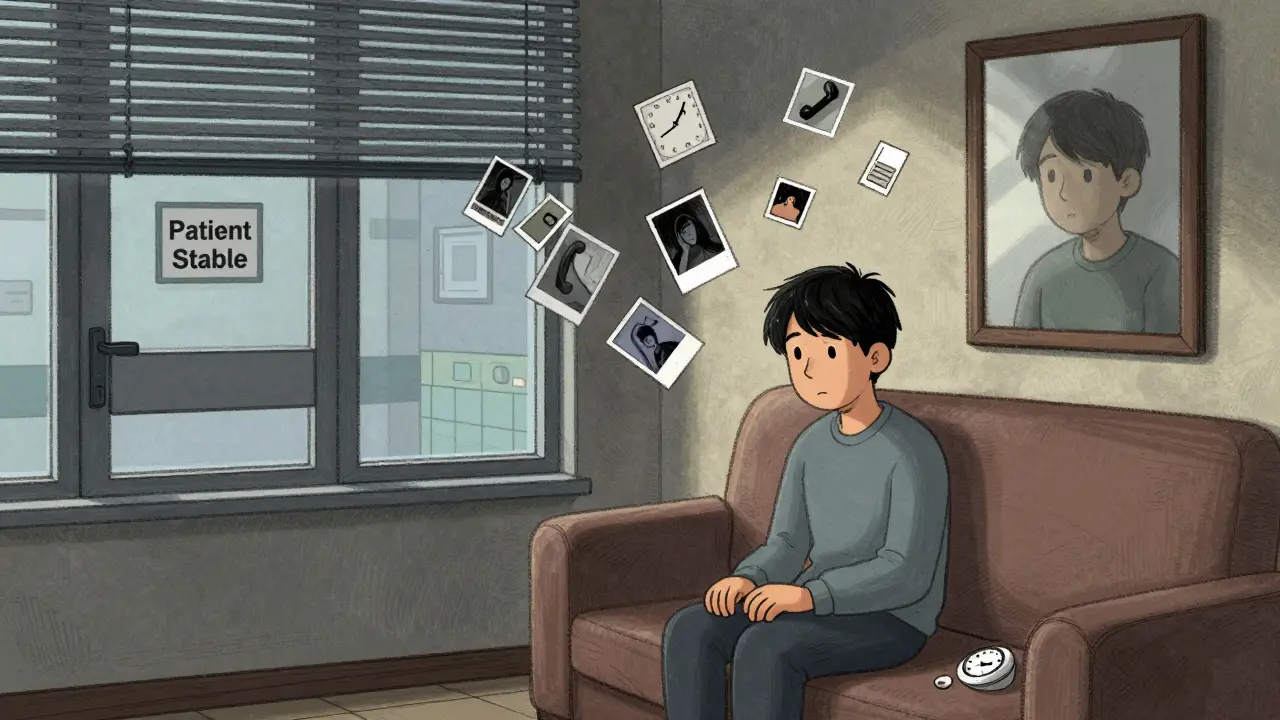
Surviving an overdose doesn’t just break your body-it breaks your mind.73% of survivors develop at least one mental health condition after the event. Nearly half develop PTSD. 38% fall into major depression. 33% struggle with constant anxiety. These aren’t just emotional reactions. They’re biological changes. The brain’s chemistry gets rewired by the trauma of nearly dying.
And here’s the worst part: only 28% of survivors get proper mental health care within 30 days. The system treats the overdose as a one-time emergency, not the start of a chronic condition. Someone might leave the hospital with a note saying “patient stable,” but no follow-up plan for depression, memory loss, or trauma.
One survey found overdose survivors are 4.7 times more likely to develop depression than others who use drugs. And in over half of those cases, the depression doesn’t fade after a year.
Why Treatment Often Fails
You’d think hospitals would be ready for this. But they’re not.The CDC found that the average time to give naloxone (the opioid overdose reversal drug) after a person stops breathing is 11.3 minutes. But brain damage starts after just four. In rural areas, it’s over 20 minutes. By then, the damage is done.
Even when people get to the hospital, the paperwork is often incomplete. Only 47% of emergency rooms document what long-term monitoring the patient needs. And 41% are sent home with no referral to specialists-no neurologist, no therapist, no rehab.
For paracetamol overdose, the critical window to prevent liver failure is 8 hours. Yet 32% of patients arrive after that window has closed. Why? Because they didn’t feel sick. They thought they were fine. That’s the danger of silent overdoses.
The Cost of Being “Lucky to Be Alive”
People say, “At least you’re alive.” But surviving doesn’t mean living well.The lifetime cost of care for someone with permanent brain damage from an overdose averages over $1.2 million. That’s four times more than for someone who recovers fully. It covers years of therapy, home care, lost wages, medication, and repeated hospital visits.
And the support system? It’s broken. Only 19% of U.S. hospitals have formal plans to monitor long-term effects. Only 31% of counties offer specialized neurological rehab. That means most survivors are on their own.
The federal government just allocated $156 million to study brain damage from overdoses-the first time this has ever been funded. But experts say it’s still less than a third of what’s needed.
What Needs to Change
We need to stop treating overdoses like a one-time event. They’re not. They’re a medical turning point that changes everything.Every survivor should get a brain scan within 72 hours. Every hospital should have a checklist for follow-up care: neurology consult, mental health screening, liver function test, heart monitor, and therapy referral. No exceptions.
Family members need training. The public needs to know the signs: unresponsive, slow breathing, pinpoint pupils. If you see them, act. Every minute counts.
And most of all-we need to stop calling survivors “lucky.” They’re not. They’re survivors of a preventable disaster. And they deserve care that matches the damage they’ve suffered.
Can you recover fully from a medication overdose?
Some people do recover with no lasting damage-especially if treatment starts quickly and the overdose was mild. But for many, the damage is permanent. Memory loss, balance problems, anxiety, and organ damage can last a lifetime. Recovery isn’t about going back to how you were-it’s about learning to live with new limits.
How long after an overdose do symptoms appear?
It depends on the drug. Opioid and benzodiazepine effects show up right away-slowed breathing, confusion, unconsciousness. But with paracetamol, you might feel fine for 24 to 72 hours while your liver is being destroyed. That’s why waiting to get help is so dangerous.
Is brain damage from overdose reversible?
Once brain cells die, they don’t grow back. But the brain can sometimes rewire itself through therapy, repetition, and time. Speech therapy, cognitive rehab, and physical training can help you regain function-but not fully. The damage is permanent; the recovery is about adaptation, not reversal.
Why don’t doctors always warn about long-term effects?
Many doctors are trained to treat the acute event, not the aftermath. Hospitals don’t have systems in place to track long-term outcomes. There’s also stigma-some still see overdose as a “choice” rather than a medical condition. But guidelines changed in 2023: doctors are now required to assess neurological function within 72 hours. The system just hasn’t caught up yet.
What should you do if someone overdoses?
Call emergency services immediately. If it’s an opioid overdose and you have naloxone, use it. Don’t wait for symptoms to get worse. Keep the person on their side if they’re unconscious. Don’t give them food, water, or caffeine. Time is critical-every minute counts. After they’re stable, push for follow-up care: brain scans, mental health screening, and specialist referrals.
10 Responses
Man, this post hit different. I had a buddy go through an opioid overdose last year. Looked fine after the naloxone, came home, said he was good. Three months later, he couldn’t remember his own birthday. Forgot how to tie his shoes. Now he’s in cognitive rehab. Nobody told us the brain doesn’t bounce back like a rubber ball. This needs to be standard info in every ER discharge packet.
so true. brain dont fix itself. u just learn to live with the gaps. my sis took too many xanax. now she cant focus long enough to cook. i help her with bills. its not pretty. but we make it.
Thank you for laying this out so clearly. I work in a rural ER, and we see this all the time. The system isn’t built for long-term follow-up. We patch them up, hand them a pamphlet, and send them on their way. This post should be required reading for every med student. We need structured care pathways-not just crisis response.
Let’s be real-this isn’t about medical negligence. It’s about weak people making weak choices. Why are we spending $1.2 million to ‘help’ someone who chose to overdose? If you don’t have the discipline to take one pill at a time, why should society pay for your broken brain? You want a free pass? Go live in a cave.
I hear you, Chris, but that mindset is exactly why people suffer in silence. This isn’t about weakness-it’s about biology. The brain doesn’t care if you ‘chose’ to take the pill. It just reacts. And when it’s damaged, the person is no longer the same person they were. We owe them compassion, not judgment. Healing isn’t about punishment. It’s about rebuilding. And we’re failing them at every level.
Why do we even care? These people are addicts. They knew the risks. If you can’t handle a little pain, why are you even on meds? My cousin got in a car wreck because she was high. Now she’s in a wheelchair. I say let nature take its course. No one owes you a second chance.
yea but like... if u take too much tylenol and u dont feel sick... why would u go to the hospital? its not like u got a bullet in u. its just... quiet. and now ur liver is dead? that's wild. no one told me that. i thought it was just for overdoses with pills like oxy.
the system is rigged. this is all part of the pharmcos’ plan. they make the drugs, then sell you the rehab. they profit from broken brains. they dont want you to heal. they want you dependent. 1.2 million? that’s a subscription fee. 🤡
brain cells dont die. they go dormant. the real damage is the neural pathways being hijacked by the pharmaceutical-industrial complex. the feds are suppressing the cure. they’ve got a quantum resonance device that can restore cognition. but it’s classified under NDAA 2021. you think they want you to know about this? lol no. 🕵️♀️
my mom took too much blood pressure med. she was fine for days. then she got dizzy and fell. turned out her kidneys were shot. no one ever told her to get checked after. just said ‘watch for side effects.’ what does that even mean? i wish someone had just told us: ‘go get a scan.’