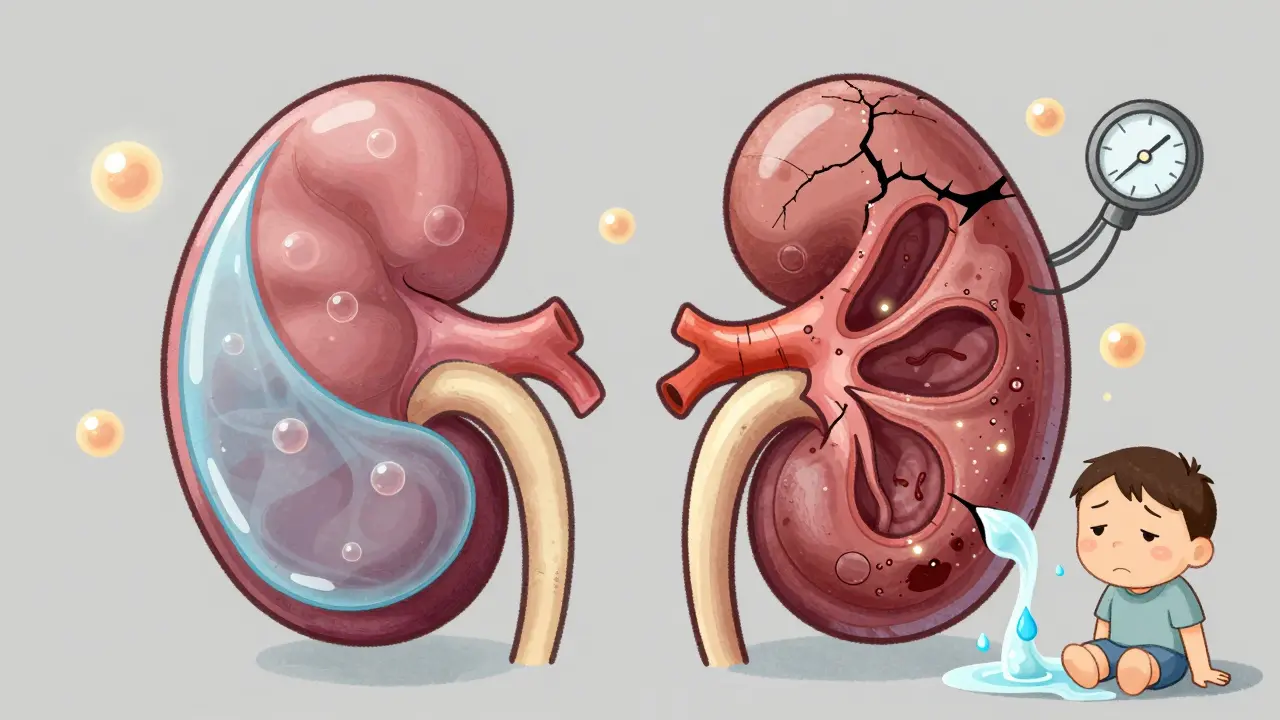
When your kidneys stop working, it’s not just about feeling tired or peeing less. It’s about your body losing its ability to clean your blood. Kidney failure, or end-stage renal disease (ESRD), happens when your kidneys lose at least 85-90% of their filtering power. At that point, you need dialysis or a transplant to survive. And the three biggest reasons this happens? Diabetes, hypertension, and glomerulonephritis. Together, they cause more than 80% of all kidney failure cases in the U.S. and globally.
Diabetes: The Silent Killer of Kidneys
Diabetes doesn’t just affect your blood sugar-it slowly destroys your kidneys. In fact, it’s the number one cause of kidney failure, responsible for nearly half of all new cases. The damage starts long before you feel any symptoms. High blood sugar over years forces your kidneys to filter too much blood. This is called hyperfiltration. Your glomeruli-the tiny filters inside your kidneys-swell under the pressure. Within just a year of diagnosis, you can already see early signs of damage in a biopsy.
This isn’t just theory. Studies show that 30% of people with type 1 diabetes and 40% of those with type 2 diabetes will develop diabetic kidney disease. The telltale sign? Protein leaking into the urine. Doctors measure this with a simple test called the urine albumin-to-creatinine ratio (UACR). If it’s above 30 mg/g, you’re in the danger zone. At 300 mg/g or higher, your risk of kidney failure in five years jumps to 44%.
The structural damage is severe: the filtering membranes thicken from a normal 300-400 nanometers to 450-650 nm. The cells that hold the filter together, called podocytes, start dying off. Mitochondria in kidney cells produce 30-50% less energy within weeks of high blood sugar. That’s like your kidneys running on fumes.
The good news? Early action works. Keeping your HbA1c below 7% within the first five years of diagnosis cuts your risk of kidney damage by over half. Medications like SGLT2 inhibitors (such as empagliflozin and dapagliflozin) don’t just lower blood sugar-they protect your kidneys directly. The EMPA-KIDNEY trial showed they reduce the risk of kidney failure by 32%. For many, starting these drugs as soon as protein shows up in the urine can stop the damage in its tracks.
Hypertension: The Hidden Pressure
If diabetes is the slow burn, hypertension is the constant squeeze. High blood pressure damages the small arteries that feed your kidneys. Over time, the walls of these vessels thicken and harden-a process called nephrosclerosis. This cuts blood flow to your glomeruli. Without enough blood, the filters shrink, scar, and eventually die.
Hypertension causes about 28% of kidney failure cases. But here’s the twist: it often teams up with diabetes. In fact, 75% of people with diabetes also develop high blood pressure. When both conditions are present, kidney function declines 3.2 mL/min/1.73m² per year-almost double the rate of diabetes alone. That’s like losing a full kidney function unit every 3-4 years.
Unlike diabetes, which often shows early warning signs like protein in urine, hypertension is silent. You might not feel a thing until your kidneys are already failing. That’s why checking your blood pressure regularly is non-negotiable. The American Heart Association says keeping it below 140/90 mmHg is critical. But for people with kidney disease, even lower targets help. KDIGO guidelines recommend <130/80 mmHg for diabetic kidney disease and <120/80 mmHg if you have proteinuria.
Medications like ACE inhibitors and ARBs are the first line of defense. They not only lower blood pressure but also reduce protein leakage, slowing kidney damage by 20-30%. The catch? Many people stop taking them because they don’t feel sick. That’s a dangerous mistake. The damage is happening whether you feel it or not.
Glomerulonephritis: When Your Immune System Attacks
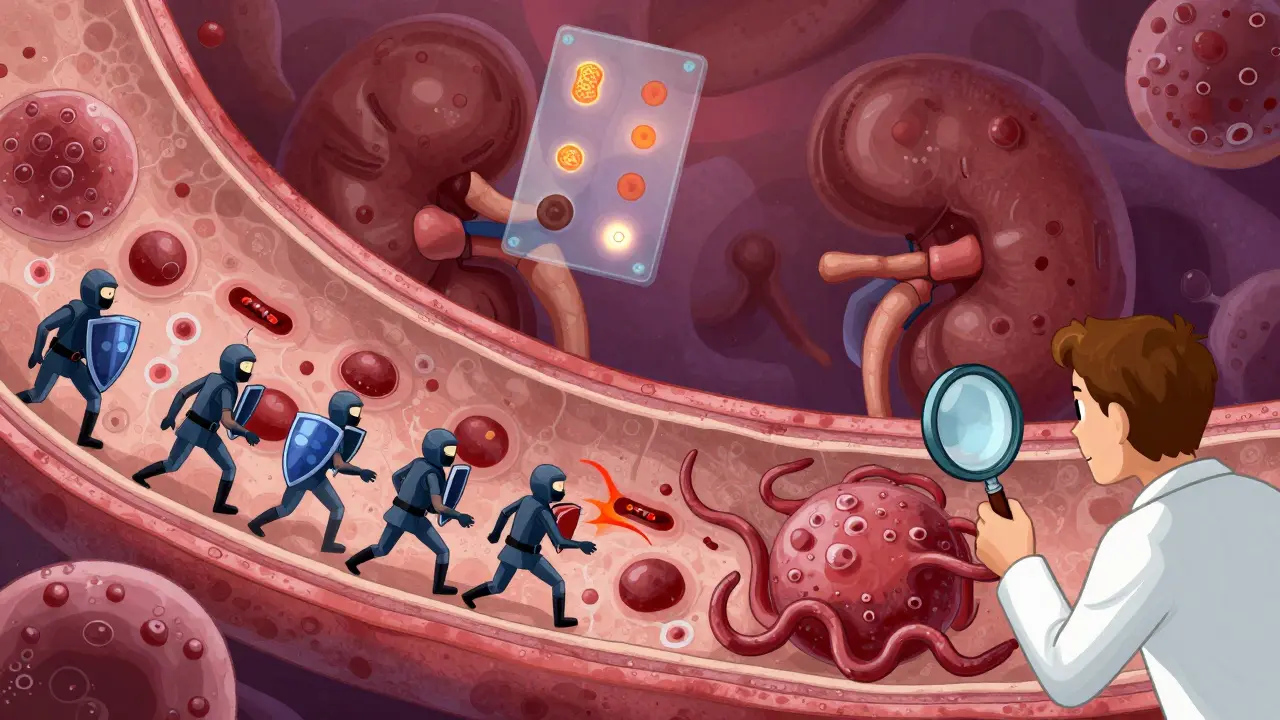
This is the most complex and least understood cause. Glomerulonephritis isn’t one disease-it’s a group of disorders where your immune system mistakenly attacks the glomeruli. It’s like your body’s defense system goes rogue. The most common form is IgA nephropathy, which affects about 2.5 in every 100,000 people in the West, and even more in Asia. Another major type is lupus nephritis, which strikes about half of all people with lupus.
What makes it tricky? It can sneak up. Many patients see seven doctors over 18 months before getting diagnosed. Symptoms are vague: foamy urine, swelling in the legs, dark or bloody urine. But without a kidney biopsy, it’s hard to confirm. The biopsy shows immune deposits-clumps of antibodies stuck in the filters. In IgA nephropathy, it’s IgA antibodies. In lupus, it’s mixed immune complexes.
Progression is unpredictable. Some people live with it for decades without problems. Others lose kidney function within 5-10 years. The Oxford Classification system helps predict risk. A score of 0-1 means a 50% chance of keeping your kidneys for 20 years. A score of 4-5? Only 20%. That’s why early diagnosis matters so much.
Treatment is different too. While diabetes and hypertension rely on blood sugar and pressure control, glomerulonephritis often needs immunosuppressants. Drugs like rituximab or corticosteroids can cut the risk of kidney failure by nearly half in high-risk patients. But it’s a trade-off. Aggressive treatment increases infection risk, especially in older adults. Some experts argue it’s not worth it for elderly patients. Others say it buys you years without dialysis.
Why Early Detection Changes Everything
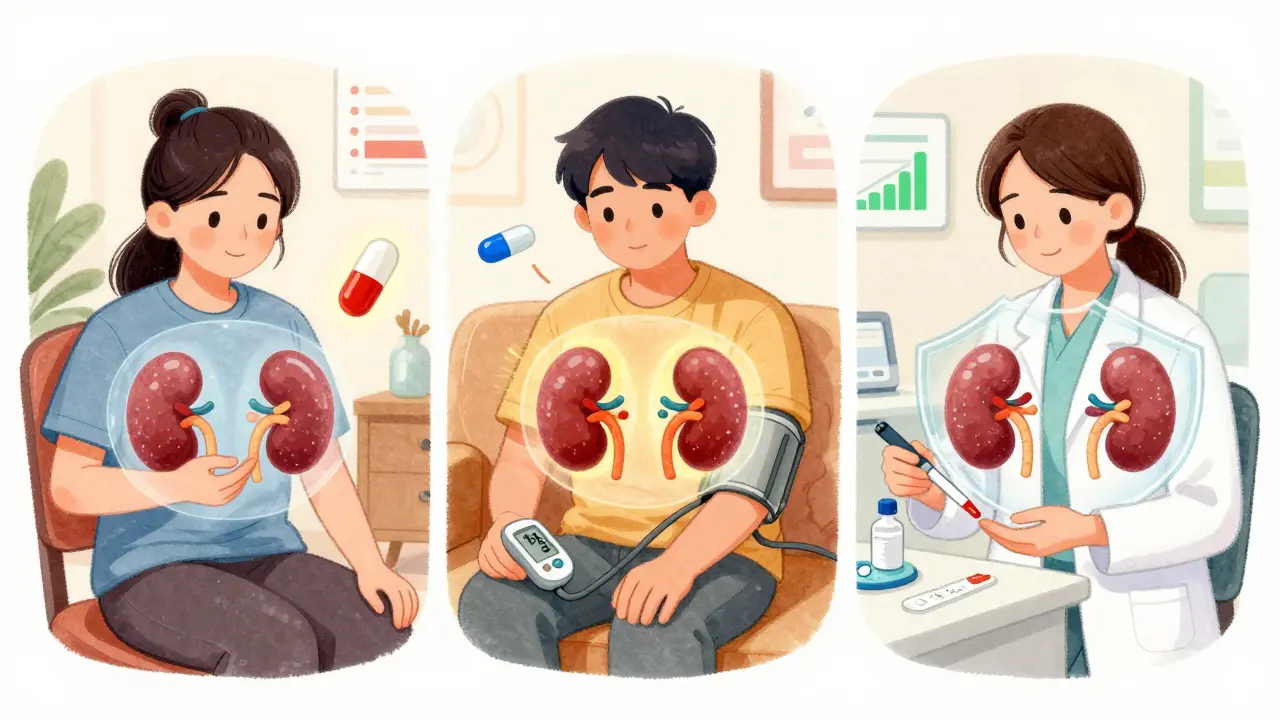
The biggest mistake people make? Waiting until they feel bad. By then, it’s often too late. Kidneys don’t hurt when they’re failing. They just stop working. That’s why routine testing is your best defense.
If you have diabetes: get your UACR tested every year. If it’s elevated, start an SGLT2 inhibitor. If you’re on blood pressure meds, don’t stop just because your numbers look fine. Keep monitoring. If you have swelling, foamy urine, or unexplained fatigue, ask for a kidney function test. Don’t wait for a doctor to bring it up.
Real people are seeing results. One patient in the National Kidney Foundation survey had protein in her urine at age 42. She started an SGLT2 inhibitor within six months. Five years later, her kidney function is stable. Another man with high blood pressure and early kidney damage lowered his systolic pressure from 150 to 118. His proteinuria dropped by 60%. These aren’t outliers-they’re what happens when you act early.
What You Can Do Right Now
- If you have diabetes: Get your UACR tested annually. Ask your doctor about SGLT2 inhibitors if your urine test shows protein.
- If you have high blood pressure: Keep it under 130/80. Take your meds. Don’t skip doses. Check your kidney function yearly.
- If you have swelling, foamy urine, or unexplained fatigue: Ask for a kidney panel-eGFR and UACR. Don’t assume it’s just aging.
- If you’re over 50 or have a family history of kidney disease: Get screened. You don’t need symptoms to be at risk.
There’s no magic pill. But there are proven steps. And they work best when you start before the damage is done. Your kidneys don’t shout. They whisper. Learn to listen.
Can kidney failure from diabetes be reversed?
Early-stage kidney damage from diabetes can be slowed or even stabilized, but once scarring (fibrosis) sets in, it’s permanent. The goal isn’t reversal-it’s stopping further damage. Starting SGLT2 inhibitors or ACE inhibitors as soon as protein appears in urine can prevent progression in most cases. Studies show that 31% of diabetic patients who act early stabilize their kidney function. But if your eGFR drops below 30 mL/min/1.73m², the chance of recovery is very low.
Is high blood pressure worse for kidneys than diabetes?
Neither is "worse"-they’re both serious. But when they occur together, the damage multiplies. Diabetes alone causes kidney failure in about 8.7 years on average. Hypertension alone takes about 12.3 years. But together? It drops to under 6 years. That’s why controlling both is critical. The real danger isn’t which one is worse-it’s ignoring either one.
Do all people with glomerulonephritis need immunosuppressants?
No. Many people with mild IgA nephropathy do just fine with blood pressure control and ACE inhibitors alone. Immunosuppressants like rituximab or steroids are reserved for those with high proteinuria, rapidly falling eGFR, or high-risk biopsy findings. For elderly patients or those with other health issues, the risks of infection may outweigh the kidney benefits. Treatment is personalized-not one-size-fits-all.
How often should I get my kidneys checked?
If you have diabetes or high blood pressure: get tested every year. That means an eGFR blood test and a urine albumin-to-creatinine ratio (UACR). If you’re over 60, have a family history of kidney disease, or are African American, Hispanic, or Native American, annual screening is still recommended-even without other risk factors. For healthy adults under 50 with no risk factors, testing every 2-3 years is reasonable.
Can lifestyle changes prevent kidney failure?
Yes, but not alone. Losing weight, cutting salt, quitting smoking, and staying active help-but they’re not enough if you have diabetes or hypertension. Medications like SGLT2 inhibitors and ACE inhibitors do the heavy lifting. Lifestyle changes support them. Think of them as teammates, not replacements. One study found that people who combined meds with healthy habits cut their kidney failure risk by 60% compared to those who only took pills.
15 Responses
I swear, my aunt had diabetes for 12 years and never knew her kidneys were dying until she collapsed. It’s wild how silent this is. Like, your body’s screaming and you’re just sipping coffee like nothing’s wrong. 😔
This post is a godsend. I’ve been telling my coworkers for years that checking your BP isn’t just for ‘old people’-it’s for anyone who eats processed food. We need more awareness like this.
SGLT2 inhibitors changed my life. Started them when my UACR hit 45, now it’s down to 18. No more panic attacks about dialysis. 🙌
The stats are brutal. But honestly? The real tragedy is how few people get screened before it’s too late.
Diabetes doesn’t ‘attack’ your kidneys-it seduces them. Slowly. Sweetly. Until they’re too weak to say no. And then? Bam. Gone.
I wish more doctors talked about this. My mom’s nephrologist only mentioned it when her GFR was at 21. Too late.
I used to think hypertension was just about heart attacks. Didn’t realize it was quietly killing my kidneys too. Reading this made me schedule my first BP check in 3 years.
I think Big Pharma hides how common this is. Why? More profits from dialysis. Just saying. 🤔
You’re not alone. I started walking 10k steps a day after reading this. Small changes = big wins. 💪
The podocyte loss and mitochondrial dysfunction details are spot on. I’m a med student and this aligns with everything we’re learning about renal pathophysiology. The 30-50% energy drop is terrifying.
It’s like watching your kidneys slowly turn into dust while you scroll through TikTok. We live in a world where we’ll take a pill for a headache but won’t check our blood sugar. We’re all just one bad habit away from losing a vital organ.
I’ve studied this for 17 years. The real issue? The medical system doesn’t care until you’re on dialysis. It’s not about health-it’s about billing codes. And don’t get me started on the insurance industry…
They say diabetes causes kidney failure-but what if it’s the insulin? What if the drugs are the real problem? I read a guy on YouTube who reversed his diabetes with lemon water and moon cycles…
The real hero here is early detection. Not the drugs. Not the surgery. Just knowing.
So we’re telling people to change their entire lifestyle… while the government subsidizes soda? 🤡