
Quick Summary
- Intranasal corticosteroids typically offer better relief for nasal symptoms than oral antihistamines.
- Timing matters: Using sprays regularly provides maximum benefit, but recent evidence supports "as-needed" use for mild cases.
- Antihistamines may still be the preferred choice specifically for eye symptoms like itching or watering.
- Cost and safety profiles strongly favor intranasal corticosteroids for long-term management.
- Proper technique with nasal sprays is critical for success and avoiding side effects.
The Big Choice Between Sprays and Pills
If you are dealing with hay fever, you have probably faced the pharmacy aisle dilemma. On the left, you see the bottles of nasal sprays. On the right, there is a row of tablets. Which one should you pick? Most people grab the pills because they are easy and familiar. But does that pill actually fix your problem as well as the spray?
We often assume antihistamines are the go-to solution because they have been around longer and are heavily advertised. However, medical research tells a different story about what actually clears your nose and stops the sneezing fits. The central entity here is Intranasal Corticosteroids, a class of medication delivered directly into the nose that reduces inflammation at the source. These sprains target the root cause of the allergic reaction differently than the pills you swallow.
How Your Body Reacts to Allergens
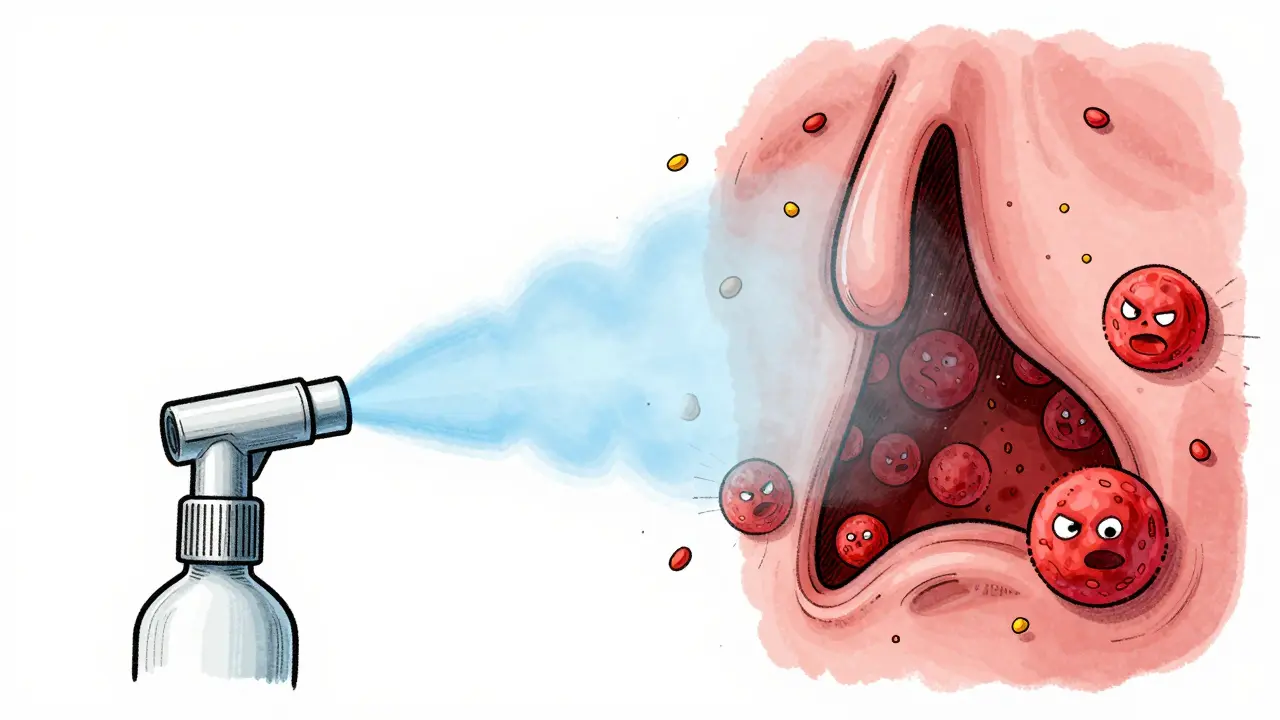
To understand why one might beat the other, we need to look at what happens inside your nose during an allergy attack. When pollen dust or pet dander enters your airway, your immune system sees a threat. Specialized cells called mast cells decide to release chemicals. One of those chemicals is histamine.
Antihistamines work by blocking the receptors that histamine attaches to. They stop the signal from getting through, much like putting a cap on a radio antenna. While this helps, it only blocks one chemical in a complex mix of inflammatory substances. It does not stop the swelling of the tissue itself very well.
In contrast, Intranasal Corticosteroids act on the inflammatory response itself by suppressing multiple pathways. They stop the mast cells from degranulating and reduce the number of inflammatory cells infiltrating the nasal passages. Because they treat the inflammation directly rather than just one symptom messenger, they tend to handle congestion and postnasal drip more effectively.
What the Research Says About Effectiveness
Over the last few decades, doctors and researchers have run countless trials to settle this debate. A major meta-analysis published in American Family Physician in 1999 looked at sixteen randomized controlled trials involving over 2,000 patients. The findings were consistent across the board. The steroid nasal spray group reported significantly less blockage, itch, discharge, and sneezing compared to the antihistamine group. The only exception was sneezing in one study, where oral therapy showed better relief.
More recent data reinforces this view. In a 2017 systematic review, experts analyzed multiple datasets and concluded definitively that intranasal corticosteroids were superior to oral antihistamines for improving nasal symptoms and quality of life. Even looking at objective biomarkers, such as eosinophil counts in the blood, these sprays reduced the actual signs of inflammation better than the pills.
| Feature | Intranasal Corticosteroids | Oral Antihistamines |
|---|---|---|
| Primary Mechanism | Reduces inflammation in nasal tissues | Blocks histamine H1 receptors |
| Nasal Congestion | Highly effective | Moderate effect |
| Eye Symptoms | Limited benefit | Effective relief |
| Time to Work | Best with regular daily use | Faster onset for itching |
| Side Effects | Dryness, minor nosebleeds | Drowsiness (first gen), dry mouth |
The Timing Debate: Regular vs. As-Needed
This is where things get interesting for patients who hate taking medicine every single day. Traditional medical advice has always suggested using these sprays continuously throughout the allergy season, even before symptoms start. The logic is to build a protective barrier. However, research shows reality looks different.
A pivotal study from the University of Chicago, led by Dr. Robert Naclerio, examined how people actually take their meds. Very few people take medications continuously as prescribed. Most take them sporadically, in response to symptoms. Surprisingly, when comparing head-to-head in an "as-needed" scenario, the steroid nasal spray group still reported far fewer symptoms over four weeks than the antihistamine group.
This changes the recommendation strategy. If you only plan to use medicine on days when you feel bad, Intranasal Corticosteroids remain the stronger option. They provide relief faster in intermittent use patterns than previously thought. This challenges older guidelines that strictly mandated daily use regardless of symptoms.
However, there is a nuance. Studies indicate that while as-needed use works, regular daily use does produce a higher clinical benefit score. If you suffer from severe seasonal allergies, planning to spray every morning is still the gold standard for maximum protection. For milder cases, you might get away with just spraying when the itching starts.
Symptom Specifics: Knowing When to Switch
While the sprays win for the nose, they are not perfect for everything. You likely have specific symptoms that bother you most. Are your eyes tearing up? Is your throat scratchy? Or is your nose completely blocked?
Allergic Rhinitis includes a spectrum of symptoms ranging from sneezing and congestion to ocular irritation. Research from the late 1990s and confirmed later found no significant difference between sprays and pills for relieving eye symptoms. If your main complaint is red, watery, itchy eyes, an oral antihistamine might still be your best first line of defense.
For pure nasal issues-congestion, runny nose, postnasal drip-the spray wins almost every time. If you have both types of symptoms, you might need a combination approach. A 2020 study showed that adding an intranasal antihistamine spray to a corticosteroid spray was superior to either alone. So, for severe cases, do not hesitate to talk to your pharmacist about layering treatments.

Safety Concerns and Cost
Many people avoid nasal sprays because of the word "steroid." There is a fear that systemic steroid drugs, which can cause weight gain or bone thinning, will happen with a nose spray. The good news is that modern intranasal formulations stay local. They act on the lining of the nose and enter the bloodstream in such small amounts that severe side effects are extremely rare.
Long-term safety data is reassuring. Analyses show no evidence of severe adverse effects even after five years of continuous use. Minor issues like dryness or occasional nosebleeds can occur but are usually manageable by angling the spray slightly toward the ear and away from the septum.
On the financial side, cost is a real factor for many. Older studies noted that generic versions of these sprays often cost less than non-sedating antihistamines. With the rise of store-brand generics, this economic gap has narrowed, making the superior efficacy of the spray an even better value proposition. It makes sense to prioritize the medication that treats the widest range of symptoms at a lower cost.
Practical Implementation and Technique
Buying the right bottle is half the battle. Using it correctly is the other half. Many patients find the spray ineffective simply because the device isn't calibrated right. Here are some quick steps to ensure you get the medicine where it needs to go.
- Prime the Pump: Shake the bottle gently. If it is new, spray a few times into the air until mist appears.
- Close the Opposite Nostril: Put your finger gently on the side of the nose not being treated.
- Aim Away: Point the nozzle slightly outward toward the inner corner of the same-side eye. This avoids the sensitive dividing wall (septum).
- Breathe In: Inhale lightly while pressing the trigger. Do not sniff hard, or you will wash the medicine down your throat.
- Rinse Later: Cleaning the tip with water after use keeps the dose accurate.
If you do not follow this routine, you might end up with bloodshot eyes or a sore nose instead of relief. The technique dictates the outcome as much as the drug itself.
Next Steps for Your Treatment Plan
If you are struggling with your current regimen, consider auditing how you use it. Are you waiting until you are miserable before acting? Try starting earlier in the season or switching to the spray if you haven't yet. Speak to your GP about combination therapies if you have mixed symptoms.
Remember that consistency builds tolerance to the allergens. Keeping the inflammation low over time prevents the spiral of worsening symptoms. Whether you choose the pill or the spray, the goal is uninterrupted breathing, sleep, and focus. Adjust your plan based on what the clinical evidence supports for your specific symptom profile.
Can I use nasal sprays if I am pregnant?
Safety data varies by specific ingredient. Budesonide is often considered safe, but you should consult your obstetrician before starting any new medication during pregnancy.
Do intranasal corticosteroids cause weight gain?
No, unlike oral steroids, the amount absorbed by nasal sprays is too small to affect metabolic function or cause systemic weight gain.
How long does it take to feel the effect?
Some improvement can be noticed within hours, but full therapeutic benefit usually requires several days of consistent use.
Are children allowed to use these sprays?
Yes, several formulations are approved for children as young as two years old, but dosage adjustments are required.
Should I stop taking antihistamines if I switch to sprays?
For nasal symptoms, yes, sprays replace pills. For eye symptoms, keeping a non-drowsy antihistamine on hand for days with high pollen counts is reasonable.
11 Responses
Clinical trials consistently indicate superior efficacy for nasal administration compared to oral alternatives. The physiological data supports direct delivery to the site of inflammation rather than systemic distribution.
Using the technique correctly makes the biggest difference for results. You need to aim away from the septum to avoid irritation. Prime the bottle well before you start using it regularly.
I really struggle with the idea of using a spray every single day without fail. It feels like so much work to remember to do that task before I head out for my morning run. My husband always says that consistency is the key to keeping symptoms under control during the pollen season. He argues that missing just one dose makes everything worse for the rest of the week. I try to follow his advice but my life gets chaotic and schedules change unexpectedly. Sometimes I forget completely until I wake up in the middle of the night sneezing uncontrollably. Then I wonder if taking a pill right when the attack hits would actually be faster. The article mentions that sprays work better overall which seems scientifically sound. Yet my personal experience tells me that immediate relief from a tablet feels much more real. I worry that relying on a pump device means I am not targeting the systemic itchiness in my throat. Maybe I should combine both methods instead of choosing one or the other exclusively. I have been doing some reading online about how the anti-inflammatory pathways actually function in tissue layers. It sounds complex and overwhelming to digest all the medical jargon involved in the explanation. Hopefully finding a balance allows me to sleep through the night without waking up gasping for air. We all want to manage our health in ways that fit our individual lifestyles perfectly. Just trying to live normally without allergies ruining every spring weekend.
Most of you are misinformed about the biological mechanisms here. The systemic absorption rate is negligible yet people still panic over the word steroid. It is pathetic how fear overrides logic in these discussions.
generally agree though cost matters
Sprays win hands down every time over the pills.
Stop buying useless medication and fix your immune system. It is time to take responsibility for your own body maintenance instead of relying on cheap chemicals. Your nose knows what it needs.
You will overcome this if you stay focused and positive. The right treatment unlocks a new level of comfort for everyone. Believe in your ability to manage symptoms effectively.
health is a journey inward and outward alike the barrier between inside and outside is fluid like water
There is value in listening to your own body signals. Different responses happen for different reasons
I think people overestimate the safety of steroids significantly. Oral antihistamines are safer for long term daily use.