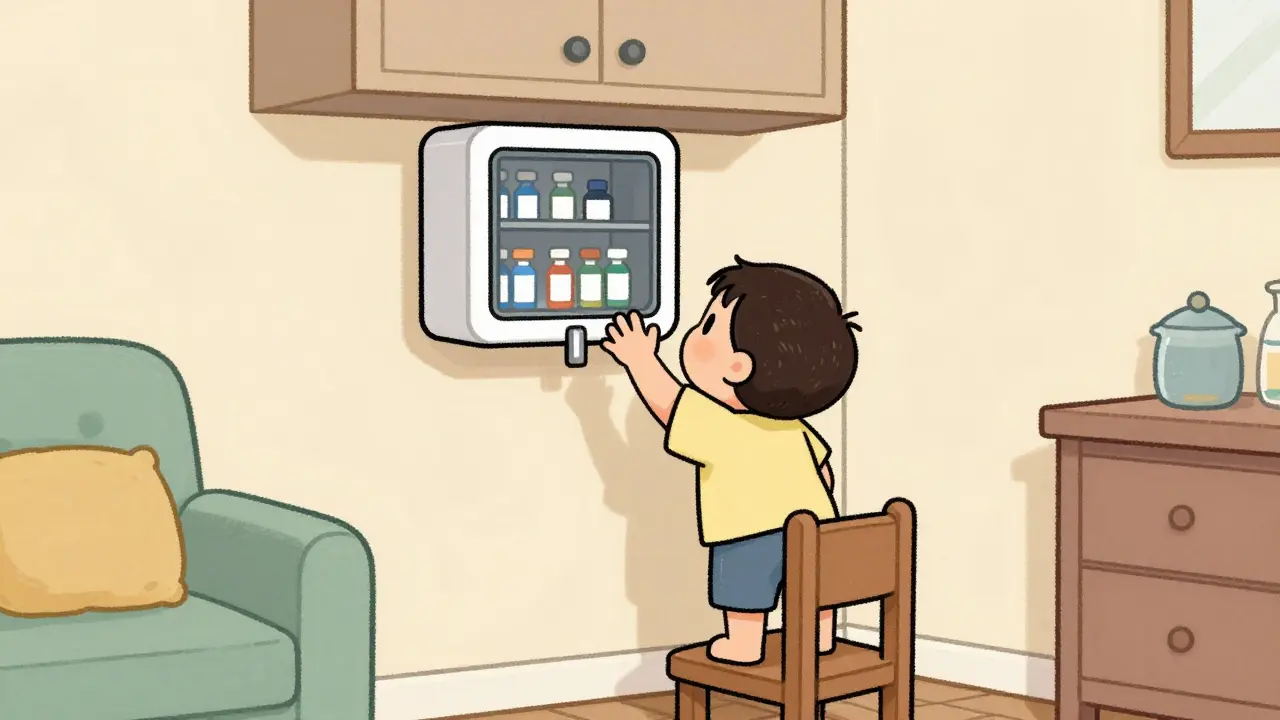
Imagine coming home after a long day and realizing your toddler is standing on a chair, reaching for the drawer where you keep your painkillers. Or perhaps you’re worried about guests finding prescription stimulants in an unlocked cabinet. These aren’t just hypothetical fears; they are daily realities for millions of households. Medication lockboxes are not merely convenient organizers-they are critical safety barriers designed to prevent accidental poisoning, misuse, and diversion of high-risk drugs.
If you have opioids, benzodiazepines, or stimulants in your home, relying on child-resistant caps or hiding pills in a junk drawer is no longer enough. Data shows that nearly half of children aged four to five can open standard safety-capped containers within a minute. A proper lockbox creates a physical barrier that stops unauthorized access before it starts. This guide will walk you through selecting the right unit, installing it correctly, and maintaining a safe storage protocol that protects everyone in your household.
Why Child-Resistant Caps Aren't Enough
We’ve all seen them: those hard plastic bottles with the push-and-turn lids mandated by the Poison Prevention Packaging Act of 1970. While they were a step forward decades ago, they simply don’t cut it today. The Centers for Disease Control and Prevention (CDC) reports approximately 60,000 emergency department visits annually due to children accessing medications. Why? Because kids are smarter and more determined than we give them credit for.
A study published in the National Library of Medicine highlighted a startling gap between awareness and action. Despite widespread knowledge of the opioid crisis, only 4% of participants initially stored their medications in a locked place. Many parents assume that "out of sight" means "safe." However, research from Hennepin Healthcare indicates that 72% of children can locate hidden medications within 30 minutes of searching. A lockbox changes this dynamic entirely. It doesn’t just hide the medication; it secures it behind a mechanism that requires specific knowledge or biometric verification to open.
Identifying High-Risk Medications
Not every pill needs a vault, but certain classes of drugs pose significant risks if accessed by children, teenagers, or well-meaning guests. You need to know exactly what qualifies as high-risk. According to guidelines from Hennepin County’s Safe Medication Storage program, the following categories demand mandatory locked storage:
- Opioids: Including hydrocodone (Vicodin, Norco), oxycodone (Percocet, OxyContin), and morphine. These carry a high risk of overdose and addiction.
- Benzodiazepines: Such as alprazolam (Xanax) and diazepam (Valium). When mixed with alcohol or other depressants, these can be fatal.
- Stimulants: Like dextroamphetamine-amphetamine (Adderall) and methylphenidate (Ritalin). These are often sought after for cognitive enhancement or recreational use.
- Fentanyl Patches: Even used patches contain lethal doses of fentanyl. They must be folded onto themselves and locked away immediately after removal.
If you have any of these in your home, a lockbox isn’t optional-it’s essential. The American Academy of Pediatrics issued a formal policy statement in 2022 recommending locked storage for all opioid medications in households with children, citing a 400% increase in pediatric opioid exposures between 2000 and 2019.
Choosing the Right Lockbox Type
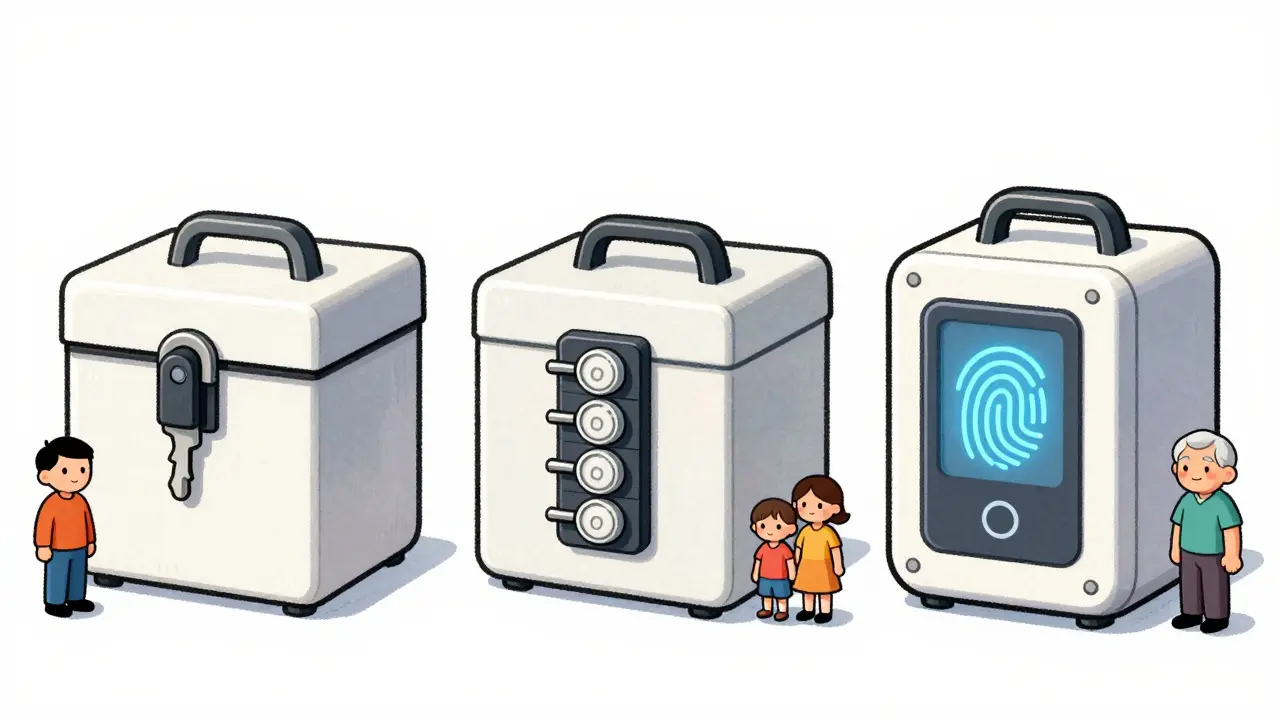
Not all lockboxes are created equal. Your choice depends on who lives in your home, your dexterity levels, and the volume of medication you need to store. Here are the three main types available on the market:
| Type | Mechanism | Best For | Pros | Cons |
|---|---|---|---|---|
| Key Lock | Physical key | Single-user households | Inexpensive, simple | Keys can be lost or copied |
| Combination | 3-4 digit code | Families, shared homes | No keys to lose, customizable codes | Codes can be forgotten; difficult for some elderly users |
| Biometric | Fingerprint scanner | Elderly users, high security | Fast access, no keys/codes needed | Higher cost ($50-$100+), battery dependent |
For most families, a combination lock offers the best balance of security and convenience. If you have an elderly parent with arthritis or dexterity issues, Dr. Jane Smith of the National Council on Aging recommends biometric solutions, noting that 15% of adults over 75 struggle with traditional lock mechanisms. Key locks are budget-friendly but risky if you tend to misplace keys under doormats or in obvious spots.
Installation and Placement Strategies
Buying the lockbox is only half the battle. Where you put it matters just as much. The CDC’s Medication Safety Guidelines outline a clear protocol for placement. First, avoid bathrooms. Humidity and heat can degrade medications, especially insulin and liquid antibiotics. Most medications require storage in a cool, dry place between 68-77°F (20-25°C).
Second, don’t just leave the box on a counter. Children can move lightweight boxes. Wall-mounted models are superior because they prevent the container from being carried away. Secure the mounting screws into wall studs, not just drywall. If you’re renting, consider adhesive-backed mounts rated for heavy loads, but verify they won’t damage walls upon removal.
Third, choose a location that is accessible to authorized users but out of reach for children. A high shelf in a bedroom closet or inside a kitchen cupboard above eye level works well. Avoid the bedside table unless you live alone; thieves or curious guests might check there first. Remember, the goal is to create a barrier that requires effort to bypass.
Establishing Access Protocols
A lockbox is only as secure as the people who know how to open it. Establish strict rules about who has access. Limit combinations or keys to one or two responsible adults. Do not share codes with teenage friends or casual visitors. If someone moves out of your home, change the combination immediately.
Dr. Sarah Lipscy, an Emergency Medicine Physician, noted in a study that providing lockboxes improved reported safe storage practices by 87%. However, this benefit vanishes if protocols are lax. Write down the combination and store it in a separate secure location, like a fireproof safe or with a trusted neighbor outside the home. Never tape the code to the back of the lockbox-a common mistake that defeats the entire purpose.
For households with multiple caregivers, such as parents sharing custody or adult children caring for aging parents, coordinate access times. Biometric lockboxes excel here because you can register multiple fingerprints without sharing passwords. Ensure everyone knows how to operate the device during an emergency. Practice opening it quickly so stress doesn’t hinder access when seconds count.
Maintenance and Disposal Best Practices
Your lockbox needs regular attention. Check batteries in electronic models every six months. A dead battery during a medical emergency is a nightmare scenario. Keep a spare set of batteries nearby, but not inside the box itself.
Clean the interior occasionally to remove dust or moisture. Inspect the locking mechanism for wear and tear. If the latch feels loose or the combination spins freely, replace the unit immediately. Don’t wait for it to fail completely.
What about old or unused medications? Never flush them unless specifically instructed by the label. Instead, use take-back programs. The DEA hosts National Prescription Drug Take Back Days twice a year. In the UK, pharmacies offer anonymous disposal bins. Store expired meds in the lockbox until you can dispose of them properly. Breaking tablets up and mixing them with unappealing substances like coffee grounds or cat litter before sealing them in a bag adds an extra layer of deterrence against scavenging animals or curious kids.
Real-World Challenges and Solutions
Even with the best intentions, implementation hurdles arise. Consumer Reports’ 2023 survey found that 22% of users cited "occasional inconvenience" as the primary drawback. Letting go of the habit of grabbing pills from an open bottle takes time. Expect a learning curve of 2-3 days. During this period, remind yourself why you’re doing this. Think of the peace of mind knowing your family is protected.
If you forget the combination, stay calm. Most manufacturers provide reset instructions via a small pinhole on the back. Have a paper copy of these instructions handy. For biometric units, ensure fingerprints are registered clearly; wet or dirty hands may not scan properly. Wipe your finger before attempting access.
Guests staying overnight present another challenge. Communicate openly. Tell them, "I keep my medications locked for safety reasons," rather than apologizing for the inconvenience. Most reasonable guests will understand. If you’re concerned about privacy, install the lockbox in a private area like your bedroom rather than a shared bathroom.
The Bigger Picture: Community and Policy
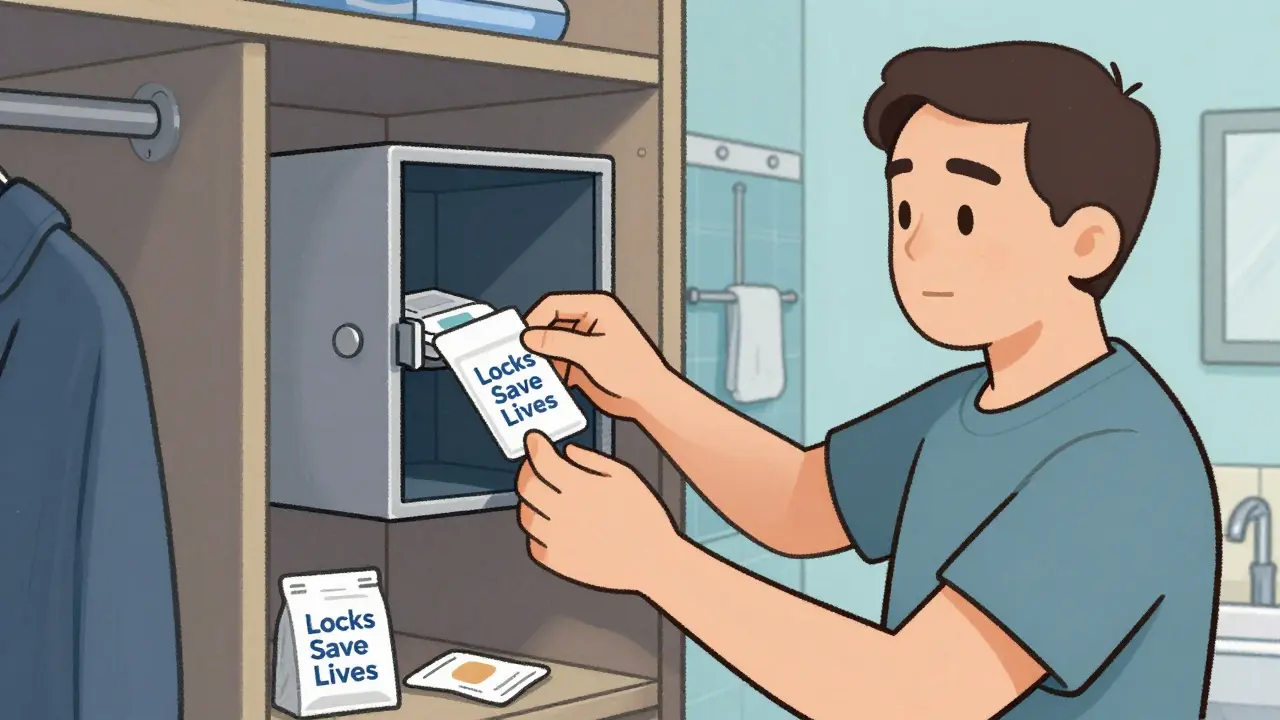
The push for medication lockboxes isn’t just individual responsibility; it’s part of a broader public health movement. Programs like "Locks Save Lives" have distributed over 14,000 free lockboxes since 2022, achieving a 94% satisfaction rate. State laws are evolving too. As of 2023, 14 U.S. states require locked storage for opioid prescriptions in households with minors. In the UK, while not yet legally mandated, healthcare providers increasingly recommend secure storage during prescription consultations.
The FDA approved the first smart lockbox with usage monitoring capabilities in May 2023. These devices record access attempts and send alerts to designated contacts. While currently expensive, they represent the future of medication safety, integrating technology to prevent both accidental ingestion and diversion. For now, a sturdy, well-placed mechanical lockbox remains the gold standard for most households.
Can I use a regular jewelry box as a medication lockbox?
No. Jewelry boxes are designed for aesthetics, not security. They often have weak latches that children can easily pry open. Medication lockboxes are constructed from reinforced steel or ABS plastic and feature tamper-resistant mechanisms specifically tested to withstand forced entry attempts.
Where should I hide the key to my medication lockbox?
Never hide the key near the lockbox. Common hiding spots like under mats, in plant pots, or taped under drawers are easily discovered by children and intruders. Instead, keep the key on your person (e.g., on a keychain) or store it in a separate secure location like a safe deposit box or with a trusted neighbor.
Do I need a lockbox for over-the-counter painkillers?
Generally, no, unless you have young children. Acetaminophen and ibuprofen are less likely to cause immediate fatal overdoses compared to opioids, but accidental ingestion can still lead to serious liver damage or kidney failure. If you have toddlers, locking all medications is a prudent precaution.
How do I dispose of unused fentanyl patches safely?
Fold the patch in half so the sticky sides touch, then place it in its original pouch or a sealed bag. Store it in your lockbox until you can drop it off at a pharmacy take-back bin or a DEA collection site. Never throw used patches directly in the trash without securing them, as they retain lethal amounts of drug residue.
Are biometric lockboxes worth the extra cost?
Yes, if you have elderly family members with dexterity issues or if you frequently forget combinations. Biometric scanners offer quick, keyless access and eliminate the risk of losing codes. While they cost more upfront, the convenience and enhanced security often justify the investment for vulnerable households.