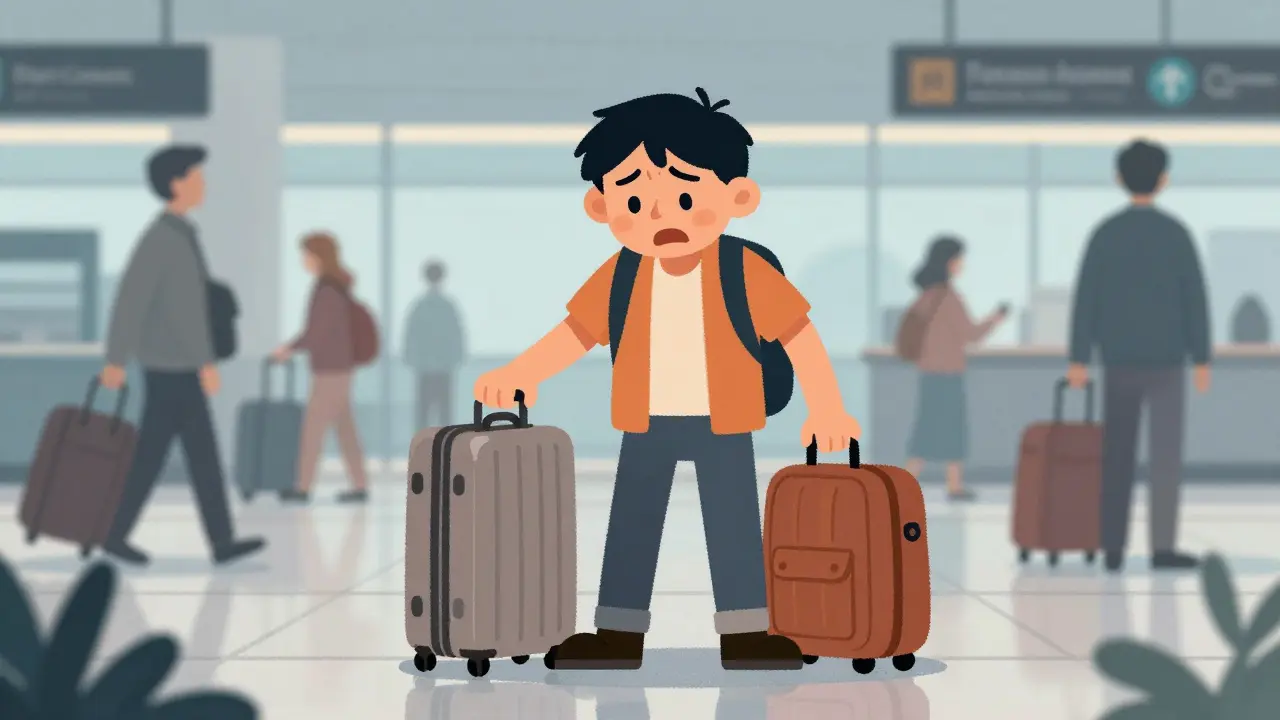
Imagine you are standing in a crowded airport terminal or settling into your hotel room after a long flight. You reach for your bag, and your heart stops. Your medication is gone. If that medication happens to be a controlled substance like oxycodone, Adderall, or Xanax, the problem goes far beyond a missed dose. You are now facing potential legal trouble, severe health withdrawal symptoms, and the nightmare of replacing a drug that requires strict medical oversight. This is not a hypothetical scenario; it is a growing reality for travelers worldwide.
The stakes are incredibly high. According to data from the Centers for Disease Control and Prevention (CDC), medication theft accounts for roughly 12% of all medication-related travel incidents. Controlled substances are disproportionately targeted because they hold significant street value. Thieves know exactly what to look for, and they often target travelers who appear distracted or unprepared. Protecting these medications requires more than just throwing them in your suitcase. It demands a strategic approach combining physical security, proper documentation, and an understanding of international laws.
Keep Medications in Your Carry-On Bag
The single most important rule for traveling with any medication, but especially controlled ones, is to never check them. The Transportation Security Administration (TSA) strongly advises keeping all medications in your carry-on luggage. Why? Because checked baggage can get lost, delayed, or opened by unauthorized personnel. SITA’s 2022 Baggage Report notes that approximately 25.5 bags per 1,000 passengers are mishandled. If your meds are in one of those bags, you are stranded without treatment.
Furthermore, temperature fluctuations in cargo holds can degrade certain medications. Many controlled substances, such as buprenorphine films, require storage between 68-77°F (20-25°C). Exposure to extreme temperatures during transit can reduce efficacy by up to 35%, according to FDA stability studies. By keeping your meds with you, you maintain control over their environment and their security.
- Never check controlled substances: Keep them in your personal item or carry-on at all times.
- Use original containers: This is crucial for identification and legal compliance.
- Avoid pill organizers for initial transport: While convenient for daily use, loose pills in generic organizers raise red flags at security checkpoints.
The Power of Original Packaging and Documentation
When you arrive at your destination, you need to prove that the pills in your pocket belong to you and were prescribed by a doctor. Cleveland Clinic pharmacists report that 78% of medication-related security issues at airports stem from medications not being in properly labeled containers. Generic bottles or ziplock bags do not cut it, especially when crossing borders.
Your best defense is the original pharmacy container. It displays your name, the prescribing physician’s name, the medication strength, and the dosage instructions. For international travel, this is non-negotiable. The International Narcotics Control Board (INCB) guidelines emphasize that while limited quantities may be transferred to secondary containers, they must include identical labeling details. However, sticking to the original bottle is safer and simpler.
In addition to the bottle, carry a doctor’s letter. This document should be on official letterhead, signed by your physician, and include:
- Your diagnosis (briefly, if comfortable) or medical necessity.
- The specific medication names and dosages.
- A statement confirming the medication is prescribed to you personally.
- Your doctor’s contact information for verification.
Securing Medications in Hotels and Accommodations
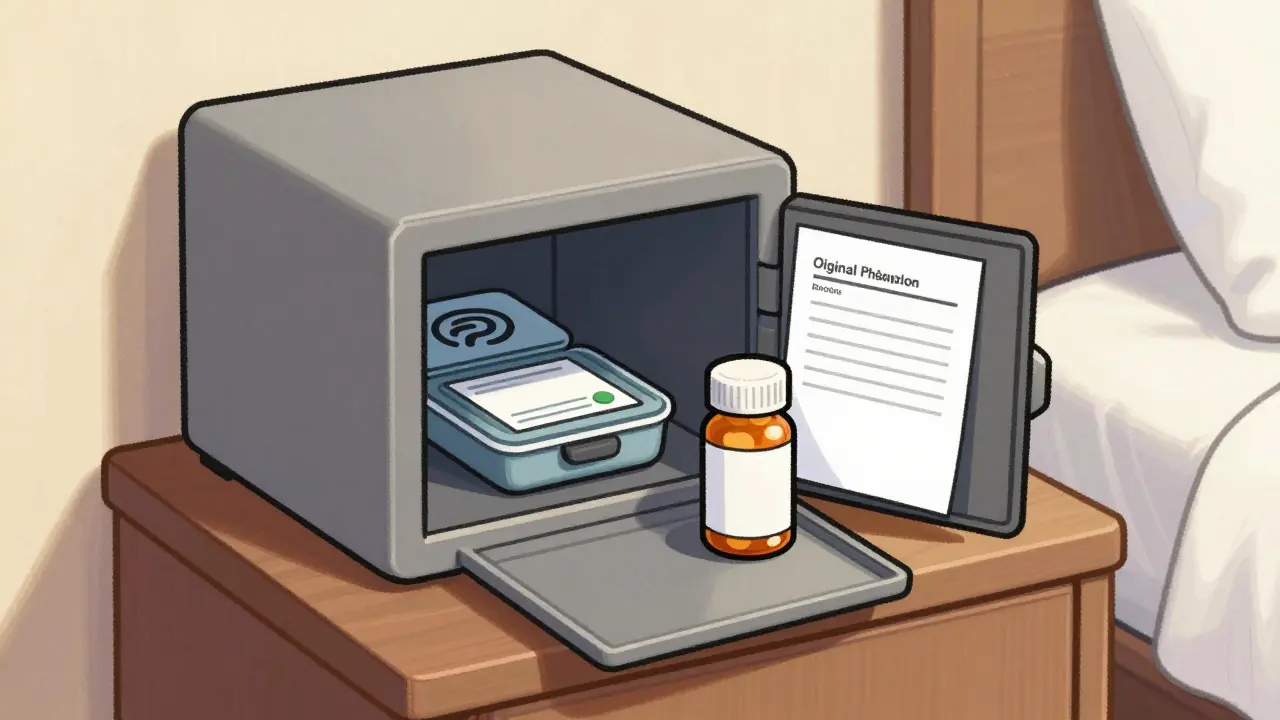
You might think the danger ends once you clear customs, but statistics tell a different story. Dr. Sarah Wyman, Chief Pharmacy Officer at Cleveland Clinic, highlights that 92% of medication theft incidents occur during hotel stays or when medications are left unattended in rental vehicles. Hotel rooms are surprisingly vulnerable. Housekeeping staff, other guests, or opportunistic thieves can access unlocked safes or easily hidden compartments.
To mitigate this risk, treat your medication like cash. Use the hotel safe, but do not rely on it blindly. Check if the safe is digital or key-operated; digital safes can sometimes be reset by staff if they suspect something valuable is inside. A better strategy involves using an RFID-blocking medication case combined with the hotel safe. Aggregated user reports on PackPoint’s travel safety blog indicate this dual-layer approach reduces theft incidents by 76%.
If you are staying in short-term rentals like Airbnb, be even more cautious. These properties often lack professional security protocols. Consider carrying your medication with you when you leave the room, rather than leaving it behind. It feels inconvenient, but losing a controlled substance can lead to criminal charges if found by others, or severe health consequences if stolen.
| Storage Method | Security Level | Risk Factors | Best For |
|---|---|---|---|
| Checked Luggage | Very Low | Lost bags, theft, temperature damage | None (Avoid entirely) |
| Carry-On (Unsecured) | Medium | Pickpocketing, accidental loss | Short domestic trips |
| Hotel Safe (Digital) | Medium-High | Staff access, code guessing | Standard hotels |
| RFID Case + Hotel Safe | High | Bulky, requires charging/case cost | International travel, high-value meds |
| On-Person (Hidden Pocket) | High | Forgetting to take it out | Transit, unsecure accommodations |
Navigating International Laws and Customs
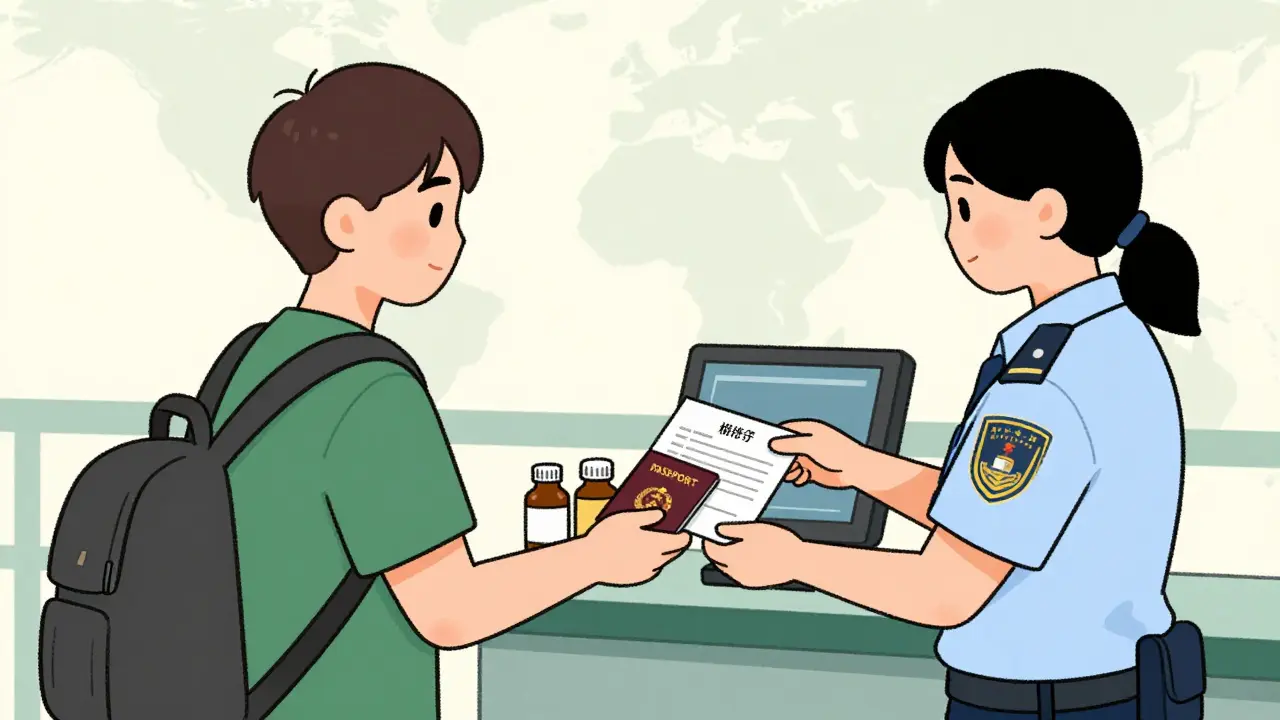
Traveling internationally adds a layer of complexity. What is legal in the United States may be strictly prohibited elsewhere. The CDC’s Yellow Book 2024 states that travelers entering 67% of countries face potential medication confiscation without proper documentation. Some nations have zero tolerance policies.
For example, Japan has strict regulations regarding pseudoephedrine, commonly found in cold medications, leading to over 2,000 documented confiscation cases in 2022. Saudi Arabia prohibits 147 controlled substances entirely, regardless of prescription status. Before booking your trip, research the specific drug laws of your destination. The INCB provides an interactive portal with country-specific exceptions, but always verify with the local embassy as well.
Be aware of quantity limits. Most countries allow a 30-day supply for Schedule III-V medications, but Schedule II substances like hydrocodone or morphine often have stricter caps. Enlyte pharmacists recommend carrying no more than a 14-day supply for a seven-day trip, plus 2-3 extra doses as a contingency. Carrying large quantities can signal intent to distribute, leading to arrest.
What to Do If Your Medication Is Stolen
If the worst happens and your medication is stolen, act quickly. Time is critical. First, file a police report immediately. Insurance companies, including major providers like UnitedHealthcare, require police reports filed within 24 hours to process claims. Data shows that only 17% of stolen medication claims are approved without timely documentation, compared to 89% with it.
Next, contact your insurance provider and your prescribing doctor. Replacing controlled substances is difficult due to DEA regulations. Pharmacies cannot dispense Schedule II medications more than 5 days early without special authorization. However, new developments are helping. The DEA launched a pilot program in April 2024 allowing electronic prescription verification for stolen controlled substances at participating pharmacies in 17 states. This can reduce replacement wait times from 72 hours to under 4 hours.
If you are abroad, contact your home country’s embassy. They can assist in locating local pharmacies that may honor foreign prescriptions or help coordinate with your doctor back home. Keep digital copies of your prescription and doctor’s letter in the cloud so you can access them even if your physical documents are lost.
Practical Tips for Discreet and Safe Travel
Thieves often target travelers who openly discuss their medication needs or display visible pill bottles. The American Academy of Family Physicians (AAFP) reports that medication diversion incidents increase by 37% during peak travel seasons, partly because thieves watch for these cues. Maintain discretion. Avoid talking about your meds in public spaces like airport lounges or hotel lobbies.
Consider using tamper-evident packaging. Pharmaceutical companies now include color-changing seals on 68% of Schedule II medication containers in the U.S., which can indicate unauthorized access. If your pharmacy offers this, request it. Additionally, inform trusted travel companions about your medication schedule so they can help monitor your belongings if you are incapacitated or distracted.
Finally, plan for delays. Flight cancellations or border hold-ups can extend your trip unexpectedly. Always carry slightly more medication than you think you need, within legal limits. This buffer ensures you don’t run out while navigating bureaucratic hurdles to get a refill.
Can I bring controlled medications in my checked luggage?
No, you should never pack controlled medications in checked luggage. The TSA and medical experts advise keeping all medications in your carry-on bag to prevent loss, theft, or damage from temperature changes. Checked bags are handled by multiple people and are prone to being lost or delayed.
Do I need a doctor's letter for domestic travel?
While not always legally required for domestic flights within the U.S., carrying a doctor's letter is highly recommended. It helps resolve any questions at security checkpoints and proves the medication is prescribed to you. For international travel, a doctor's letter is often mandatory.
What should I do if my medication is stolen at a hotel?
Immediately file a police report. Contact your insurance company and your prescribing doctor. If you are abroad, reach out to your embassy. Having a police report is crucial for insurance claims and speeding up the process of getting a replacement prescription.
How much medication can I carry when traveling internationally?
Most countries allow a 30-day supply for Schedule III-V medications. However, Schedule II substances often have stricter limits. It is best to carry only what you need for the trip plus a few extra doses. Always check the specific laws of your destination country before traveling.
Is it safe to transfer pills to a generic pill organizer?
It is generally safer to keep controlled substances in their original pharmacy containers. Loose pills in generic organizers can raise suspicion at security checkpoints and make it harder to prove ownership. If you must use an organizer, keep the original bottle nearby for reference.