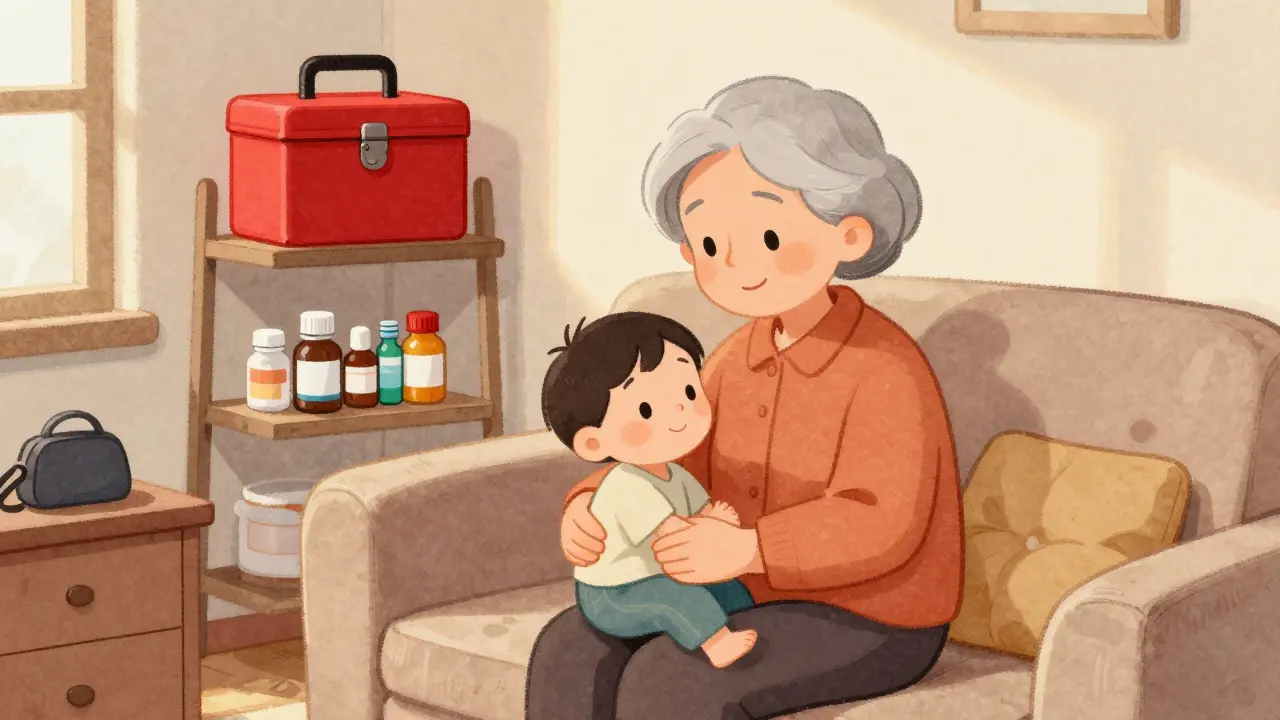
Every year, pediatric medication safety becomes more urgent-not because kids are getting into more drugs, but because the people caring for them are holding more of them. Grandparents and other caregivers are now raising 13% of U.S. children under 18, and many of them are managing multiple prescriptions of their own. The problem? Medicines that are perfectly safe for adults can be deadly for toddlers. And too often, they’re left within reach-on nightstands, in purses, or in unmarked containers.
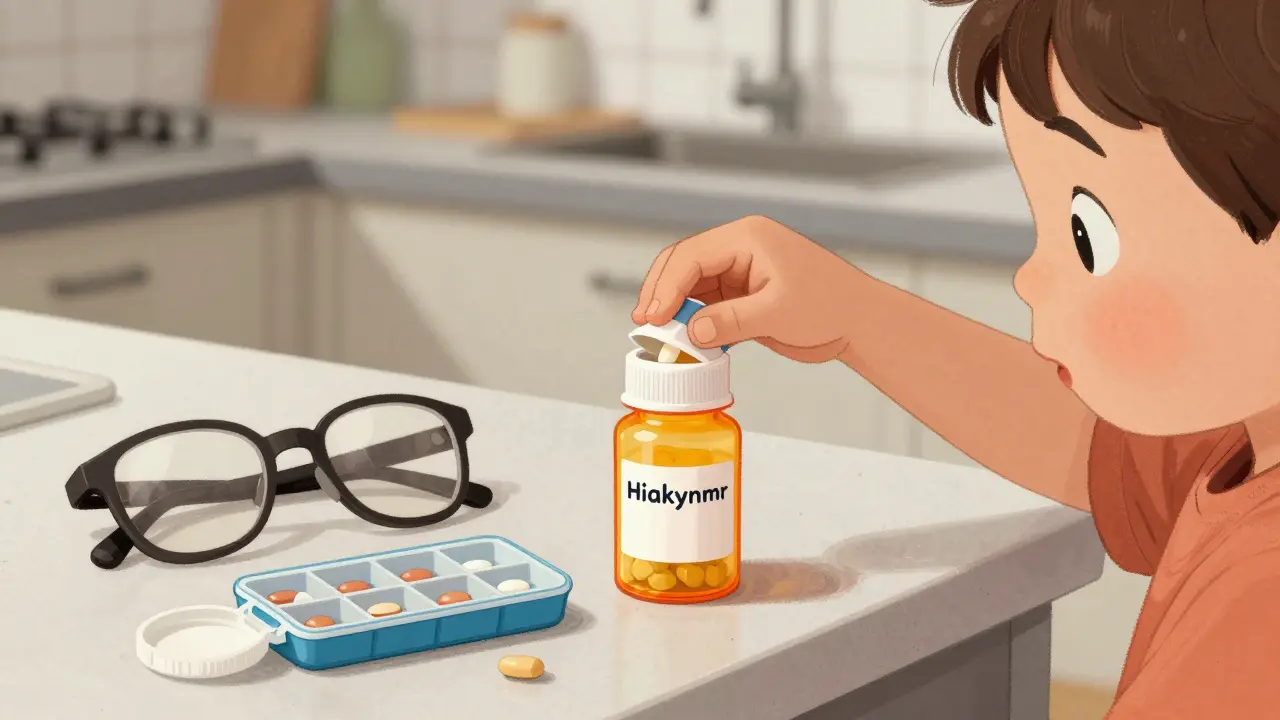
Here’s the hard truth: 38% of all pediatric medication poisonings that land kids in the emergency room involve a grandparent’s medicine. That’s not a fluke. It’s a pattern. And it’s happening because most grandparents don’t realize how easily a child can get into their pills-even if they’re in "child-resistant" bottles. In fact, 30% of 4-year-olds can open those caps in under five minutes. Meanwhile, 29% of caregiving grandparents transfer medications into weekly pill sorters, which are completely unsecured. And 12% keep them right on their bedside tables.
Why Grandparents Are at the Center of This Problem
Grandparents aren’t careless. Most are deeply loving and vigilant. But they’re also navigating a perfect storm. The average caregiving grandparent takes 4.7 prescription medications daily. That’s more than double what most parents take. They’re more likely to have arthritis, memory lapses, or vision issues that make handling bottles and reading labels harder. And they’ve lived through a time when medicine was kept on the kitchen counter-"because it was always there."
Parents, on the other hand, are usually more aware. Studies show 68% of parents store medications safely. But grandparents? Only 52% do. The gap isn’t about care-it’s about knowledge. Many grandparents believe child-resistant caps are enough. They don’t know that these caps are tested on 5-year-olds, not 2-year-olds. They don’t realize that a child who can climb on a chair can reach a purse left on a couch. They don’t know that a bottle of ibuprofen looks like candy to a toddler.
What Works: The PROTECT Initiative and Real-World Fixes
The CDC and Consumer Healthcare Products Association launched the "Up & Away and Out of Sight" campaign over a decade ago-and it still works. A 2017 study found that just one 15-minute conversation with grandparents, using clear visuals and hands-on practice, boosted safe storage from 39% to 78% within three months. The key? Not scolding. Not lecturing. Teaching.
Here’s what that 15-minute session taught grandparents:
- Store all medications-prescription, OTC, vitamins-in a locked cabinet, at least 4 feet off the ground.
- Keep them in their original containers with child-resistant caps. No more pill sorters unless they’re locked.
- Never leave meds in purses, bags, or nightstands-even for a minute.
- Dispose of expired or unused meds properly. Flushing isn’t always safe. Use pharmacy take-back programs.
And it’s not just about storage. One grandparent, "GrandmaJen42," shared on Reddit: "My 3-year-old found my blood pressure pills in my purse. I didn’t even know he could reach it. Now I have a locked box in my closet, and I tell him, ‘These are Grandma’s special vitamins-only grown-ups can touch.’" That simple phrase-"special vitamins"-is a game-changer. It teaches without fear.
How to Talk to Grandparents Without Offending Them
Don’t say: "You’re putting the kids at risk."
Say: "We’re all trying to keep our grandkids safe. Let’s make sure no one finds medicine by accident."
Grandparents respond better when they feel like part of the solution, not the problem. Research shows 87% of them are deeply worried about their grandchildren’s safety. They just need clear, non-judgmental guidance.
Use these phrases:
- "I know you want to make sure the kids are safe. Let’s make sure medicine stays out of reach."
- "Can we check your medicine storage together? I’ve learned a few things that might help."
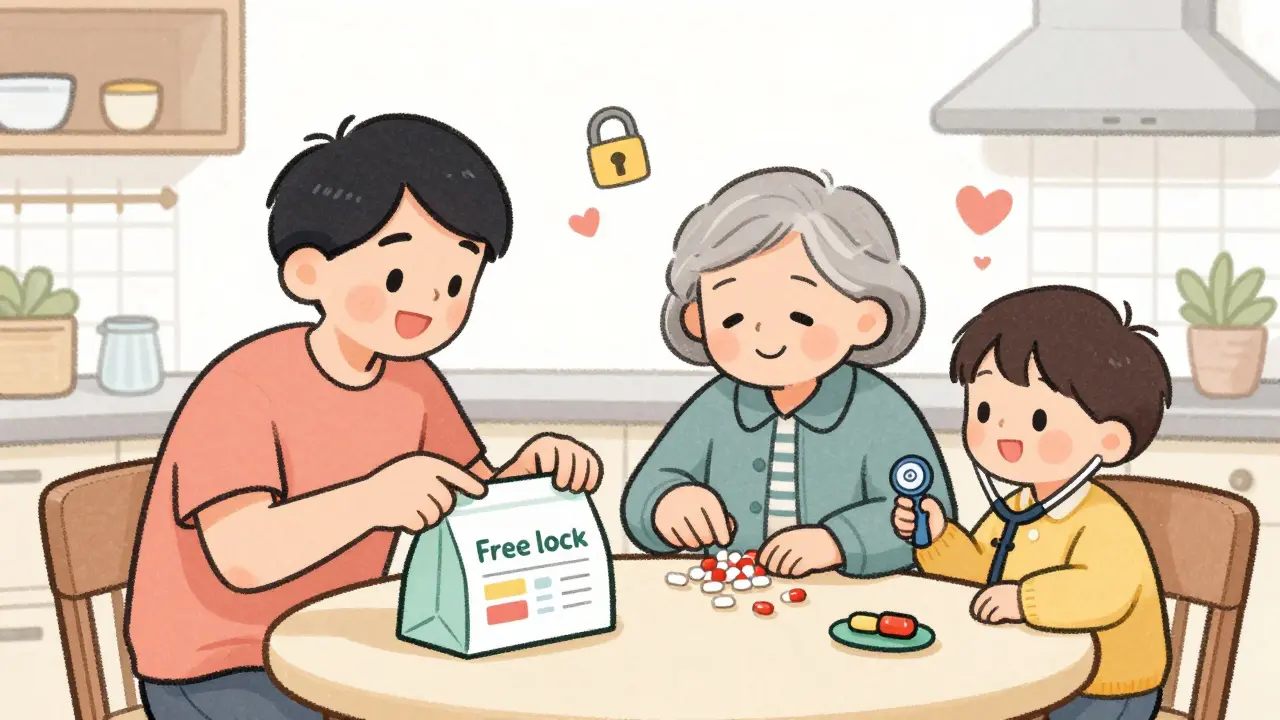
- "The pharmacy has free lockboxes for grandparents. Want one?"
Also, avoid technical terms. Say "locked box" instead of "childproof cabinet." Say "medicine is not candy" instead of "pharmacological toxicity risk."
Practical Steps for Grandparents and Caregivers
If you’re a grandparent or primary caregiver, here’s what to do-right now:
- Go through every room in your home. Look under sinks, on nightstands, in purses, in coat pockets. Find every pill, liquid, patch, or inhaler.
- Put all medications back in their original bottles. Throw out expired ones. Use a pharmacy take-back bin or mail-back program.
- Buy a locked storage box. They cost $10-$15. Many pharmacies give them out free. Ask for one during your next refill.
- Place the box up high-on a top shelf, in a closet, behind a door. Make sure it’s out of sight and out of reach. Use a latch that requires 15 pounds of force to open.
- Teach your grandchild: "Medicine is not candy. Only adults give medicine. If you find medicine, tell an adult right away."
And don’t forget: if you have arthritis or trouble opening bottles, ask your pharmacist for easy-open caps or a pill dispenser with a lock. Many pharmacies offer free training on how to use them.
What Parents Can Do to Help
Parents, this isn’t just your job. You’re the bridge between the grandparent and the safety system.
- Ask your child’s grandparents: "Where do you keep your medicine?" Don’t wait for a crisis.
- Send them a simple handout. Print the CDC’s "Up & Away" guide. Or better yet, give them a free lockbox with a note: "For keeping our grandkids safe."
- Make it part of your visit routine. "Let’s check the medicine box together before we leave."
- Share your own storage habits. "I keep my son’s asthma inhaler in the bathroom cabinet, locked. Maybe we can do the same?"
Only 38% of families have a clear plan for how grandparents store medicine. That’s too low. Make yours one of them.
New Tools and Resources Available in 2026
There’s new support out there-and it’s free.
- The CDC’s "Grandparent Guardian" digital toolkit (launched Jan 2024) has short videos in English, Spanish, and Chinese showing exactly how to lock up medicine. Watch them together.
- Major pharmacy chains like CVS, Walgreens, and Rite Aid now give free lockboxes to seniors who ask. Just say: "I’m a grandparent. Can I get a safety box?"
- The NIH-funded GRAND SAFE app sends gentle reminders to grandparents before holidays or visits-when medicine exposure risk spikes.
- Some states, like California, now require pharmacists to offer safety counseling to patients over 60 who care for children. Ask your pharmacist.
And if you’re part of a senior center, church group, or community organization, ask them to host a 20-minute "Medicine Safety Hour." It takes almost no time-but it saves lives.
What’s Still Missing
Despite all the progress, big gaps remain. Only 12% of Medicare Part D plans include medicine safety counseling. Most grandparents never get a single word about it from their doctor. And 67% say they’ve never been told how to store medicine safely.
That’s changing. The American Geriatrics Society now includes pediatric medicine safety in its annual guidelines for older adults. And H.R. 2187, the Safe Storage for Grandkids Act, is moving through Congress-with bipartisan support-to fund $15 million a year for community programs.
But you don’t have to wait for policy. You can act today.
Final Thought: Safety Isn’t About Control-It’s About Love
Grandparents don’t need to be perfect. They just need to be informed. A locked box isn’t a sign of distrust. It’s a sign of care. A simple conversation isn’t an intrusion-it’s a gift.
Every grandparent who moves their medicine from the nightstand to a locked box just saved a child from a trip to the ER. And maybe, just maybe, kept a family together.
Why are grandparents more likely to cause pediatric medication poisonings than parents?
Grandparents are more likely to take multiple daily medications (4.7 on average vs. 2.1 for parents), often store them in accessible places like nightstands or purses, and may not realize how easily young children can open child-resistant caps. Many also transfer pills into non-childproof containers like weekly pill sorters. Unlike parents, they rarely receive safety education from healthcare providers, and outdated beliefs-like "child-resistant caps are enough"-are common.
Is child-resistant packaging enough to protect kids?
No. Child-resistant caps are tested on 5-year-olds, but 30% of 4-year-olds can open them in under five minutes. The Consumer Product Safety Commission says true safety requires storage at least 4 feet high, in a locked cabinet that needs 15 pounds of force to open-far beyond what most children can manage. The caps are a backup, not a solution.
What should I do if my grandchild finds medicine?
Call Poison Control immediately at 1-800-222-1222-even if you think they didn’t swallow anything. Don’t wait for symptoms. Keep the medicine container handy so you can tell them what was taken. Afterward, review your storage habits. Most poisonings happen because the child found the medicine, not because they were given it.
Can I get a free medicine lockbox?
Yes. Major pharmacy chains like CVS, Walgreens, and Rite Aid offer free lockboxes to seniors who ask. You can also get them through local health departments, senior centers, or the CDC’s "Up & Away" campaign. The box costs $10-$20, but most programs provide them at no charge. Just request one during your next medication pickup.
How do I talk to my grandparent about medicine safety without sounding critical?
Use phrases like: "We’re all trying to keep our grandkids safe-can we check where you keep your medicine?" or "I learned something new and thought you’d want to know." Avoid blame. Focus on teamwork. Say "our grandkids," not "your medicine." Offer to help: "I’ll pick up a lockbox for you next time I’m in town."
Are there any apps or tools to help grandparents remember to lock up medicine?
Yes. The NIH-funded GRAND SAFE app, launched in 2025, sends gentle reminders to grandparents before high-risk times like holidays or overnight visits. It also includes short videos on proper storage and disposal. The CDC’s "Grandparent Guardian" toolkit has free multilingual videos available online. Both are designed for low-tech users and work on phones or tablets.
If you’re a grandparent, caregiver, or parent, start today. One locked box. One conversation. One changed habit. It could be the difference between a safe visit-and a hospital visit.
15 Responses
Just did this with my mom last weekend. Bought her a lockbox from CVS-free, by the way. Told her it was "Grandma’s secret vault." She laughed, put her blood pressure pills in, and now she even reminds my granddaughter, "No touching, sweetie, these are grown-up vitamins." Small win, big difference.
Child-resistant caps are tested on 5-year-olds? That’s the problem right there. The CPSC standards are outdated. They should be testing on 2-year-olds. And why aren’t pharmacies required to give lockboxes with every script for seniors? This isn’t optional safety-it’s public health.
i just started helping my grandma with her meds last month. she had them all in a plastic bag under her bed. no joke. we got a lockbox, labeled everything with big letters, and now she says she feels safer too. its not about control. its about peace of mind.
people who leave medicine on nightstands deserve what happens. if you cant keep your pills locked up then you shouldnt be raising kids. this isnt rocket science. its basic parenting. stop making excuses for negligence.
It’s funny how we blame the grandparents when really, the system failed them. No one ever sat down with them and said, "Here’s how to keep your grandkids safe." We assume they know. We assume they care enough. But care without guidance is just noise. The real fix isn’t boxes-it’s community. Someone needs to show up. Not once. Every few months.
In India, we store medicines in high cupboards, often tied with cloth to prevent accidental access. No lockbox needed. But the cultural difference is profound. Here, individualism overshadows collective safety. Perhaps we need to reframe this not as a medical issue, but as a cultural one-where safety is shared, not owned.
My mum used to keep her pills in her handbag. I found ibuprofen in there last Christmas. She was horrified. So now? I send her a little note every holiday: "Love you. Lock it up." She replies with a photo of the box. We’ve turned safety into a ritual. And honestly? It’s kind of beautiful.
just got the grand safe app. it sent me a reminder before easter. i had my meds in the drawer. now they’re locked. also, i put a sticker on the box that says "no candy" 😊
my sister told me her grandkid ate 4 of her blood pressure pills. she said she didn't even know he could reach her purse. i cried. then i made a flyer. printed 50 copies. left them at the senior center. next week i'm bringing lockboxes. if you're reading this and you're a grandparent? please. just one box. please.
There is a moral obligation here. The elderly are not entitled to negligence. Healthcare providers must be mandated to deliver safety counseling. This is not a suggestion. It is a clinical imperative. Failure to do so constitutes a breach of duty of care. The system is broken.
My aunt in Toronto has the same issue. She’s got arthritis, can’t open bottles, so she leaves them out. We got her a lockbox with easy-open lid. Now she doesn’t have to choose between safety and independence. That’s the win. Not punishment. Accessibility.
my grandpa gave me a pill once. said it was sugar. i was 3. i threw up. he never learned. now he’s 80. still keeps meds on the counter. i don’t visit anymore. too risky.
i read this and thought of my dad. he took 6 pills a day. kept them on the windowsill. i didn’t say anything. just started leaving little sticky notes: "for you, not them." one day he asked why. i said, "you’re the reason they’re safe." he cried. now he has a box. no lectures. just love.
i never thought about how hard it is to open bottles with shaky hands. my grandma cried when she got the easy-open cap. said no one ever asked. just gave her a box and said "put it here." sometimes safety just means someone noticed you were struggling.
lockbox. 10 bucks. done. no drama. no guilt. just safer kids.