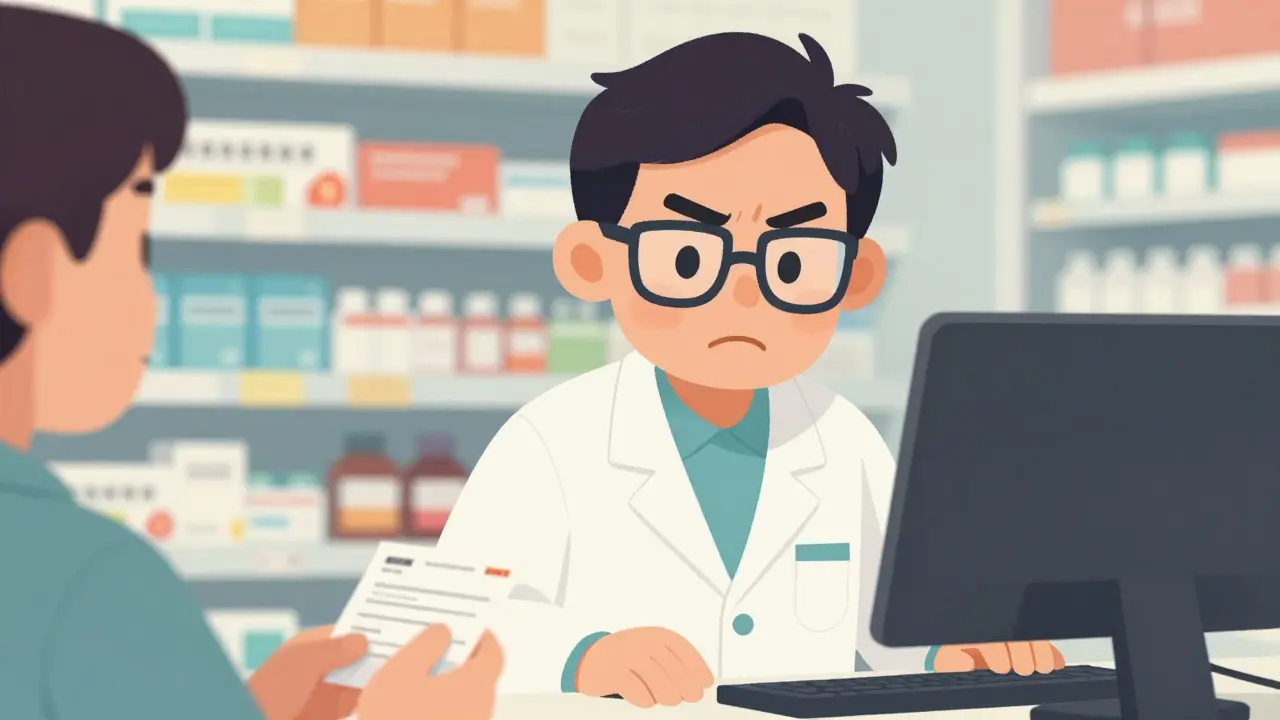
Imagine you are at a busy pharmacy counter or sitting in a doctor’s office. You hand over your prescription, and the pharmacist frowns slightly at their screen. "Wait," they say. "This new antibiotic interacts badly with the blood thinner you’ve been taking for months." That moment of pause is a safety alert in action. It is the difference between a minor inconvenience and a hospital visit.
For years, we have treated our medication lists as simple shopping checklists. We write down names and dosages, maybe add a note about side effects, and call it done. But this approach leaves us vulnerable. Documenting safety alerts on your medication list is not just bureaucratic paperwork; it is a critical layer of defense against serious harm. High-alert medications-drugs like insulin, opioids, and anticoagulants that can cause severe injury if used incorrectly-require more than just a name on a page. They need context, warnings, and clear instructions that travel with you from the hospital to your home.
What Exactly Is a Safety Alert?
A safety alert is any warning associated with a medication that signals potential risk. This isn’t just the fine print on a bottle. It includes interactions with other drugs, specific administration rules (like "take on an empty stomach"), and contraindications based on your health conditions. The Institute for Safe Medication Practices (ISMP), a leading authority in this field, defines high-alert medications as those with an increased risk of causing serious patient harm when used in error.
When you document these alerts, you are creating a "red flag" system for anyone who handles your care. If you go to an emergency room and cannot speak, your documented medication list becomes your voice. Without clear safety alerts noted, a well-meaning doctor might prescribe a standard painkiller that dangerously spikes your blood pressure because they didn’t know you were on a specific antidepressant. The goal is to make these risks visible before they become problems.
Why Your Current List Might Be Failing You
Most people keep their medication lists on a scrap of paper, a notes app, or a crumpled discharge summary from the hospital. These methods fail because they lack structure. Research from the World Health Organization shows that properly implemented safety alert documentation can reduce medication errors by up to 50%. Yet, most personal lists contain zero alerts.
Consider the common scenario of methotrexate, a drug used for arthritis and cancer. In oncology, it is often given weekly. For rheumatoid arthritis, it is also typically weekly but can be confused with daily dosing if not clearly specified. A study highlighted that systems without proper documentation protocols see bypass rates for safety checks as high as 49%. If your list just says "Methotrexate 10mg," it misses the crucial alert: "TAKES WEEKLY ONLY - DAILY DOSING IS TOXIC." This specific instruction saves lives. Generic lists do not provide this level of protection.
Step-by-Step: Building a Safety-Focused Medication List
You do not need expensive software to start. You need a structured format. Here is how to transform your basic list into a safety tool.
- Create a Master Inventory: List every substance you take. This includes prescription drugs, over-the-counter medicines (like ibuprofen or antacids), vitamins, and herbal supplements. Many patients forget that St. John’s Wort or garlic supplements can interact with blood thinners.
- Identify High-Alert Medications: Flag drugs that fall into high-risk categories. The Joint Commission requires hospitals to maintain lists of these, and you should too. Common categories include:
- Insulin and other diabetes injectables: Risk of hypoglycemia.
- Opioids: Risk of respiratory depression.
- Anticoagulants (blood thinners): Risk of bleeding.
- Chemotherapy agents: Risk of toxicity.
- Neuromuscular blockers: Risk of respiratory arrest (usually hospital-only, but relevant if recently discharged).
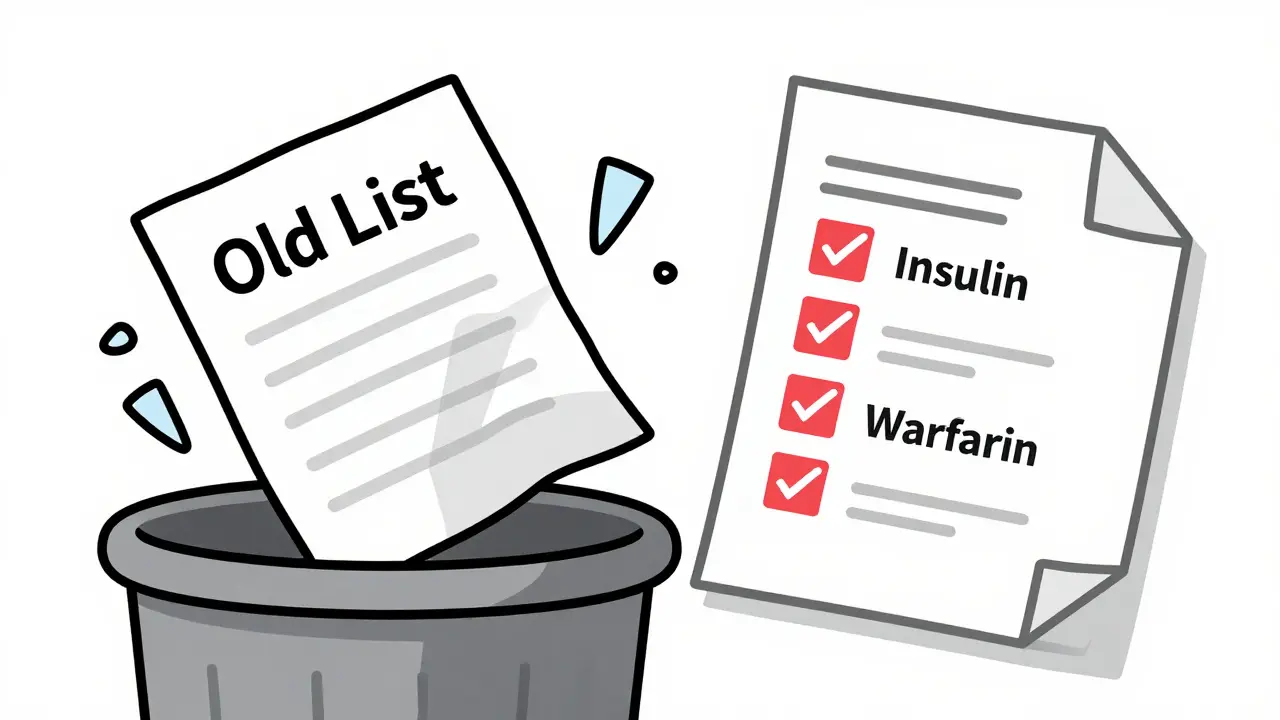
- Add Specific Safety Alerts: Next to each high-alert medication, write the specific warning. Do not assume the provider knows. Write: "Warfarin: Check INR weekly. Avoid vitamin K-rich foods." Or "Metformin: Hold dose 48 hours before contrast dye procedures."
- Note Interactions: If you take multiple drugs, ask your pharmacist to highlight known interactions. Add these to your list. Example: "Simvastatin + Amiodarone: Increased risk of muscle damage. Monitor for pain."
- Include Administration Rules: Timing matters. "Take Lisinopril in the morning," or "Take Levothyroxine on an empty stomach, 30 minutes before breakfast."
The Role of Technology and Digital Tools
In 2026, technology plays a huge role in medication safety. The medication safety technology market has grown to $3.2 billion globally, reflecting the demand for better tracking. While hospitals use complex electronic health records (EHRs) with hard-stop verification protocols, you can leverage simpler tools.
Many pharmacies now offer digital medication profiles accessible via secure apps. These often pull data directly from your prescriptions, reducing transcription errors. However, do not rely solely on them. A 2023 survey found that 62% of hospitals struggle to integrate external safety alerts into their internal systems promptly. As a patient, you must bridge this gap. Use apps that allow custom notes. When you pick up a new prescription, immediately open your app and type the pharmacist’s verbal warnings into the notes section for that specific drug.
Look for features like barcode scanning. Some apps let you scan your pill bottle to auto-populate details. This reduces typos, which are a common source of errors. For example, confusing "Lansoprazole" with "Omeprazole" might seem minor, but if you have a specific allergy or interaction issue, the difference is significant.
Maintaining Your List: The Quarterly Review
A static list is a dangerous list. Your body changes, and so does your treatment plan. The American Society of Health-System Pharmacists (ASHP) recommends that medication safety committees analyze error data quarterly. You should apply the same rigor to your personal list.
Set a reminder for every three months to review your medication list. During this review:
- Remove discontinued drugs: Keep only what you are currently taking. Old meds clutter the list and confuse providers.
- Update doses: Did your doctor increase your blood pressure medication last month? Update it now.
- Refresh alerts: New research emerges constantly. The FDA releases approximately 120 drug safety communications annually. Ask your pharmacist if there are any new warnings for your long-term medications.
- Check expiration dates: Especially for life-saving drugs like epinephrine auto-injectors or nitroglycerin.
This habit ensures your list remains a living document, not a relic from last year’s flu season.
Communicating with Healthcare Providers
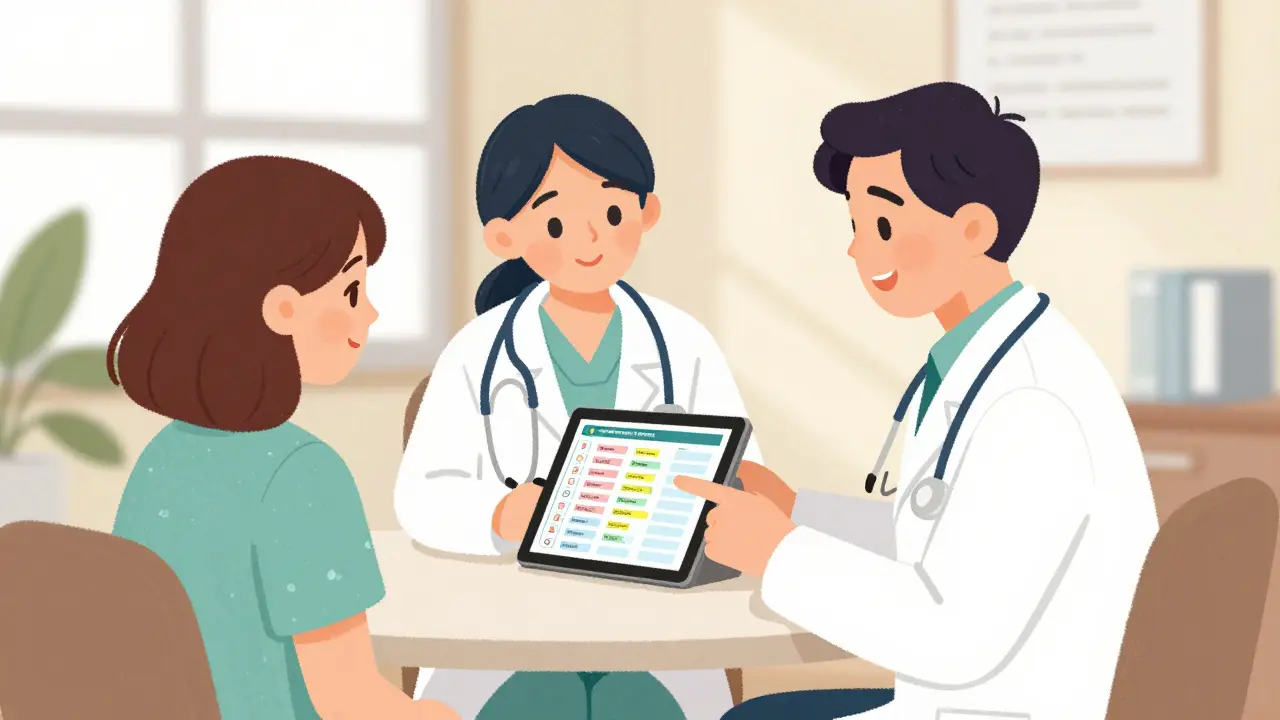
Your documented list is useless if you do not share it. Every time you see a new specialist, go to the ER, or visit the dentist, bring your updated list. Make it a ritual. Place it at the top of your folder or phone home screen.
When discussing new medications, actively ask: "Are there any safety alerts I should add to my list?" This question signals to the provider that you are engaged in your own safety. It prompts them to think beyond the standard script. For instance, if you are prescribed a statin, asking this might lead the doctor to mention monitoring liver enzymes, an alert you wouldn’t otherwise know to track.
In emergency situations, consider wearing a medical ID bracelet that references your list. If you carry a physical card in your wallet, ensure it has a space for "Critical Alerts" separate from the medication names. This visual separation helps first responders spot dangers quickly.
Common Pitfalls to Avoid
Even with good intentions, mistakes happen. Here are common errors patients make when documenting safety alerts:
- Vague Language: Writing "Be careful" is not helpful. Write "Causes dizziness; stand up slowly." Specificity drives action.
- Ignoring OTC Drugs: Assuming over-the-counter meds are safe is a myth. Acetaminophen can damage the liver if combined with certain other drugs or alcohol. Include them.
- Overloading the List: Too much information can be ignored. Focus on high-alert items and critical interactions. If your list is ten pages long, no one will read it all. Summarize where possible.
- Failing to Update After Hospitalization: Discharge summaries are goldmines for new alerts. Transfer those instructions to your master list within 24 hours of coming home.
The Future of Personal Medication Safety
We are moving toward a more integrated future. By 2027, experts predict that 75% of U.S. hospitals will have fully automated safety alert documentation with real-time analytics. AI-assisted systems are already emerging to categorize and prioritize alerts based on individual patient data. While this technology primarily benefits healthcare institutions, it trickles down to consumers through better-connected pharmacy apps and telehealth platforms.
However, automation is not a substitute for human vigilance. Dr. Robert Wachter warns that over-documentation can lead to alert fatigue, where users ignore warnings because there are too many. As a patient, your curated, concise list cuts through the noise. It highlights only what matters to you, ensuring that critical alerts are never lost in a sea of generic warnings.
What is a high-alert medication?
A high-alert medication is a drug that carries a heightened risk of causing serious patient harm if it is used in error. Examples include insulin, opioids, anticoagulants (blood thinners), and chemotherapy agents. These drugs require extra caution, double-checks, and clear documentation of safety alerts.
How often should I update my medication list?
You should update your medication list immediately whenever you start, stop, or change the dose of a medication. Additionally, conduct a comprehensive quarterly review to remove discontinued drugs, verify current dosages, and check for new safety alerts or interactions.
Do I need to include vitamins and supplements on my safety list?
Yes. Vitamins, herbal supplements, and over-the-counter medications can interact with prescription drugs. For example, St. John’s Wort can reduce the effectiveness of birth control pills, and garlic supplements can increase bleeding risk with blood thinners. Including them provides a complete picture for your healthcare providers.
What should I do if I don't understand a safety alert on my prescription?
Never guess. Contact your pharmacist or doctor immediately. Ask them to explain the alert in plain language and write down the specific actions you need to take. For instance, if the alert says "monitor renal function," ask what that means for your lifestyle and when you should expect blood tests.
Can digital apps replace a physical medication list?
Digital apps are excellent tools, but they should complement, not completely replace, a physical backup. Phones can die, lose signal, or be forgotten. Carry a printed copy of your critical alerts and high-alert medications in your wallet or purse, especially when traveling or during emergencies.