
If your medication isn’t doing what it’s supposed to, you’re not alone. About half of all people don’t take their prescriptions as directed, and a big reason? They don’t feel like it’s helping. But staying silent won’t fix it. The key isn’t just to notice something’s off-it’s to speak up in a way that gets results. You don’t need to be pushy. You just need to be clear, prepared, and confident that your voice matters.
Start by Tracking What’s Really Happening
Before your next appointment, write down exactly what’s going on. Don’t say, “It’s not working.” Say, “I’ve been taking the pill every morning at 8 a.m., but my pain is still at a 7 out of 10 by noon.” Or, “I’ve had dizziness every time I take it after lunch, and it’s lasted for three hours.”People who bring a symptom log to their doctor are 68% more likely to get a change in treatment. That’s not luck-it’s evidence. Write down:
- When you take the medicine (time, with or without food)
- What symptoms you still have (be specific)
- Any new side effects (fatigue, nausea, brain fog, mood changes)
- How it’s affecting your daily life (sleep, work, walking, socializing)
Bring this list with you. If you can, also bring the actual bottles of all your medications-prescription, over-the-counter, and supplements. Seeing the labels helps your doctor spot possible interactions or duplicates you didn’t even know you were taking.
Ask the Right Questions-Out Loud
You don’t have to wait for your doctor to ask if something’s working. Lead with it. Here are the exact questions that work:- “Why am I taking this medication?” Sometimes the original reason doesn’t even apply anymore.
- “What are the alternatives?” Not just “is there another drug?” but “what else could help?”
- “What are the pros and cons of each option?” This forces a real comparison, not just a default switch.
- “Can I stop or reduce the dose?” Many meds can be lowered or phased out safely.
- “Will this affect my memory, balance, or risk of falling?” Especially important if you’re over 65.
- “Is this still necessary?” A simple question that’s led to people getting off three unnecessary pills at once.
Don’t be afraid to say, “I’ve read about other options. Can we talk about them?” You’re not challenging your doctor-you’re partnering with them. Research shows patients who use structured question lists have 47% more discussions about alternative treatments.
Be Specific About What You Want to Feel
Medications don’t work the same for everyone. A drug that helps one person sleep might make another feel numb. So tell your doctor what you’re trying to achieve.Instead of saying, “This isn’t helping my anxiety,” say: “I need to feel calm during meetings, not just less jittery at night.” Or: “I want to be able to walk my dog without my knees locking up.”
When you link your goal to the treatment, your doctor can match you to the right tool. For anxiety, some meds work better for panic attacks. Others help with constant worry. For pain, some drugs target nerve pain. Others reduce inflammation. Your job is to describe the life you want back-not just the symptom you want gone.
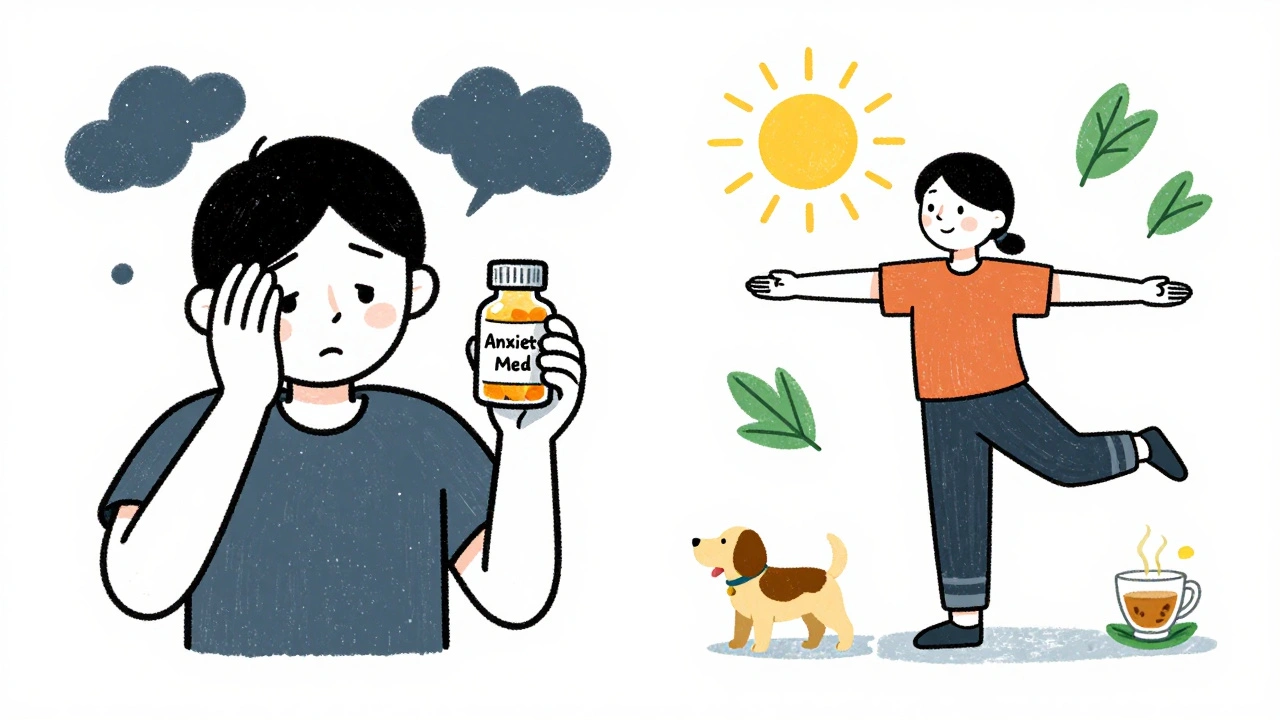
Know That Non-Medication Options Exist
You don’t have to swap one pill for another. Many conditions respond just as well-or better-to lifestyle changes or therapy.For example:
- Sleeping pills: Cognitive behavioral therapy for insomnia (CBT-I) works as well as medication after eight weeks-with no grogginess or risk of dependence.
- Type 2 diabetes: Regular walking, weight loss, and eating more fiber lowered blood sugar as much as metformin in over two-thirds of patients in a major study.
- Acid reflux: Cutting out caffeine, eating earlier at night, and losing even 5% of body weight helped 55% of people stop needing proton-pump inhibitors.
- Low back pain: Exercise, physical therapy, and acupuncture gave the same pain relief as NSAIDs-but without stomach issues or heart risks.
- Anxiety: CBT alone matched the effectiveness of SSRIs for mild to moderate cases, according to a major Lancet review.
Ask: “Are there non-drug options I could try alongside or instead of this?” Many doctors don’t bring these up unless you do.
Ask About Cost, Genetics, and Generic Options
If a new medication sounds expensive, say so. Ask: “Is there a generic version?” or “Is there another drug that works the same but costs less?”62% of people who ask this question find a cheaper alternative. You’d be surprised how often a $200 brand-name drug has a $15 generic twin.
Also ask about genetic testing. Some blood tests can now tell if your body metabolizes certain drugs slowly or quickly. This helps avoid trial-and-error. Right now, it’s available for about 57% of patients-and it’s becoming more common. If your doctor hasn’t mentioned it, ask: “Could my genes affect how this drug works for me?”
Prepare for Pushback-And How to Handle It
Not every doctor responds well. Some assume you’re “non-compliant” or “looking for a quick fix.” If that happens:- Stay calm. Say: “I’m not trying to argue-I just want to make sure we’re on the same page about what’s working.”
- Bring your log again. Facts beat feelings.
- Ask: “If this were your parent, what would you suggest?”
- Request a follow-up appointment. Say: “Can we schedule a 30-minute visit next week to go over options?”
Don’t let a dismissive response shut you down. You have the right to understand your treatment. If your doctor won’t engage, consider finding one who will. Your health isn’t a suggestion-it’s your responsibility.
Follow Up and Get It in Writing
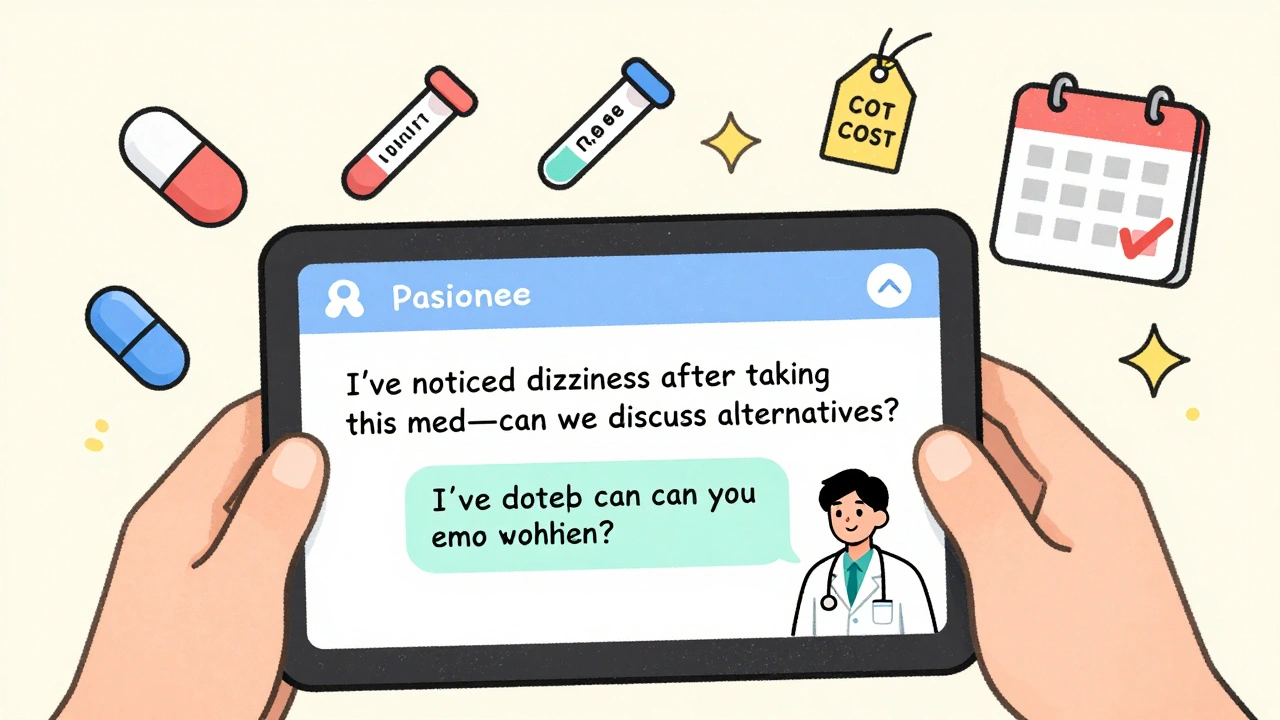
If your doctor agrees to switch or add something, ask for written instructions. Verbal advice is forgotten 50% of the time. Written directions improve understanding by 40%.Also, check your patient portal. Many systems now let you send notes directly to your provider before your visit. Use it. Write: “I’ve been having trouble with [medication]. I’d like to discuss alternatives. Here’s what I’ve noticed…”
And don’t wait for your next scheduled visit. If something feels dangerous-like sudden confusion, chest pain, or severe dizziness-call right away. You don’t need to wait.
Why This Matters More Than You Think
When patients speak up about ineffective meds, they’re not just helping themselves. They’re helping the system. A 2022 study found that patients who asked about alternatives were 3.2 times more likely to have unnecessary drugs stopped safely. That reduces side effects, hospital visits, and even deaths.Medicare now pays doctors extra to have these conversations. Hospitals are adding tools to help patients track meds. The FDA is requiring apps to give accurate alternatives. This isn’t just your personal issue-it’s a shift in healthcare. And you’re part of it.
You don’t need to be an expert. You just need to be honest. Your body is the best indicator of what’s working. Your doctor is the guide. Together, you can find the right path.
What if my doctor says the medication is working even though I don’t feel better?
Ask for specific measurements. Say: “You say it’s working-what numbers or signs show that? Is it based on my blood test, my symptom score, or just how I look?” Sometimes doctors rely on lab results that don’t match how you feel. You have the right to say, “I need to feel better in my daily life, not just have a number change.” If they still dismiss you, ask for a second opinion or a referral to a specialist.
Can I stop a medication on my own if it’s not working?
Never stop a medication abruptly without talking to your doctor-especially for blood pressure, antidepressants, seizure meds, or steroids. Stopping suddenly can cause dangerous withdrawal or rebound effects. But you can say: “I’m thinking about stopping this because it’s not helping, and I’d like to do it safely. Can we make a plan to taper it down?” Most doctors will agree if you’re clear about your concerns.
How long should I wait before asking for an alternative?
It depends on the drug. For antibiotics or pain relievers, if there’s no improvement in 3-5 days, it’s fair to ask. For antidepressants or blood pressure meds, it can take 4-8 weeks. But if you’re having bad side effects-dizziness, nausea, confusion, swelling-don’t wait. Call your doctor the same day. You don’t need to suffer through a full trial period if the risks outweigh the benefits.
What if I can’t afford the alternative medication?
Say it outright: “I can’t afford this new prescription. Is there a cheaper option?” Many generic drugs cost under $10 a month. Some pharmaceutical companies offer free or low-cost programs. Ask your pharmacist-they often know about savings cards or patient assistance plans. You can also check websites like GoodRx or NeedyMeds. No one should skip meds because of cost-and you’re not alone in asking for help.
Should I bring someone with me to the appointment?
Yes-if you can. It’s hard to remember everything in a 15-minute visit. A friend or family member can take notes, ask questions you forget, and help you remember what was said. Studies show patients who bring a companion are more likely to get their concerns addressed. Just make sure the person you bring respects your voice and doesn’t speak for you.
8 Responses
I used to just suffer through bad meds until I started keeping a little notebook. Took me 3 weeks to notice my headaches only happened after lunch with the pill. Turned out the food interaction was killing me. Now I bring that notebook to every appointment. Docs actually listen when you show up with proof, not just complaints.
OMG YES 😭 I was on antidepressants for 2 years and felt like a zombie… then I asked for alternatives and switched to therapy + walking my dog 4x a week. No more brain fog 🐶💪 #lifechanger
My grandma started tracking her meds after her doctor dismissed her dizziness as 'just aging' turns out she was on two blood pressure pills that canceled each other out. She brought the bottles and the list and boom three meds gone in 10 minutes. Docs need reminders we're not just numbers. Also typo sorry brain tired 🤕
This is one of the most practical guides I've seen on patient advocacy. The key insight is shifting from 'this isn't working' to 'here's what I need to experience.' That reframing transforms the conversation from confrontation to collaboration. The data on symptom logs and question lists is especially compelling. I've shared this with my patients and colleagues.
Y'ALL. I cried reading this. My mom was on 7 meds for 8 years. One question - 'Is this still necessary?' - led to her getting off 5 of them. She started hiking again. She remembered my birthday. This isn't just medical advice. It's life restoration. Thank you for writing this. I'm printing 10 copies.
The data supports patient engagement. Documentation improves outcomes. Communication reduces errors. These are not opinions. They are evidence based practices. Follow the protocol.
My brother's doctor told him his chronic pain was 'all in his head' until he showed up with a spreadsheet tracking pain levels, meds, sleep, and coffee intake. Doc was shocked. Now they're doing a joint trial with physical therapy. You don't need to be loud - just consistent. And bring the bottles. Always bring the bottles.
In India, we have Ayurveda, yoga, and centuries of wisdom - why are you Americans so dependent on pills? Your system is broken. You need to go back to nature, not ask for more drugs! This article is just another capitalist scam to keep you buying pills! You should be fasting, meditating, and drinking turmeric milk, not writing spreadsheets!