You take your morning pill. It’s a small white tablet for high blood pressure or cholesterol. You don’t think much about it until you see the price tag at the pharmacy counter-or worse, when your insurance says you owe more than expected. But here is a fact that might surprise you: that generic pill just saved the U.S. healthcare system billions of dollars. In 2024 alone, generic and biosimilar medications saved American patients and the healthcare system $467 billion. Over the last decade (2015-2024), those savings hit a staggering $3.4 trillion.
That number is hard to wrap your head around. To put it in perspective, $3.4 trillion is enough to cover the entire annual budget of many federal programs multiple times over. Yet, despite these massive savings, most people still feel the pinch of rising medical bills. Why? Because while generics are doing their job, the rest of the pharmaceutical market is fighting back with complex strategies to keep prices high. Understanding how this works-and why it matters-is key to navigating today’s confusing healthcare landscape.
The Power of Generic Competition
To understand where these savings come from, we have to look at what a generic drug actually is. A generic drug is a medication made after the brand-name patent has expired. It contains the same active ingredient, strength, dosage form, and route of administration as the original brand-name drug. The only difference is usually the price-and sometimes the color or shape of the pill.
The magic happens through competition. When a patent expires, multiple manufacturers can produce the same drug. They compete on price, driving costs down dramatically. According to the Association for Accessible Medicines (AAM) and IQVIA Institute, Americans filled 3.9 billion generic prescriptions in 2024 compared to just 435 million brand-name prescriptions. That means nine out of ten prescriptions filled were generics. Yet, those generics accounted for only 12% of total prescription drug spending ($98 billion) versus 88% ($700 billion) for brand drugs.
| Metric | Generic Drugs | Brand Name Drugs |
|---|---|---|
| Prescriptions Filled | 3.9 Billion (90.2%) | 435 Million (9.8%) |
| Total Spending | $98 Billion (12%) | $700 Billion (88%) |
| Average Cost Per Prescription | ~$25 | ~$1,609 |
This disparity shows exactly why generics are so critical. They handle the bulk of patient care-treating common conditions like hypertension, diabetes, and high cholesterol-at a fraction of the cost. Without them, the financial burden on families and government programs like Medicare would be unsustainable.
Biosimilars: The Next Frontier in Savings
If generics are the workhorses of cost containment, biosimilars are the new heavy lifters. While generics copy simple chemical molecules, biosimilars replicate complex biological products made from living cells. These include treatments for cancer, rheumatoid arthritis, and Crohn’s disease. Because they are harder to make, biosimilars took longer to gain traction, but their impact is growing fast.
In 2024, biosimilars generated $20.2 billion in savings. Since the first biosimilar entered the market in 2015, cumulative savings have reached $56.2 billion. The Rand Corporation projected that biosimilars could reduce direct spending on biologic drugs by $54 billion over a decade-a projection that now looks conservative given current trends. As more biologics lose patent protection, we expect to see even greater adoption of biosimilars, further reducing costs for some of the most expensive therapies available today.
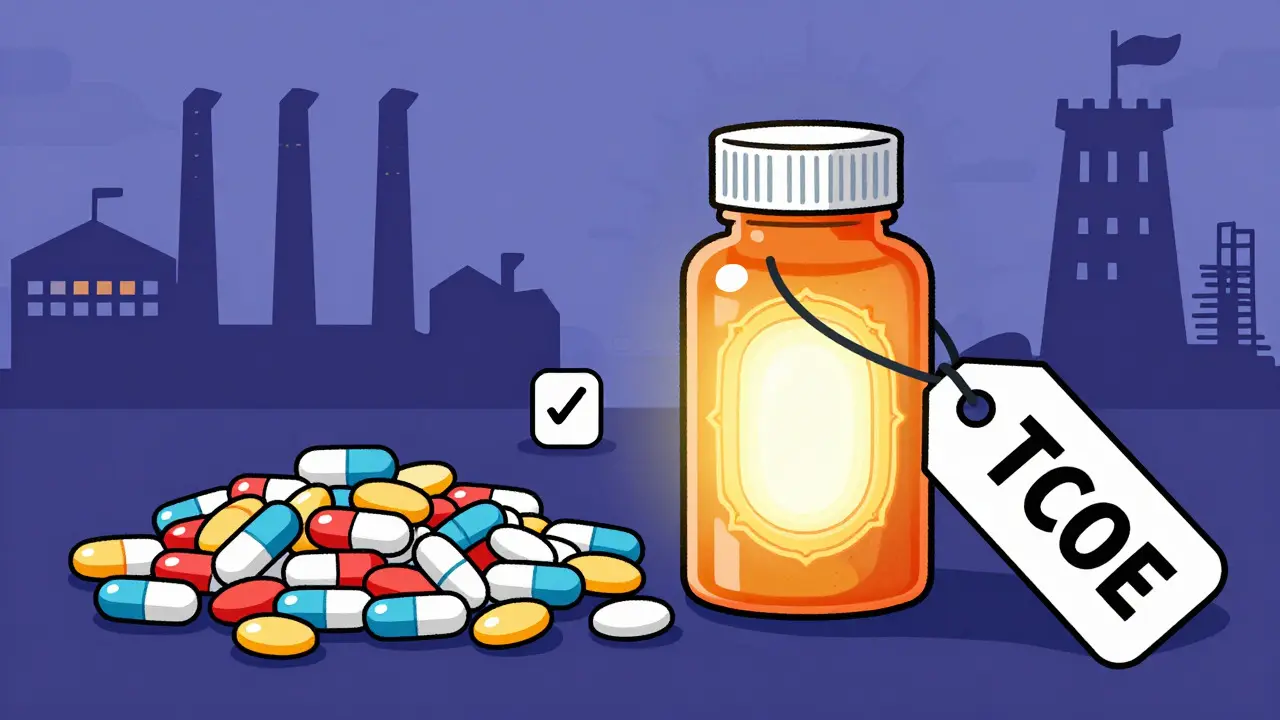
Why Aren’t Prices Lower Everywhere?
If generics save so much money, why do patients still complain about high copays? The answer lies in the gaps between potential savings and actual realized savings. Several factors prevent the full benefit from reaching every patient:
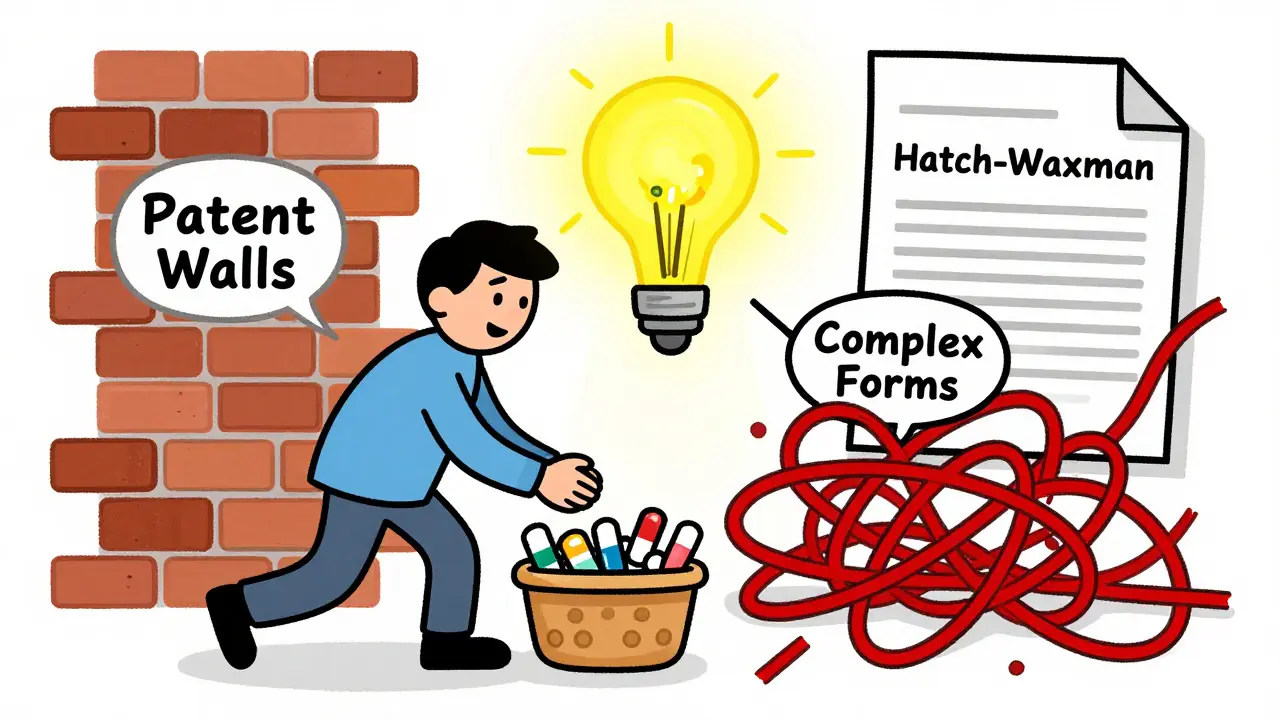
- Patent Thicketing: Brand manufacturers often file dozens of secondary patents on minor aspects of a drug (like packaging or delivery method) to delay generic entry. A JAMA Health Forum study found that lost competition due to patent thickets on just four widely prescribed drugs cost the system over $3.5 billion in two years.
- Pay-for-Delay Settlements: Sometimes, brand companies pay generic makers to stay out of the market. Blue Cross Blue Shield estimated these anti-competitive practices drive up costs by nearly $12 billion annually.
- Product Hopping: Brands may slightly reformulate a drug right before patent expiration, forcing doctors and patients to switch to a new version with its own patent clock.
- Opaque Pricing Structures: Even when generics are cheap, Pharmacy Benefit Managers (PBMs) and insurers may not pass all savings onto consumers. Dr. Darius Lakdawalla noted that U.S. consumers systematically overpay for generics due to fragmented purchasing power.
These tactics create a situation where the theoretical savings exist, but individual patients don’t always feel them. For example, while California achieved 98% generic utilization through mandatory substitution laws, Texas lags behind at 87% due to more flexible policies. State-level variations highlight how policy choices directly impact wallet-size savings.
The Role of Policy and Regulation
The foundation of today’s generic market was laid by the Hatch-Waxman Act of 1984. This law created a streamlined pathway for generic approval while balancing patent protections for innovators. It also granted 180 days of exclusivity to the first generic applicant, incentivizing companies to challenge weak patents early. This framework has been largely successful, leading to an 8.7% compound annual growth rate in generic savings from 2016 to 2024.
However, recent legislative efforts aim to close loopholes. S.1041, The Affordable Prescriptions for Patients Act, passed the Senate HELP Committee in June 2024 with bipartisan support. If enacted, it could generate an additional $7.2 billion in annual savings by cracking down on patent abuse. The Congressional Budget Office estimates that limiting patent thicketing alone would save $1.8 billion over ten years.
Despite progress, challenges remain. Drug shortages affected 287 generic medications as of December 2024, partly due to consolidation in manufacturing. The top ten manufacturers now control 63% of the market, up from 51% in 2015. This concentration increases vulnerability to supply chain disruptions, reminding us that affordability must go hand-in-hand with reliability.
What Does This Mean for You?
For everyday patients, the message is clear: ask for generics. Most doctors prefer them because they are clinically equivalent and cheaper. If your prescription comes in a brand name, check with your pharmacist if a generic alternative exists. Many states allow automatic substitution unless the doctor specifies “dispense as written.”
Also, be aware of your plan’s formulary. Some Medicare Part D plans steer patients toward higher-cost brands despite generics being available. Review your coverage options during open enrollment, and consider switching to plans that prioritize generic use. Patient advocacy groups and tools like GoodRx can help compare out-of-pocket costs across pharmacies.
Finally, support policies that promote competition. Public awareness drives political will. When voters demand transparency and fair pricing, lawmakers respond. The success of the Hatch-Waxman Act proves that smart regulation can balance innovation with access. We need similar bold steps today to ensure that life-saving medicines remain affordable for everyone.
Are generic drugs as effective as brand names?
Yes, generic drugs must meet the same strict FDA standards for safety, efficacy, and quality as brand-name drugs. They contain the same active ingredients and work the same way in the body. While inactive ingredients (like fillers or dyes) may differ, these rarely affect performance. Clinical studies consistently show bioequivalence between generics and their brand counterparts.
Why do some doctors still prescribe brand names?
Doctors may prescribe brand names due to habit, marketing influence, or specific clinical reasons (e.g., narrow therapeutic index drugs where consistency matters). However, pharmacists can often substitute generics automatically unless the prescription says otherwise. Always discuss alternatives with your provider to optimize cost without compromising care.
What are biosimilars, and how are they different from generics?
Biosimilars are highly similar versions of biologic drugs, which are made from living organisms rather than synthesized chemically. Unlike generics, biosimilars undergo rigorous comparative clinical trials to prove similarity to the reference product. They are used for complex diseases like cancer and autoimmune disorders and offer significant savings as patents expire.
How can I find the cheapest price for my generic medication?
Use online tools like GoodRx, RxSaver, or Mark Cuban Cost Plus Drug Company to compare prices across local pharmacies. Check if your insurance covers the generic fully, and ask your pharmacist about discount programs. Sometimes buying cash at a large retailer is cheaper than using insurance due to rebate structures.
Will generic drug shortages get worse?
Shortages are a growing concern due to manufacturing consolidation and supply chain fragility. The FDA monitors shortages closely and encourages diversification of suppliers. Patients should maintain open communication with their pharmacists and consider having a small reserve of essential medications when possible, following professional advice.