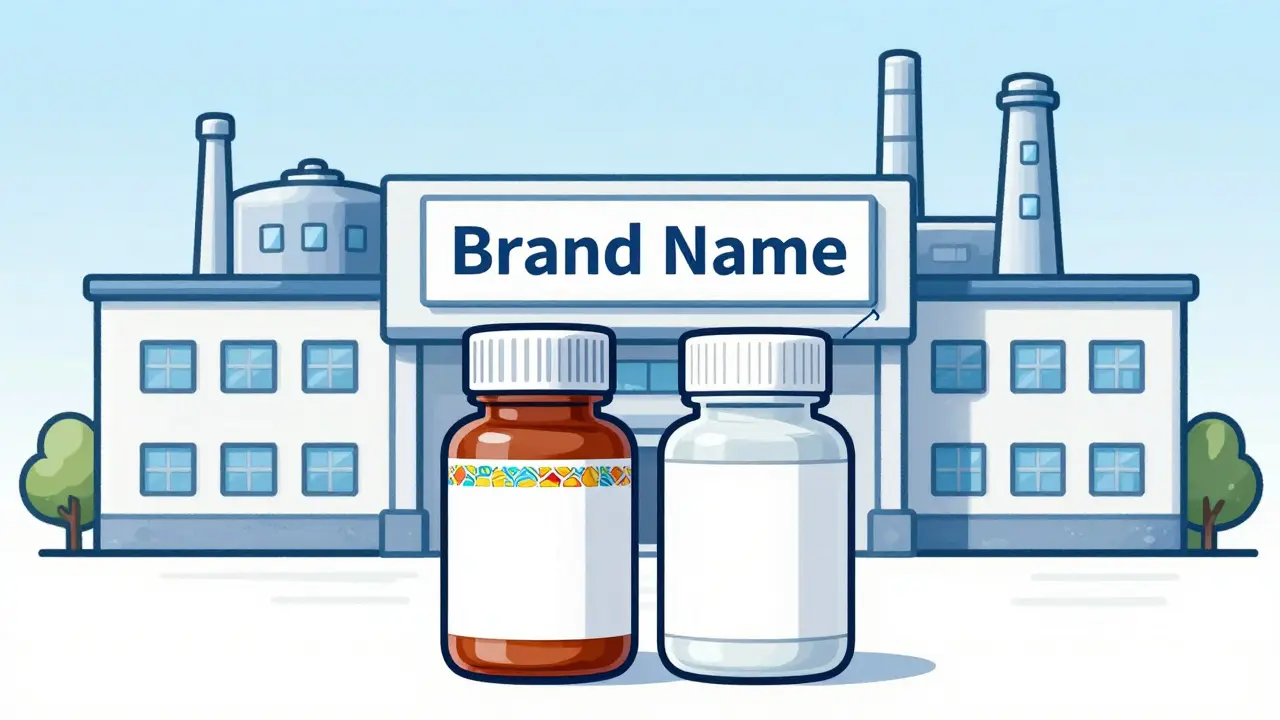
Have you ever noticed that when a popular medication loses its patent protection, the original company doesn't always disappear from the market? Instead of letting competitors take over completely, many big pharma companies launch their own "generic" version. This isn't a mistake or a copycat move by a rival. It is a calculated business strategy known as authorized generics, which are generic versions of brand-name drugs produced and marketed by the original brand manufacturer. These products look different on the label but contain the exact same ingredients, made in the exact same facilities, using the exact same processes as the brand-name drug you have been taking for years.
This practice might seem counterintuitive. Why would a company undercut its own premium product? The answer lies in the brutal economics of the pharmaceutical industry. When a patent expires, prices for traditional generics can drop by 80% to 85% within the first year. By introducing an authorized generic, the brand manufacturer captures a significant slice of this new, lower-priced market while maintaining control over quality and manufacturing. It is a way to soften the blow of the "patent cliff"-the sudden loss of monopoly revenue-and keep cash flowing even after exclusivity ends.
The Legal Framework: How the Hatch-Waxman Act Enabled This
To understand how brand manufacturers produce their own generics, we need to look at the rules of the game. The foundation of this strategy is the Drug Price Competition and Patent Term Restoration Act, commonly known as the Hatch-Waxman Act. Passed in 1984, this legislation created a regulatory framework that allows generic competition while protecting intellectual property rights through specific mechanisms like patent term restoration.
Under these rules, a brand manufacturer does not need to go through the lengthy and expensive process of filing a new Abbreviated New Drug Application (ANDA) from scratch. They already hold the full New Drug Application (NDA) with complete safety and efficacy data approved by the FDA. This means they can leverage their existing approval status to introduce a generic version without repeating clinical trials. The first major example of this occurred in 1997 when AstraZeneca launched an authorized generic version of Prilosec (omeprazole). Within six months, this single move captured approximately 30% of the total omeprazole market, proving the model's viability.
The key legal distinction here is trademark law. While the chemical formulation remains identical, U.S. trademark laws prevent the authorized generic from looking exactly like the brand-name pill. You will see differences in size, shape, color, or packaging. This visual separation is mandatory to avoid consumer confusion, even though the active ingredient-the part that actually treats your condition-is chemically identical.
The Production Process: Same Factory, Different Label
If you are wondering where these pills come from, the answer is usually right next door to the brand-name version. Unlike traditional generic manufacturers who must build new production lines and undergo rigorous FDA inspections, the brand manufacturer uses its existing facilities. According to Pfizer’s manufacturing documentation, the transition timeline typically requires only 6 to 9 months for regulatory adjustments and repackaging logistics.
Here is what the production reality looks like:
- Identical Formulation: The active pharmaceutical ingredient (API) and inactive ingredients (binders, fillers) are the same. There is no reformulation.
- Same Manufacturing Standards: The facilities maintain the same Good Manufacturing Practice (GMP) standards required for originator drugs. If the brand-name drug was made in Plant A, the authorized generic is made in Plant A.
- Regulatory Shortcut: Because the brand owner already has the NDA, they bypass the average 17-month FDA review period associated with traditional generic ANDA submissions.
- No Clinical Trials: Since bioequivalence is assumed due to identical manufacturing, no new human testing is required.
This efficiency is a massive advantage. Traditional generic competitors spend millions and years proving their drug works just as well. The brand manufacturer skips this step entirely, allowing them to hit the market simultaneously with-or sometimes even before-competitors. In 2019, Teva Pharmaceuticals launched an authorized generic of Copaxone on the exact day the patent expired, capturing 22% of the generic market share in the first quarter alone.
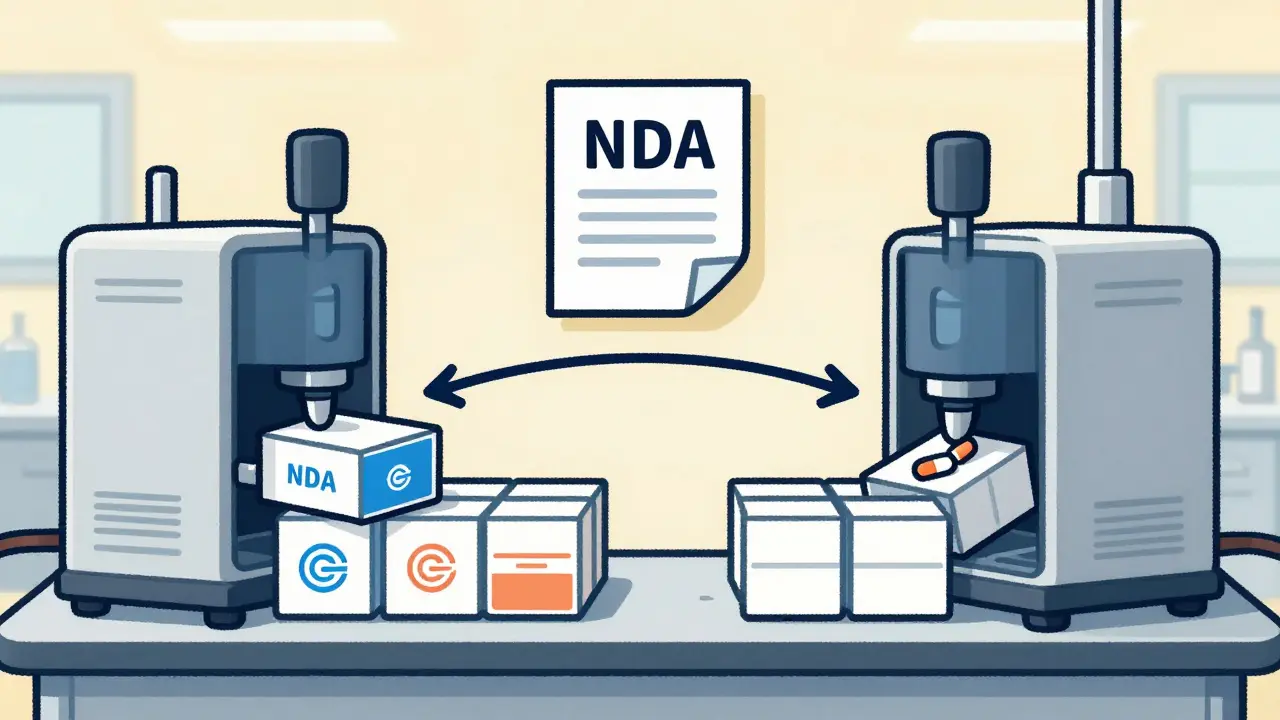
Market Strategy: Pricing and Market Share
Why do companies do this? It comes down to market preservation. Data from Drug Patent Watch shows that when brand manufacturers introduce authorized generics, they typically capture 15% to 35% of the total generic market share within the first year. This significantly reduces the market penetration available to competing generic manufacturers.
The pricing strategy is carefully calibrated. Authorized generics are usually priced 10% to 15% below the brand-name price but 5% to 10% above competing traditional generics. This creates a middle tier. Patients who want savings but trust the original manufacturer opt for the authorized generic. Those seeking the lowest possible cost go for the traditional generic. Meanwhile, the brand manufacturer retains revenue that would otherwise vanish completely.
| Feature | Brand-Name Drug | Authorized Generic | Traditional Generic |
|---|---|---|---|
| Manufacturer | Original Innovator Company | Original Innovator Company | Third-Party Competitor |
| Active Ingredient | Proprietary Formula | Identical to Brand | Bioequivalent to Brand |
| Price Point | Highest (Monopoly Pricing) | Moderate (Discounted) | Lowest (Competitive) |
| Packaging/Appearance | Distinctive Branding | Generic Labeling (Different Look) | Generic Labeling |
| FDA Approval Pathway | New Drug Application (NDA) | Leverages Existing NDA | Abbreviated New Drug Application (ANDA) |
| Time to Market After Patent Expiry | N/A (Already on Market) | Immediate (6-9 months prep) | Variable (Often delayed by litigation) |
Consumer Perception and Confusion
While the business logic is sound, the impact on patients is mixed. A 2023 Kaiser Family Foundation survey found that 71% of patients preferred authorized generics when available because they trusted the familiarity of the product. However, 64% were unaware that these generics were produced by the same company as the brand-name drug.
Pharmacists often report confusion. Independent pharmacy owners surveyed by the National Community Pharmacists Association noted that 63% found authorized generics created ambiguity for patients who couldn't distinguish between the brand and the "generic" version produced by the same entity. On social platforms like Reddit, users frequently express skepticism, noting instances where an authorized generic priced at $85 was only $5 cheaper than the brand, while a traditional generic from a competitor was available for $30.
Despite the price complaints, patient reviews on sites like Drugs.com show higher satisfaction rates (4.2 out of 5 stars) for authorized generics compared to traditional generics (3.8 out of 5 stars). The common sentiment is relief: "It's the same pill I've been taking for years." For patients sensitive to inactive ingredients or fillers-which can vary between traditional generic manufacturers-this consistency is a major benefit.
Regulatory Scrutiny and Antitrust Concerns
This strategy does not operate without oversight. The Federal Trade Commission (FTC) has filed antitrust complaints against several manufacturers, alleging that authorized generics were used to improperly extend market dominance or delay true competition. A landmark case involved Actavis and its drug Namenda. The FTC argued that the authorized generic launch was part of a scheme to stifle competition. The resulting $448 million settlement established clear legal boundaries for how these products can be introduced.
The CREATES Act of 2019 further shaped this landscape. While it addressed concerns about anti-competitive practices regarding sample access for generic testing, it preserved the authorized generics pathway. Today, the FDA’s draft guidance clarifies expectations, acknowledging the growing prevalence of this strategy while ensuring that labeling clearly distinguishes the authorized generic from the brand-name product to prevent fraud or misrepresentation.
The Future: Biosimilars and Complex Drugs
As we move into 2026, the scope of authorized generics is expanding beyond simple small-molecule pills. With approximately $250 billion in brand-name drug revenues facing patent expiration between 2023 and 2027, the strategic importance of this model is growing. We are now seeing authorized generics of more complex therapies. In 2023, Johnson & Johnson launched an authorized generic of Invega Sustenna, a long-acting injectable medication. This required specialized manufacturing adaptations, highlighting that the strategy applies to biologics as well.
In fact, Amgen approved the first authorized biosimilar of its own Enbrel in 2023. Analysts predict that by 2025, 40% of small-molecule drugs losing patent protection will have authorized generic versions. As barriers to entry rise for traditional generic competitors dealing with complex biologics, brand manufacturers are increasingly relying on their own expertise to dominate the post-patent market.
Is an authorized generic the same as the brand-name drug?
Yes, chemically and functionally, an authorized generic is identical to the brand-name drug. It contains the same active and inactive ingredients, is manufactured in the same facility, and follows the same production processes. The only differences are in the packaging and labeling, which must comply with trademark laws preventing exact visual replication.
Who makes authorized generics?
Authorized generics are produced by the original brand-name drug manufacturer. Unlike traditional generics, which are made by third-party companies, the authorized generic is made by the innovator company itself, often under a subsidiary name to satisfy regulatory distinctions.
Are authorized generics cheaper than brand-name drugs?
Typically, yes. Authorized generics are usually priced 10% to 15% lower than the brand-name version. However, they may still cost 5% to 10% more than traditional generics produced by competitors, placing them in a middle-price tier.
Why do brand manufacturers create their own generics?
The primary reason is market preservation. When a patent expires, prices can drop drastically due to competition. By launching an authorized generic, the brand manufacturer captures a portion of the generic market share, maintains quality control, and generates revenue that would otherwise be lost to competitors.
Do authorized generics require FDA approval?
They rely on the existing FDA approval of the brand-name drug. The manufacturer does not need to file a new Abbreviated New Drug Application (ANDA) or conduct new clinical trials because the product is identical to the already-approved brand-name medication.
Can I tell the difference between an authorized generic and a traditional generic?
Visually, both will look different from the brand-name pill due to trademark restrictions. However, an authorized generic is made by the original company, so the inactive ingredients (fillers, dyes) are identical to the brand. Traditional generics may use different inactive ingredients, which can sometimes affect tolerability for sensitive patients.
7 Responses
I actually found the section about the Hatch-Waxman Act really interesting because it explains why companies don't have to redo all those expensive clinical trials just to sell the same chemical under a different label. It makes sense from a business perspective that they would want to keep some revenue coming in after the patent expires instead of letting third-party competitors take everything immediately. I wonder if this strategy works as well for more complex drugs like biologics since the manufacturing process is so much harder to replicate exactly?
The semantic dissonance inherent in the term 'authorized generic' is a masterclass in corporate gaslighting, leveraging regulatory loopholes to exploit consumer cognitive biases regarding brand loyalty versus cost efficiency. By maintaining control over the supply chain and quality assurance metrics, the innovator company effectively creates a moat around their post-patent revenue streams, utilizing trademark law not to protect innovation but to obfuscate the identical nature of the product. This strategic positioning allows them to capture the 'middle tier' of price-sensitive consumers who still harbor irrational fears about bioequivalence, thus maximizing profit margins while simultaneously undermining the competitive integrity of the traditional generic market. It is a parasitic evolution of the pharmaceutical business model that prioritizes shareholder value over genuine therapeutic accessibility.
i think its kinda cool that they can make the same pill cheaper without changing anything about how it works. honestly i dont care who makes it as long as it helps me feel better and doesnt break the bank. seems like a win win situation for everyone involved really.
It is important to note that the regulatory framework surrounding authorized generics is quite specific. The FDA requires that the packaging be distinct from the brand-name product to prevent confusion, even though the active ingredients are identical. This ensures that pharmacists and patients can differentiate between the two options based on labeling and pricing structures. The existence of these products does provide an additional layer of competition, which can help stabilize prices during the transition period following patent expiration.
This is such a fascinating topic!! I never realized that the big pharma companies were actually making their own generics too! It totally changes how I look at my prescriptions now. I always thought generics were only made by other smaller companies trying to compete. Knowing that the original maker can do this gives me way more confidence in sticking with the authorized version if my insurance covers it!
its absolutely disgusting how these corporations manipulate the system to keep us paying high prices for the exact same thing. they call it a 'strategy' but its really just greed disguised as innovation. we should be ashamed of allowing this kind of exploitation to continue unchecked in our healthcare system. the moral decay of these industries is staggering and reflects poorly on society as a whole.
The concept of identity in pharmaceuticals becomes blurred when the manufacturer remains constant but the branding shifts. One must contemplate whether the essence of the drug lies in its molecular structure or in the perceived authority of its originator. This duality suggests that value is often constructed through narrative rather than material substance, raising questions about the nature of trust in medical science.