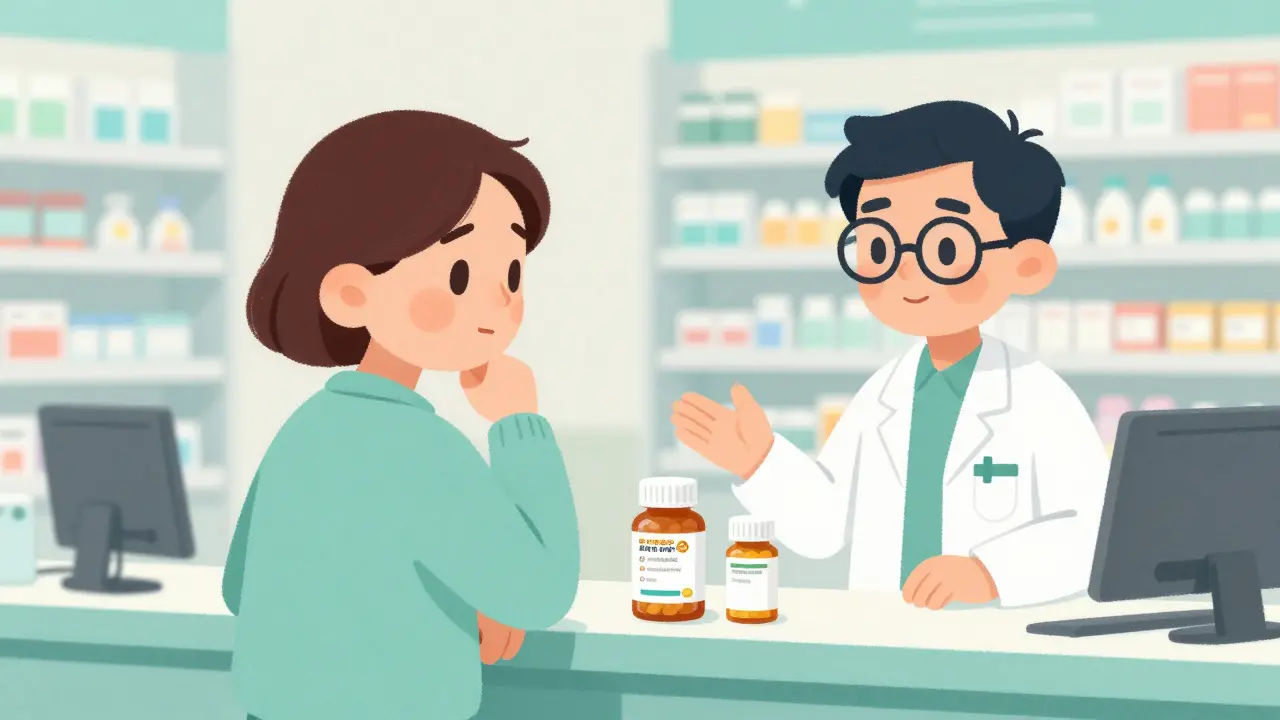
You're at the pharmacy counter, and your pharmacist asks if you'd like the generic version of your medication. It's significantly cheaper, but a nagging question pops up: is it actually as good as the brand-name version? For many, the idea of a "cheaper" drug feels risky, as if something essential was stripped away to lower the price. However, the reality of modern pharmacy is that the difference between a brand and its generic counterpart often comes down to the packaging and the price tag, not the medical outcome.
Quick Summary: What you need to know
- Generic drugs contain the same active ingredients and provide the same clinical benefit as brand names.
- They are typically 80-85% cheaper because they don't require the same initial research and development costs.
- The FDA ensures "bioequivalence," meaning the drug hits your bloodstream at the same rate and concentration.
- While most are interchangeable, a few specific types of medication (like those with a narrow therapeutic index) require closer supervision when switching.
What actually makes a drug "generic"?
To understand the choice, we first have to define what we're talking about. Generic Medications is a pharmaceutical equivalent of a brand-name drug that becomes available after the original patent expires. When a company develops a new drug, they get a patent that gives them exclusive rights to sell it for a set time (usually around 20 years). This allows them to recover the billions spent on research. Once that patent expires, other companies can apply to make the same drug.
These manufacturers use the Abbreviated New Drug Application (ANDA) process. They don't have to repeat the massive clinical trials to prove the drug works-since the brand-name version already did that-but they must prove the drug is "bioequivalent." In plain English, this means the generic version delivers the same amount of active ingredient into your bloodstream in the same amount of time as the original.
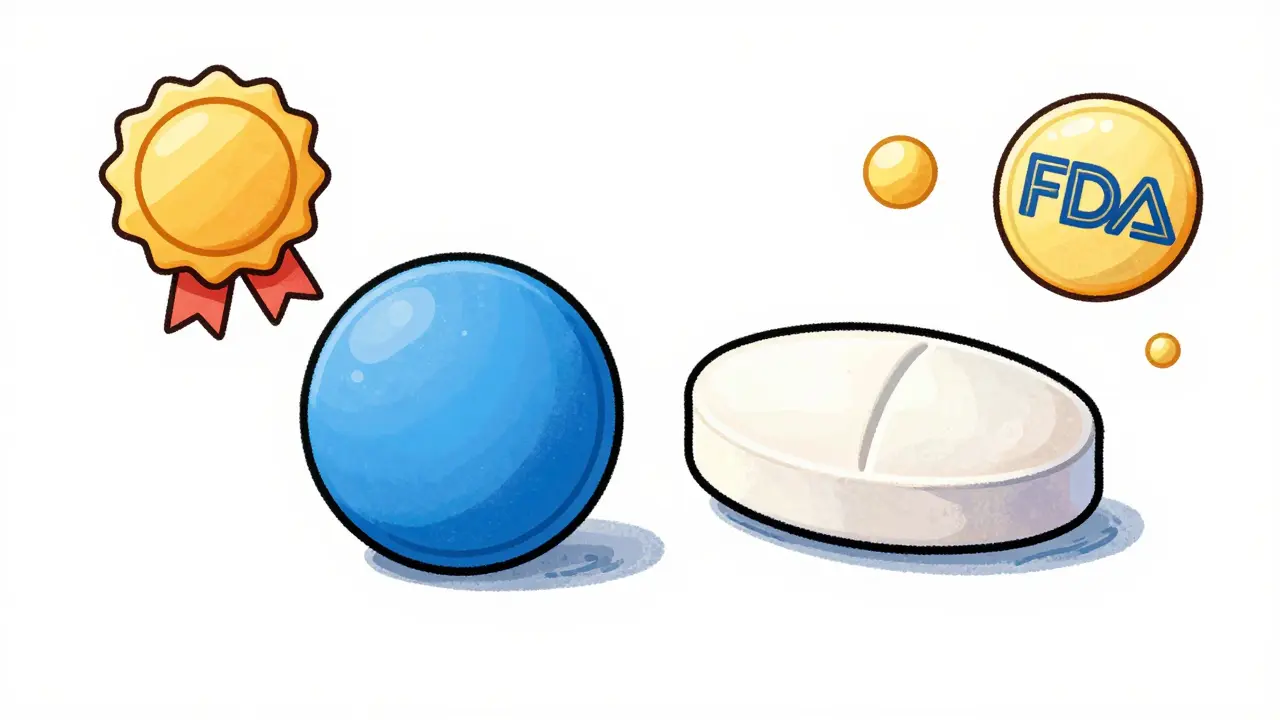
You might notice the pill looks different. That's because excipients-the inactive ingredients like fillers, binders, and dyes-can vary. This is why one pill might be blue and round while the generic is white and oval. These don't change how the medicine treats your condition, but they can matter if you have a specific allergy to a certain dye or filler.
The truth about efficacy and "wiggle room"
A common myth is that generics are "lower quality" or less potent. In reality, the FDA (Food and Drug Administration) holds generics to the same strict standards for strength, purity, and stability as brand-name drugs. If you look at the data, generics perform identically to brand names in about 98.5% of cases across cardiovascular and metabolic medicines.
Now, there is a technical "range" for bioequivalence. The FDA allows the drug's concentration in the blood to fall within a window of 80% to 125% of the brand-name product. On paper, that sounds like a lot of variation. However, expert analysis from Harvard Medical School suggests that the actual observed difference is usually around 4%. This tiny variation is generally irrelevant to how you feel or how your disease is managed.
The real risk isn't usually the drug itself, but the cost of the brand name. When a drug costs $400 for 30 days instead of $4, many people simply stop taking it or skip doses. This leads to far worse health outcomes than a 4% difference in absorption ever would.
| Feature | Brand-Name | Generic Equivalent |
|---|---|---|
| Active Ingredient | Identical | Identical |
| Inactive Ingredients (Fillers) | Specific to manufacturer | May vary by manufacturer |
| FDA Approval Process | Full New Drug Application (NDA) | Abbreviated Application (ANDA) |
| Average Cost | Significantly Higher | 80-85% Lower |
| Appearance (Color/Shape) | Consistent | Often different |
When the brand name actually matters
Is a generic always the right choice? Mostly, yes. But there are a few critical exceptions where you and your doctor should be cautious. These usually fall into the category of "Narrow Therapeutic Index" (NTI) drugs. These are medications where a very small change in the dose or the blood concentration can cause either the drug to fail or become toxic.
For example, Levothyroxine (used for thyroid issues) and Warfarin (a blood thinner) are often managed with more caution. If you switch from a brand-name thyroid med to a generic, your doctor might want to monitor your TSH levels more closely for a few weeks to ensure the switch didn't slightly nudge your levels out of balance.
Another area of concern is complex delivery systems. If you use an inhaler, the active drug inside might be identical, but the way the device delivers that drug (the mechanical part) can vary. Some patients have reported that generic inhalers don't feel as effective because the spray pattern or the effort required to inhale the medicine is different from the brand-name version.
How to handle the switch
If you're moving from a brand to a generic, don't let the visual change scare you. It's common to feel a "placebo effect" (or nocebo effect) where you feel the drug isn't working simply because it looks different. To make the transition smoother, try these steps:
- Ask for the manufacturer: If you are on an NTI drug, ask your pharmacist to use the same generic manufacturer every month. This prevents "batch variability" where you get a different company's version every 30 days.
- Track your symptoms: Keep a simple log for two weeks after the switch. If you actually feel a difference in your symptoms, contact your doctor immediately.
- Use pill identifiers: If you're confused by the new look, the FDA's Drugs@FDA database can help you confirm that the pill in your hand is exactly what it's supposed to be.
- Consult your pharmacist: They can tell you if the generic is rated "AB" in the FDA's Orange Book, which is the gold standard for substitutability.
The financial impact: Why it's a win-win
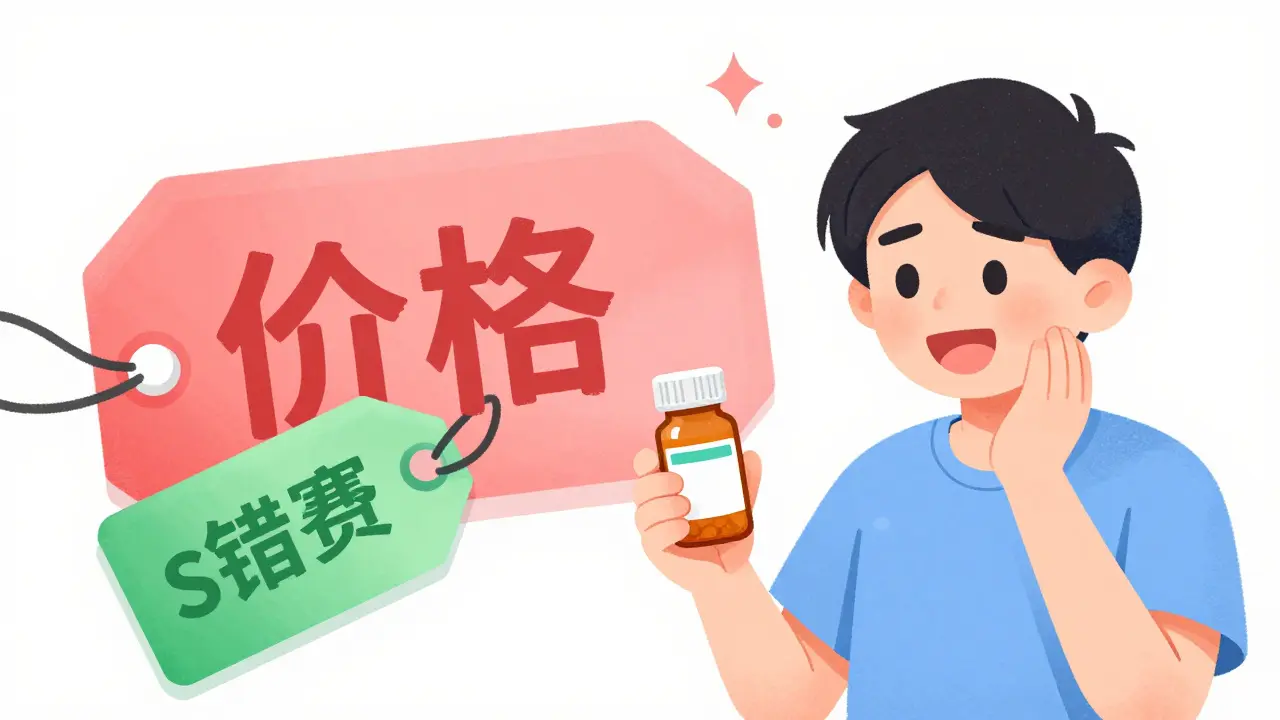
The math on generic and brand medications is staggering. In the US alone, generics account for about 90% of prescriptions filled but only about 23% of the total spending. To put this in perspective, a 30-day supply of generic sertraline can cost as little as $4, while the brand-name Zoloft might run you $400.
By choosing generics, patients aren't just saving a few bucks; they are fundamentally changing their ability to stay adherent to their treatment. When the cost drops, the likelihood of a patient skipping a dose because they can't afford the refill drops significantly. This creates a healthier population and reduces the burden on the overall healthcare system.
Are generic drugs less effective than brand-name drugs?
No. The FDA requires generic drugs to be bioequivalent to the brand-name drug, meaning they must have the same active ingredient and deliver the same amount of that ingredient into the bloodstream at the same rate. In the vast majority of cases, there is no clinical difference in how they treat a condition.
Why is the generic version so much cheaper?
Generic manufacturers don't have to pay for the initial research, development, and extensive clinical trials that the original brand-name company funded. They also don't spend millions on advertising the drug to doctors and patients, allowing them to sell the medication at a fraction of the cost.
Can I always switch to a generic?
While most medications can be switched, you should consult your doctor first for "narrow therapeutic index" drugs (like warfarin or levothyroxine) or complex delivery systems (like certain inhalers), as these may require more precise dosing or specific device techniques.
What are inactive ingredients and do they matter?
Inactive ingredients, or excipients, are things like binders, flavors, and colors. They don't treat the disease, but they hold the pill together. For most people, they don't matter. However, if you have a known allergy to a specific dye or filler, you should check with your pharmacist.
What should I do if I feel my generic medication isn't working?
First, document your symptoms. Then, talk to your doctor or pharmacist. It could be a placebo effect, or in rare cases, a specific generic manufacturer's formulation might not agree with you. Your doctor can help you switch to a different manufacturer or go back to the brand name if necessary.
Next steps for your next pharmacy visit
Next time you're filling a prescription, start by asking your pharmacist, "Is there a generic version available for this, and is it rated as therapeutically equivalent?" If you are taking a medication for a chronic condition-like blood pressure or cholesterol-and you're worried about the switch, ask for a transition period where you track your health metrics closely.
If you find that your insurance only covers the generic but you feel you truly need the brand name, ask your doctor to write "Dispense as Written" (DAW) on the prescription. Be aware that this may mean you have to pay a higher co-pay, but it ensures you get the specific version you prefer.
11 Responses
Honestly, if you're still paying for brand names for basic meds, you're just throwing money down the drain. It's common sense at this point.
Most people just like the fancy label, which is honestly kind of sad.
Such a helpful breakdown! It's all about finding that balance between cost and peace of mind 🌿✨. Love seeing science explained in a way that actually helps people save money 💖.
The simplification of the ANDA process presented here is quite pedestrian. One must acknowledge that the sheer lack of rigorous scrutiny regarding the specific polymorphic forms of the active pharmaceutical ingredient in some generic iterations can lead to suboptimal therapeutic outcomes, regardless of the FDA's statistical "window." It is an affront to true medical precision to suggest that a 4% variance is universally inconsequential for every patient phenotype. Truly a superficial analysis.
The pharmacokinetic data regarding the Cmax and AUC values for bioequivalence is the real crux of this matter. When examining the narrow therapeutic index drugs, the stochastic nature of absorption rates can lead to significant fluctuations in steady-state concentrations, potentially precipitating toxicity or therapeutic failure. The systemic reliance on the 80-125% confidence interval is a pragmatic compromise rather than an absolute pharmacological certainty.
Oh please! This is just a blatant attempt to make us trust big pharma generics! 😱 I switched once and I swear I could feel my body rejecting it immediately! It's absolute madness to believe a cheap pill does the same thing as the real deal! Total nightmare!
What a tragedy that we live in a society where we must debate the basic morality of pricing life-saving medicine. The brand names are essentially extortion schemes masquerading as innovation. It's a grotesque display of corporate greed that forces the poor to gamble with generic substitutes just to survive the month. We are descending into a dystopian void where health is a luxury and not a right! Absolutely appalling!
The logic is sound. Most people lack the discipline to read the Orange Book. It is simply a matter of education. If you cannot verify your own medication, you are merely a passenger in your own healthcare.
I agree with the point about the cost. It really makes a difference for families. Good info here.
It's interesting to think about how much of our health experience is tied to the psychology of the brand. We trust the name because it feels like a promise of quality, but the chemistry doesn't actually care about the logo on the box. It's a weird intersection of capitalism and biology.
saving money is always a win 💸 just talk to your doc and you're good lol
The information regarding the Narrow Therapeutic Index drugs is very important. It is best to follow the doctor's guidance for those specific medications.