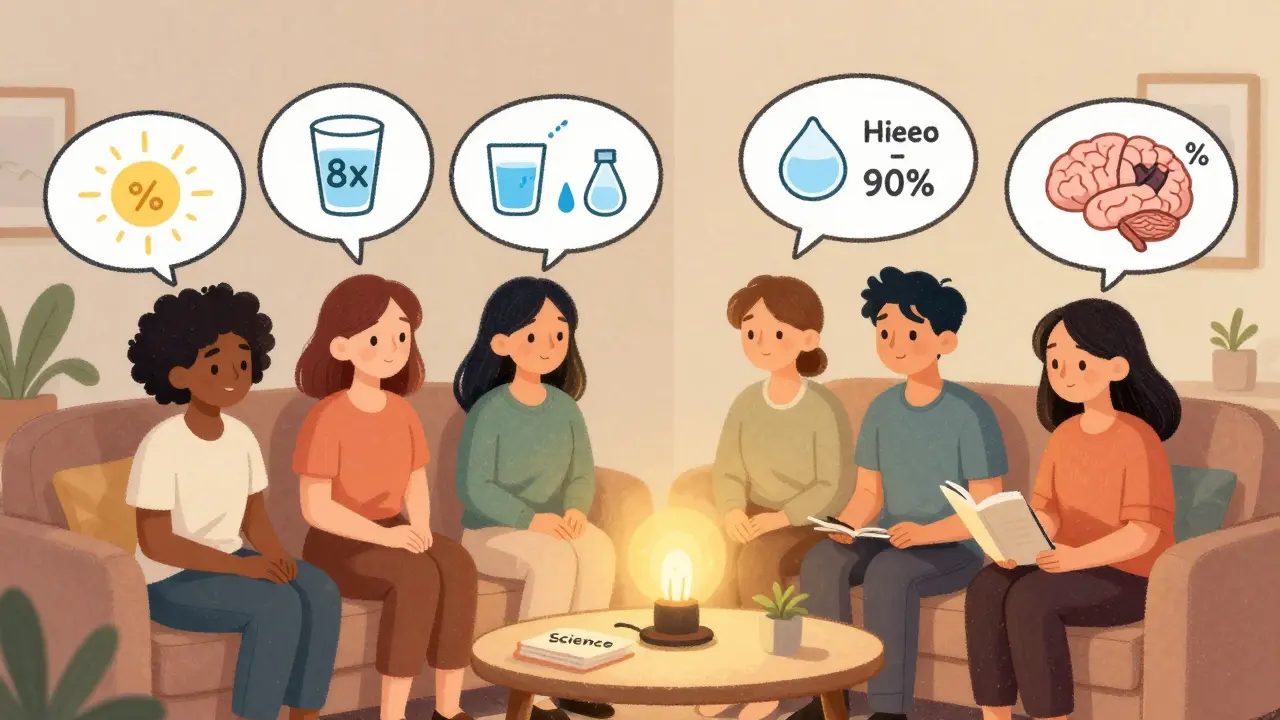
Every year, millions of people make health decisions based on myths passed down like family recipes-believed because they sound right, repeated because they’re easy to remember, and rarely questioned because no one ever told them otherwise. From "you need eight glasses of water a day" to "sugar makes kids hyper," these myths stick around not because they’re true, but because they’re comforting, convenient, or profitable. In healthcare, where trust is everything, these false beliefs can lead to real harm: missed diagnoses, unnecessary treatments, or worse, avoidance of proven care. The good news? Many of these myths have been thoroughly tested, studied, and debunked-with clear, science-backed answers waiting to replace them.
Myth: You Lose 70-80% of Your Body Heat Through Your Head
This one’s been around for decades. You’ve probably heard it from parents, teachers, even doctors: "Put on your hat, or you’ll lose all your heat!" It sounds logical-your head is exposed, so it must be a major heat sink. But here’s the truth: your head doesn’t lose more heat than any other uncovered body part. A 2022 study by UCHealth and confirmed by Dr. Ian Tullberg, a family medicine specialist, found that the head makes up only about 7-15% of your total body surface area. That means if you’re cold and only your head is exposed, you’ll lose roughly 10-15% of your heat through it-not 70%. The myth likely came from a flawed 1950s military study where soldiers wore cold-weather gear covering everything except their heads. In real life, heat loss depends on what’s exposed. Cover your hands, your feet, your neck-any bare skin will lose heat. A hat helps, but it’s not magic.
Myth: You Need to Drink Eight Glasses of Water a Day
It’s on every water bottle, every fitness app, every school poster: "Drink eight glasses a day." But where did this number come from? Nowhere official. Dr. Heinz Valtin, a nephrologist at Dartmouth Medical School, reviewed decades of peer-reviewed research in 2002 and found zero scientific evidence supporting the eight-glass rule. Your body gets water from food, coffee, tea, soup-even fruits and vegetables. The Institute of Medicine recommends about 3.7 liters of total water intake per day for men and 2.7 liters for women, but that includes all fluids and foods. What matters most is thirst. If you’re not thirsty, you’re probably not dehydrated. Forcing water just because of a myth can lead to unnecessary bathroom trips, electrolyte imbalances, or even water intoxication in extreme cases. Listen to your body. Drink when you’re thirsty. Eat hydrating foods. You don’t need a water tracker to be healthy.
Myth: We Only Use 10% of Our Brain
This myth has fueled movies, self-help gurus, and even some pseudoscientific products promising to "unlock your full potential." But the brain isn’t some unused 90% battery waiting to be tapped. Modern fMRI scans show that even during simple tasks like sipping coffee or walking, nearly every part of the brain is active. Neuroscientists at the University of Alabama at Birmingham reviewed over 1,200 studies and confirmed in 2022 that there’s no "unused" region. Every area has a function-some are active more often than others, but none sit idle. The myth likely started from a misinterpretation of psychologist William James’ writings in the 1920s. He said we use only a small portion of our mental potential, not our physical brain. That’s a big difference. Your brain is always working, even when you’re asleep. It’s not about using more of it-it’s about using it better.
Myth: Chewing Gum Stays in Your Stomach for Seven Years
If you’ve ever been a kid told not to swallow gum, you’ve heard this one. "It’ll stay in your stomach for seven years!" But your digestive system isn’t a trap. Gum is made of synthetic rubber, which your body can’t digest-but that doesn’t mean it gets stuck. As Dr. Tullberg explains, "Most chewing gum travels through your system in a matter of two to four days." It moves like any other indigestible item-think corn kernels or fiber-passing through your gut and out with your stool. The only risk? Swallowing huge amounts over a short time, especially in young children, which could cause a blockage. But one piece? No problem. This myth persists because it’s scary, and scary stories stick. But science says: swallow it, no big deal.
Myth: Sugar Makes Kids Hyper
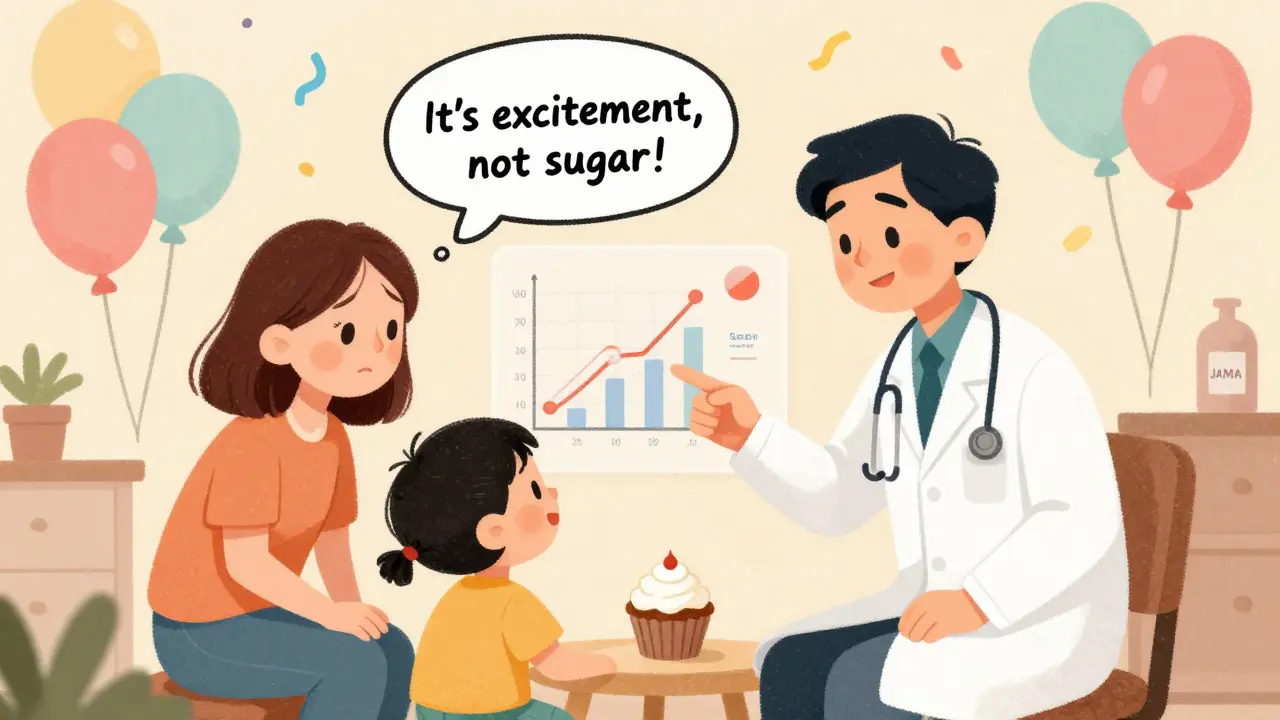
It’s Halloween. The kids are bouncing off the walls. Everyone blames sugar. But over 23 double-blind studies, including a major 2021 meta-analysis in JAMA Pediatrics, have found no link between sugar intake and hyperactivity in children. The real culprit? Context. Parties. Excitement. Lack of routine. Parents expect kids to get hyper after sugar, so they interpret normal energy as overactivity. Even when kids are given placebo sweets, parents still report hyper behavior if they believe their child had sugar. The myth has survived for over 70 years, partly because of lobbying by the sugar industry, which funded studies to muddy the science. In 2016, internal documents revealed industry efforts to downplay sugar’s real health risks-obesity, diabetes, tooth decay-by shifting blame to behavior myths. Sugar isn’t harmless, but it doesn’t cause hyperactivity. Focus on real risks instead.
Myth: Superfoods Like Acai or Goji Berries Are Magic
Walk into any health store, and you’ll see shelves lined with "superfoods"-goji berries, chia seeds, spirulina-sold with claims of miracle energy, weight loss, or cancer prevention. But there’s no scientific definition of "superfood." The term was created by marketers, not nutritionists. The European Food Information Council found no evidence that these foods offer health benefits beyond what you get from a balanced diet rich in fruits, vegetables, whole grains, and lean proteins. A blueberry has antioxidants. So does a strawberry. So does kale. You don’t need to pay $20 for a bag of goji berries to get them. In fact, focusing on exotic "superfoods" can lead people to ignore everyday healthy eating. A 2023 BBC Science Focus article called it "essentially a marketing term." The best superfood? Consistency. Eat a variety of whole foods. Don’t chase trends.
Why These Myths Stick-And How to Fight Them
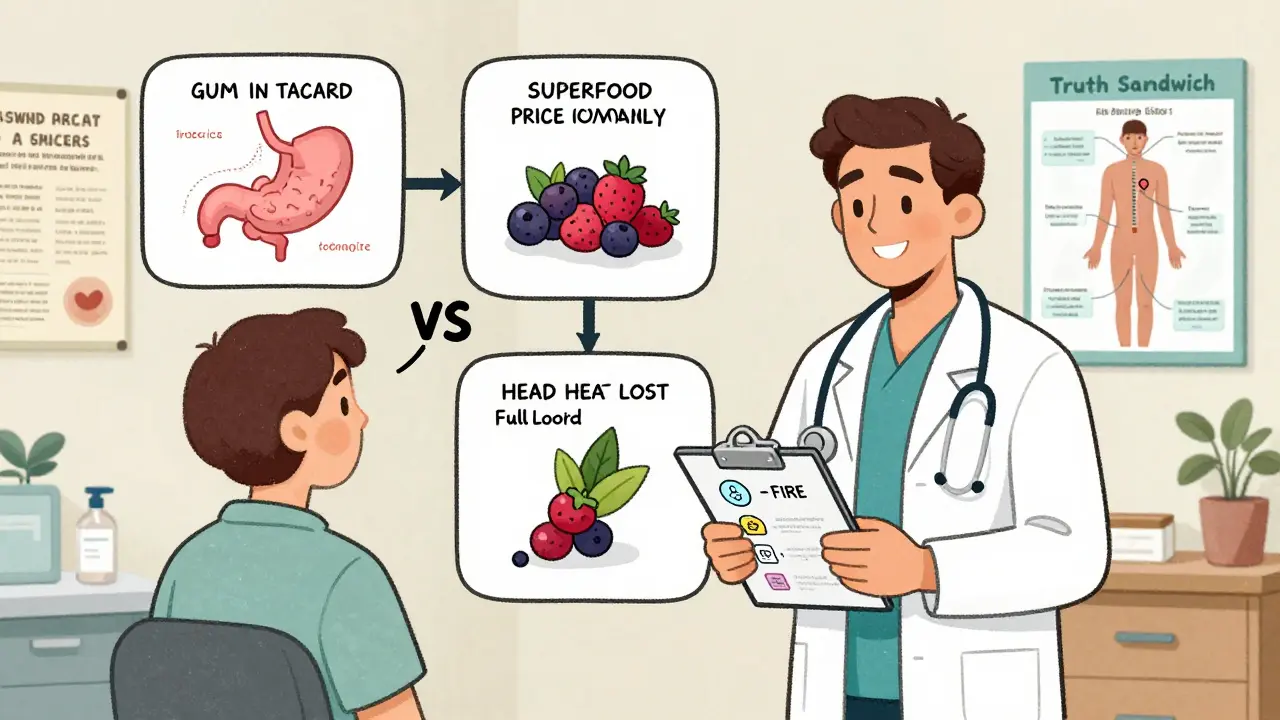
So why do these myths last? Because they’re simple. They fit stories we already believe. They’re repeated by people we trust. And they’re often tied to emotions-fear, hope, guilt. A 2022 study in the Journal of Cognitive Neuroscience found that simply telling someone "that’s wrong" often backfires. People double down on false beliefs when they feel their identity or values are under attack. The most effective way to correct myths? Use the "truth sandwich." Start with the fact: "Your body gets water from all kinds of sources." Then briefly name the myth: "Some say you need eight glasses a day." Then end with the fact again: "Thirst is your body’s natural signal-and it’s reliable." This method increases retention by nearly 50% compared to just stating the truth. Repeating the correct info in different ways-through stories, visuals, or analogies-helps too. A Veritasium video on body heat loss got over 4 million views because it showed, not just told. People remember what they see.
What Healthcare Providers Can Do
Health systems are starting to take this seriously. In 2023, 68 U.S. hospitals added myth-debunking sections to patient education materials-up from just 12 in 2020. The CDC’s Myth vs. Fact template is now used by 78% of U.S. health departments. But it takes training. Staff need to know not just the facts, but how to deliver them without triggering defensiveness. The "FIRE" technique works well: Facts (state the truth), Interpretation (why the myth is tempting), Resolution (what to do instead), and Emotion (acknowledge the fear or hope behind the myth). For example: "I know you’ve been told sugar makes kids hyper-it’s a common belief. But studies show it’s not the sugar. It’s the excitement. So instead of cutting out treats, focus on routines and sleep. That’s what really helps."
Final Thought: Knowledge Is a Shield
Myths aren’t just annoying-they’re dangerous when they steer people away from real care. A parent who skips vaccines because of a debunked link to autism. Someone who avoids insulin because they think "natural remedies" are better. A patient who ignores heart symptoms because they believe "chest pain always means a heart attack." Correcting myths isn’t about winning arguments. It’s about protecting people. The best defense? Clear, calm, evidence-based information. And the best way to spread it? Talk about it. Share it. Question it. The next time someone says, "I heard that sugar makes kids hyper," say this: "Actually, studies show it’s not sugar-it’s the party." And then, maybe, you’ve changed something.
8 Responses
It's wild how these myths stick around like old family traditions. I used to swear by the eight-glass rule until I started listening to my body. Turns out, I drink when I'm thirsty, eat watermelon in summer, and never feel off. No tracker needed. Just simple trust in biology.
And honestly? The brain myth always made me feel like I was wasting potential. Like I was some lazy neuron. Turns out, I'm just using it normally. Relief.
Myth-busting isn't about being right. It's about letting people off the hook from unnecessary guilt.
Sugar making kids hyper is the most tired myth ever. I’ve seen parents blame sugar then panic when the kid gets excited at a birthday party. The kid’s not wired wrong-the environment is. Same with the hat thing. Cover your hands if you’re cold. Your head’s not a radiator.
Stop giving myths power. They’re just stories with bad science.
Chewing gum stays in your stomach for seven years? My mom told me that. I swallowed a piece at six and spent a week checking the toilet like it was a treasure hunt. Turns out, I just had a normal poop. I’m 34 now and still laugh about it.
Myth: scary. Reality: boring. That’s why myths win.
It is indeed commendable that the article presents evidence-based corrections with clarity. The notion that misinformation persists due to emotional resonance rather than factual accuracy is a profound insight. In many cultures, including my own in India, health myths are passed down through generations as part of familial wisdom. The truth sandwich approach, as suggested, is a gentle and effective method to preserve dignity while correcting misconception. I encourage healthcare professionals to adopt this with patience and humility, recognizing that the goal is not to defeat belief, but to illuminate it with care.
I love how the article ties myth persistence to emotional needs-fear, hope, guilt. That’s the real hook. We don’t reject myths because they’re false. We hold onto them because they make us feel safe.
My aunt swears by acai berries because she thinks they’re "magic." I didn’t argue. I just gave her a bag of blueberries from the farmers market and said, "Try these. They’re cheaper and grow nearby." She loved them. No lecture. Just a shift.
Maybe the best myth-busting is quiet. Not loud. Just… better options.
Oh my gosh, I just realized-I’ve been using the FIRE technique without knowing it! Like last week, my coworker was convinced that drinking cold water after a workout is "bad" because it "shocks your system." I said: Facts-your body regulates temperature automatically; Interpretation-this myth probably came from old-school coaches who didn’t understand physiology; Resolution-drink what’s cool and refreshing; Emotion-I get it, it feels weird to gulp ice water after sweating, but your body knows what it’s doing. She nodded and said, "Huh. That actually makes sense." And then she bought me a smoothie. So… success?
Also, the 10% brain thing? I used to think I was just lazy because I wasn’t "unlocking" anything. Now I just accept that my brain is doing a million things I don’t notice. Like, right now, it’s processing this sentence, regulating my heartbeat, remembering my cat’s face, and wondering if I should snack. It’s a busy little thing. And I’m not even trying. Amazing.
The evidence presented is both rigorous and well-documented. The persistence of these misconceptions underscores the importance of clear communication in public health. It is imperative that healthcare institutions prioritize the dissemination of accurate information through standardized, evidence-based educational materials. The adoption of the "truth sandwich" methodology represents a thoughtful and empirically supported approach to patient education. Continued investment in training providers to deliver such information with precision and empathy is not merely beneficial-it is ethically necessary.
gum dont stay 7 yrs lol. i swallowed it as kid and nothin happened. same with water rule. drink when thirsty. simple.