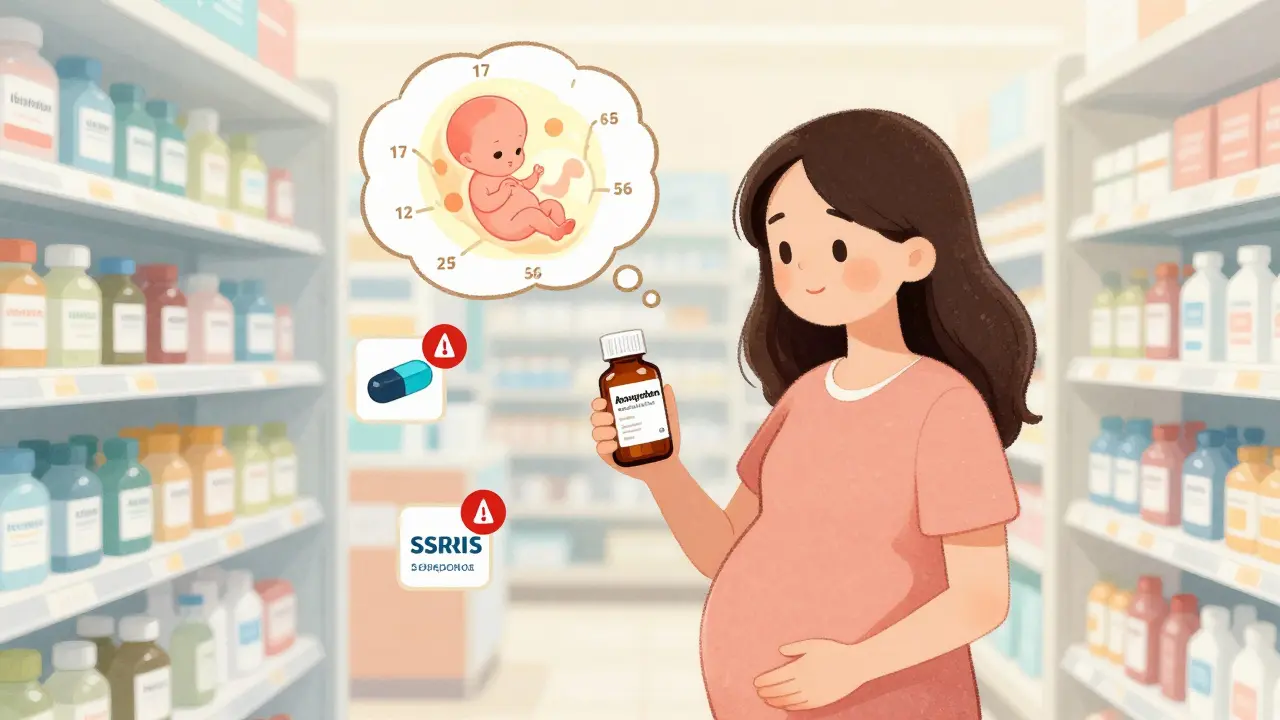
When you’re pregnant, even a simple headache can feel like a crisis. You grab the bottle of acetaminophen - the one your doctor said was safe - but then you wonder: Is this really okay? What if that cough syrup, allergy pill, or antibiotic is doing more harm than good? The truth is, the first 12 weeks of pregnancy are the most delicate time for your baby’s development. This isn’t just a general warning - it’s a biological fact. And understanding what happens during these weeks can help you make smarter, calmer choices about every pill, drop, or patch you use.
Why the First Trimester Is So Critical
Your baby doesn’t start out looking like a baby. In the first few weeks, it’s a cluster of cells. By week 3, those cells begin to organize into layers that will become every organ, bone, and system in the body. This process, called embryogenesis, is like building a house from scratch - and one wrong move can change the whole structure. The most dangerous window? Days 17 to 56 after conception. That’s when your baby’s heart, brain, limbs, eyes, and ears are forming. If something interferes - like a medication, infection, or toxin - the result can be a major birth defect. The CDC says 90% of serious structural birth defects happen during this time. And here’s the hard part: you might not even know you’re pregnant yet. Many women don’t realize they’re expecting until week 4 or 5. That’s why the first trimester is not just important - it’s unavoidable.What Medications Are Actually Used?
A study of over 5,000 pregnant women found that nearly everyone takes at least one medication in the first trimester. Some are prescribed. Others are picked up over the counter. Here’s what showed up most often:- Acetaminophen (Tylenol): Taken by 30.2% of women. It’s still the top choice for pain and fever.
- Amoxicillin: Used by 3.1%. A common antibiotic for infections.
- Progestins (from birth control pills): Found in 2.8%. Often taken by women who didn’t realize they were pregnant.
- NSAIDs (ibuprofen, naproxen): Taken by 4.5% and 0.9% respectively. People reach for these for cramps or headaches.
- Pseudoephedrine (Sudafed): Used by 2.9%. A decongestant for colds.
The Real Risks of Common Medications
Let’s cut through the noise. What do we actually know?Acetaminophen: The “Safe” Choice With Hidden Warnings
For decades, acetaminophen was the gold standard. But newer studies are raising red flags. Research from 2023 suggests that using it for more than a few days in the first trimester may raise the risk of ADHD by 30% and autism spectrum disorder by 20%. That doesn’t mean every use causes harm. But it does mean: don’t use it like candy. Take it only when needed, at the lowest dose, for the shortest time. The FDA still says up to 4,000 mg per day is safe - but that’s the maximum. Most women don’t need that much.NSAIDs: More Dangerous Than You Think
Ibuprofen and naproxen are common. People use them for period-like cramps early in pregnancy. But here’s the problem: a 2011 Canadian study of 4,705 pregnancies found that using NSAIDs in the first trimester increased the risk of miscarriage by 60%. Later, from week 20 on, they can cause serious kidney problems in the baby and low amniotic fluid. The FDA warns against them entirely after 20 weeks. So if you’re pregnant, skip them. Not just in the third trimester - avoid them from the start.Antidepressants: Not All the Same
If you’re managing depression or anxiety, stopping medication can be dangerous. But which ones are safest?- Paroxetine (Paxil): Linked to a 1.5-2.0 times higher risk of heart defects. Avoid if possible.
- Fluoxetine (Prozac), Sertraline (Zoloft), Citalopram (Celexa): No clear link to birth defects. These are often preferred.
Antibiotics: Penicillin Is Your Friend
Amoxicillin and cephalosporins are considered safe. Erythromycin, too. But avoid:- Tetracyclines (like doxycycline): Can permanently stain your baby’s teeth and affect bone growth.
- Fluoroquinolones (like ciprofloxacin): Linked to joint and cartilage damage in animal studies. Human data is limited, but better to skip.
Decongestants and Allergy Pills
Sudafed (pseudoephedrine) might help your stuffy nose - but it’s been tied to a 1.2-1.3 times higher risk of gastroschisis, a rare abdominal wall defect. Skip it in the first trimester. Better options? Loratadine (Claritin) and Cetirizine (Zyrtec) are considered safe. Diphenhydramine (Benadryl) is okay too, though it can cause drowsiness.Acne and Fungal Treatments: Big Red Flags
Isotretinoin (Accutane) is one of the most dangerous drugs in pregnancy. It carries a 20-35% risk of major birth defects - including brain, heart, and ear problems. The FDA has a black box warning for it. Never use it if you’re pregnant or trying to conceive. For fungal infections, topical creams like clotrimazole are fine. But oral fluconazole? One study found no increased risk in 226 cases - but experts still recommend avoiding it in the first trimester. Why? Because we don’t have enough data. Better safe than sorry.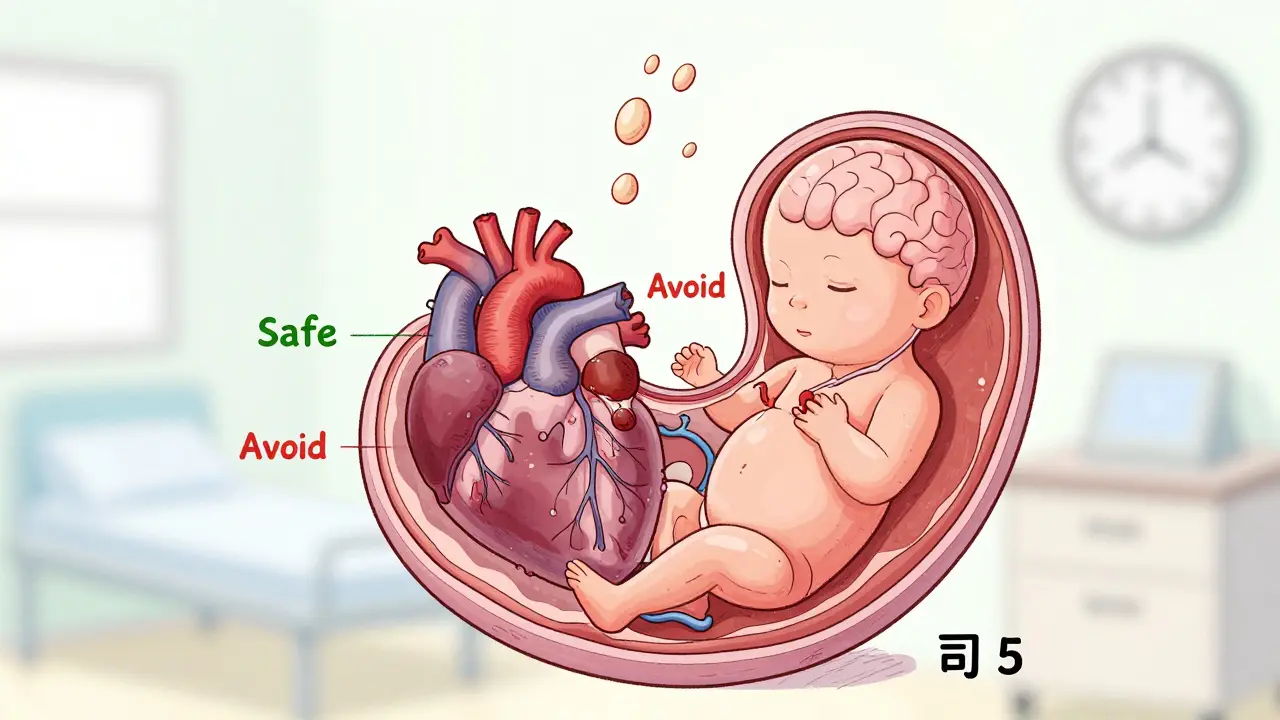
What About Thyroid, Epilepsy, or Autoimmune Drugs?
Some conditions can’t be ignored.- Levothyroxine (for hypothyroidism): You need it. In fact, your dose often needs to go up by 30-50% during pregnancy. Not taking it raises the risk of miscarriage and developmental delays.
- Antiepileptics (like valproate): Some carry high risks - valproate can cause neural tube defects and cognitive issues. But stopping seizures is even more dangerous. Work with your neurologist to switch to safer options like lamotrigine.
- Hydroxychloroquine (Plaquenil): Used for lupus and rheumatoid arthritis. Studies show no increased risk of birth defects. In fact, continuing it may help prevent miscarriage in women with autoimmune disorders.
- Corticosteroids (like prednisone): May slightly raise the risk of cleft lip or palate. But for severe asthma or autoimmune disease, the benefits often outweigh the risks.
What Should You Do?
Here’s a simple, step-by-step approach - backed by ACOG and MotherToBaby:- Know your dates. When was your last period? When did you ovulate? Ultrasounds help confirm timing.
- Identify what you’re taking. Write down every pill, supplement, cream, or herbal remedy. Include OTC meds.
- Don’t stop cold turkey. Especially for mental health, thyroid, or seizure meds. Talk to your provider first.
- Use non-drug options first. For nausea: ginger, acupressure bands. For constipation: fiber, water, movement. For pain: heat, rest, massage.
- If you need medication, use the lowest dose for the shortest time. Even “safe” drugs can be risky if overused.
- Call MotherToBaby. They’re a free, confidential service staffed by specialists. They field over 15,000 calls a year. They can tell you what’s known - and what’s not.
The Big Problem: We Don’t Know Enough
Here’s the hardest truth: 96% of medications used in pregnancy have no solid human data on safety. The FDA says 98% of drug labels lack clear pregnancy risk info. That’s not because doctors are careless. It’s because pharmaceutical companies aren’t required to test drugs on pregnant women. So we’re flying blind. That’s why you can’t rely on Google. Or your friend’s cousin. Or even your pharmacist. You need expert, evidence-based advice - and you need it fast.Final Thought: You’re Not Alone
Sixty-eight percent of pregnant women worry about medications. Forty-two percent have stopped taking something they needed - just because they were scared. And 31% have gotten conflicting advice from different providers. You’re not failing. You’re not being careless. You’re trying to protect your baby. And that’s exactly why you need clear, calm, science-backed guidance - not fear. The goal isn’t to avoid every medication. It’s to use the right one, at the right time, in the right dose. And if you’re unsure? Ask. Call a specialist. Talk to your OB. Don’t guess.Is acetaminophen safe during the first trimester?
Acetaminophen is still considered the safest option for pain and fever in pregnancy, but recent studies suggest prolonged use (more than a few days) may be linked to a 30% higher risk of ADHD and 20% higher risk of autism spectrum disorder. Use the lowest effective dose for the shortest time possible. Avoid daily or long-term use unless medically necessary.
Can I take ibuprofen in early pregnancy?
No. Ibuprofen and other NSAIDs increase the risk of miscarriage in the first trimester by about 60%, according to a major Canadian study. They can also cause kidney problems and low amniotic fluid later in pregnancy. Avoid NSAIDs completely during pregnancy unless specifically directed by a doctor.
Are antidepressants dangerous in the first trimester?
Some are, some aren’t. Paroxetine (Paxil) is linked to a higher risk of heart defects and should be avoided. Fluoxetine (Prozac), sertraline (Zoloft), and citalopram (Celexa) have no consistent evidence of major birth defects. But stopping antidepressants can increase risks like preterm birth and postpartum depression. Always consult your doctor before making changes.
What antibiotics are safe in the first trimester?
Penicillins (like amoxicillin), cephalosporins, and erythromycin are generally considered safe. Avoid tetracyclines (can stain baby’s teeth) and fluoroquinolones (linked to cartilage damage in animals). Always confirm with your provider - even “safe” antibiotics should only be used when needed.
I took a medication before I knew I was pregnant. What should I do?
Don’t panic. Most exposures don’t cause harm. The critical window for major defects is narrow - days 17 to 56 after conception. If you took a medication during that time, contact MotherToBaby (1-866-626-6847) or your OB. They can assess your specific situation using real data. Most women who take medications early in pregnancy go on to have healthy babies.
10 Responses
I appreciate how this breaks down the facts without fearmongering. Acetaminophen isn't magic - it's a tool. Use it like one. Shortest time, lowest dose. Same with everything else. You don't need to panic, but you do need to be intentional. MotherToBaby is a godsend.
I've been reading about this for weeks... and honestly? I think Big Pharma and the FDA are hiding something. Why is there no long-term data? Why aren't they forced to test on pregnant women? It's not just negligence - it's systematic. They profit from pills... and we're the lab rats. I'm not saying every med is evil... but the system? It's rigged. Don't trust anyone. Not even your OB. Keep a journal. Track everything. And pray.
This was super helpful. I took ibuprofen for a week before I knew I was pregnant. Was freaking out. Now I know it's not a death sentence. Just don't do it again. And yeah - ginger for nausea works better than I thought. Who knew?
lol at people panicking over tylenol. just don't take 10 pills a day. chill. 🤷♂️
I'm so glad someone finally said this clearly. I took Zoloft through both pregnancies. My kids are 7 and 9. Perfectly healthy. Zero issues. Stop the fear. Talk to your doctor. Don't self-diagnose on Reddit. We need more calm, science-based voices like this.
The fact that people still think acetaminophen is safe shows how little they understand developmental biology. You think a chemical that crosses the placenta doesn't affect neural pathways? Please. The 30% ADHD increase isn't a coincidence. It's a warning label you're choosing to ignore
Let me guess - you're the person who took 4000mg of Tylenol daily because your 'head hurt' and now you're shocked your kid is 'a little off'? Newsflash: your body doesn't have a 'safe threshold' for chemicals. It has a 'breaking point'. And guess what? You don't know where yours is. Stop pretending you're in control. You're not. You're just lucky so far. Next time, ask before you swallow.
I was terrified after my first trimester. Took everything 'just in case' - antihistamines, painkillers, even that weird herbal tea. Then I called MotherToBaby. They walked me through every single thing. No judgment. Just facts. And you know what? My daughter is thriving. You're not alone. Reach out. Seriously. It's free. And they know more than Google ever will.
Oh sweet mercy. Another 'science-backed' article that reads like a pharmaceutical pamphlet disguised as wisdom. Let me translate: 'We don't know anything, but here's a list of things we won't get sued for saying are safe.' The real truth? We're all just guessing. And the fact that you're reading this instead of eating organic kale and meditating? That's your real risk.
I want to thank the author for not sugarcoating. I took Paxil for anxiety before I knew I was pregnant. I was terrified. I called my OB. We switched to sertraline immediately. My son is now 18 months old - brilliant, happy, healthy. I cried when I read this. Because I know how many women are silently suffering, afraid to speak up. You’re not alone. And you’re not failing. You’re fighting. Keep going.