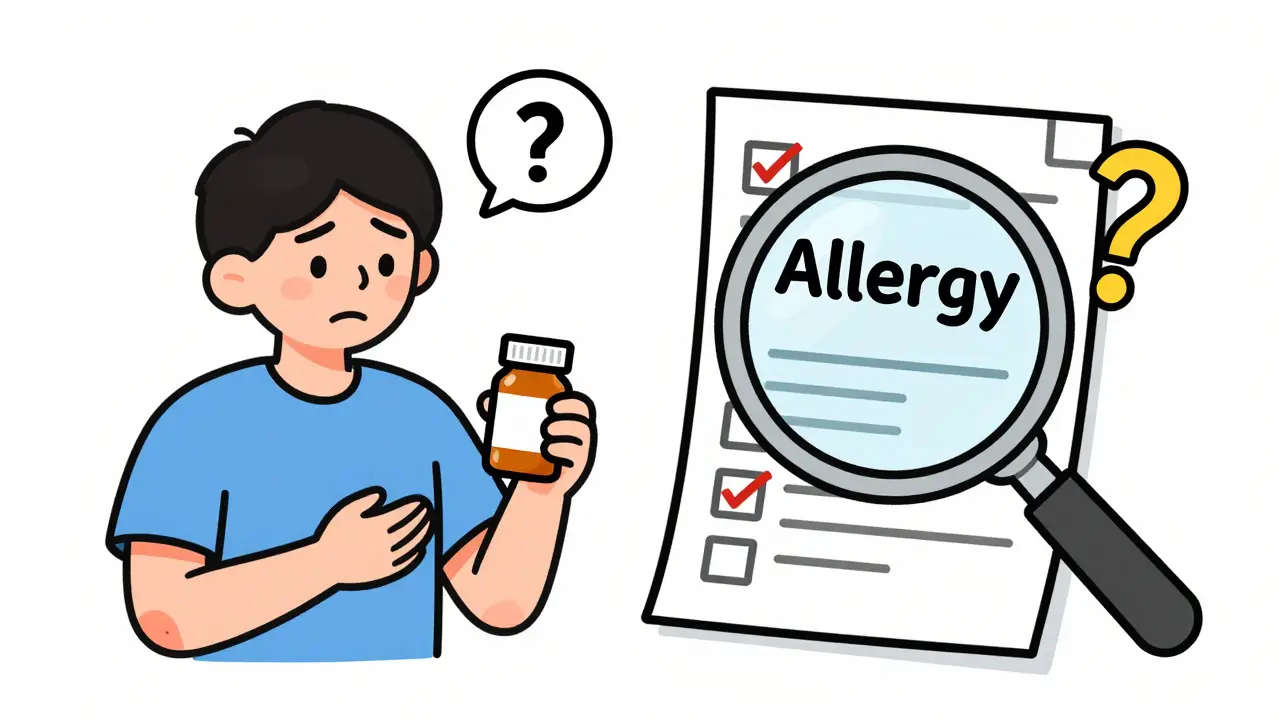
When you understand the difference, you stop avoiding medications you might actually need. Many people spend decades avoiding Penicillin is a group of antibiotics used to treat various bacterial infections because of a mild rash they had as a child, only to find out years later that they were never allergic at all. This confusion doesn't just affect your peace of mind; it leads to doctors using "stronger," broader-spectrum antibiotics that are more expensive and increase your risk of getting a stubborn infection like Clostridioides difficile (C. diff).
The Real Difference: Your Immune System vs. Biology
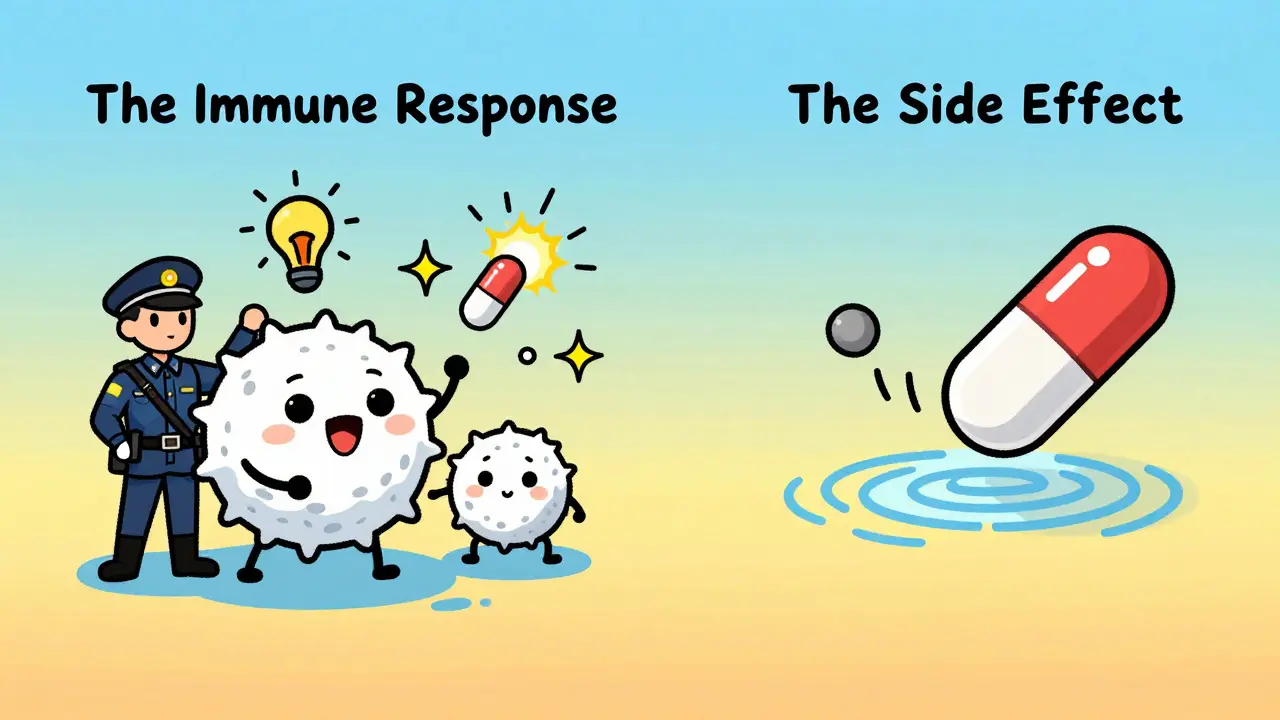
The core difference comes down to whether your immune system is involved. A Drug Allergy is an immune response. Your body mistakenly thinks the medicine is a dangerous invader, like a virus or bacteria. To fight it, your system produces antibodies and releases histamine, which triggers the symptoms we associate with allergies-hives, swelling, and in severe cases, anaphylaxis. It's an overreaction of your body's defense system.
A Side Effect, however, is just a predictable result of how the drug works. It's not an "attack" by your immune system; it's simply the drug doing something it does in many people. For example, if a medication lowers your blood pressure, it might also make you feel dizzy. That dizziness isn't an allergy; it's a pharmacological effect. Think of it like this: an allergy is a "wrong" response, while a side effect is an "expected but annoying" response.
Spotting the Signs: How to Recognize Each Reaction
One of the best ways to tell these apart is by looking at drug allergies symptoms and how quickly they appear. Allergic reactions usually fall into two camps: immediate and delayed.
- Immediate Reactions: These happen within minutes to an hour. You might get hives, swelling of the lips or throat, or feel like you can't breathe. This is often an IgE-mediated response and can be life-threatening.
- Delayed Reactions: These are trickier. You might develop a rash or a fever several days or even weeks after starting the drug. Some severe versions, like DRESS syndrome, involve systemic inflammation and can be very dangerous if not caught.
Side effects, on the other hand, usually follow a more predictable pattern based on the dose. If you take more of the drug, the side effect often gets stronger. Common examples include nausea from antibiotics or muscle aches from Statins (cholesterol-lowering meds). Unlike a true allergy, side effects often fade away as your body gets used to the medicine, or they can be managed by adjusting the dose.
| Feature | Drug Allergy | Side Effect |
|---|---|---|
| Cause | Immune system overreaction | Chemical/Biological action of drug |
| Predictability | Unpredictable (varies by person) | Predictable (common to many users) |
| Dose Relationship | Can happen with a tiny amount | Usually depends on the dose |
| Typical Symptoms | Hives, swelling, shortness of breath | Nausea, dry mouth, dizziness, cough |
| Repeat Exposure | Usually worse each time | Consistent or improves over time |
Why Mislabeling Matters for Your Health
You might think, "Who cares? If I can't take it, I can't take it." But labeling a side effect as an allergy has real-world consequences. When a medical record says "Penicillin Allergy," doctors often pivot to alternatives like Vancomycin. While effective, these alternatives are often more powerful and more expensive. Using these "big guns" unnecessarily can make bacteria more resistant to treatment and significantly increase the cost of a hospital stay-sometimes by over $1,000 per visit.
There is also the risk of the "false alarm." A huge number of children develop a rash while taking amoxicillin for a viral infection. Because the rash happens while they are on the drug, parents and doctors often assume it's an allergy. In reality, the virus itself caused the rash, not the medicine. This leads to millions of people being wrongly labeled as allergic for their entire lives, limiting their treatment options during emergencies.
How to Get a Real Answer: Testing and De-labeling
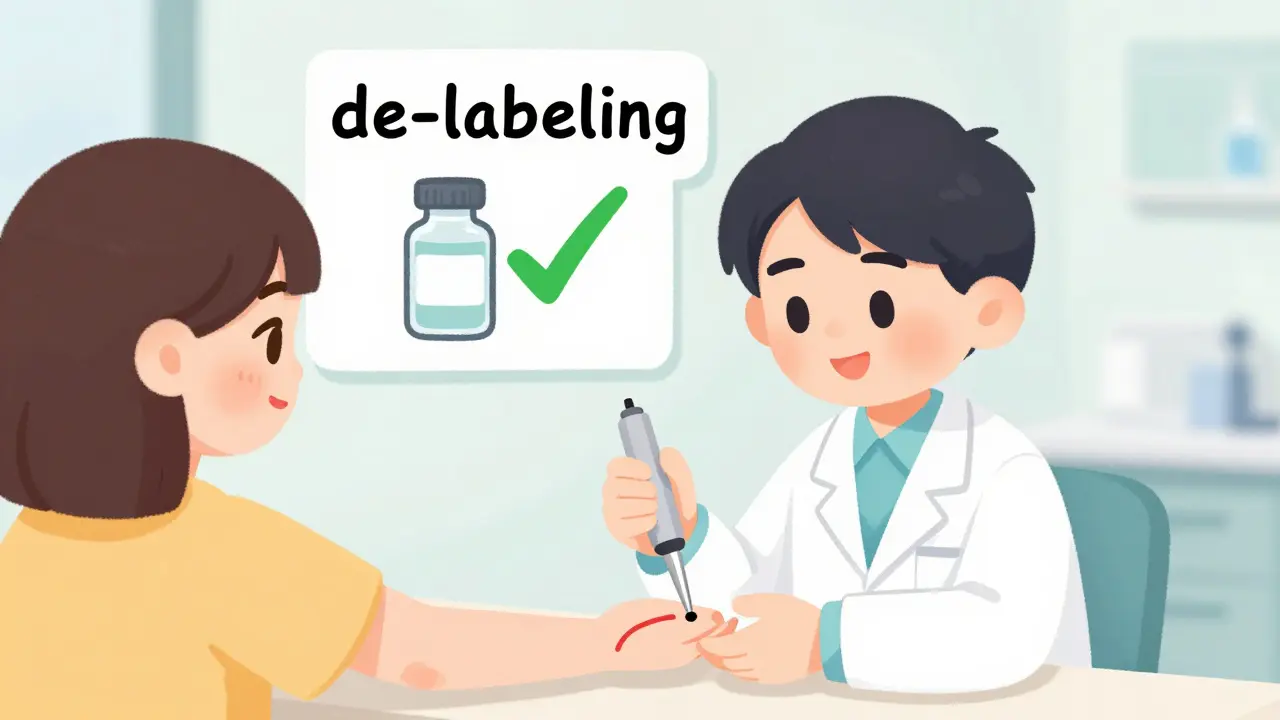
If you've been told you're allergic to a drug but aren't 100% sure, you can actually get this checked. This process is called "de-labeling." An allergist can use a few different methods to find the truth:
- Skin Testing: A tiny amount of the drug is placed under the skin to see if it triggers a localized reaction. This is highly effective for penicillin.
- Graded Challenge: Under strict medical supervision, you take a very small dose of the drug, which is slowly increased. If you don't react, you aren't allergic.
- Pharmacist Review: Sometimes, just talking through the symptoms with a specialist pharmacist can reveal that what you experienced was a side effect, not an allergy.
For most people, these tests are safe and can open up a world of better, cheaper, and more effective treatment options. If you have a documented allergy that you suspect was actually just a bad side effect, it's worth bringing up at your next check-up.
Managing Your Reactions Safely
Regardless of whether it's an allergy or a side effect, you should always track your reactions. Instead of just writing "allergic" in your notes, be specific. Write down: "Took Drug X on Tuesday, developed itchy red bumps on arms within 20 minutes, stopped after taking Benadryl." This level of detail helps your doctor determine if your immune system was involved or if the drug was just irritating your skin.
If you experience any swelling of the face, throat, or difficulty breathing, treat it as a medical emergency. That is the hallmark of anaphylaxis, regardless of the cause. But for mild rashes or stomach upsets, take a breath and ask your provider: "Is this a side effect of the drug, or is my immune system reacting to it?" The answer could change how you handle your health for the next twenty years.
Can a side effect ever be dangerous?
Absolutely. While side effects aren't "allergies," they can still be severe. For example, some medications can cause internal bleeding or kidney damage. The difference is that these are caused by the drug's chemistry, not your immune system. Always report any severe symptom to your doctor immediately.
If I'm allergic to one drug, will I be allergic to similar ones?
Often, yes. This is called cross-reactivity. For instance, if you have a true allergy to penicillin, you might also react to cephalosporins because they have a similar chemical structure. This is why an accurate diagnosis is so important-it helps your doctor know which entire family of drugs to avoid.
Do drug allergies go away over time?
Some do. Depending on the type of immune response, your body can sometimes lose its sensitivity to a drug over several years. This is why some people find they can tolerate a medication in adulthood that they reacted to as a child, although you should never test this yourself without a doctor's help.
Why do some side effects get better after a few days?
This is common with medications that irritate the gut or change your body's chemistry. Your body often adapts to the presence of the drug, and the receptors in your system become less sensitive to the irritating effect. True allergies, however, usually get worse or happen faster the second time you're exposed.
Is a skin rash always a sign of an allergy?
Not at all. Rashes can be side effects (like photosensitivity, where the sun makes your skin react to a drug) or even caused by a separate illness you have at the same time you're taking the medicine. Only a specialist can determine if the rash was a true immunological reaction.
15 Responses
It is really important to keep a detailed log of your symptoms. Many people simply write "allergic" in their records, but specifying that you had an itchy rash that responded to antihistamines helps your provider differentiate between a true IgE-mediated response and a non-immunological reaction. This precision can save you from being prescribed unnecessarily potent medications in the future.
This is so helpful!!! I never knew that most reactions weren't actually allergies!!! It's amazing how much we can learn when we actually look into it!!!
The dichotomy between biological predictability and immunological chaos is a classic study in human fallibility. Most people just accept the label given by a rushed doctor without questioning the underlying mechanism. It's a typical systemic failure where efficiency is prioritized over accuracy, and the patient simply pays the price in both health and currency.
Big Pharma just wants you on the expensive stuff. Labeling everything as an allergy is a scam to push "big gun" drugs.
I'm glad this is out there. It makes me feel better knowing that some of the scary stuff we go through might just be the medicine working in a weird way.
the distinction between a mistake of the system and a property of the molecule is an interesting boundary to explore in the context of healing
Omg this is so eye-opening!!! 🌸 I always thought a rash meant stop immediately!!! It's so cool that we can actually get "de-labeled" ✨💖
Whatever.
It's okay to feel overwhelmed by medical jargon. If you're unsure about your history, just take it one step at a time and talk to your doctor about the testing options mentioned here.
Typical nonsense. Real Americans just take their meds and deal with the itch. Why do people need a manual for everything these days it's pathetic
Actually, the point about Penicillin is a bit oversimplified. Some people have a true hypersensitivity that doesn't show up on a basic skin test, so assuming de-labeling is a silver bullet is a bit optimistic, but hey, the general idea is fine for most.
Good to see a clear breakdown of this. It's a bit of a relief to know that some reactions are just a side effect and not a permanent ban on a useful drug.
I totally agree with the need for better tracking! Maybe we could even suggest a template for people to use when they record their reactions so it's easier for doctors to read. Let's make the process as simple as possible for everyone involved!
Let's get after it! If you've been avoiding a med for 20 years based on a childhood rash, now is the time to call your allergist and get that cleared up! Don't let old data hold back your current health!
I remember when I was a kid and my parents were absolutely terrified because I had a mild reaction to a syrup, but it turned out to be a combination of the cold I had and the medicine itself, which is exactly what was mentioned about the viral rash. It's such a shame that so many of us grow up with these labels that aren't even true, because it creates this anxiety every time we have to go to a new clinic or a different hospital where they have to cross-reference our allergies, and you just feel this tension in the room because the doctors are trying to avoid the "dangerous" drugs when they could actually be using the most effective ones. I think we really need to foster a culture where we're not afraid to question these old medical labels, even if it feels a bit scary to potentially try a drug again, as long as we do it under the care of a professional who actually knows how to handle a challenge test. It's all about finding a balance between safety and efficacy, and honestly, the mental load of carrying a "false" allergy for decades is a burden that many of us don't even realize we're carrying until we read something like this.