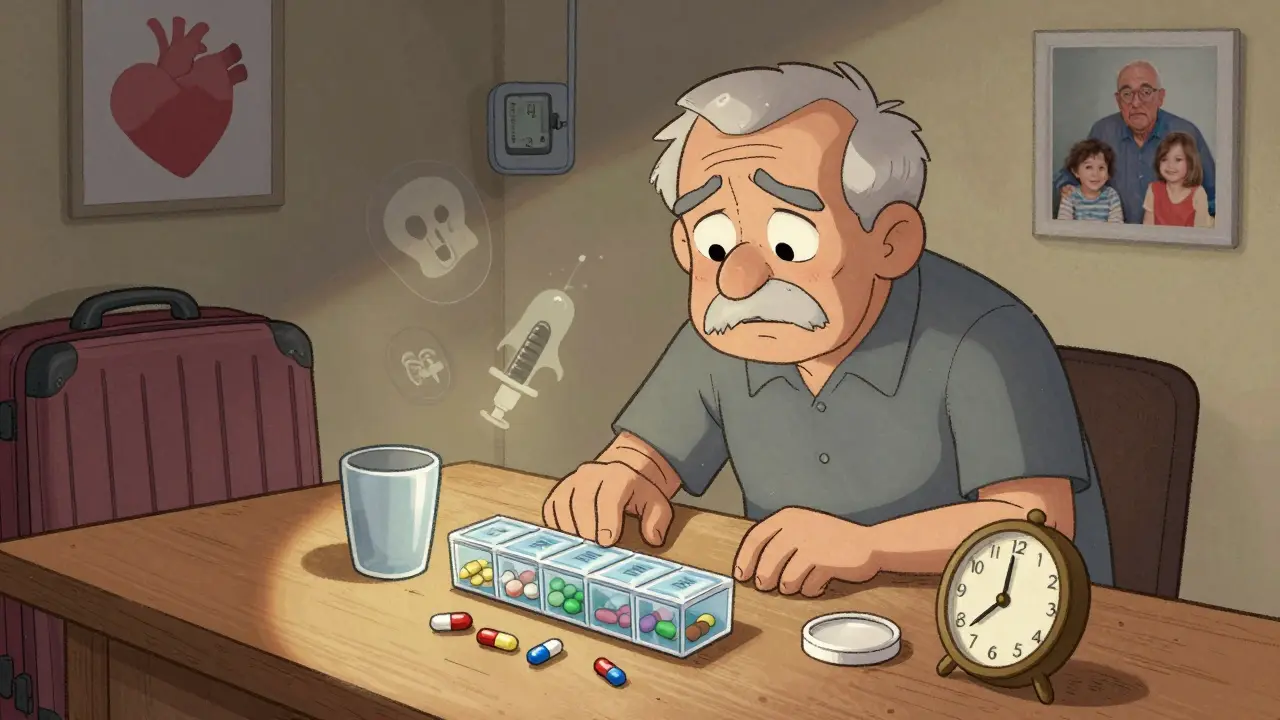
Every year, around 125,000 people in the United States die because they didn’t take their medicine the way their doctor told them to. That’s more than the number of deaths from car crashes or homicides. And it’s not just about dying-it’s about ending up in the hospital, losing your job, or watching your health spiral out of control-all because a pill was skipped, a dose was delayed, or a prescription was left unfilled.
What Happens When You Skip Your Meds?
Taking medicine as prescribed isn’t just a suggestion. It’s the difference between controlling a condition and letting it take over your body. For someone with high blood pressure, missing doses can lead to a stroke. For someone with diabetes, skipping insulin can cause nerve damage, kidney failure, or even amputation. For people with heart disease, not taking statins or beta-blockers can trigger a heart attack. These aren’t hypothetical risks. They’re documented outcomes backed by decades of research. In fact, studies show that up to 50% of treatment failures across all chronic illnesses are directly linked to patients not taking their medications correctly. This isn’t about being irresponsible-it’s about how complex modern medicine has become. If you’re on five different pills, each with different times, food restrictions, and side effects, it’s easy to get overwhelmed. And when you do, your body pays the price.The Real Cost of Nonadherence
The financial toll is just as staggering. In 2016, medication nonadherence cost the U.S. healthcare system $529 billion. That’s more than the entire GDP of many countries. For individuals, it means higher out-of-pocket expenses. When your condition worsens because you didn’t take your meds, you’re more likely to need emergency care, hospital stays, or specialist visits-all of which cost far more than the original prescription. Medicare patients who don’t take their medications as directed are 20% more likely to be readmitted within 30 days. And half of those readmissions are directly tied to nonadherence. That’s not just a statistic-it’s a mother who can’t pick up her grandkids, a father who misses work for weeks, a retiree who loses independence because a simple pill was forgotten. In the European Union, avoidable costs from poor medication adherence hit €80-125 billion annually. These aren’t abstract numbers. They’re real people, real families, real lives disrupted.Who’s Most at Risk?
This isn’t a problem that affects everyone equally. Older adults are especially vulnerable. In the U.S., up to 100,000 preventable deaths each year happen among seniors who miss doses. Why? Because they’re often on multiple medications. A 72-year-old with diabetes, heart failure, arthritis, and depression might be taking eight pills a day. Mixing them up isn’t just possible-it’s common. Minority communities face even steeper barriers. Black, Latino, and Indigenous patients are more likely to skip meds because they can’t afford them, don’t have a pharmacy nearby, or don’t trust the system. Historical discrimination in healthcare has left deep scars. When a patient feels dismissed or misunderstood, they stop engaging. And that’s when things go wrong. Even younger adults aren’t safe. The CDC found that 8.2% of adults aged 18-64 skipped doses in 2021 because of cost. That’s one in twelve people. For many, choosing between insulin and groceries isn’t a hypothetical-it’s a daily reality.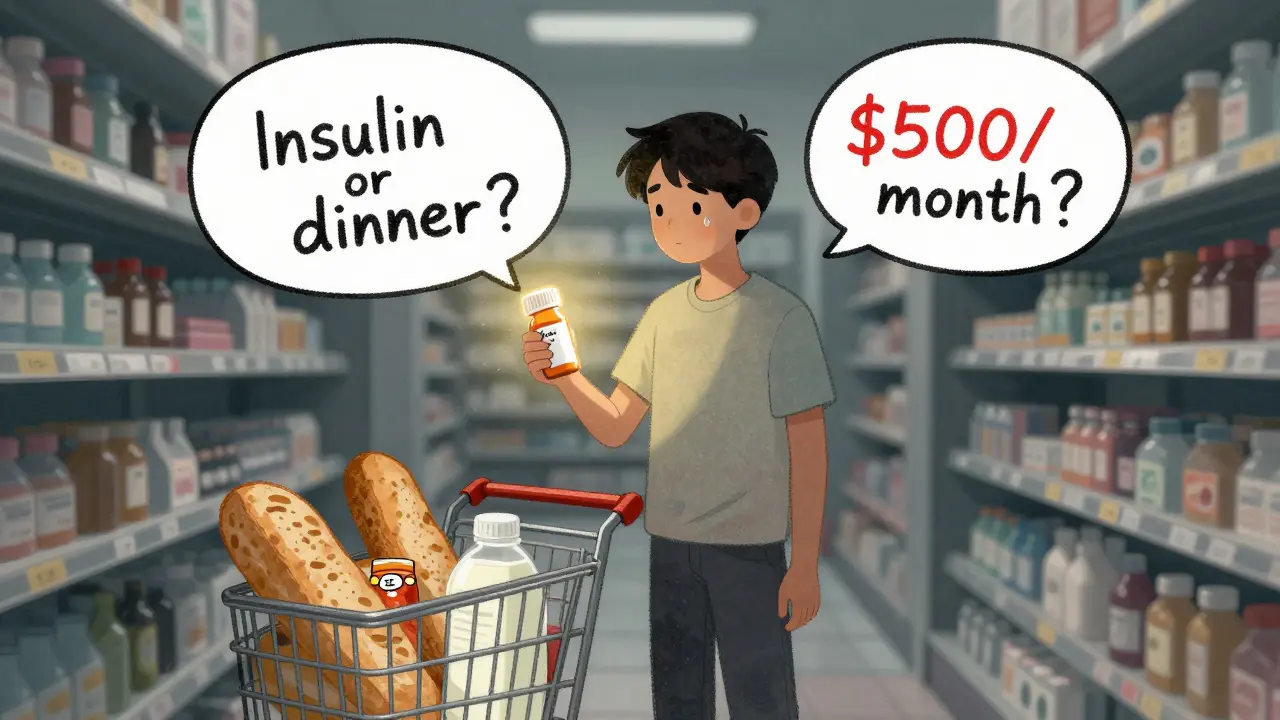
Why Do People Skip Their Meds?
People don’t skip pills because they’re lazy. They do it because the system makes it hard to follow through. - Cost: A $500 monthly copay for a blood thinner? Many just can’t pay. They ration pills, cut doses, or stop entirely. - Side effects: Nausea, dizziness, fatigue-these are real. And if your doctor doesn’t talk about them upfront, you assume it’s normal. You stop taking the medicine instead of asking for help. - Complex regimens: “Take this with food, that on an empty stomach, avoid grapefruit, don’t lie down for 30 minutes.” It’s no wonder people give up. - Lack of understanding: If you don’t know why a pill matters, you won’t care if you miss it. “I feel fine,” people say. But high blood pressure doesn’t make you feel sick until it’s too late. - Poor communication: Doctors spend 10 minutes per visit. Pharmacists are rushed. No one sits down and says, “This is what happens if you don’t take this.” And here’s the cruel twist: adherence drops over time. The first month, you’re motivated. By month three, you’ve forgotten. By month six, you’ve convinced yourself you don’t need it anymore.What Happens in the Long Run?
Skipping meds doesn’t just make you sicker-it makes treatment less effective. Antibiotics become useless if you stop early. Antiretrovirals for HIV can lead to drug-resistant strains. Antidepressants lose their power if taken inconsistently. Your body adapts, and the medicine stops working. For transplant patients, missing even one dose of immunosuppressants can trigger organ rejection. For people with epilepsy, skipping a dose can mean a seizure. For asthma patients, not using inhalers regularly can lead to permanent lung damage. And then there’s mental health. Nearly 60% of people with conditions like depression or schizophrenia don’t take their meds as directed. That’s not because they don’t care-it’s because the side effects are brutal, the stigma is heavy, or they feel better and think they’re cured. But mental illness doesn’t go away because you feel good for a week. It comes back harder.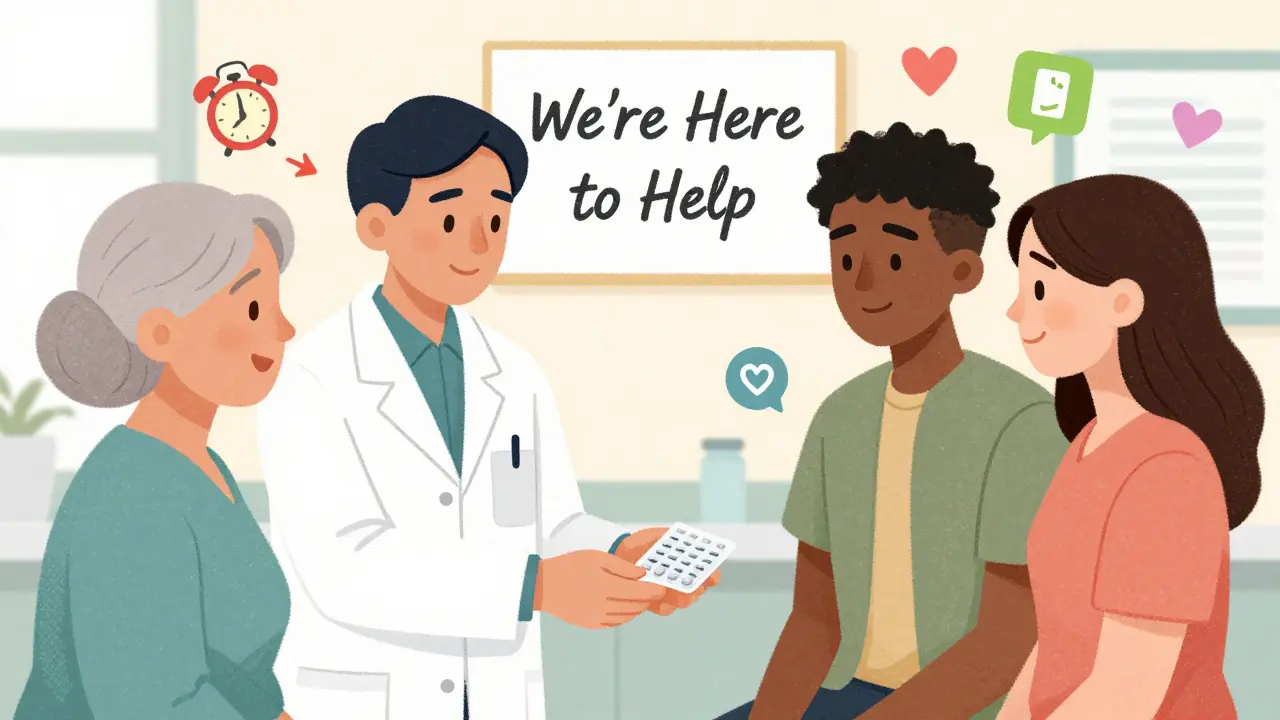
What Can Be Done?
There are solutions-and they work. - Pharmacist-led programs: When pharmacists check in with patients, adherence improves by 15-20%. They simplify regimens, answer questions, and even deliver meds to your door. - Text reminders: A simple daily text message can boost adherence by 12-18%. It’s low-tech, cheap, and effective. - Pill organizers: Weekly or monthly blister packs with times clearly labeled make it impossible to forget. - Cost assistance: Generic drugs, patient assistance programs, and pharmacy discount cards can cut costs by 80%. - Team-based care: When your doctor, pharmacist, and nurse all talk to each other, you get better outcomes. Integrated medical-pharmacy plans are proven to reduce disparities and improve results. But here’s the problem: most of these programs aren’t covered by insurance. No one gets paid to help you take your pills. So even though we know what works, it’s rarely offered.What Should You Do?
If you’re struggling to take your meds:- Ask your doctor: “Can we simplify this?” Maybe you can switch from three pills a day to one.
- Ask your pharmacist: “Is there a cheaper version?” Or “Can I get a 90-day supply?”
- Use a pill organizer or set phone alarms.
- Write down why the medicine matters to you. “I take this so I can walk my dog.” “I take this so I don’t end up in the hospital.”
- Talk to someone. A friend, a support group, a counselor. You’re not alone.
The Bigger Picture
This isn’t just about pills. It’s about how we treat people in the healthcare system. If we expect patients to manage complex, expensive, side-effect-heavy regimens without support, we’re setting them up to fail. The World Health Organization says medication adherence has a more direct impact on health outcomes than the treatment itself. That’s a powerful statement. It means that even the best drug in the world won’t help if you don’t take it. We need policies that make adherence easier: better insurance coverage for adherence services, lower drug prices, community health workers, and training for doctors to talk about nonadherence without judgment. Until then, the burden falls on you. And that’s unfair. But you’re not powerless. Every pill you take is a step toward staying healthy, staying independent, and staying alive.What happens if I skip a dose of my medication?
Skipping a single dose might not cause immediate harm, but it can reduce the effectiveness of your treatment. For some medications, like antibiotics or blood thinners, missing even one dose can lead to treatment failure or dangerous complications. If you miss a dose, check the instructions on the label or call your pharmacist. Never double up unless instructed to do so.
Why do I feel fine, but my doctor says I still need to take my medicine?
Many chronic conditions-like high blood pressure, high cholesterol, or diabetes-don’t cause symptoms until damage is already done. The medicine isn’t there to make you feel better right now; it’s there to prevent future problems. You’re not feeling sick because the medication is working. Stopping it is like turning off the alarm system after a break-in-everything seems fine until the next one happens.
Can I stop taking my meds if I can’t afford them?
Never stop taking prescribed medication because of cost. Instead, talk to your doctor or pharmacist. Many drug manufacturers offer free or low-cost programs. Pharmacies like Walmart and CVS sell common generics for under $10 a month. You can also ask about patient assistance programs or state aid. Your health is worth more than the price tag.
Is it safe to take someone else’s medication if I run out?
Absolutely not. Medications are prescribed based on your specific condition, weight, allergies, and other drugs you take. Taking someone else’s medicine can cause dangerous interactions, allergic reactions, or overdose. Even if the pill looks the same, it’s not the same for you. Always get a refill or call your doctor.
How can I remember to take my pills every day?
Use a pill organizer with morning, afternoon, evening, and night compartments. Set phone alarms labeled with the name of the medication. Link taking your pills to a daily habit-like brushing your teeth or eating breakfast. Some pharmacies offer blister packs with times printed on them. Apps like Medisafe or MyTherapy can send reminders and track your adherence.
Do side effects mean I should stop taking my medicine?
Not necessarily. Many side effects fade after a few days or weeks as your body adjusts. Others can be managed with dose changes or additional treatments. Never stop taking a medication because of side effects without talking to your doctor first. They may be able to switch you to a different drug or adjust your dose to reduce discomfort.
10 Responses
man i just missed my blood pressure pill yesterday and felt fine, but then i read this and got scared lol. i mean, i know it’s bad, but it’s so easy to forget when you’re juggling work, kids, and life. i’m gonna get one of those pill boxes now. thanks for the kick in the pants.
let me guess-this is another liberal guilt-trip disguised as public health. people skip meds because they’re tired of being treated like broken machines. if your ‘treatment’ costs more than your rent and makes you feel like a zombie, don’t act shocked when someone says ‘fuck this.’ the system’s broken, not the patient.
the pharmacoeconomic calculus here is staggering-nonadherence isn't just a behavioral flaw, it's a systemic failure of care architecture. when polypharmacy meets socioeconomic precarity, you're not dealing with ‘noncompliance’-you're confronting a structural collapse in the social contract of health. we need decentralized, community-embedded adherence ecosystems, not just apps and alarms. think: local pharmacists as wellness liaisons, not just pill dispensers.
hey, i get it. life’s messy. i used to forget my meds too. then my grandma had a stroke because she ran out of her blood thinner and couldn’t afford a refill. now i set alarms for my mom, and we talk about it like it’s just part of the day. no shame. just support. 🤝 you’re not alone in this. even small steps matter. keep going.
ah yes, the classic ‘blame the patient’ narrative. how quaint. the real issue is that the pharmaceutical-industrial complex has turned chronic disease management into a revenue stream, not a healing process. the fact that we reward doctors for prescribing, not for ensuring adherence, reveals the moral bankruptcy of our healthcare model. this isn’t about willpower-it’s about capitalism’s failure to care.
you people act like skipping meds is some tragic accident. it’s not. it’s a choice. if you can afford a phone, you can afford a $10 generic. if you can’t, you’re not a victim-you’re irresponsible. stop pretending poverty is an excuse for self-sabotage. your ‘complex regimen’ is your fault for not planning better.
my uncle died from a stroke because he skipped his pills to save money for rent. no one talked to him about it. no one asked. just a prescription and silence. now i remind my friends. it’s not hard. just ask.
the United States spends more per capita on healthcare than any nation on Earth, yet we allow preventable deaths due to nonadherence? This is an abdication of national responsibility. Medication access is a matter of public safety, not charity. Congress must mandate universal affordability for essential chronic disease medications, and enforce compliance through integrated health infrastructure-not moralizing.
i cried reading this. seriously. my mom’s on 7 meds and she forgets half the time. i started putting her pills in a little box with stickers for each time of day. now she says ‘thank you’ every morning. it’s not perfect, but it’s love in action. 💕 if you’re reading this and you’re struggling-reach out. someone wants to help. you’re not a burden. you’re human.
the paradox of adherence lies in the tension between autonomy and obligation. we demand personal responsibility in health, yet provide no structural scaffolding to make responsibility sustainable. is it moral to prescribe a treatment that only the privileged can sustain? perhaps the real question isn’t ‘why do people skip pills?’ but ‘why do we design systems that expect people to fail?’