
When your doctor prescribes a medication and the pharmacy says it’s out of stock-again-you’re not alone. In 2025, the U.S. saw over 350 drug shortages, from antibiotics to heart medications, hormone therapies, and even basic pain relievers. For many patients, waiting weeks isn’t an option. That’s where compounding pharmacies come in. They don’t just fill prescriptions. They build them from scratch when nothing else works.
What Exactly Is a Compounding Pharmacy?
A compounding pharmacy is not your local CVS or Walgreens. These are specialized labs where pharmacists mix ingredients to make medications that aren’t available through regular manufacturers. Think of it like a chef cooking a meal instead of serving pre-packaged food. If you’re allergic to red dye, lactose, or gluten, and every brand of your pill contains it, a compounding pharmacist can remove those triggers. If you need a liquid version because swallowing pills is impossible, they can make it. If the only available dose is too strong or too weak, they can adjust it precisely-down to the milligram. These pharmacies follow strict standards set by the U.S. Pharmacopeia (USP <795> for non-sterile, <797> for sterile). They work in clean rooms, use pharmaceutical-grade ingredients, and test their batches for purity. About 7,500 pharmacies in the U.S. specialize in compounding, with another 32,000 offering some level of custom preparation. That’s not a niche side business-it’s a lifeline for tens of thousands of patients.When Do You Really Need One?
You don’t need a compounding pharmacy just because a drug is temporarily out of stock. But you do need one if:- You’re allergic to fillers, dyes, or preservatives in commercial versions of your medication.
- You can’t swallow pills-common in kids, seniors, or people with neurological conditions.
- The only available dose is too high or too low for your needs.
- The drug you need has been discontinued or is on a national shortage list.
- You need a topical cream, gel, or suppository instead of a pill.
How It Works: From Prescription to Package
It starts with your doctor. They don’t just write “compounded medication” on the script. They have to specify the exact ingredients, strength, dosage form, and reason-like “allergic to gluten” or “unable to swallow tablets.” That’s not optional. The FDA requires this documentation to ensure the compound is medically necessary. Then, the prescription goes to a compounding pharmacy. Most take 24 to 72 hours to prepare. Sterile compounds (like injections or IV bags) take longer because they require extra testing and clean-room procedures. You won’t get it the same day, but you also won’t be left without treatment. The pharmacist reviews your medical history, checks for interactions, and follows a precise formula. They don’t guess. They use digital formulation tools and automated balances that reduce errors by up to 37%. After preparation, the batch is tested for potency and purity. You’re not getting a homemade remedy-you’re getting a scientifically prepared medication.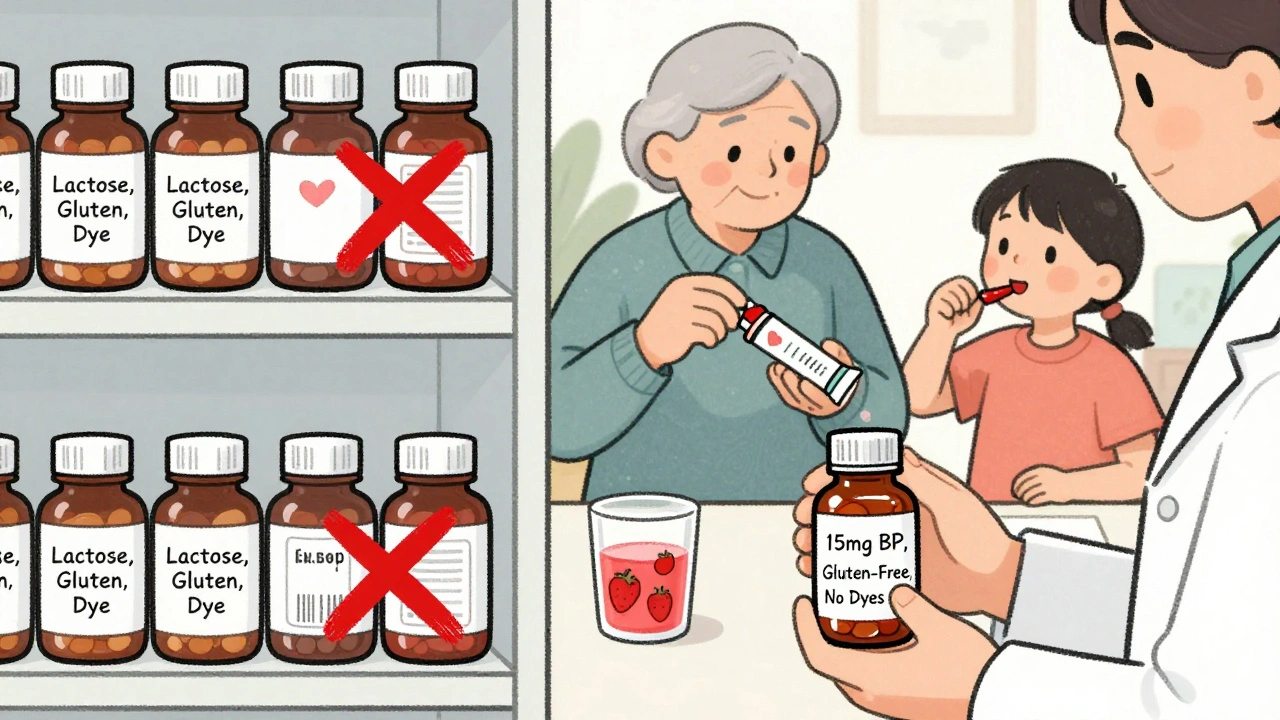
Who Benefits the Most?
Not everyone needs this service, but certain groups rely on it more than others:- Pediatric patients: About 40% of children can’t swallow pills. Compounded flavored liquids-strawberry, bubblegum, grape-boost adherence by 73%.
- Elderly patients: Nearly 30% of older adults have trouble swallowing. Creams, gels, and troches (lozenges) make treatment possible.
- Allergy-sensitive patients: 15-20% of people react to common additives. Compounding removes dyes, gluten, lactose, and preservatives.
- Chronic pain and hormone therapy patients: These two categories make up 50% of all compounded prescriptions. Custom topical creams for pain or balanced hormone blends are often the only viable option.
What They Can’t Do
Compounding pharmacies aren’t magic. They can’t replicate complex drugs like biologics (insulin, monoclonal antibodies), vaccines, or anything that requires FDA-approved manufacturing processes. If a drug is available, safe, and effective, they won’t-and shouldn’t-replace it. Dr. Robert Smith from the National Community Pharmacists Association says about 15% of compounded prescriptions could have used standard drugs. That’s a problem. Compounded meds lack the same pre-market safety testing. They’re not risk-free. But when there’s no other option, the risk of not treating outweighs the risk of compounding.Cost and Insurance: The Hidden Hurdle
Here’s the tough part: insurance doesn’t always cover compounded medications. About 45% of patients pay out-of-pocket, compared to just 15% for regular prescriptions. Costs vary widely-a compounded pain cream might be $50, while a custom hormone blend could run $150-$300 a month. Some insurers will cover it if your doctor provides a letter of medical necessity. Others won’t touch it. Always check with your pharmacy and insurer before starting. Many compounding pharmacies offer payment plans or discounts for long-term prescriptions.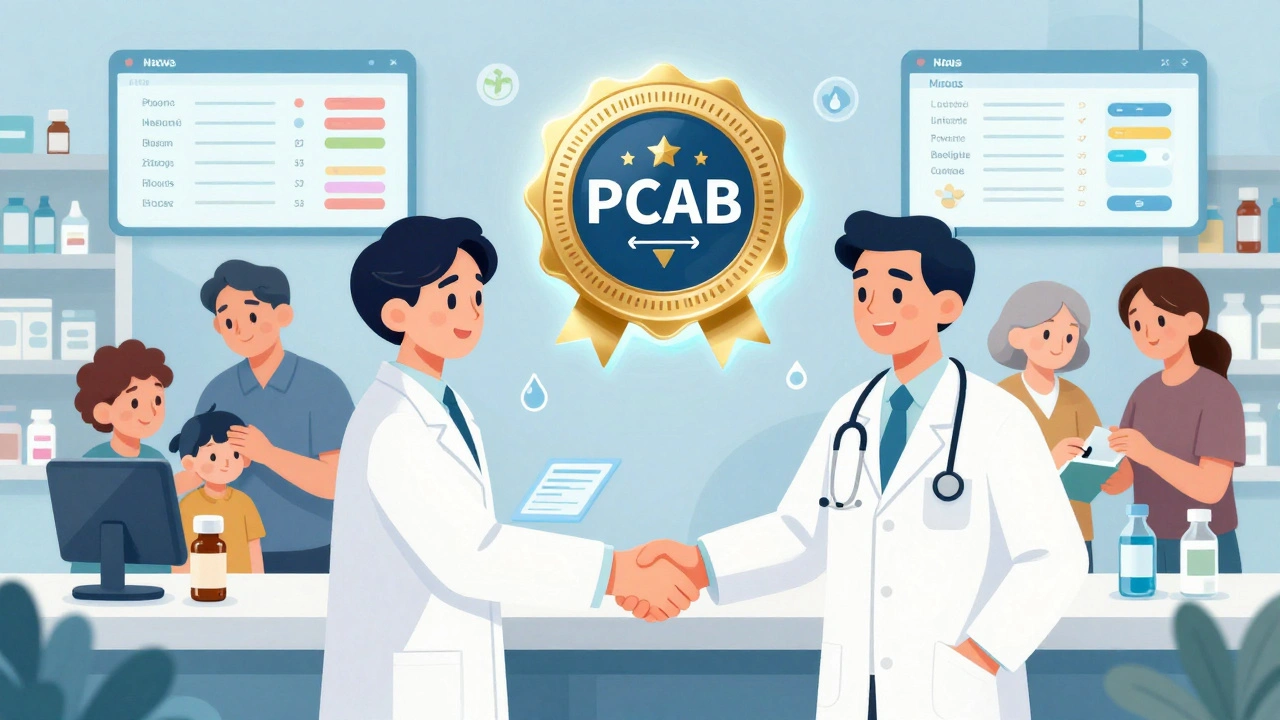
How to Find a Reliable One
Not all compounding pharmacies are equal. Look for accreditation from the Pharmacy Compounding Accreditation Board (PCAB). Only about 1,200 of the 7,500 specialized compounding pharmacies in the U.S. have this seal. PCAB accreditation means they’ve passed strict audits on equipment, training, testing, and recordkeeping. Ask your doctor for recommendations. If they don’t know any, search the PCAB directory online. Avoid pharmacies that advertise “magic pills” or sell hormones without a prescription. Legit compounding pharmacies work only with licensed prescribers and follow FDA rules.What’s Changing in 2025?
The FDA updated its guidance in late 2024 to clarify when compounding is acceptable during drug shortages. It’s now clearer that pharmacists can prepare medications if the commercial version is unavailable and the patient has no other treatment option. Technology is improving too. Digital formulation tools, better stability testing, and automated dispensing systems are reducing errors and extending shelf life by 25-40%. More compounding pharmacies are integrating with electronic health records so your doctor and pharmacist can coordinate safely. The market is growing. It was worth $11.2 billion in 2022 and is projected to hit $15.8 billion by 2027. Why? Because drug shortages aren’t going away. And personalized medicine is here to stay.Final Thoughts: A Necessary Tool, Not a Shortcut
Compounding pharmacies aren’t the answer to every drug shortage. But they’re the only answer for some people. When you’ve tried everything else and still can’t get the medication you need, they step in-not to replace FDA-approved drugs, but to fill the gaps those drugs can’t reach. If you’re struggling with unavailable prescriptions, talk to your doctor. Ask if a compounded version is possible. Don’t assume it’s too complicated or too expensive. For many, it’s the difference between managing a condition and giving up on treatment altogether.Are compounded medications safe?
Yes, when made by accredited pharmacies following USP standards. Compounded medications are custom-made under strict controls for purity, potency, and sterility. However, they don’t undergo the same pre-market testing as FDA-approved drugs, so they should only be used when no suitable alternative exists.
Can I get compounded medications from my regular pharmacy?
Some community pharmacies offer basic compounding, like flavoring liquids or making topical creams. But complex or sterile preparations require specialized labs with clean rooms and trained staff. If your medication needs precision or sterility, you’ll need a dedicated compounding pharmacy.
Why don’t drug companies make these custom versions?
Manufacturers focus on mass production. It’s not profitable to make small batches of a drug for a niche group-say, 500 people who need a 12mg capsule without lactose. Compounding pharmacies fill that gap by making small quantities tailored to individual needs.
How long does it take to get a compounded prescription?
Most take 24 to 72 hours. Sterile compounds (injections, IVs) can take longer due to additional testing. Non-sterile items like creams or flavored liquids are often ready in 24 hours. Always plan ahead-don’t wait until your current supply runs out.
Does insurance cover compounded medications?
Sometimes. About 55% of patients get partial or full coverage if their doctor provides a letter of medical necessity. The rest pay out-of-pocket. Always check with your insurer and pharmacy before starting. Some compounding pharmacies offer payment plans or discounts.
Can compounding pharmacies make any drug I want?
No. They can’t make drugs that require FDA-approved manufacturing, like biologics, vaccines, or complex synthetic compounds. They also can’t make drugs that are unsafe, illegal, or not prescribed by a licensed provider. Compounding is for customization-not for creating unapproved or risky substances.
13 Responses
Ugh I hate when pharmacies just say 'out of stock' like it's some cosmic accident. Like yeah sure, the whole country's running on fumes and no one's making basic meds anymore. Compounding pharmacies? Yeah sure, if you got time and cash to waste. But let's be real-this is just a bandaid on a bullet wound.
Compounding pharmacies represent a vital component of pharmaceutical accessibility. They serve as adaptive solutions within constrained healthcare systems. Their operation adheres to rigorous scientific protocols. This is not alternative medicine. This is precision medicine adapted to individual needs. Respect the process.
Why is the FDA letting this happen? We got a whole country of people on life support because Big Pharma can't make pills anymore. Compounding is a last resort for Americans who got screwed by greedy corporations and lazy regulators. We don't need fancy labs-we need American-made drugs. This is just another way the system fails us.
This is actually kind of beautiful when you think about it. Someone out there is literally crafting your medicine like a custom piece of art just so you can breathe or sleep or not throw up all day. It's not magic, it's human care. And honestly? We need more of that. Not less. Keep going, compounding heroes 💪
It is interesting to consider the regulatory architecture underpinning compounding pharmacies in the United States. The distinction between USP 795 and USP 797 standards for non-sterile and sterile preparations respectively introduces a tiered framework of operational complexity. Furthermore, the absence of pre-market FDA approval for compounded formulations raises legitimate concerns regarding batch-to-batch consistency and long-term pharmacokinetic stability. The proliferation of PCAB-accredited facilities-approximately 16% of the total-suggests a market-driven response to quality assurance demands, yet the economic burden on patients remains structurally unaddressed. One might argue that this system functions as a de facto parallel pharmaceutical supply chain, contingent upon physician advocacy and patient financial resilience.
omg this is so needed i had to get my mom a compounded thyroid med last year and the pharmacy took 3 days but they made it sugar free and in a gummy which she could actually swallow and she cried happy tears lol. i wish more people knew this was a thing. why does insurance make it so hard??
Of course the government lets this happen. They'd rather let some random guy in a lab coat mix up pills than actually fix the supply chain. And don't even get me started on how they charge $300 for a cream that should cost $15. This isn't healthcare-it's a scam. They're milking the sick. And now we're supposed to be grateful?
I live in rural Ohio and my neurologist referred me to a compounding pharmacy 90 miles away. I used to cry in the parking lot before going in because I was scared I wouldn't get my meds. Now? I walk in like I'm walking into my favorite coffee shop. They know my name. They remember my dog's name. They made me a lavender-flavored version of my seizure med. I don't care if it's not FDA-approved-I care that I'm alive. This isn't a loophole. This is love in a lab coat.
While the efficacy and necessity of compounded pharmaceuticals are well-documented in clinical literature, one must not overlook the ethical implications of their commercialization. The absence of standardized pricing mechanisms, coupled with the disproportionate financial burden placed upon vulnerable patient populations, raises profound questions regarding equity in healthcare delivery. Furthermore, the reliance on physician advocacy as a prerequisite for access suggests a systemic failure in regulatory oversight. The growth of this sector, while commendable in its intent, must be accompanied by policy reform to ensure universal accessibility.
India has been doing this for decades. We make custom doses for kids and elderly all the time. Why is America acting like this is some new miracle? We have pharmacists who compound insulin for diabetics in villages with no electricity. You think your 15mg pill is special? We make 2.3mg tablets with no machines. You're late to the party.
I used to work at a compounding pharmacy. We had a 72-year-old woman come in every month for her custom estrogen cream. She said it was the only thing that kept her from crying all day. One time she brought us cookies. We didn't charge her. She didn't have insurance. We just… did it. I wish more people knew how many quiet heroes are behind these prescriptions.
so you're telling me the american healthcare system is so broken that we need wizards with beakers to make people's pills? cool. i guess we'll just call it 'artisanal medicine' and charge $200 for a jar of lotion that should be $12. genius.
my dad got a compounded pain cream after his back surgery and it was a game changer. no more swallowing 5 pills a day. just rub it on and boom. also they gave him a free sample and a handwritten note. i cried. 🥹