
Living with chronic pain isn’t just about hurting every day. It’s about losing sleep, missing work, avoiding friends, and watching life slip away because movement feels like a threat. For 50 million adults in the U.S. alone, pain doesn’t fade after an injury heals-it becomes a constant companion. And the old way of treating it-reaching for pills-isn’t working anymore. The science is clear: chronic pain management needs to be about rebuilding your life, not just numbing the hurt.
Why Pain Doesn’t Go Away-And What That Means for You
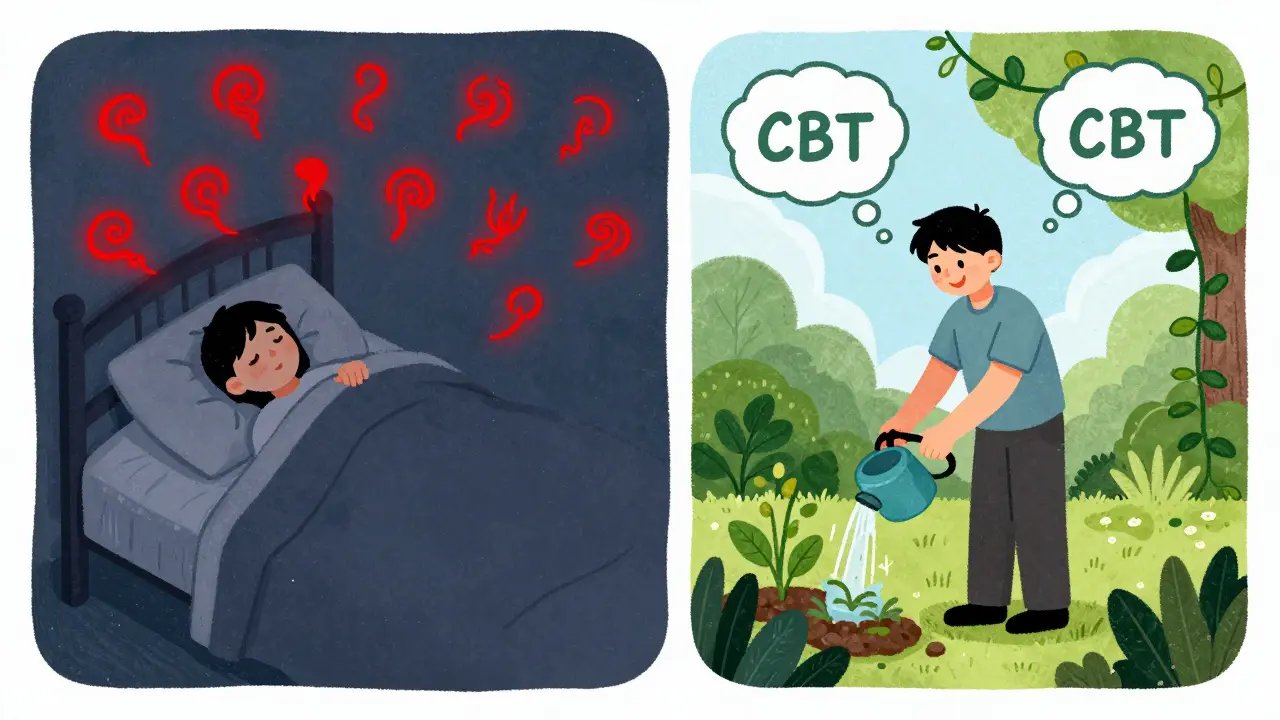
Pain that lasts longer than three months isn’t a sign your body is still healing. It’s a sign your nervous system has gotten stuck. Think of it like a fire alarm that won’t turn off, even when there’s no smoke. Your brain keeps sounding the alarm because it’s learned to expect danger, even when there’s none. That’s why pushing through pain with stronger meds often makes things worse. Opioids might dull the signal at first, but after a few months, they lose their power-and increase your risk of dependence, overdose, and even heightened sensitivity to pain. The 2022 CDC guidelines made this official: opioids should be a last resort. Not because they don’t work, but because their long-term risks far outweigh their benefits. Studies show that after six months, opioid users see only 10-15% more pain relief than before, while their risk of overdose jumps 40% if they’re taking more than 50 morphine milligram equivalents per day. Meanwhile, people who skip opioids and focus on movement, mindset, and support report better function, better sleep, and more control over their lives.The Four Pillars of Real Pain Relief
There’s no magic pill for chronic pain. But there are four proven tools that work together to help you take back your life. These aren’t quick fixes-they’re lifestyle changes backed by decades of research.- Structured Movement: You don’t need to run a marathon. Walking 20 minutes a day, doing water aerobics twice a week, or following a gentle yoga routine three times a week can reduce pain by 15-30% and improve mobility by 20-40% over 6-12 weeks. Programs that mix aerobic exercise, strength training, and motor control (like tai chi or Pilates) are especially powerful. The key? Consistency over intensity. Start slow. Keep going.
- Cognitive Behavioral Therapy (CBT): This isn’t talking about your feelings. It’s learning how your thoughts, emotions, and behaviors feed into your pain. CBT teaches you to spot catastrophic thinking (“I’ll never get better”), replace it with realistic self-talk (“I can manage this flare-up”), and slowly reintroduce activities you’ve avoided. Twelve weekly sessions of 60-90 minutes can cut pain intensity by 25-40%, reduce disability by 30%, and slash pain-related anxiety by half. Veterans using CBT have cut their opioid use by 75% while improving daily function.
- Medications That Actually Help: Forget the idea that pain meds are the only option. Acetaminophen (up to 3,000 mg/day), NSAIDs like naproxen (500-1,000 mg/day), and certain antidepressants like duloxetine (60-120 mg/day) or nerve pain drugs like pregabalin (150-600 mg/day) are first-line treatments. These don’t cure pain, but they can take the edge off enough to let movement and therapy work. Always use them under supervision-these aren’t over-the-counter snacks.
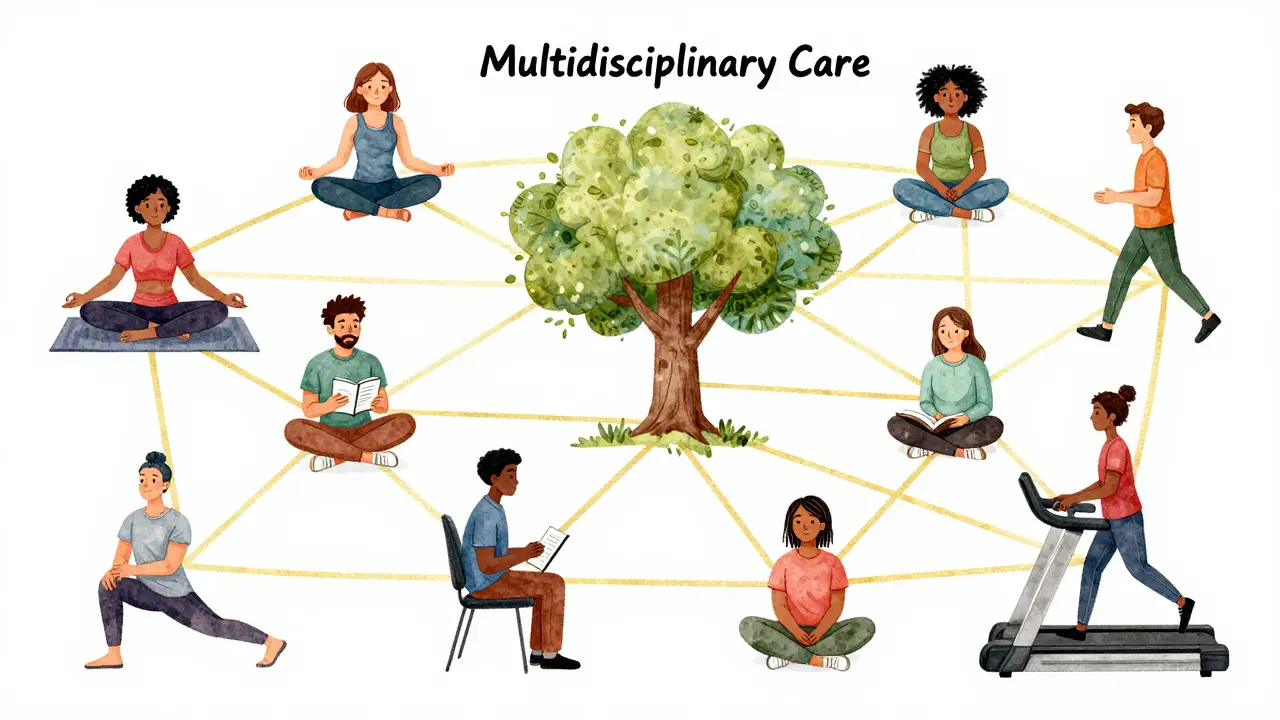
- Multidisciplinary Programs: The gold standard. These intensive, 3-week programs (like the one at Mayo Clinic) bring together physical therapists, psychologists, occupational therapists, and pain specialists. You learn biofeedback, stress management, pacing techniques, and how to rebuild daily routines. Outcomes? 65-75% of participants improve function significantly, and 50-65% reduce or stop opioids entirely. The catch? Only 15-20% of people who need them can access them. Cost, location, and insurance denials block most patients.
What Doesn’t Work (And Why You Should Avoid It)
Not all treatments are created equal. Some are outdated. Some are expensive. Some are downright dangerous.- Long-term opioids: As mentioned, they lose effectiveness fast and increase risk. The CDC warns that for chronic pain, the evidence for long-term benefit is weak. Don’t let fear of pain push you into dependency.
- Acupuncture for all types of pain: It helps with osteoarthritis and some muscle pain-yes. But for nerve pain, fibromyalgia, or back pain from spinal issues? The benefit is minimal. Don’t waste money unless your condition matches the evidence.
- Bed rest: Resting for days because your back hurts? That’s a trap. Inactivity weakens muscles, stiffens joints, and trains your nervous system to fear movement. Movement-even small amounts-is medicine.
- “Miracle cures” and supplements: Turmeric, CBD gummies, magnetic bracelets-none have strong evidence for chronic pain. Some may help a little, but they’re not replacements for proven methods. If a product claims to “cure” pain, walk away.
Barriers You’re Probably Facing-And How to Overcome Them
The biggest problem isn’t your pain. It’s the system.- Your doctor doesn’t know the options: A 2022 study found only 35% of primary care providers had training in non-opioid pain management. If your doctor only offers pills or says “live with it,” ask for a referral to a pain specialist or physical therapist trained in chronic pain. You have a right to better care.
- Insurance won’t cover therapy: CBT, physical therapy, and multidisciplinary programs are often denied-even though CDC and WHO guidelines recommend them. Appeal denials. Cite the 2023 WHO guidelines. Call your state’s insurance commissioner. Many patients succeed after one or two appeals.
- You can’t afford it: Programs cost $15,000-$20,000. But you don’t need the full program. Start with one piece: a weekly CBT app (like PainCare or CBT-i Coach), a 12-week online exercise program, or a local community center’s low-cost yoga class. Small steps build momentum.
- You feel alone: 72% of people in online chronic pain communities say their doctors don’t understand them. Join a group-Reddit’s r/ChronicPain, the American Chronic Pain Association, or a local support circle. You’re not broken. You’re managing a complex condition in a system not built for it.
How to Start Today-Even If You’re Overwhelmed
You don’t need to fix everything at once. Pick one thing. Do it for 10 minutes. Then another day, do it for 15.- Track your pain: Use the Brief Pain Inventory (BPI) or a simple journal. Note what hurts, how bad (1-10), what made it better or worse, and how it affected your day. This helps you spot patterns and shows your provider what’s working.
- Move a little: Walk around the block. Stretch for 5 minutes. Sit in a warm bath. Movement doesn’t have to be exercise-it just has to be consistent.
- Call one person: Ask your doctor for a referral to a physical therapist who specializes in chronic pain. Or find a CBT therapist through Psychology Today’s directory (filter for “chronic pain”).
- Ask for help with insurance: If a treatment was denied, write a short letter: “I’m requesting coverage for CBT/physical therapy as recommended by the WHO and CDC guidelines for chronic pain management.” Send it to your insurer and your employer’s HR department.
What Success Looks Like
Success isn’t pain-free. Success is waking up and choosing what you’ll do today-not what pain will let you do. People in multidisciplinary programs report returning to work, playing with grandchildren, cooking meals, and sleeping through the night. One veteran reduced his opioid dose from 120 MME/day to 30 MME/day while doing more things he loved. Another woman with fibromyalgia started gardening again after 8 weeks of water therapy and CBT. The goal isn’t to erase pain. It’s to stop letting it dictate your life.Can chronic pain ever go away completely?
For most people, chronic pain doesn’t vanish completely-but it can become manageable. The goal isn’t to eliminate pain, but to reduce its impact on your life. Many people learn to live with low-level pain while regaining function, sleep, and joy. Studies show that with the right combination of movement, therapy, and support, up to 75% of participants report meaningful improvement in daily life-even if pain remains.
Is it safe to stop opioids cold turkey?
No. Stopping opioids suddenly can cause dangerous withdrawal symptoms like nausea, anxiety, muscle cramps, and increased pain sensitivity. If you’re on opioids, work with a doctor to taper slowly-usually over weeks or months. Combine tapering with non-opioid treatments like CBT or physical therapy to manage withdrawal and build new coping skills. The CDC recommends monthly check-ins during any opioid reduction plan.
What if my doctor won’t refer me to a specialist?
You don’t need a referral for everything. In the U.S., you can often self-refer to physical therapists and many psychologists. Check your insurance plan. If your doctor refuses, ask for a written reason. Then contact your state’s medical board or patient advocacy group. You have the right to seek second opinions. The CDC and WHO guidelines are public-print them out and bring them to your next appointment.
Are there free or low-cost options for CBT or physical therapy?
Yes. Many community health centers, universities, and nonprofits offer sliding-scale therapy. Apps like PainCare, CBT-i Coach, and This Way Up offer structured CBT programs for under $10/month. Local YMCAs, senior centers, and arthritis foundations often run low-cost exercise classes designed for chronic pain. The VA offers free programs to veterans. Even 30 minutes a week of guided movement or mindfulness can make a difference.
Why do some people get better and others don’t?
It’s not about how bad the pain is-it’s about how much support you have and how consistent you are with treatment. People who stick with movement, therapy, and social connection improve more than those who wait for a miracle cure. Also, access matters. People in rural areas, low-income communities, or minority groups often face bigger barriers to care. If you’re struggling, it’s not your fault. It’s the system. Keep pushing for better options. Even small steps add up.
12 Responses
i just started walking 15 mins a day after reading this and holy shit my lower back feels like it’s not gonna kill me today
no pills, no magic, just moving. i didn’t think it’d do anything but wow.
still sore, still tired, but i slept through the night. weird.
thanks for writing this like a human and not a textbook.
from india here 🙏
we don’t have access to most of these programs but i started yoga with a free app and it’s changed everything
no more crying in the shower over pain
thank you for sharing
so let me get this straight
the medical system spent 30 years telling us to pop pills like candy
and now they’re like ‘oh btw, maybe move your body and talk to someone?’
yeah, genius. took a whole decade of people dying to figure that out
and still, insurance won’t cover CBT unless you’re a veteran or rich
the system is broken but at least we’ve got this info now
so… who’s gonna fix it? or do we just keep surviving on reddit threads?
i’ve been doing the water aerobics twice a week. it’s the only thing that lets me move without screaming
my therapist said i’m ‘making progress’
i don’t know what that means but my knees don’t feel like broken glass today
so i’ll take it
you guys are doing it right. i was stuck on 80mg of oxycodone for 4 years
then i found a local multidisciplinary program through a VA referral
3 weeks. 12 hours a day. felt like hell
but now i cook dinner for my grandkids, sleep 6 hours straight, and i didn’t touch a pill in 11 months
it’s not easy but it’s possible
start small. walk. journal. call one person. you’ve got this
the part about insurance denying CBT hit me hard
i got denied twice and cried for an hour
then i wrote a letter citing the WHO guidelines and sent it to my boss
they covered it on the third try
it’s not fair but it’s possible
don’t give up
you’re not alone
acupuncture helped my knee but did nothing for my fibro
so i stopped wasting money
and started walking with my dog every morning
he doesn’t care if i’m slow
he just wants to go
so we go
Respected colleagues, I must express my profound gratitude for this meticulously researched and compassionately articulated exposition on chronic pain management.
It is both a scholarly triumph and a lifeline for the suffering masses.
May this wisdom permeate the corridors of policy and the hallowed halls of medical education.
Let us not forget: the body remembers, but the mind can relearn.
With deepest respect and unwavering hope,
Yours in healing,
Shamsheer Shaikh
the ‘move a little’ advice is the most powerful thing here
i thought i had to be a gym rat to get better
but i just started stretching on the couch for 5 minutes after coffee
now i do it before bed too
no pressure, no goals, just movement
it’s weird how small things add up
how do you even find a therapist who gets chronic pain?
i looked up ‘CBT for chronic pain’ and got 12 results
only one took insurance
the rest were $200/hour
and i’m not rich
you people are so naive
you think walking and yoga will fix this?
you’re just delaying the inevitable
your body is breaking down and you’re pretending it’s a mindset issue
you’re being manipulated by wellness influencers and lazy doctors
the truth? you’re going to die in pain
and no amount of ‘small steps’ changes that
in my village in Nigeria, we don’t have clinics or apps or therapists
but we have family. we have stories. we have elders who say ‘pain is a visitor, not a tenant’
we sit together. we talk. we move slow. we laugh when we can
maybe the real medicine isn’t in the program
maybe it’s in being seen
you’re not broken
you’re just carrying a heavy world
and you’re still here
that’s strength
not the absence of pain
but the refusal to let it erase you