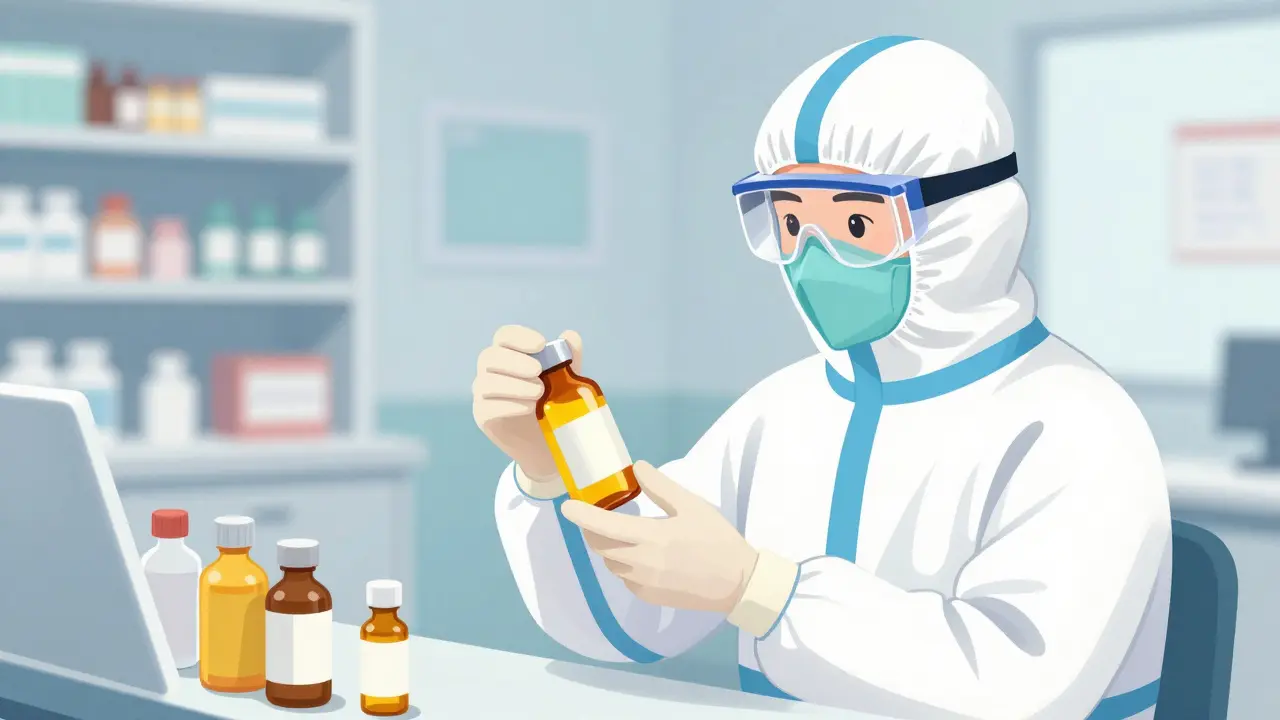
Handling cancer drugs isn't like managing a standard prescription. These medications are designed to kill rapidly dividing cells, which makes them incredibly effective against tumors but dangerous to the people administering them. From nurses and pharmacists to family caregivers, the risk of accidental exposure can lead to long-term health issues. Because of this, antineoplastic therapy requires a strict set of safety protocols to ensure the drug reaches the patient without harming anyone else in the process.
The Modern Framework of Chemotherapy Safety
For decades, safety was based on general caution, but today we have a highly structured system. The gold standard is currently set by the ASCO/ONS American Society of Clinical Oncology and Oncology Nursing Society guidelines. In 2024, these standards shifted their focus from just "chemotherapy" to "antineoplastic therapy." Why the change? Because modern cancer care now includes targeted therapies and immunotherapies that don't always behave like traditional chemo but still pose significant risks if handled incorrectly.
These guidelines aren't static; they are updated every few years to keep up with new drugs. For instance, the latest revisions focus heavily on preventing patient identification errors and managing severe reactions like cytokine release syndrome, which have become more common with newer immunotherapy drugs.
Essential Gear for Hazardous Drug Handling
You cannot simply wear a pair of standard latex gloves and call it a day. The USP <800> United States Pharmacopeia standard for handling hazardous drugs mandates specific barriers to prevent the drug from soaking through to the skin. Standard gloves are often permeable; therefore, staff must use chemotherapy-tested double gloves. For high-risk agents like carmustine or thiotepa, double gloving is non-negotiable because these chemicals can seep through a single layer of protection in minutes.
Beyond gloves, a full safety kit typically includes:
- Impermeable Gowns: These prevent spills from soaking through to the skin or street clothes.
- Eye Protection: Safety goggles or face shields are required whenever there is a risk of splashing.
- Respiratory Protection: Masks are used if aerosols are created or during the cleanup of a major spill.
One hard rule in oncology is that all personal protective equipment (PPE) is considered contaminated the moment it touches the drug. Studies have shown that chemicals easily transfer from the outer glove to the skin or nearby surfaces, which is why PPE must be discarded immediately after the task is finished.
The Four Pillars of Administration Safety
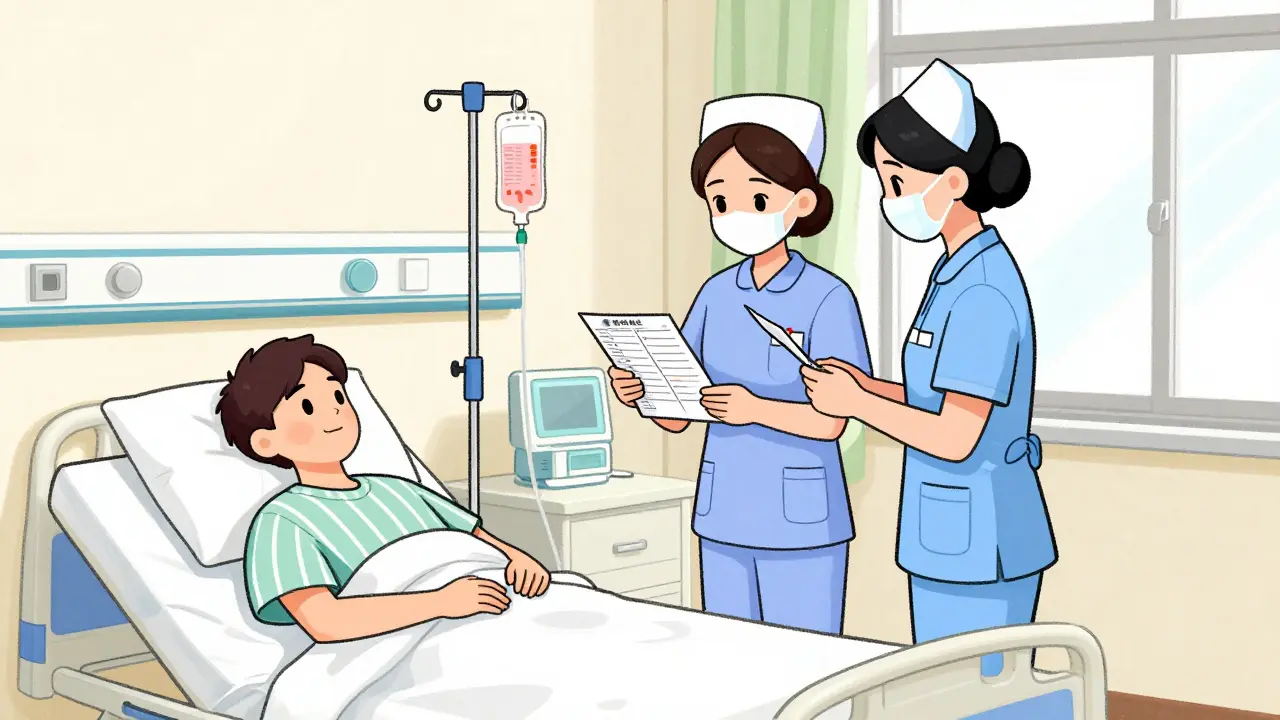
To keep errors near zero, the administration process is broken down into four specific domains. This ensures that no single person's mistake leads to a patient receiving the wrong dose.
| Domain | Core Focus | Critical Requirement |
|---|---|---|
| Safe Environment | Facility Design | Engineering controls like CSTDs Closed-System Transfer Devices to trap vapors. |
| Patient Consent | Education | Documented drug names, doses, and clear therapeutic goals. |
| Ordering & Prep | Verification | Multiple checks including a mandatory 4th verification at the bedside. |
| Monitoring | Post-Admin Care | Immediate access to antidotes and protocols for cytokine release syndrome. |
The most critical recent addition is the "fourth verification." Now, two licensed clinicians must verify the patient's identity and the medication right at the bedside. This step is designed to tackle the 18% of adverse events that stem from simple identification errors. While some nurses argue this adds 10 minutes to an already packed schedule, the data shows it significantly reduces "near-miss" errors.
Managing Risks in the Home Setting
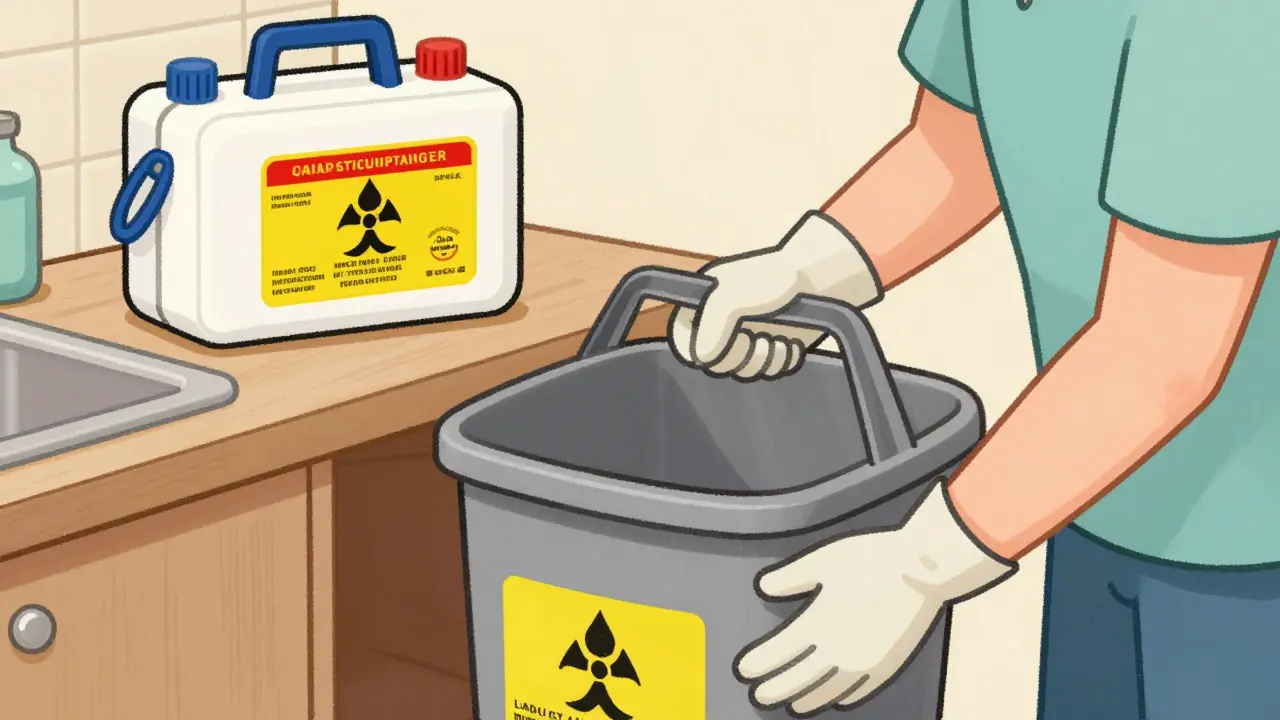
Safety isn't just for hospitals. More patients are receiving chemotherapy at home, but this is where the system often breaks down. Many caregivers feel overwhelmed, especially when dealing with bodily fluids. Because chemotherapy remains active in the body for a while, sweat, urine, and vomit can be hazardous for 48 to 72 hours after treatment.
If you are managing care at home, follow these concrete rules:
- Store Drugs Securely: Keep all medications in child-proof locations and away from food prep areas.
- Use Spill Kits: Never try to wipe up a chemo spill with a paper towel. Use a dedicated chemotherapy spill kit.
- Handle Waste Carefully: Use specific hazardous waste bins for sharps and contaminated linens.
- Fluid Caution: Use gloves when helping a patient with toileting for at least three days post-infusion.
Using specialized toolkits developed for home safety has been shown to reduce caregiver anxiety by over 40%, proving that proper education is just as important as the equipment itself.
The Cost of Compliance and Industry Trends
Implementing these standards isn't cheap. For a medium-sized practice, the initial setup for facility modifications and staff training can range from $30,000 to $47,000. There are also ongoing costs for specialized PPE and hazardous waste disposal. However, the financial risk of not complying is higher. OSHA has ramped up enforcement, with penalties averaging over $14,000 per violation for hazardous drug handling failures.
Looking ahead, the industry is moving toward AI-powered verification. Some NCI-designated cancer centers are piloting systems that use technology to cross-check dosages and patient IDs, potentially removing the manual burden from nurses while increasing accuracy. We are also seeing a push for national certification for anyone handling these drugs, expected to roll out by 2026.
Why is double-gloving necessary for some chemo drugs?
Certain drugs, such as carmustine and thiotepa, are highly permeable. They can soak through a single layer of standard nitrile or latex gloves very quickly. Double-gloving creates a secondary barrier that significantly reduces the risk of the drug absorbing into the skin.
What is Cytokine Release Syndrome (CRS) and why is it in the safety standards?
CRS is a systemic inflammatory response that can occur during immunotherapy. Because cases have increased by 300% in recent years, safety standards now require hospitals to have immediate, ready-access protocols and antidotes to treat CRS, as it can be fatal if not managed quickly.
How long are bodily fluids hazardous after chemotherapy?
Generally, bodily fluids are considered hazardous for 48 to 72 hours after the administration of chemotherapy. During this window, caregivers should use gloves and follow specific disposal protocols for urine, feces, and vomit.
What are Closed-System Transfer Devices (CSTDs)?
CSTDs are engineering controls that prevent the escape of hazardous drug vapors or liquids into the environment during the transfer of the drug from the vial to the patient's IV bag. They protect the healthcare worker from inhaling toxic fumes.
What is the 'fourth verification' step?
The fourth verification is a mandatory bedside check where two licensed clinicians verify the patient's identity and the drug dose in the patient's presence. This is the final safety net to prevent medication errors before the drug is infused.
15 Responses
The implementation of Closed-System Transfer Devices (CSTDs) is truly a cornerstone of modern occupational safety in oncology. Many practitioners find that while the initial learning curve is steep, the reduction in volatile organic compound (VOC) exposure is statistically significant. It is also worth noting that the transition to antineoplastic terminology reflects the broader shift toward precision medicine, acknowledging that targeted therapies carry distinct biological risks compared to traditional cytotoxic agents.
probly just a way to sell more expensive gloves and fancy plastic tubes lol. safety guidelines are just a laungage for control and making sure we all pay more for the same stuff. why do we even need a 4th check if the first 3 are suposed to work... makes no sense
Keep pushing for those safety standards! It's all about protecting the people who take care of us. Let's get everyone up to speed on these protocols so no one gets hurt!
cstd is a game changer for staff safety
Typical. They're just adding more 'protocols' to hide the fact that these new immunotherapies are basically experimental. Now they want AI-powered verification? That's just a fancy way to say they're handing over medical decisions to a black-box algorithm that some corporation controls. Wake up people, this isn't about safety, it's about tracking every single move the nurses make and automating them out of a job while the drugs get more dangerous!
Oh sure, because adding another ten minutes of bureaucracy to a nurse's shift is exactly what the healthcare system needs. I'm sure the patients love waiting around while two people stare at a label for the fourth time. Truly a peak efficiency move here!
It's so heartening to see the focus on home caregivers. So many families are just thrust into this without any real training, and knowing how to handle fluids for those first few days can really take the edge off the anxiety. We should really advocate for more free home-safety kits provided by the hospitals.
I can't even imagine how scary it is for a spouse to realize the laundry or the bathroom is actually hazardous. It's a lot to process when you're already dealing with a diagnosis.
this whole thing is a joke because nobody follows the rules anyway. i bet half these clinics just pretend to use the double gloves when the inspector is around. typical american corporate fake safety culture where the profit is more important than the person’s skin and the rules are just suggestions for the poor staff
The emphasis on the 48 to 72-hour window for hazardous bodily fluids is an essential precaution for the well-being of the family unit. It is imperative that caregivers are provided with clear, written instructions to ensure the safety of the domestic environment.
Wait, $47,000 just to set up a safe room? That's absolutely wild. I mean, the level of drama in the billing department must be insane when they try to justify these costs to the board. Give me a break, it's just some plastic and a few gowns!
I wonder if the AI verification will eventually include real-time biometric scanning of the patient to completely eliminate ID errors. It would be fascinating to see how that integrates with existing EHR systems. Still, the human element of the 'fourth check' provides a psychological layer of security that a machine simply cannot replicate.
Glad to see the focus on training. Proper knowledge is the best tool we have!
It's great that they're updating these guidelines for the new types of drugs. It shows the field is evolving and trying to keep everyone safe, which is the most important thing in the end.
The cost of compliance is a joke because the government just wants to funnel money into the pockets of the PPE manufacturers. These 'safety' updates are timed perfectly with the expiration of old patents. And don't even get me started on the AI verification-it's just a surveillance tool to track nurse movement and optimize labor for the corporations. They want to replace the human touch with a sensor so they can cut staff and call it 'safety improvement.' It's all a coordinated effort to strip away professional autonomy while pretending to protect the patient. I bet the 2026 certification is just another way to tax the workers through mandatory fees. The whole system is rigged to profit from fear and bureaucracy. I've seen how these things go and it always ends with more control and less actual care. Just a massive scam wrapped in medical jargon to keep us compliant.