More than cancer prevention is about early detection-it’s about stopping cancer before it starts. The truth is, we have more power over our cancer risk than most people realize. According to the World Health Organization, 30-40% of all cancers could be avoided simply by changing everyday habits. That’s not a guess. It’s based on decades of data from millions of people across the globe. You don’t need a miracle cure. You need consistent, realistic changes in how you live.
What You Do Every Day Matters More Than You Think
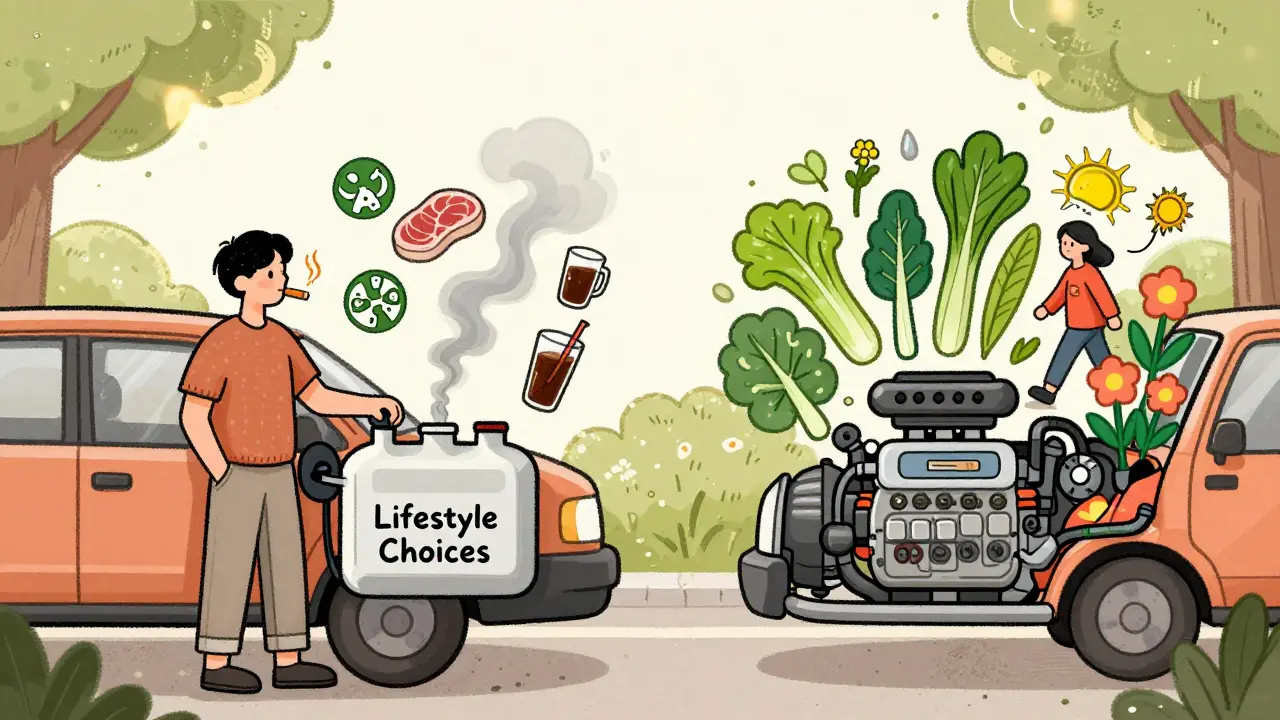
Think of your body like a car. If you keep putting bad fuel in it, eventually the engine breaks down. Cancer doesn’t appear out of nowhere. It builds over years from the choices you make: what you eat, how much you move, whether you smoke, how you handle stress. The science is clear: small, daily actions add up.
The American Cancer Society’s latest guidelines (updated in 2020) spell out exactly what works. It’s not about perfection. It’s about progress. For example, if you stick to just three of their core recommendations-maintaining a healthy weight, being physically active, and eating mostly plant-based foods-you can cut your cancer risk by 18-21% within five years. That’s not theoretical. It’s what real people achieved in long-term studies from Harvard and other top institutions.
Tobacco: The Biggest Single Risk
If you quit smoking today, you’re already reducing your cancer risk. Smoking doesn’t just cause lung cancer. It’s linked to at least 12 types of cancer, including throat, bladder, pancreas, and cervix. Cancer Research UK reports that smoking causes 78% of all lung cancer cases and contributes to 15-20% of all cancer deaths worldwide. Even secondhand smoke raises your risk. There’s no safe level. Quitting at any age helps, but the earlier you quit, the better. Within 10 years of quitting, your risk of lung cancer drops by half.
Weight and Movement: Two Sides of the Same Coin
Carrying extra weight isn’t just a concern for your heart or diabetes-it directly fuels cancer growth. The American Institute for Cancer Research found that for every 5-point increase in BMI above 25, your risk rises: 12% for postmenopausal breast cancer, 10% for kidney cancer, and 8% for colorectal cancer. Fat tissue doesn’t just sit there. It produces hormones and inflammatory signals that help tumors grow.
Exercise isn’t optional. It’s medicine. The recommendation? At least 150 minutes of brisk walking each week-or 75 minutes of running. That’s about 30 minutes, five days a week. Studies from the Mayo Clinic show this cuts colon cancer risk by 24% and breast cancer risk by 12-20%. You don’t need a gym. Walking the dog, gardening, taking the stairs-all count. The key is consistency. People who move regularly have lower levels of insulin and inflammation, two major drivers of cancer.
What’s on Your Plate
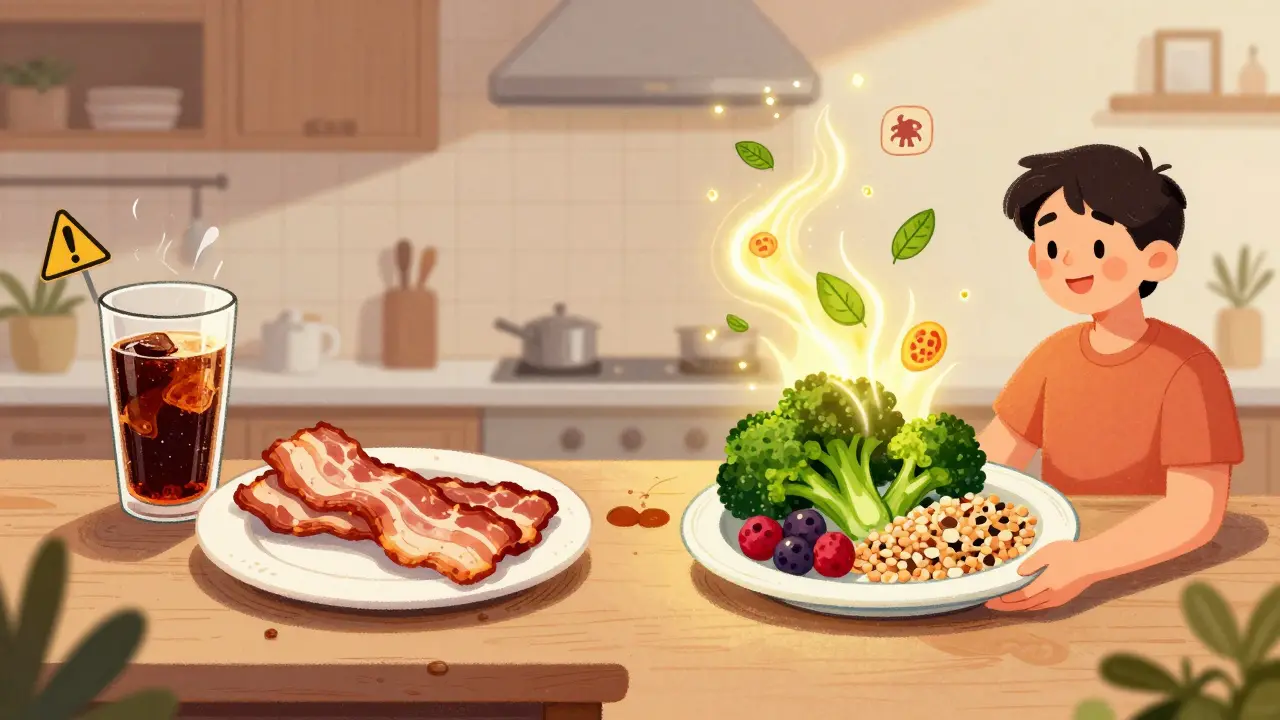
Eating more vegetables and fruits isn’t just for vitamins. It’s a direct shield. The ACS recommends 2.5-3 cups of vegetables and 1.5-2 cups of fruit daily. Cruciferous veggies like broccoli, cauliflower, and kale stand out. A 2024 meta-analysis from UC Davis Health found people who ate them regularly had 15-20% lower risk of prostate cancer. Why? They contain compounds like sulforaphane that help your body detoxify harmful substances and shut down early cancer cells.
Red and processed meats? Limit them. The World Cancer Research Fund says processed meats like bacon, sausage, and deli meats are Group 1 carcinogens-meaning there’s no safe amount. Even small amounts raise colorectal cancer risk. The ACS allows up to 18 ounces a week, but many experts say zero is better. Swap out processed meats for beans, lentils, tofu, or fish. Whole grains matter too. Choose brown rice over white, whole wheat bread over white. Fiber helps move waste through your colon faster, reducing exposure to potential toxins.
Alcohol: The Hidden Threat
Many people think alcohol is fine in moderation. But it’s a known carcinogen. Each additional drink per day increases breast cancer risk by 7-12%. For esophageal cancer, the risk jumps 20-30% with every drink. Alcohol damages DNA and raises estrogen levels, which fuels hormone-sensitive cancers. The guidelines are clear: no more than one drink a day for women (14g ethanol), two for men (28g). That’s one 12-oz beer, 5 oz of wine, or 1.5 oz of spirits. If you don’t drink, don’t start. If you do, cut back.
Sun Protection Isn’t Just for Sunburn
UV radiation from the sun causes skin cancer-the most common cancer in the U.S. and the UK. But it’s also one of the most preventable. Using SPF 30+ broad-spectrum sunscreen every two hours cuts melanoma risk by 50%. Don’t wait until summer. UV rays are strong even on cloudy days. Avoid direct sun between 10 a.m. and 4 p.m., when 80% of UV exposure happens. Wear hats, sunglasses, and UV-blocking clothing. Check your skin monthly. If a mole changes shape, color, or size, get it checked.
What Is Chemoprevention? And Is It Right for You?
While lifestyle changes work for most people, some face higher risk due to genetics, family history, or past cancer. For them, chemoprevention-using medications or supplements to block cancer before it starts-can be an option. It’s not for everyone. It’s targeted.
For example, tamoxifen and raloxifene reduce breast cancer risk by up to 50% in high-risk women. Aspirin has been shown to lower colorectal cancer risk by 30-40% over 10 years in people with a family history. But these aren’t over-the-counter fixes. They come with side effects. Tamoxifen can cause blood clots. Aspirin can cause stomach bleeding. These decisions require careful discussion with a doctor, based on your personal risk profile, not a general recommendation.
The NIH is currently funding new studies to make chemoprevention smarter. The NCI-MATCH trial is testing whether genetic testing can guide who benefits most from specific drugs. Results are expected by late 2025. Until then, lifestyle remains the safest, most effective tool for nearly everyone.
Why Most People Struggle-and How to Succeed Anyway
Knowing what to do isn’t the problem. Doing it is. A 2023 UCLA survey found 68% of people struggle to stay active, and 52% can’t hit their veggie targets. The biggest excuse? Time. But the solution isn’t more time-it’s better systems.
UC Davis Health’s ‘Cultivating Health’ program paired activity tracking with weekly group check-ins. Participants hit 85% of their goals, compared to just 45% in the control group. Why? Social support works. Accountability works. Small wins build momentum.
The American Cancer Society’s ‘3-2-1’ rule is simple: 30 minutes of movement daily, 2+ vegetable servings at lunch or dinner, and 1 hour less screen time. Programs using this approach saw 62% adoption. But here’s the secret: people who set specific goals-like ‘I’ll walk after dinner Monday, Wednesday, Friday’-had an 87% success rate. Those with vague goals like ‘I’ll exercise more’? Only 43% stuck with it.
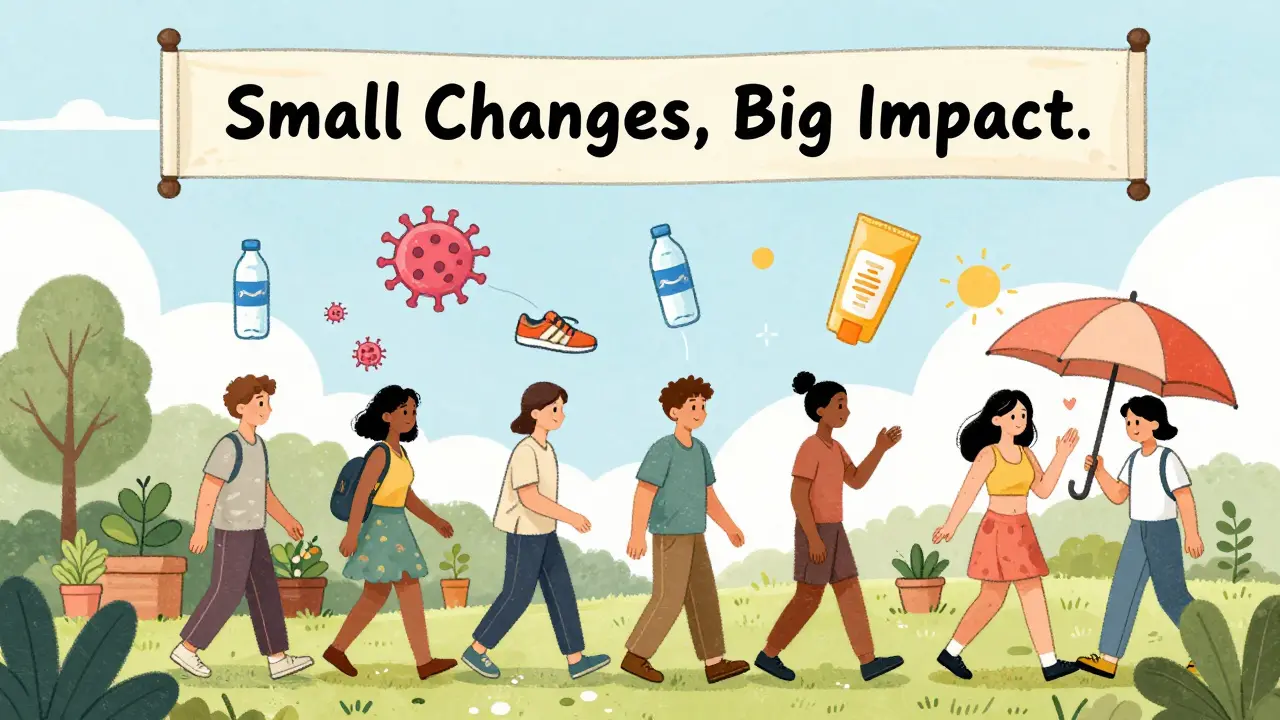
Dr. Alpa Patel from the ACS says it best: ‘Small, sustainable changes beat drastic overhauls.’ Start with one thing. Maybe it’s swapping soda for water. Or walking after dinner. Once that sticks, add another. Most people who stick with one change for 12 months keep it for life.
The Big Picture: Progress, Not Perfection
It’s tempting to think you need to overhaul your life overnight. But cancer prevention isn’t a sprint. It’s a lifelong rhythm. You don’t have to be perfect. You just have to be consistent.
Even 5-10% weight loss can reduce inflammation by 25-30% in just six months. That’s enough to slow cancer growth. Even cutting alcohol from five drinks a week to two makes a measurable difference. Even replacing one processed meat meal a week with beans lowers your risk.
And yes, genetics play a role. About 5-10% of cancers come from inherited mutations. Environmental toxins account for another 15-20%. But that still leaves 70-80% of risk in your hands. That’s not luck. That’s control.
Where We’re Headed
The future of cancer prevention is personalized. The NIH is investing $287 million over the next five years to study how digital tools-like apps that track diet, activity, and sleep-can help people stick with healthy habits. By 2025, oncologists will be trained to talk about lifestyle as part of routine care. The American Society of Clinical Oncology’s ‘Prevention First’ initiative is training 5,000 providers to do just that.
But none of this changes the core truth: the best cancer prevention tool you have is already in your hands. It’s not a pill. It’s not a gadget. It’s your daily choices. What you eat. How you move. Whether you smoke. Whether you protect your skin. Whether you choose to make small changes, again and again.
Start today. Not tomorrow. Not next week. Today. One step. One meal. One walk. That’s how cancer prevention really works.
Can lifestyle changes really prevent cancer, or is it just hype?
Yes, lifestyle changes can prevent a significant portion of cancers. According to the World Health Organization, 30-40% of all cancer cases are preventable through diet, physical activity, and maintaining a healthy weight. Studies show that following even a few key recommendations-like avoiding tobacco, staying active, and eating mostly plant-based foods-can reduce cancer risk by 18-21% within five years. This isn’t speculation. It’s based on data from millions of people tracked over decades.
Is chemoprevention something I should consider?
Chemoprevention-using medications like tamoxifen or aspirin to lower cancer risk-is only recommended for people with very high risk, such as those with strong family histories or genetic mutations. It’s not for the general public. These drugs have side effects, and their benefits are only clear in specific high-risk groups. Always talk to your doctor before starting any preventive medication. For most people, lifestyle changes remain the safest and most effective option.
How much physical activity do I really need to reduce cancer risk?
The standard recommendation is 150 minutes of moderate-intensity exercise per week-like brisk walking at 3-4 mph-or 75 minutes of vigorous activity, like running. This level of activity reduces colon cancer risk by 24% and breast cancer risk by 12-20%. You don’t need to do it all at once. Three 10-minute walks during lunch breaks count. The key is consistency. Even small amounts of movement are better than none.
Does alcohol really cause cancer, even in small amounts?
Yes. Alcohol is a known carcinogen. Each additional drink per day increases breast cancer risk by 7-12% and esophageal cancer risk by 20-30%. There’s no safe threshold. Even one drink a day raises risk. The guidelines say no more than one drink daily for women and two for men. But if you don’t drink, don’t start. Cutting back from five drinks a week to one or two still lowers your risk.
Why do so few people follow cancer prevention guidelines?
The biggest barriers are time, habit, and lack of support. A 2023 UCLA survey found 74% of people cited ‘time constraints’ as the main reason they don’t exercise regularly. Another 52% struggled to eat enough vegetables. But programs that offer simple frameworks-like the ACS’s ‘3-2-1’ rule-and social accountability see much higher success. Setting specific goals, like ‘I’ll walk after dinner on Mondays and Wednesdays,’ increases adherence from 43% to 87%.
11 Responses
Cancer prevention isn't magic. It's just not letting your body rot from the inside out. Eat real food. Move. Don't smoke. Stop pretending you're too busy. You're not. You're just lazy. And if you think a multivitamin fixes your 12-pack-a-week habit, you're not just wrong-you're endangering everyone around you.
I appreciate how this breaks down the science without being overwhelming. I started walking after dinner three times a week last month, and honestly, I didn’t expect to stick with it. But it’s become part of my routine. Small changes really do add up.
I grew up in a household where vegetables were an afterthought. Then I read about sulforaphane in broccoli and decided to try roasting it with garlic and olive oil. Now it’s my favorite thing to eat. It’s funny-what you think is a sacrifice turns into something you actually crave. I’ve cut out processed meats entirely, and I don’t miss them. It’s not about deprivation. It’s about discovery.
I’ve read this entire thing. The data is cherry-picked. The WHO says 30-40%? That’s a range. Why not say 35%? And where’s the control group for people who didn’t change anything? Also, ‘150 minutes a week’-that’s assuming you have a 40-hour workweek and no kids. Most people are working two jobs. This feels like a luxury pamphlet.
I would like to express my profound appreciation for the clarity and evidence-based rigor of this post. The integration of peer-reviewed findings from Harvard, Mayo Clinic, and the American Cancer Society provides a foundation that is both scientifically robust and practically actionable. It is rare to encounter such a well-structured synthesis of preventive oncology principles in a public forum. Thank you for elevating the discourse.
You know what they don’t tell you? That 70% of ‘preventable’ cancers are from environmental toxins we have ZERO control over. Glyphosate in your bread. PFAS in your water. Microplastics in your seafood. The government and Big Pharma are pushing this ‘lifestyle’ nonsense because they don’t want you suing them. Quit smoking? Fine. But your ‘plant-based diet’ won’t save you from the chemtrails.
Oh wow, so now I’m supposed to feel guilty because I had a glass of wine with dinner? And I guess my 20-year-old skin cancer scare was just ‘bad luck’? Let me guess-next you’ll tell me my thyroid cancer was caused by not eating enough kale. Please. The real cancer risk is believing everything you read on Reddit.
I used to think I had to be perfect to make a difference. Then I started doing one thing: I swapped soda for sparkling water. Just that. One change. Six months later, I started walking with my neighbor. Then we started cooking together. Now we have a weekly veggie challenge. It’s not about the numbers. It’s about the people. You don’t have to do it alone. Start small. I’ll walk with you.
I’ve been following the 3-2-1 rule for 8 months now. 30 minutes of movement daily ✅ 2+ vegetable servings ✅ 1 hour less screen time ✅ I didn’t lose weight. I didn’t ‘beat cancer.’ But I sleep better. I’m less anxious. My blood pressure dropped. And I finally understand why ‘consistency beats perfection.’ It’s not about the outcome. It’s about showing up. I’m proud of that.
The data presented here is statistically noisy and lacks proper confounder adjustment. BMI is a crude proxy for metabolic health. The 18-21% risk reduction cited is derived from observational studies with high residual confounding. Moreover, the chemoprevention data omits the J-curve effect of aspirin use in low-risk populations. Without multivariate regression analysis or propensity score matching, these claims are epistemologically unsound.
I know someone who quit smoking, ate kale, and still got pancreatic cancer. So what’s the point? We’re all just waiting for our number to be called. The real cancer prevention is avoiding doctors. They’re the ones who give you scans that turn into biopsies that turn into bills. Why not just… live? And enjoy your wine?