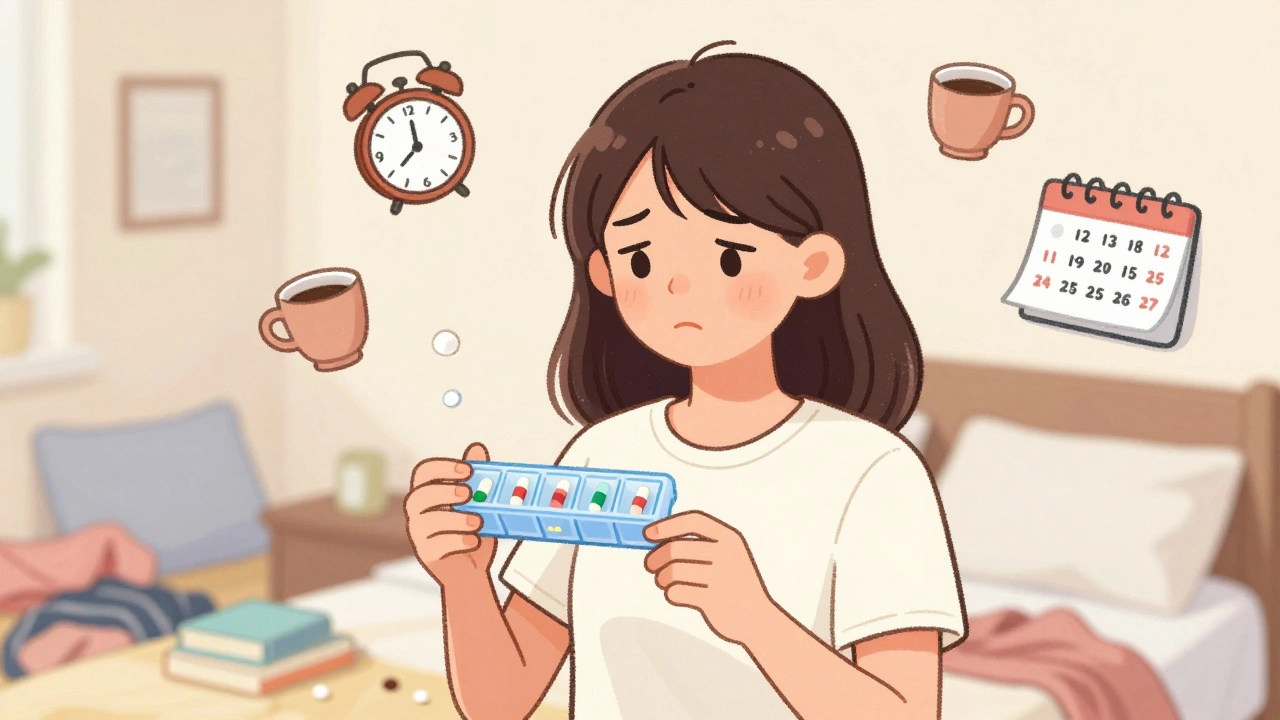
When it comes to preventing pregnancy, birth control pills are one of the most popular choices in the UK and the US. But knowing how well they work, what side effects to watch for, and which medications can mess with them makes all the difference. Many women start the pill thinking it’s foolproof-until they hear a story about someone getting pregnant despite taking it daily. The truth? It’s not the pill’s fault. It’s how it’s used.
How Effective Are Birth Control Pills?
Birth control pills come in two types: combined pills (estrogen + progestin) and progestin-only pills (the "mini-pill"). Both are designed to stop ovulation, thicken cervical mucus, and thin the uterine lining. But their real-world effectiveness depends almost entirely on one thing: consistency.
If you take the pill at the same time every single day, without missing a dose, it’s 99% effective. That means fewer than 1 in 100 women will get pregnant in a year. Sounds perfect, right? But here’s the catch: most people don’t take it perfectly. Life happens. You forget. You travel. You get sick. You’re late to work and skip your morning pill.
That’s where typical use comes in. In real life, about 7 out of 100 women using the pill will get pregnant each year. That’s a 93% effectiveness rate. Compare that to an IUD or implant-both over 99% effective even with imperfect use-and you start to see why doctors often recommend those for younger women or anyone who struggles with daily routines.
Studies show women under 21 are nearly twice as likely to have an unintended pregnancy on the pill than those over 21. Why? It’s not about intelligence or motivation. It’s about routine. Teens and young adults are more likely to have irregular schedules, forgetful habits, or feel embarrassed asking for refills. The pill demands discipline. If you’re not built for that, another method might suit you better.
What Are the Common Side Effects?
Most women tolerate birth control pills well, but side effects are common-especially in the first 2 to 3 months. Your body is adjusting to synthetic hormones, and that can cause a few uncomfortable changes.
Here’s what you might notice:
- Nausea (usually goes away after a few weeks)
- Breast tenderness
- Mild headaches or dizziness
- Spotting between periods (common in the first few cycles)
- Changes in mood or libido
- Weight gain (often water retention, not fat)
These side effects usually fade as your body adapts. If they stick around or get worse, talk to your doctor. You might need a different formulation. Not all pills are the same. Some contain levonorgestrel, others drospirenone or norethindrone. The estrogen dose can vary from 20 to 35 micrograms. Lower doses often mean fewer side effects.
One big benefit many women don’t expect? The pill can help with acne, heavy periods, painful cramps, and even endometriosis. Some brands, like Yaz or Ortho Tri-Cyclen, are FDA-approved specifically for treating acne. If you’ve struggled with breakouts or irregular cycles, the pill might do more than just prevent pregnancy-it might improve your skin and quality of life.
When Do Birth Control Pills Become Effective?
If you’re starting the pill for the first time, don’t assume you’re protected right away. The pill takes time to build up in your system.
For combined pills, you need to take them daily for 7 days before you’re fully protected. That means if you start on a Monday, you should use condoms or avoid sex until the next Monday. Some doctors recommend waiting a full cycle (28 days) if you’re starting mid-cycle.
For the mini-pill, timing is even tighter. You have to take it within the same 3-hour window every day. If you’re more than 3 hours late, you’re no longer protected. That’s why many women find the mini-pill harder to stick with. It’s not just "take it daily"-it’s "take it at 8:03 a.m. every day, no exceptions."
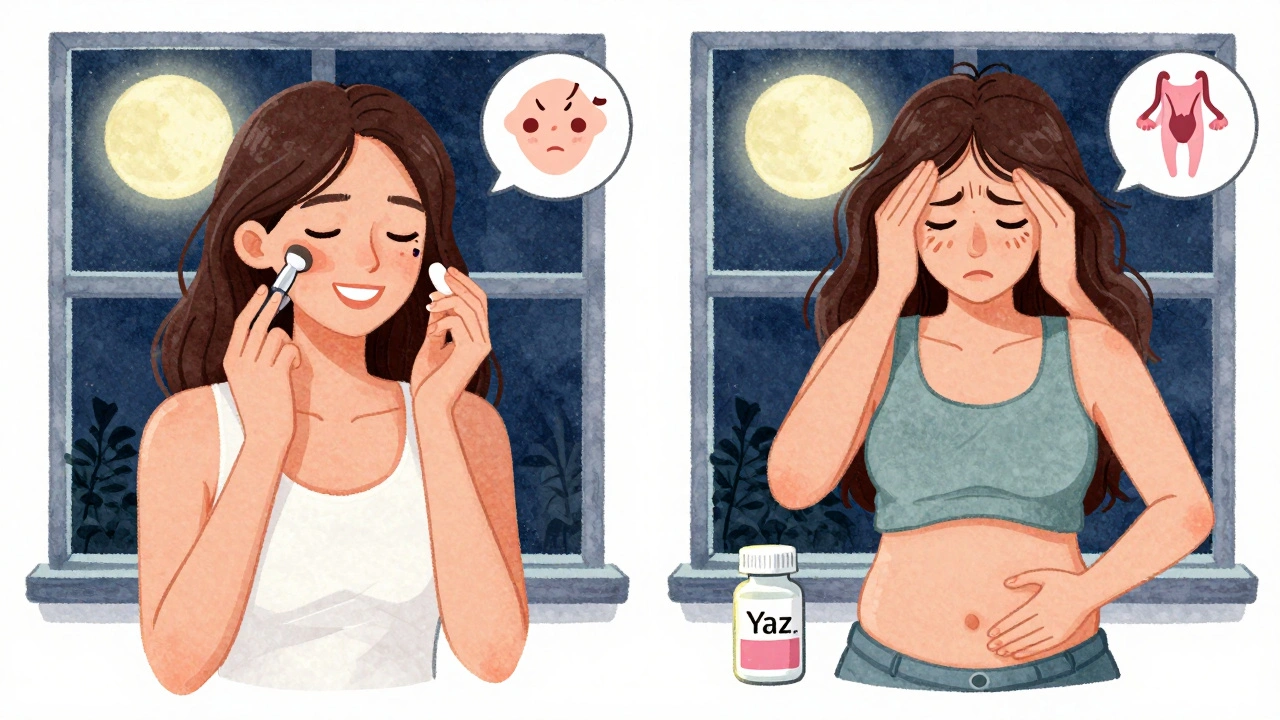
What Medications and Supplements Can Interfere?
Here’s something many women don’t know: your birth control pill can be weakened by common medicines and even natural supplements.
Drugs that can reduce pill effectiveness include:
- Some antibiotics (rifampin and rifabutin-others like amoxicillin don’t affect it)
- Anti-seizure medications (phenytoin, carbamazepine, topiramate)
- Some HIV medications (efavirenz, nelfinavir)
- St. John’s Wort (a popular herbal supplement for depression)
- Some antifungal drugs (griseofulvin)
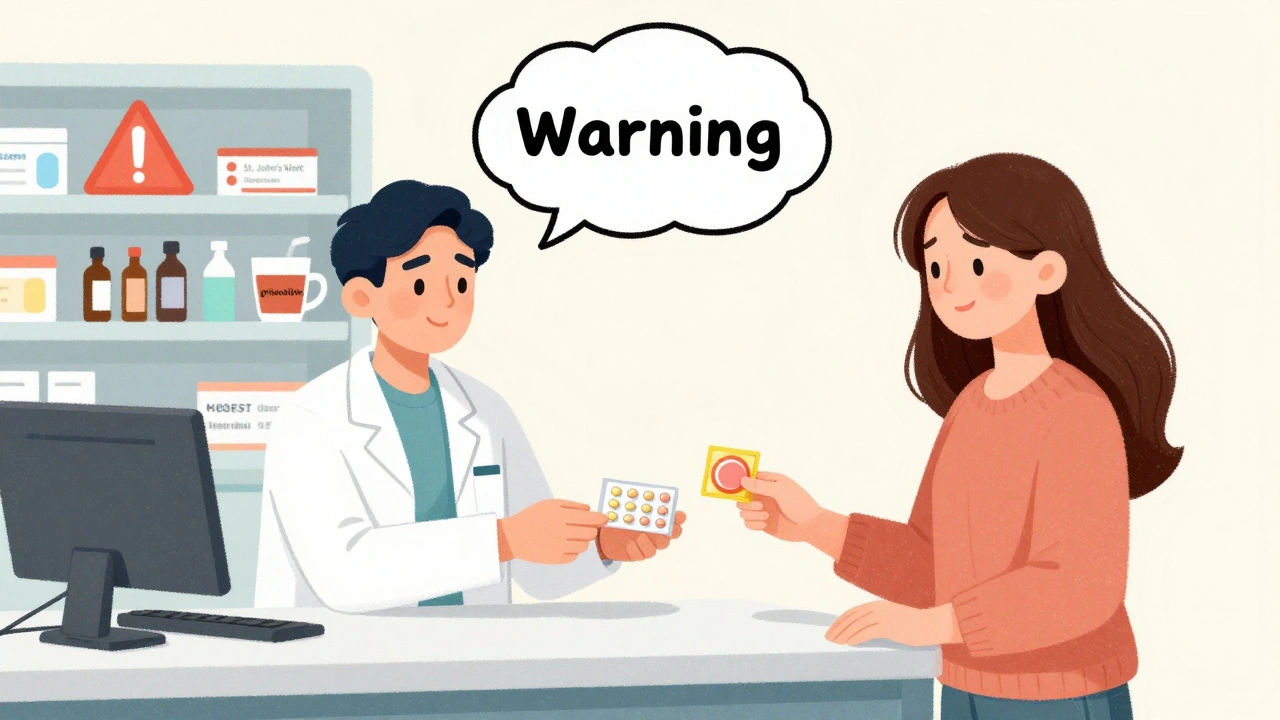
If you’re prescribed any of these, ask your doctor or pharmacist: "Will this make my birth control less effective?" If the answer is yes, use backup contraception (like condoms) for at least 7 days after stopping the interfering drug.
Even over-the-counter products matter. If you’re taking herbal teas, weight-loss supplements, or CBD oil, check with your provider. Some of these can affect liver enzymes that break down hormones, changing how your body processes the pill.
And remember: vomiting or severe diarrhea within 2 hours of taking your pill can also reduce absorption. If that happens, treat it like a missed pill-take another one as soon as you can and use backup protection for the next 7 days.
Who Should Avoid Birth Control Pills?
Birth control pills are safe for most healthy women, but not everyone should use them. Certain health conditions make the risks too high.
You should avoid combined pills if you have:
- A history of blood clots, stroke, or heart attack
- Uncontrolled high blood pressure
- Severe liver disease
- Breast cancer or a history of estrogen-sensitive cancers
- Migraines with aura (visual disturbances, numbness, speech issues)
- Smoking and being over 35 years old
If you have any of these, the progestin-only pill (mini-pill) may be a safer alternative. It doesn’t contain estrogen, so it avoids many of the cardiovascular risks.
Even if you’re healthy, your doctor should check your blood pressure before prescribing the pill. High blood pressure can silently increase your risk of stroke while on hormonal contraception.
What Happens When You Stop Taking the Pill?
Many women worry they’ll be infertile after stopping the pill. That’s a myth. Fertility returns quickly for most.
Studies show that 97% of women have a normal period within 90 days after stopping the pill. About 80% get pregnant within a year. There’s no evidence that long-term use delays fertility. In fact, some women conceive the very next cycle.
Some notice changes in their cycle after stopping-periods might be heavier, more painful, or irregular at first. That’s your body relearning how to ovulate on its own. If your period hasn’t returned after 3 months, talk to your doctor.
Is the Pill Right for You?
There’s no one-size-fits-all answer. The pill works great for women who:
- Want a daily routine they can stick to
- Need help with acne, heavy periods, or cramps
- Prefer a non-invasive, reversible method
- Don’t have medical conditions that increase risks
But if you’re forgetful, travel often, or have a health condition that makes estrogen risky, you might be better off with an IUD, implant, or even the shot.
The biggest mistake? Choosing a method because it’s popular-not because it fits your life. The pill isn’t "the best"-it’s just one option. The best method is the one you’ll use correctly, every day, without stress.
Talk to your GP or a sexual health clinic. Bring your concerns, your schedule, your medical history. There’s no shame in switching. If the pill isn’t working for you, another method might be a better fit.
What About STIs?
Birth control pills do nothing to protect against sexually transmitted infections. Not chlamydia. Not gonorrhea. Not HIV. If you’re not in a monogamous relationship or haven’t both been tested, condoms are still essential-even if you’re on the pill.
Using both a pill and a condom gives you the best of both worlds: pregnancy prevention and infection protection. It’s not about mistrust. It’s about smart, layered safety.
9 Responses
This post is everything. I’ve been on the pill for six years and honestly? I didn’t know half this stuff until I read this. The part about St. John’s Wort messing with it? Mind blown. I’ve been taking it for my anxiety and had no clue it could undo my birth control. Thanks for laying it out like this - no fluff, just facts.
Let’s be clear: if you’re taking the pill and missing doses, it’s not the pill’s fault - it’s yours. The 93% effectiveness rate isn’t a flaw in the science, it’s a reflection of human inconsistency. Stop blaming the medication and start taking responsibility. Your body isn’t a suggestion box.
So let me get this straight - you’re telling me I need to take a pill at exactly 8:03 a.m. every day or risk a baby? And the ‘mini-pill’ is the ‘easy’ option? Sounds like someone designed this to fail. Next they’ll tell me I need to water my plants with a pipette.
i just started the pill last month and honestly?? i thought the nausea was just my coffee. now i know its the hormones 😅 also, i had no idea about st. john's wort. thanks for this!!
Let’s be real - the pill is a glorified placebo for people who can’t handle a 30-second daily task. IUDs are 99.9% effective, last for years, and don’t require you to be a human alarm clock. The fact that doctors still push pills as the default is a testament to how little the medical system understands human behavior. If you’re under 25, your brain isn’t wired for consistency - get an implant. It’s not a luxury, it’s a survival tactic.
And don’t even get me started on the myth that the pill improves acne. It does for some. For others, it turns your face into a warzone. The FDA approved Yaz for acne? Great. That doesn’t mean it works for everyone. It means the pharmaceutical lobby won a marketing war.
Also, the idea that women over 35 who smoke can’t take it? Correct. But why are we still prescribing it to women who smoke 10+ cigarettes a day and think they’re ‘fine’? Because the system doesn’t care. It cares about prescriptions filled, not lives saved.
And the part about fertility returning? Of course it does. Your body doesn’t forget how to ovulate. But society wants you to believe you’re broken if you don’t conceive immediately after stopping. That’s not biology - that’s capitalism selling you anxiety.
Bottom line: the pill is fine if you’re a disciplined adult with a stable schedule. If you’re not? Stop pretending. Get an IUD. It’s cheaper long-term, less emotionally taxing, and doesn’t require you to be perfect.
Yessss this is why I switched to the implant. No more panic when I’m late to work or out drinking. One little rod and I’m good for 3 years. Also, I used to get crazy mood swings on the pill - switched to progestin-only and now I’m basically a calm human. 🙌
Did anyone else notice how the article never mentioned that some birth control pills can cause actual depression? Not just mood swings - clinical, debilitating depression. It’s not in the ‘common side effects’ list, but it’s in the FDA’s own adverse event reports. If you feel like you’re drowning emotionally after starting the pill, it’s not ‘just hormones.’ It’s a chemical reaction. And you’re not weak for needing to stop.
THEY WANT YOU TO TAKE THE PILL BECAUSE THEY OWN THE PHARMA. THE IUD IS A GOVT-CONTROLLED DEVICE. ST. JOHN’S WORT IS A NATURAL ANTIDOTE TO THEIR HORMONAL SLAVERY. THEY DON’T WANT YOU TO KNOW THAT THE PILL CAUSES CANCER AND INFERTILITY AFTER 5 YEARS. THEY’RE LYING TO YOU. TRUST NO ONE. CHECK YOUR LABS. THE TRUTH IS OUT THERE.
I just want to say thank you to whoever wrote this. I’ve been scared to talk about my pill side effects because I felt like I was being ‘dramatic.’ But reading this made me feel seen. If you’re struggling with spotting, nausea, or feeling off - you’re not broken. You’re just not on the right pill. And that’s okay. Talk to your doctor. Try a different brand. Your body deserves to feel good, not just ‘not pregnant.’