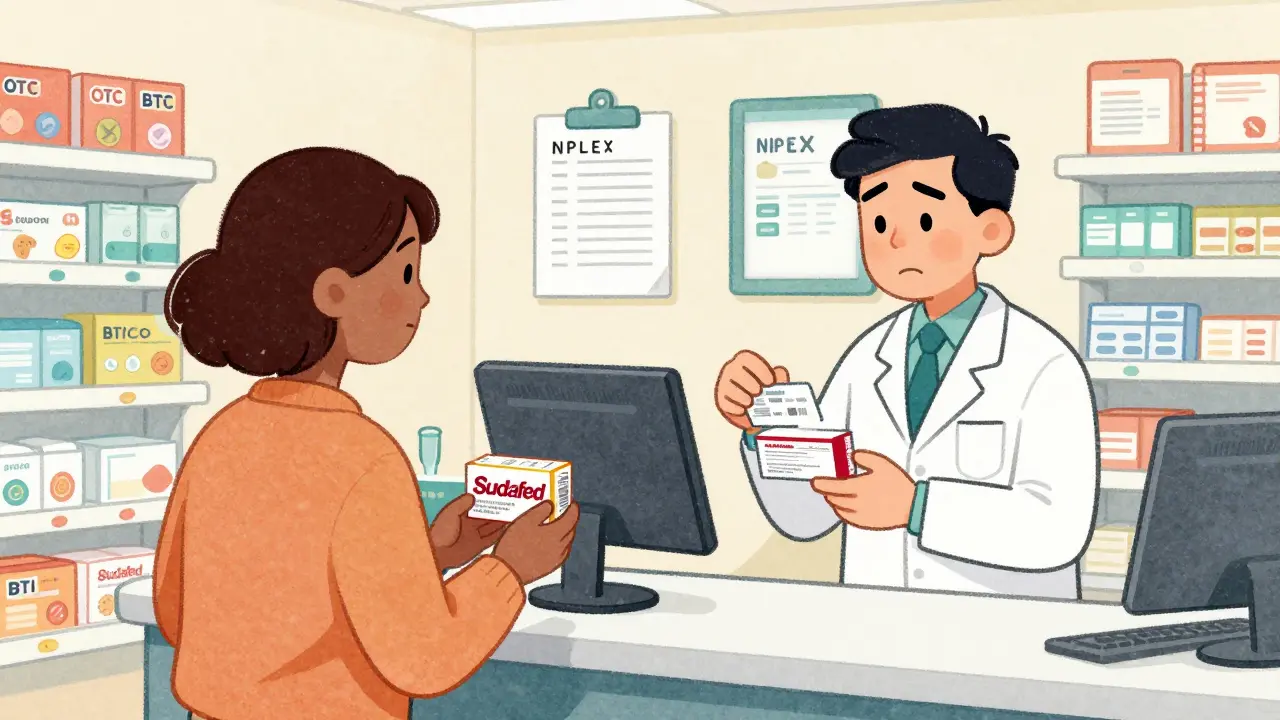
Have you ever stood at the pharmacy counter, holding a box of Sudafed, and felt like you were being interrogated? You show your ID, sign a logbook, and wait while the pharmacist checks a screen. It’s not paranoia-it’s the behind-the-counter system in action. These aren’t prescription drugs, but they’re not exactly like the painkillers you grab off the shelf at the grocery store either. Behind-the-counter (BTC) medications sit in a gray zone: more controlled than regular OTC products, but still available without a doctor’s note. And if you’ve ever struggled to buy cold medicine during flu season or rushed to get emergency contraception after hours, you’ve already experienced this system firsthand.
What Exactly Is a Behind-the-Counter Medication?
Behind-the-counter meds are a middle ground between prescription-only drugs and regular over-the-counter (OTC) items. You don’t need a prescription, but you can’t just pick them up yourself. They’re locked behind the counter, and you must talk to a pharmacist before buying. This system started in the U.S. in 2006 after Congress passed the Combat Methamphetamine Epidemic Act. The goal? Stop people from using pseudoephedrine-common in cold medicines-to make illegal methamphetamine. So, Sudafed moved behind the counter. But over time, it became clear this model worked for more than just decongestants.
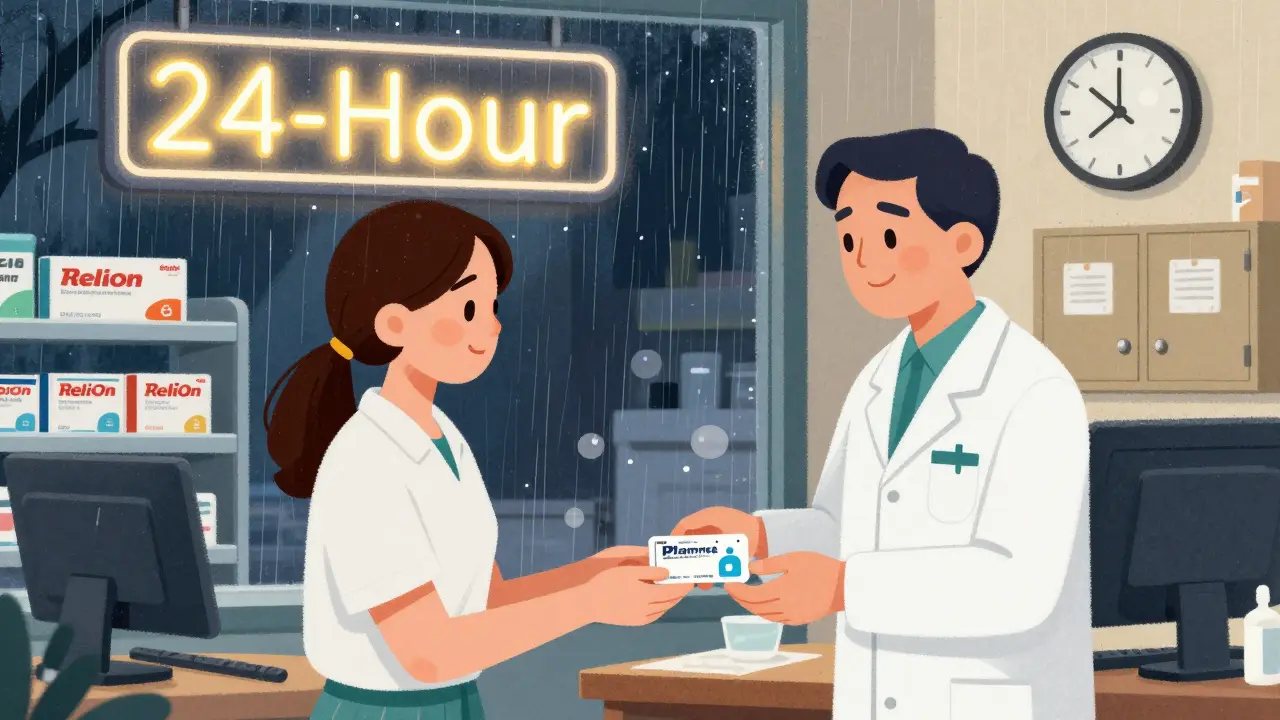
Today, BTC includes a handful of key medications that need oversight but not a full prescription. Think emergency contraception like Plan B One-Step, certain types of insulin (like Walmart’s ReliOn), and in some states, cough syrups with low-dose codeine. Pharmacists are the gatekeepers here. They check your ID, record your purchase in a national database called NPLEx, and make sure you’re not hitting daily or monthly limits. For pseudoephedrine, that’s 3.6 grams per day and 9 grams per month. That’s about six 60mg tablets a day. It sounds strict, but it’s designed to balance safety with access.
Why Not Just Make These Prescription Drugs?
You might wonder: why not just require a prescription? The answer is speed and access. Imagine needing Plan B after a condom breaks at 11 p.m. on a Sunday. A doctor’s office is closed. Waiting until Monday could mean the difference between preventing a pregnancy or not. Plan B is 89% effective if taken within 72 hours. Making it prescription-only would delay care-and cost more. The BTC model lets pharmacists act as frontline health advisors. They can confirm you’re eligible, explain how to use it, and even warn you about interactions with other meds you’re taking.
Same with insulin. Before Walmart launched its ReliOn brand, many Americans paid over $100 for a vial of insulin. Now, you can walk in, show ID, and buy regular or NPH insulin for $25. No prescription needed. For people without insurance or with high deductibles, this is life-changing. It’s not perfect-some newer insulins still require prescriptions-but this move alone saved thousands from rationing or skipping doses.
There’s also the science angle. Pseudoephedrine works better than its OTC replacement, phenylephrine. Studies show pseudoephedrine relieves nasal congestion in 72% of users, while phenylephrine only helps 38%. So if you’re sick and want real relief, pseudoephedrine is the go-to. But because it can be misused, it’s not sold freely. The BTC system keeps the effective version available while reducing abuse.
What You Need to Know Before You Buy
Buying a BTC medication isn’t like grabbing a bandage or antacid. Here’s what actually happens when you walk up to the counter:
- You ask for the product by name. Don’t just say “the cold medicine.” Say “Sudafed” or “Plan B.”
- You must show a government-issued photo ID. Passport, driver’s license, state ID-all accepted. No exceptions.
- The pharmacist enters your info into a national tracking system. This logs your name, ID number, product, and quantity.
- You’re asked if you’ve bought this product recently. Be honest. The system will tell them.
- You sign a logbook or electronic screen. This is legally required.
- The pharmacist may ask why you need it. They’re not being nosy-they’re checking for red flags like frequent purchases or signs of diversion.
It’s not invasive if you understand the why. But it can feel awkward. Especially if you’re young, female, or from a minority group. Studies show Black customers are over three times more likely to be questioned or refused when buying pseudoephedrine-even when their buying patterns match white customers. That’s a serious equity issue. Pharmacists aren’t trained to spot bias, and the system doesn’t correct for it.
State Rules Vary-Big Time
Here’s the messy part: there’s no single federal rulebook for BTC meds. Each state sets its own limits. In Texas, you can buy up to 9 grams of pseudoephedrine per month. In Oregon, it’s 7.5 grams. Some states require you to be 18 to buy Plan B. Others let anyone over 17 buy it. A few still allow low-dose codeine cough syrup without a prescription. But most don’t anymore.
This patchwork creates confusion. If you’re traveling, you might hit a pharmacy that won’t sell you what you’re used to getting at home. A person from California might be shocked to find their usual pseudoephedrine brand isn’t available in Florida because of a local cap. And if you’re a parent buying cold medicine for your kid, you might not realize you need to be 18 yourself to buy it in some places.
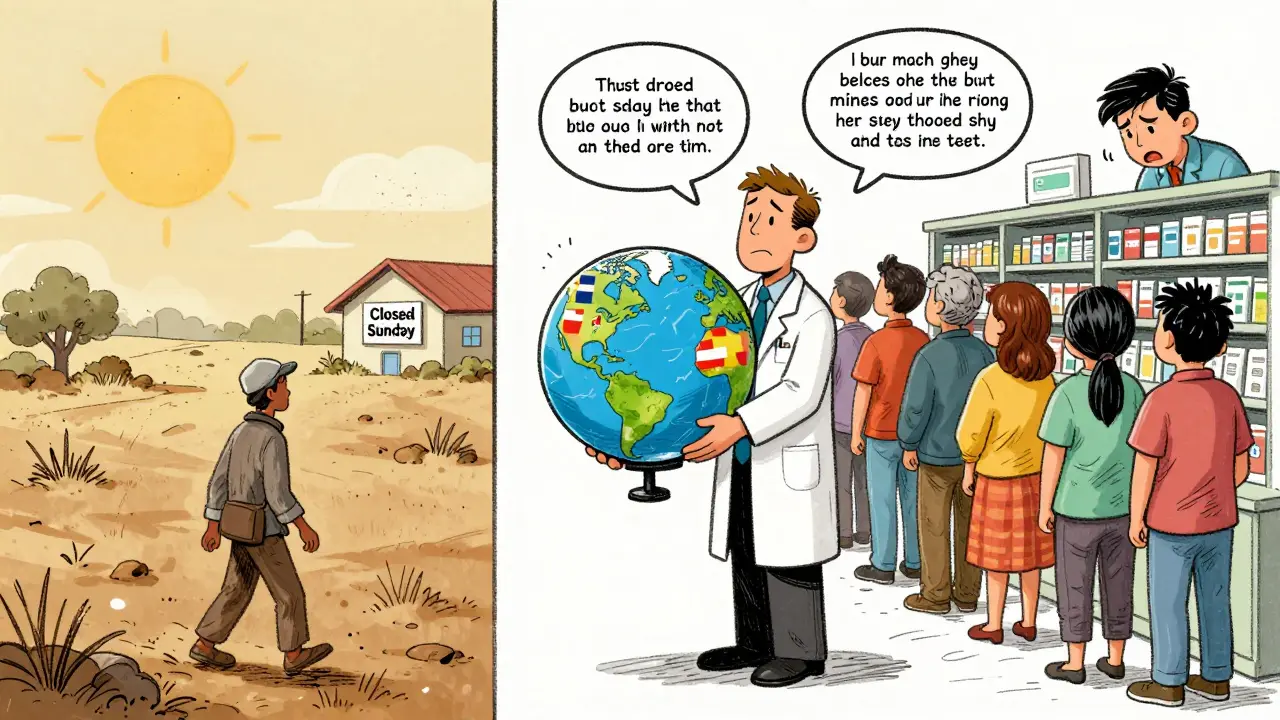
Pharmacies have to juggle 28 different state laws. That’s why some stores keep multiple versions of the same drug on the shelf-some for one state, some for another. It’s inefficient, expensive, and frustrating for everyone.
Who Benefits? Who Gets Left Behind?
The BTC model works best when you live near a pharmacy and have reliable transportation. In urban areas, 68% of BTC purchases happen. In rural communities, where 60 million Americans live more than 10 miles from a pharmacy, it’s a different story. If you don’t have a car, no public transit, and the nearest pharmacy is closed on Sundays, you’re out of luck. That’s not just inconvenient-it’s dangerous. People with chronic conditions like diabetes or asthma can’t afford delays.
There’s also the cost of the system itself. Pharmacies spend about $1,200 a year per location on tracking software. Staff spend eight hours a year training on BTC rules. That cost gets passed on indirectly-through higher prices or reduced service hours. And while 76% of customers say they feel more confident using BTC meds after talking to a pharmacist, 18% report being denied or delayed when legally entitled to buy them. That’s especially true for emergency contraception, where personal beliefs sometimes override legal rights.
The Future: More BTC Meds Coming
The FDA is actively considering expanding the BTC category. In May 2023, LoRez-a low-dose naltrexone for alcohol use disorder-became the first BTC opioid treatment medication. That’s huge. It means people struggling with addiction can now get help without a doctor’s appointment. More are coming. Experts predict at least five to seven prescription drugs will shift to BTC status by 2027. Candidates include low-dose atorvastatin (for cholesterol) and 150mg mifepristone (for gynecological issues). These aren’t just convenience items-they’re treatments for serious conditions.
But expansion needs standardization. Right now, with 28 different state rules, the system is a maze. Pharmacists in New York face different rules than those in Arizona. Patients get confused. Companies struggle to comply. Without federal guidelines, the BTC category risks becoming a bureaucratic nightmare instead of a public health win.
What You Can Do
If you need a BTC medication:
- Know the name of the drug. Don’t rely on vague descriptions.
- Carry a valid photo ID. Always.
- Ask questions. If the pharmacist doesn’t explain the limits or why you’re being asked for ID, ask why.
- Know your rights. If you’re legally allowed to buy Plan B and you’re denied, you can report it to your state pharmacy board.
- Plan ahead. If you use pseudoephedrine regularly, check your state’s monthly limit and track your purchases.
And if you’re frustrated by the system? Talk to your pharmacist. Ask if they’ve seen improvements since 2020. Ask if they think federal rules would help. Your voice matters. Pharmacists are on the front lines-and they’re often the first to say this system needs fixing.
Final Thoughts
Behind-the-counter medications aren’t perfect. They’re not convenient. They’re not always fair. But they serve a real purpose: giving people access to important medicines without requiring a doctor’s visit every time. For someone with no insurance needing insulin, or a young woman needing Plan B after midnight, this system saves time, money, and sometimes lives.
The real challenge isn’t the concept-it’s the execution. Inconsistent rules, lack of training, racial bias, and rural access gaps are the real problems. Fix those, and BTC meds could become a model for how we balance safety, access, and dignity in healthcare. Until then, the next time you’re asked for ID at the pharmacy counter, remember: you’re not being treated like a criminal. You’re part of a system trying-and often failing-to do the right thing.
14 Responses
Wow. Just... wow. I stood at the counter last week trying to buy Sudafed, and the pharmacist asked me if I was ‘building a lab’-I swear I wasn’t even sneezing. I showed ID, signed three times, and still got side-eye. It’s not about safety-it’s about making people feel like criminals for wanting to feel better.
Let’s be real-this system is a joke. Pseudoephedrine’s effectiveness is proven, but we’re forcing everyone into this bureaucratic dance because a tiny fraction of people misuse it. Meanwhile, phenylephrine? Useless. We’re punishing millions to stop a few. And don’t even get me started on the racial profiling.
Access isn’t freedom if it comes with humiliation.
Everyone complains about BTC but nobody understands the science. Pseudoephedrine has a 72% efficacy rate versus phenylephrine’s 38%. The FDA didn’t make this up-it’s based on peer-reviewed pharmacokinetics. You want convenience? Then accept the tradeoff. The system works if you stop treating it like a personal attack
So we spend $1200 per store and 8 hours training so some guy in Nebraska can buy 3 packs of Sudafed? Brilliant. Just brilliant. 🤡
wait so plan b is behind the counter?? i thought it was just otc?? and why do i need id for that?? like i know its for tracking but still feels weird??
This system saves lives. Every time someone gets insulin for $25 instead of rationing, or Plan B when it matters-this works. Yes, it’s clunky. But it’s better than nothing. Don’t trash the system-help fix it.
I got denied Plan B last month because the pharmacist said ‘I don’t feel comfortable.’ Like… what?? I had the ID, the receipt, the time window. I cried in the parking lot. 🥺 This isn’t healthcare-it’s moral policing with a pharmacy badge.
State-by-state rules are a regulatory disaster. You can’t have 28 different laws for one drug. That’s not healthcare-that’s chaos. Federal standardization isn’t optional. It’s mandatory.
Pharmacists are gatekeepers? More like judgmental babysitters with a clipboard. I’m not a drug dealer-I’m a 22-year-old with a sinus infection. But nope, I get the third degree like I’m smuggling cocaine. And the logbook? I swear I saw one guy get asked if he was ‘making crystal’… in 2024?
it’s weird how we’re okay with this if it helps people but still make it feel so awful. like… we know it’s necessary but we don’t make it kind. maybe that’s the real problem
THEY’RE TRACKING EVERYTHING. THE DATABASE. THE ID NUMBERS. THE PURCHASE HISTORY. WHAT IF THEY USE IT TO DENY YOU HEALTHCARE LATER? WHAT IF INSURANCE COMPANIES GET ACCESS? I’M NOT TRUSTING THIS SYSTEM. NOT ONE BIT. 🚨
So we trade dignity for dosage. How noble. The poor get insulin for $25 but are treated like suspects. The rich? They just walk into a clinic and get the fancy version. Capitalism in a pill bottle. 🤷♂️
Listen. I’m from a village in India where you need a doctor to buy aspirin. Here, you can get Plan B and insulin without a prescription. That’s progress. Yes, the system is messy. But don’t throw the baby out with the bathwater. Talk to your pharmacist. Ask for better training. Push for federal rules. Change doesn’t come from rage-it comes from showing up.