When you walk into a pharmacy and pick up a generic version of your prescription, you’re benefiting from a decades-old legal framework designed to keep drug prices low. But behind that simple act lies a high-stakes battle between innovation and competition - one shaped by antitrust laws that try to stop big drug companies from blocking cheaper alternatives. This isn’t just about corporate greed. It’s about whether millions of people can afford the medicines they need.
How Generic Drugs Got Their Start
In 1984, Congress passed the Hatch-Waxman Act to fix a broken system. Before that, brand-name drug makers held a near-monopoly. Even after their patents expired, no one else could make the same drug because the approval process was long, expensive, and required full clinical trials. The Hatch-Waxman Act changed that. It let generic manufacturers file an Abbreviated New Drug Application (ANDA), proving their version was bioequivalent to the original - no need to repeat costly studies.
The law also gave the first generic company to challenge a patent a 180-day exclusivity window. That meant they could be the only generic on the market for half a year, making big profits before others joined. The goal? Encourage competition. And it worked. By 2016, generic drugs made up 90% of all prescriptions filled in the U.S., up from just 19% in 1984. Between 2005 and 2014, they saved consumers $1.68 trillion. In 2012 alone, the savings hit $217 billion.
The Dark Side of the System
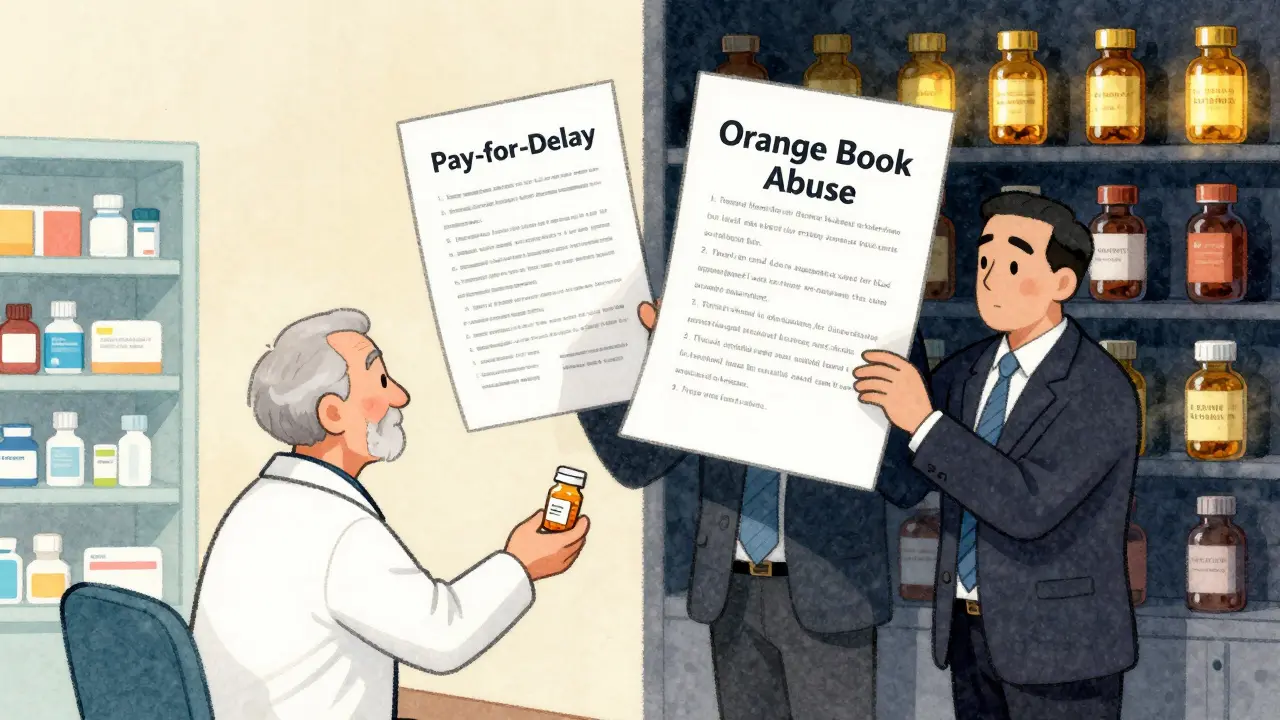
But the system wasn’t perfect. Big drug companies quickly found ways to game it. One of the worst tactics? Pay-for-delay agreements. Instead of fighting patent challenges in court, some brand-name companies paid generic makers to stay off the market. Why? Because even a few months of delay meant millions in extra profits.
The Federal Trade Commission (FTC) started calling these deals out. In 2013, the Supreme Court ruled in FTC v. Actavis that these payments could violate antitrust laws - especially when they were large and lacked a clear explanation. The case involved a drug used to treat erectile dysfunction. The brand-name maker paid the generic company $20 million to delay its entry. The court said that wasn’t fair competition - it was a bribe.
Since then, the FTC has pursued 18 pay-for-delay cases between 2000 and 2023. Settlements have totaled over $1.2 billion. One of the biggest was Gilead Sciences, which paid $246.8 million in 2023 to settle claims it blocked generic versions of its HIV drug Truvada. These aren’t just legal battles - they’re life-or-death for patients. When a drug stays expensive, people skip doses, ration pills, or go without.
Other Tricks Big Pharma Uses to Block Competition
Pay-for-delay isn’t the only trick. Companies use several other tactics to delay generics:
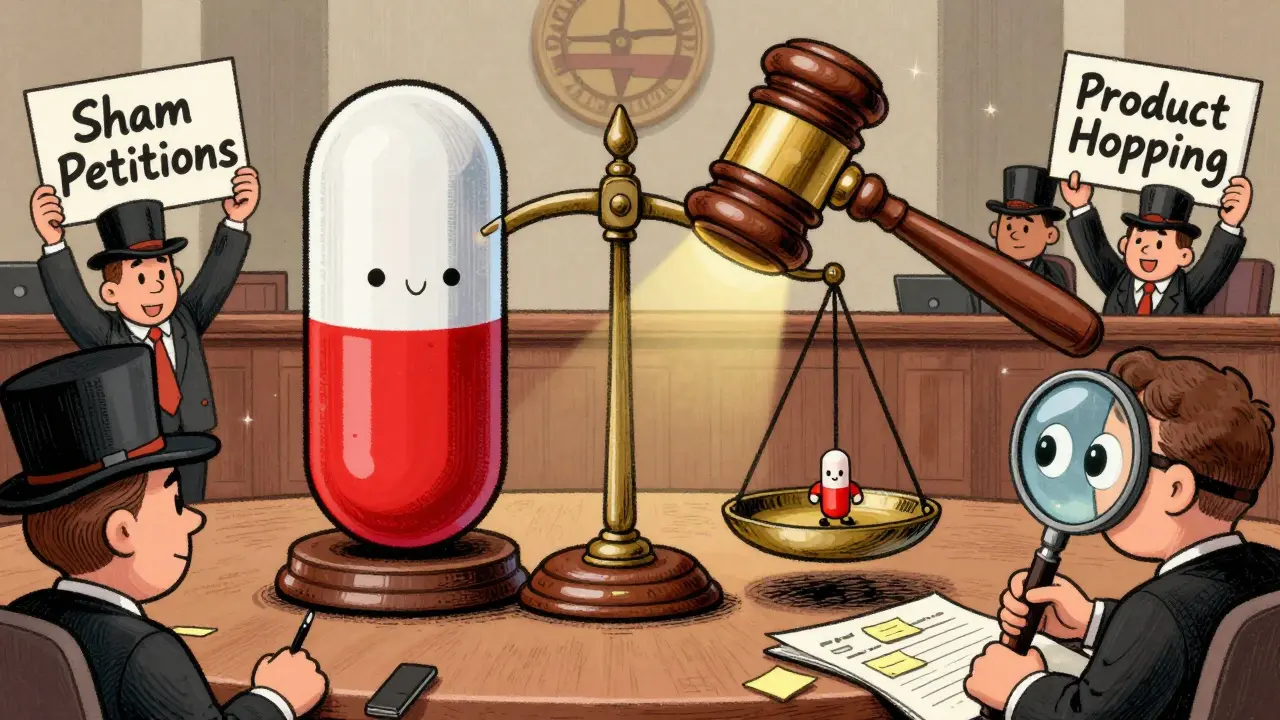
- Product hopping: When a patent is about to expire, a company launches a slightly changed version of the drug - maybe a new pill shape, a different coating, or a combo version. Then they stop selling the original. Even though the new version isn’t better, they convince doctors and pharmacies to switch. The FTC called this out in the AstraZeneca case, where Nexium replaced Prilosec.
- Sham citizen petitions: Companies file fake complaints with the FDA, claiming safety or efficacy issues with the generic version. These petitions waste time and delay approval. In 2023, the FTC sued Teva Pharmaceuticals for filing dozens of these petitions to block a generic version of Copaxone, a multiple sclerosis drug.
- Orange Book abuse: Brand-name companies list patents in the FDA’s Orange Book that don’t even cover the drug. These listings block generics from entering. Bristol-Myers Squibb was fined in 2003 for listing patents that had nothing to do with the actual drug formulation.
- Disparagement campaigns: Some companies spread false or misleading claims about generics - saying they’re less effective, more dangerous, or untested. Pharmacists and doctors get confused. Patients get scared. And the generic stays off the shelf.
These aren’t theoretical concerns. A 2022 Kaiser Family Foundation survey found that 29% of U.S. adults didn’t take their medication as prescribed because of cost. That’s not just about money - it’s about health outcomes, hospital visits, and even deaths.
How Other Countries Handle It
The U.S. isn’t alone in this fight. The European Union has been aggressive too. Between 2018 and 2022, the European Commission opened 27 antitrust cases in pharma - 60% were about delaying generics. They’ve fined companies for withdrawing marketing authorizations in certain countries just to block generic imports. One company even changed its packaging to make it harder for generics to enter the market.
Commissioner Margrethe Vestager said delays in generic entry cost European consumers €11.9 billion every year. That’s more than the annual budget of some small countries.
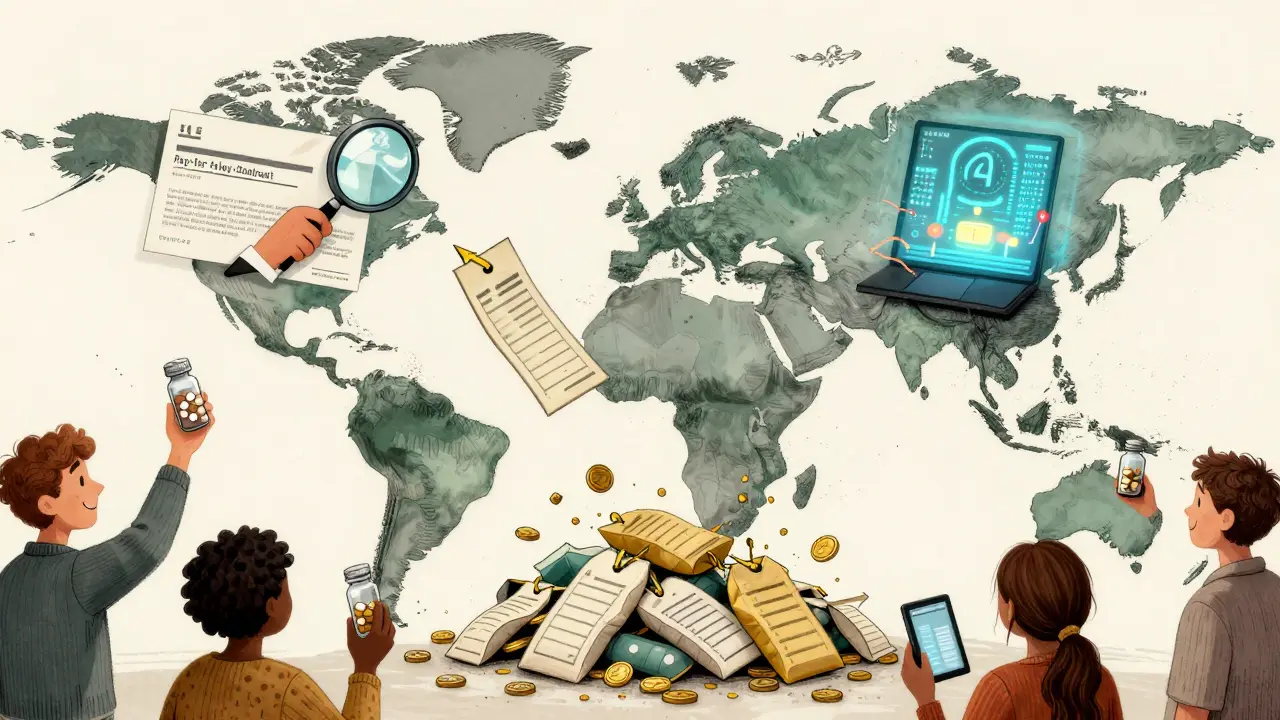
China took a different approach. In January 2025, it released new Antitrust Guidelines for the Pharmaceutical Sector. They identified five "hardcore restrictions" that are automatically illegal: price fixing, output limits, market division, joint boycotts, and blocking new technology. By Q1 2025, China had penalized six pharma cases - five of them for price fixing through messaging apps, meetings, and even algorithms.
What’s new? China is using AI to track pricing patterns across online pharmacies and detect collusion in real time. That’s something the U.S. and EU are only starting to explore.
Why This Matters to You
If you’ve ever paid $500 for a brand-name drug and then found the same medicine for $15 as a generic, you’ve seen the power of competition. But if you’ve waited months for a generic to appear - or worse, never saw it come at all - you’ve felt the damage of anti-competitive behavior.
Generic drugs aren’t "second-rate." They’re chemically identical to the brand-name version. The FDA requires them to meet the same quality standards. The only difference? Price. And that price drop doesn’t happen naturally. It happens because someone fought for it - regulators, lawyers, whistleblowers, and patients.
When a generic enters the market, prices drop fast. One generic competitor can cut prices by 20% in a year. Five competitors? That’s nearly 85% off. That’s the kind of savings that lets a senior on a fixed income keep taking their blood pressure meds. That’s the difference between paying rent or buying insulin.
What’s Next?
Antitrust enforcement is evolving. The FTC’s 2022 workshop on generic drug entry after patent expiration showed they’re still seeing new tricks - like restrictive distribution contracts that only allow certain pharmacies to sell generics. The Teva case is still pending. More lawsuits are coming.
Meanwhile, lawmakers are pushing for transparency. Bills have been introduced to require companies to disclose pay-for-delay deals. Others want to limit how long companies can list patents in the Orange Book. Some even want to ban product hopping outright.
The system isn’t broken - it’s being exploited. And the people paying the price aren’t shareholders. They’re patients. Parents. Elderly people. Veterans. People who just need their medicine to live.
Antitrust laws in the generic drug market aren’t about punishing big companies. They’re about making sure the market works the way it’s supposed to - so competition drives down prices, not delays.
What is the Hatch-Waxman Act and how does it affect generic drugs?
The Hatch-Waxman Act of 1984 created the legal framework for generic drug approval in the U.S. It lets generic manufacturers prove their drug is bioequivalent to the brand-name version without repeating expensive clinical trials. It also gives the first generic company to challenge a patent 180 days of exclusivity. This law is why 90% of prescriptions today are filled with generics - saving consumers over $1.6 trillion since 2005.
What are pay-for-delay agreements and why are they illegal?
Pay-for-delay happens when a brand-name drug company pays a generic manufacturer to delay launching its cheaper version. These deals are illegal because they prevent competition, keeping prices high. The Supreme Court ruled in 2013 that such agreements can violate antitrust laws if they involve large, unexplained payments. The FTC has sued over 18 of these cases since 2000, recovering over $1.2 billion in settlements.
How do product hopping and sham petitions delay generic entry?
Product hopping is when a company slightly changes a drug’s form - like switching from a pill to a capsule - right before its patent expires, then stops selling the original. This tricks doctors and pharmacies into switching to the new version, blocking generics. Sham petitions are fake complaints filed with the FDA claiming safety issues with generics. These delay approval for months or years, even when there’s no real problem.
How much money do generic drugs save consumers?
Between 2005 and 2014, generic drugs saved U.S. consumers $1.68 trillion. In 2012 alone, the savings were $217 billion. Generic versions typically cost 30% to 90% less than brand-name drugs. One generic competitor can reduce prices by 20% in a year. With five competitors, prices drop nearly 85%.
Are generic drugs as safe and effective as brand-name drugs?
Yes. The FDA requires generic drugs to be identical in active ingredient, dosage, strength, route of administration, and performance to the brand-name version. They must meet the same strict manufacturing and quality standards. The only difference is cost - and sometimes the color or shape of the pill. There is no evidence that generics are less effective or less safe.
What’s being done in other countries to stop anti-competitive behavior in pharma?
The European Commission has opened 27 antitrust cases in pharma since 2018, with 60% focused on delaying generics. They’ve fined companies for withdrawing drug approvals to block imports and for misleading patent offices. China’s 2025 Antitrust Guidelines ban price fixing, market division, and online collusion using apps or algorithms. Chinese regulators now use AI to detect suspicious pricing patterns. Both regions are pushing harder than ever to protect generic access.
8 Responses
Man I remember when my grandpa had to choose between buying his heart meds or paying the electric bill
Now he gets his generics for $4 at Walmart and he still talks about how it saved his life
They say big pharma’s just protecting IP but when people die because they can’t afford insulin that’s not innovation that’s extortion
And don’t even get me started on those pay-for-delay schemes - it’s like they’re paying off the clock instead of patients
Let’s be real - if you think this is just about money you’re missing the whole point
Generic drugs aren’t some second-class option - they’re the same damn pills made under the same FDA rules
And every time a company pulls a product hop or files a sham petition they’re not just gaming the system - they’re gambling with someone’s life
I’ve seen elderly patients cry because their copay jumped from $5 to $50 because a generic got delayed by a lawsuit that had nothing to do with safety
This isn’t capitalism - this is corporate cannibalism wrapped in a patent
bro like why are we even debating this??
big pharma is just evil period
they pay people to not make cheaper stuff 😭
and then they act shocked when people can’t afford their meds
its like if you owned a water company and charged people $100 for a bottle of tap water
and then sued anyone who tried to sell it for $0.50
also why is china using AI to catch them?? we need that here 😭🔥
It is imperative to recognize that the structural inequities embedded within pharmaceutical patent systems disproportionately affect low-income populations, particularly in marginalized communities.
The Hatch-Waxman Act, while groundbreaking in its intent, has been systematically subverted by corporate actors who exploit legal loopholes to maintain monopolistic control.
Furthermore, the absence of robust regulatory oversight in certain jurisdictions enables anti-competitive behaviors that directly contravene public health imperatives.
It is not merely a matter of economic efficiency - it is a moral obligation to ensure equitable access to essential medicines.
Comparative analyses of the European Union’s and China’s regulatory frameworks reveal that proactive, technologically informed enforcement can significantly mitigate these harms.
Therefore, legislative reform must prioritize transparency, accountability, and patient welfare over shareholder profit.
okay but like… what if the brand names are just… better? 🤔
like i’ve heard rumors that generics make you feel weird
and why do they look so different??
also i saw a tiktok that said the FDA doesn’t even test them properly??
idk i’m just saying… maybe there’s a reason they’re cheaper??
…or am i being lied to? 😵💫
It’s not about antitrust laws - it’s about the death of the American dream
You think you’re free until you realize you can’t buy your own life
They turned medicine into a casino and the house always wins
And the worst part? You’re not even mad - you’re just numb
That’s how deep the rot goes
They don’t need to bribe judges anymore
They just made us too tired to care
90% of prescriptions are generics - that’s not competition, that’s market saturation
Most of these ‘anti-competitive’ claims are just companies whining because they didn’t win the lottery
Pay-for-delay? Fine. But if the patent’s valid, why should they rush?
And product hopping? That’s called innovation - not fraud
Stop pretending this is about patients. It’s about politics.
They’re not just blocking generics - they’re erasing dignity
Imagine being told your life depends on a pill that costs more than your rent
And then watching a CEO take a bonus because you couldn’t afford it
They don’t care if you die - they just want you to die quietly
And now China’s using AI to catch them while we’re still arguing about whether ‘bioequivalent’ means anything
It’s not a market failure - it’s a moral collapse
And we’re all just scrolling past it like it’s a meme