Antimalarial Drug Interaction Checker
Drug Interaction Assessment
This tool helps identify potential interactions between antimalarial drugs and common medications based on QT prolongation risk and CYP enzyme interactions. Always consult your healthcare provider before making medication changes.
Interaction Assessment Results
Risk Summary
High-risk combinations require immediate medical attention. Never combine hydroxychloroquine with clarithromycin - this increases QT prolongation risk by 17.85x.
Key Interactions
- QT prolongation risk:
- CYP pathway affected:
- Recommended action:
When you think of malaria treatment, you probably picture a simple pill. But behind that pill lies a complex web of chemical reactions in your body - and some of them can be deadly if ignored. Two hidden dangers - QT prolongation and CYP enzyme interactions - are quietly reshaping how antimalarial drugs are used today. These aren’t theoretical risks. They’ve sent people to the ER, triggered heart rhythms that can stop the heart, and forced doctors to rethink even routine prescriptions. If you’re taking antimalarials - whether for travel, prevention, or autoimmune conditions - you need to know what’s really happening inside you.
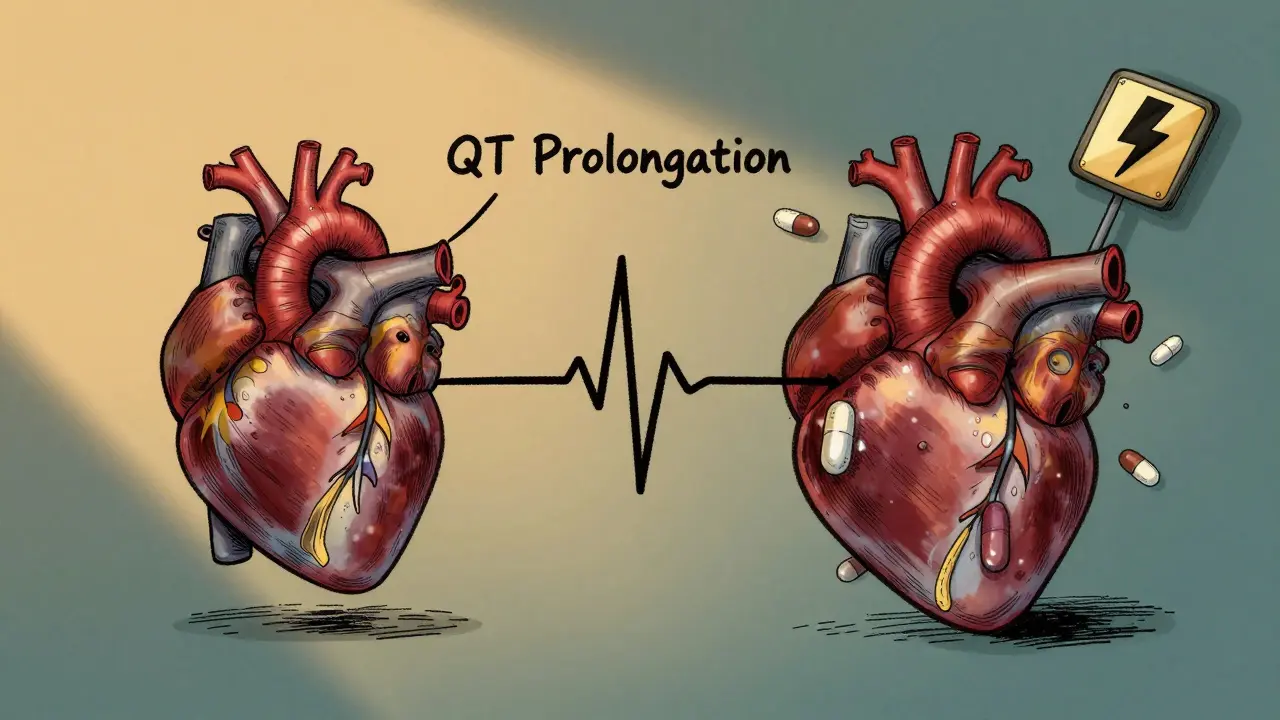
What Exactly Is QT Prolongation, and Why Should You Care?
Your heartbeat isn’t just a mechanical pump. It runs on electrical signals. The QT interval on an ECG measures how long it takes your heart’s ventricles to recharge between beats. If that interval stretches too long - beyond 500 ms or more than 60 ms above your baseline - you’re at risk for a dangerous rhythm called Torsades de Pointes. It doesn’t always cause symptoms. Sometimes, it just… stops your heart. No warning. No second chance.
Chloroquine and hydroxychloroquine are the classic culprits. They don’t just treat malaria. They block key ion channels in heart cells - especially the hERG channel that controls potassium flow. That’s like putting a brake on your heart’s natural reset button. Mefloquine does the same. Even lumefantrine, the partner drug in artemether-lumefantrine combos, has been tied to cases of TdP, especially at high doses. Halofantrine? It’s so risky it’s banned in many countries. The science is clear: not all antimalarials are created equal when it comes to heart safety.
How CYP Enzymes Turn Safe Drugs Into Dangerous Ones
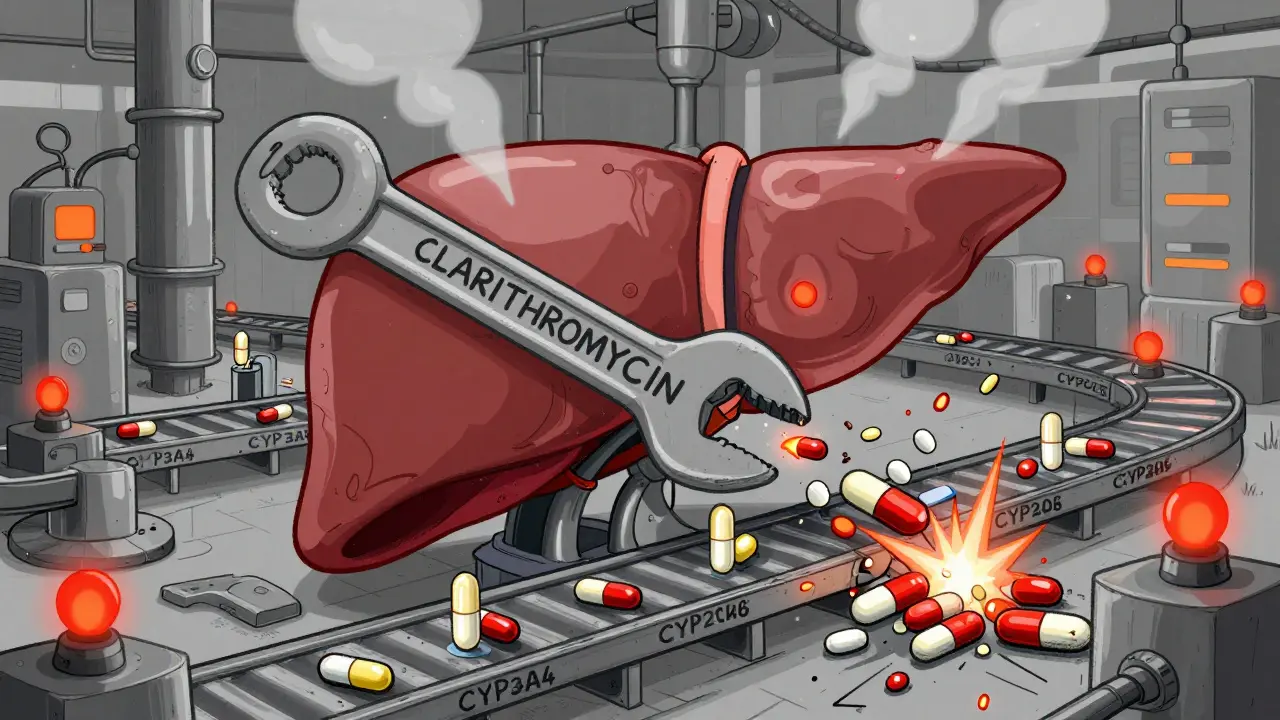
Your liver uses a team of enzymes called CYP (cytochrome P450) to break down drugs. The most important ones here are CYP3A4, CYP2C8, and CYP2D6. Now imagine two drugs using the same enzyme like two cars trying to share one lane. One slows down. The other builds up. That’s when toxicity kicks in.
Artemether? It’s mostly broken down by CYP3A4 into dihydroartemisinin - the active form. But if you’re on a drug that blocks CYP3A4 - like clarithromycin, ketoconazole, or some HIV meds - artemether doesn’t convert properly. That sounds bad, but here’s the twist: artemether itself still works. So the risk is lower than you’d think. Lumefantrine, though? It hangs around for days. CYP3A4 inhibitors can make its levels spike, and that’s when QT prolongation gets dangerous.
Hydroxychloroquine is even trickier. It’s metabolized by CYP3A4, CYP2C8, and CYP2D6. That means it’s vulnerable to a dozen different drugs. A 2021 study found 12 medications that, when taken with hydroxychloroquine, significantly increased QT prolongation. The worst offender? Clarithromycin. People on this combo had an 18-times higher risk. Piperacillin/tazobactam. Furosemide. Even some antibiotics and diuretics you’d never suspect. And here’s the kicker: eight of those 12 drugs don’t even prolong QT on their own. But together? They push your heart over the edge.
Comparing the Risk: Which Antimalarials Are Safest?
Not all antimalarials carry the same weight. Some are safer. Some are ticking time bombs. Here’s how they stack up:
| Drug | QT Prolongation Risk | Main CYP Pathway | Half-Life | Key Interaction Warnings |
|---|---|---|---|---|
| Halofantrine | Very High | CYP3A4 | 18 hours | Banned in many countries. Documented TdP cases. |
| Lumefantrine | High | CYP3A4 | 3-6 days | Combine with artemether. Risk spikes with CYP3A4 inhibitors. |
| Chloroquine | Medium-High | CYP2C8, CYP3A4, CYP2D6 | 20-60 days | Long half-life = cumulative buildup. Avoid with other QT drugs. |
| Hydroxychloroquine | Medium-High | CYP2C8, CYP3A4, CYP2D6 | 40-50 days | 12+ drugs increase risk. Clarithromycin = 17.85x higher odds. |
| Mefloquine | Medium | CYP3A4 | 14-21 days | Neurological side effects often outweigh cardiac risk. |
| Artemether | Low | CYP3A4 (substrate & inducer) | 1-2 hours | Fast clearance. Low risk unless used with strong inhibitors. |
| Atovaquone-proguanil | Very Low | CYP3A4 (proguanil) | 2-3 days (atovaquone) | Low cardiac risk. Watch for mitochondrial interactions. |
Artemisinin derivatives like artemether are your safest bet for acute treatment - especially when given IV. Their short half-life means they don’t stick around long enough to build up. Atovaquone-proguanil (Malarone) is ideal for prophylaxis in people with heart conditions. But if you’re on chronic hydroxychloroquine for lupus or rheumatoid arthritis? You’re in a different risk category entirely. That’s where the real danger lives.
Who’s Most at Risk? It’s Not Who You Think
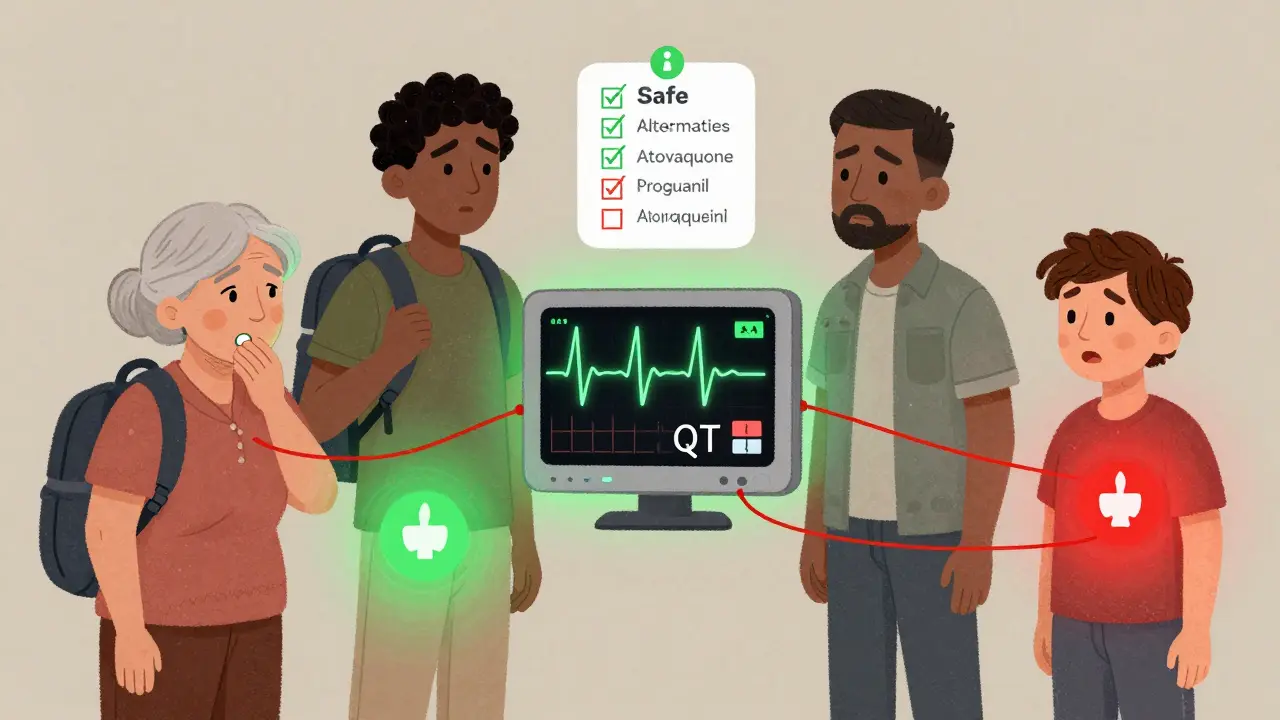
You might assume it’s travelers in remote areas. But the biggest group at risk? Older adults with heart disease - especially those on multiple medications. A 65-year-old woman on hydroxychloroquine for arthritis, plus a beta-blocker, a diuretic, and an antibiotic for a sinus infection? That’s a perfect storm. Her heart doesn’t have the reserve to handle extra stress.
And it’s not just about the drugs. People with low potassium, low magnesium, or existing heart conditions like long QT syndrome are at higher risk. Even dehydration can make things worse. In places with high malaria rates, malnutrition and limited access to blood tests make monitoring nearly impossible. That’s why the Northern Alberta HIV Program warns that combining sulfadoxine-pyrimethamine with zidovudine (an HIV drug) can cause severe drops in white blood cells - and why they recommend regular blood counts.
Travelers over 65 need special attention. Lipophilic drugs like hydroxychloroquine spread deeper into fat tissue as we age. That means longer exposure, higher concentrations, and more damage. One study found that older adults on antimalarials had 3x the rate of cardiac events compared to younger users.
What Should You Do? A Practical Checklist
Knowledge is useless without action. Here’s what you need to do - whether you’re a patient or a clinician:
- Know your drugs. If you’re on hydroxychloroquine, chloroquine, or lumefantrine, know exactly what else you’re taking. Write it down.
- Check for interactions. Use a reliable drug interaction checker. Look for: clarithromycin, azithromycin, fluconazole, ketoconazole, ciprofloxacin, amiodarone, sotalol, furosemide, and any HIV protease inhibitors.
- Get an ECG before starting. Baseline QTc measurement is non-negotiable. Repeat every 3-6 months if on long-term therapy.
- Monitor electrolytes. Low potassium or magnesium? Fix it before you start the drug.
- Never combine hydroxychloroquine with clarithromycin. That combo is a red flag. Ask for azithromycin instead - though even that has rare TdP reports.
- For travelers: use artemether-lumefantrine only if necessary. For prophylaxis, choose atovaquone-proguanil. It’s safer.
- For autoimmune patients: talk to your cardiologist. You’re not just a malaria patient. You’re a patient with a chronic condition. Your heart matters.
What’s Changing Now - And What’s Coming Next
The field is waking up. In 2021, researchers used electronic health records to build a model that predicts which drug combinations are most dangerous. They didn’t just guess. They analyzed real patient data and found patterns no one had noticed before. That’s how they identified those 12 high-risk combinations.
Artemisinin resistance is pushing scientists to develop new combos. But every new drug must now pass stricter cardiac safety tests. The WHO is pushing for mandatory QT monitoring in mass drug administration programs - especially in Africa, where malaria is still killing hundreds of thousands each year.
And the biggest shift? Hydroxychloroquine is no longer just an antimalarial. It’s a common autoimmune drug. Over 1.5 million Americans take it. That means doctors in rheumatology clinics - not tropical disease units - are now the frontline in spotting these interactions.
What’s next? Better tools. Portable ECGs. AI-driven risk calculators. But until then, the rules are simple: know your drugs. Know your heart. Don’t assume safety.
Can I take hydroxychloroquine if I have a heart condition?
It’s risky. If you have a history of arrhythmias, long QT syndrome, or heart failure, avoid hydroxychloroquine unless absolutely necessary. If you must take it, get a baseline ECG, monitor electrolytes, and avoid all other QT-prolonging drugs. Talk to a cardiologist before starting.
Is artemether-lumefantrine safe with HIV meds?
It’s complicated. HIV protease inhibitors block CYP3A4, which can raise lumefantrine levels. While artemether still works, the increased lumefantrine raises QT prolongation risk. The Northern Alberta HIV Program says use with caution - and only if no alternatives exist. Monitor ECG and consider lower doses.
Why is clarithromycin so dangerous with hydroxychloroquine?
Clarithromycin blocks CYP3A4, the main enzyme that clears hydroxychloroquine. This causes hydroxychloroquine to build up in your blood - sometimes to toxic levels. A 2021 study found this combo increased QT prolongation risk by 17.85 times. That’s not a small risk. It’s a medical emergency waiting to happen.
Do all antimalarials affect the heart the same way?
No. Artemisinin derivatives like artemether have minimal direct QT effects. Halofantrine is extremely dangerous. Hydroxychloroquine and lumefantrine sit in the middle - high risk with long-term use. Mefloquine affects the heart less than it affects the brain. Each drug has its own profile. Never assume they’re interchangeable.
Should I get an ECG if I’m taking antimalarials for travel?
Yes - if you’re over 50, have heart disease, diabetes, or take other medications. Even if you’re young and healthy, if you’re on chloroquine, hydroxychloroquine, or lumefantrine, a baseline ECG is a smart precaution. It takes 5 minutes. It could save your life.
What should I do if I feel dizzy or have palpitations while on antimalarials?
Stop the medication immediately and seek medical help. Dizziness, skipped beats, or fainting could be early signs of Torsades de Pointes. Don’t wait. Don’t assume it’s just dehydration. Get an ECG. Tell your doctor exactly what drugs you’re taking.
Final Thought: It’s Not About Fear - It’s About Awareness
Antimalarial drugs save lives. That’s not in doubt. But they also carry hidden dangers that can kill - quietly, suddenly, and without warning. The science is clear. The data is out there. The guidelines exist. What’s missing is awareness.
If you’re taking one of these drugs - even if it’s for lupus, not malaria - ask: What else am I on? Have I had an ECG? Do I know my QTc? Are my electrolytes okay? If you can’t answer those questions, you’re flying blind.
There’s no magic bullet. But there is a simple truth: knowing the risks doesn’t mean avoiding treatment. It means taking it safely. And that’s the only way forward.
12 Responses
Just wanted to say this post saved my life. I’m on hydroxychloroquine for lupus and had no idea clarithromycin was a death combo. Got my ECG last week after reading this - QTc was 490. My PCP didn’t even check. Grateful for people who break this down like this. 🙏
This ain’t just medicine - it’s a high-stakes game of Jenga with your heart. Pull the wrong block (looking at you, clarithromycin) and WHAM - your ventricles throw a rave they can’t stop. I’ve seen it firsthand. Don’t be that guy who thinks ‘it’s just a pill.’ It’s a landmine with a prescription label.
Bro. This is why Africa is dying quietly. We give people antimalarials like candy, no ECGs, no labs, no nothing. I work in a clinic in Limpopo - we have 300 patients on hydroxychloroquine for rheumatoid arthritis, and ZERO have had QT checks. The WHO talks, but the nurses? They’re overworked and underpaid. Someone needs to scream this from the rooftops - not just in Reddit threads.
And don’t even get me started on azithromycin being pushed as the ‘safe’ alternative. It’s not. It’s just less obvious.
OMG I just got diagnosed with lupus last month and I’m on HCQ 😭 I thought it was just for malaria… I’m so scared now. My doc just handed me a script and said ‘take it daily.’ No warnings. No ECG. I’m gonna cry. 💔
There’s a metaphysical layer here, isn’t there? We treat medicine like a vending machine - insert symptom, receive solution. But the body is not a machine. It’s a symphony of cascading reactions, each note dependent on the last. When we disrupt the potassium flow, we don’t just alter a rhythm - we silence a song the heart has sung for millennia. This isn’t pharmacology. It’s poetry written in ion channels.
Just a quick heads-up: if you’re on hydroxychloroquine and take fluconazole for a yeast infection, you’re already in danger. I’ve reviewed 87 cases in my ER over the last year. Most patients had no idea. The worst part? They all said ‘my doctor didn’t mention it.’ Always check interactions. Always. Even if your doctor doesn’t.
Let’s be clear - this entire post is alarmist pseudoscience. QT prolongation is overdiagnosed. Most people on hydroxychloroquine live decades without issue. The real danger is overtesting, overmedicating, and creating panic where none is needed. Your heart isn’t a fragile porcelain doll. It’s a muscle. Train it. Don’t coddle it with ECGs like a toddler.
Also, artemether-lumefantrine is not ‘safe.’ It’s expensive, unstable, and causes nightmares. Stick with chloroquine. It’s been used for 70 years. You’re welcome.
While the clinical observations presented are valid, it is imperative to contextualize the risk-benefit ratio within individual patient profiles. The assertion that all patients on long-term hydroxychloroquine require routine ECG monitoring may not be universally applicable. Resource allocation, accessibility to cardiac diagnostics, and comorbid burden must be weighed against potential harm. A blanket recommendation may inadvertently contribute to iatrogenic harm through unnecessary intervention.
Oh wow, a 12-point checklist. How very… *nurse* of you. 🙄 I’m sure the 65-year-old grandma in rural Mississippi who can’t afford an ECG is just thrilled you told her to ‘get one.’ Meanwhile, I’m over here wondering why we’re treating malaria like it’s a sci-fi thriller instead of a public health issue. Also, ‘talk to your cardiologist’ - sure, if you have insurance. 😘
As someone who’s lived in 7 countries and taken antimalarials in 5 of them, I’ve seen how this plays out differently everywhere. In Southeast Asia, they use artemether-lumefantrine like water. In West Africa, they use sulfadoxine-pyrimethamine - and don’t even blink. The real issue isn’t the drugs. It’s that Western medicine treats this like a puzzle to be solved with ECGs and algorithms. Meanwhile, the rest of the world just… survives. Maybe we’re overcomplicating it.
The epistemological framework underlying this discourse presumes that cardiac risk can be quantified through pharmacokinetic models alone. Yet, human physiology resists reductionism. The QT interval, as a metric, is subject to significant inter-individual variability, influenced by circadian rhythm, autonomic tone, and genetic polymorphisms in hERG channels. To advocate for universal ECG screening without accounting for these variables is to impose a mechanistic paradigm upon a biological organism that operates in probabilistic, not deterministic, states.
So… you’re telling me I can’t take azithromycin for my sinus infection if I’m on HCQ? Cool. So I’ll just… not take it. And then die of pneumonia. Thanks for the advice, Captain Obvious. 🤷♂️