
Almost allergic asthma is the most common form of asthma, affecting 6 out of every 10 people with the condition. It’s not just about wheezing or shortness of breath-it’s your immune system overreacting to things most people ignore: pollen, dust mites, cat dander, or mold. When you breathe these in, your body treats them like invaders, triggering inflammation, tightening your airways, and making it hard to breathe. The good news? Unlike some types of asthma, allergic asthma has clear triggers-and you can do something about them.
What Exactly Triggers Allergic Asthma?
Allergic asthma isn’t caused by one thing. It’s a chain reaction. Your body makes IgE antibodies to harmless substances, and when you’re exposed again, those antibodies signal mast cells to release histamine and other chemicals. That’s when your airways swell, produce mucus, and contract.
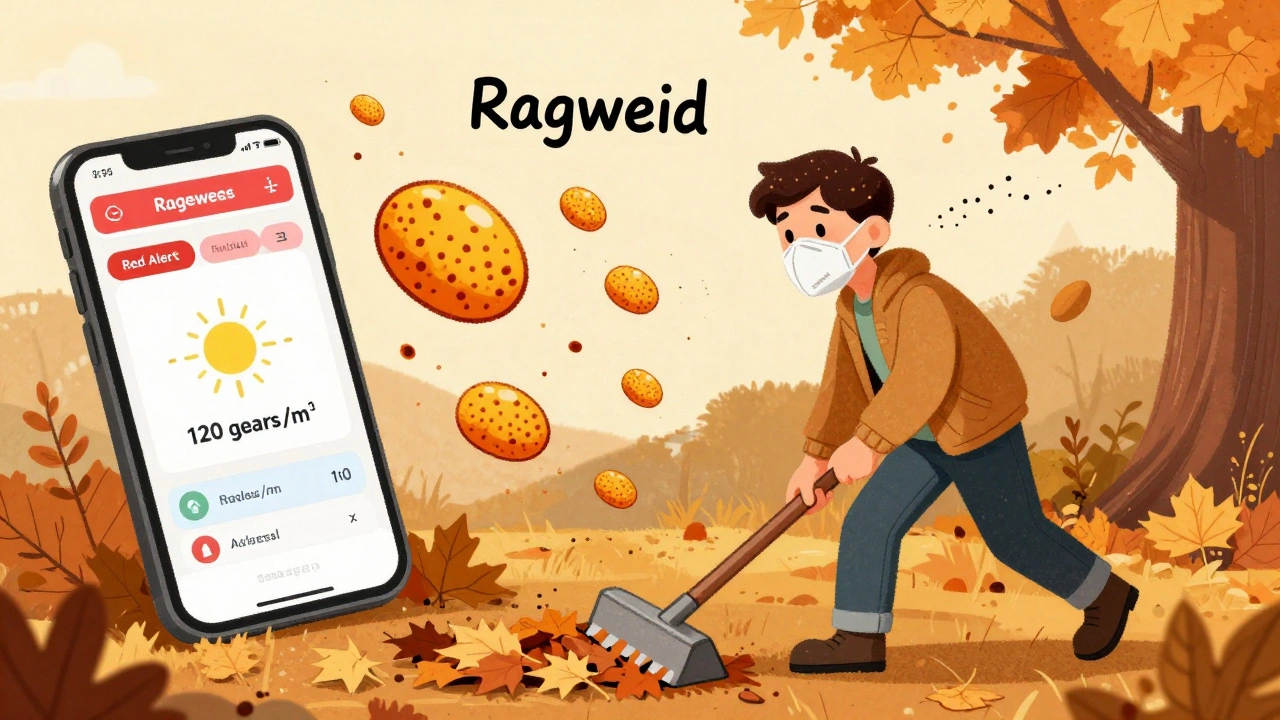
Outside triggers change with the seasons. In early spring, tree pollen-like from oak, birch, or maple-soars into the air. By late spring and summer, grass pollen takes over, especially in June. Then, from August through October, ragweed pollen hits its peak. In many parts of the U.S., ragweed counts can hit over 100 grains per cubic meter on bad days. That’s enough to send someone with allergic asthma to the ER.
Indoor triggers are just as dangerous-and often more constant. Dust mites thrive in bedding, carpets, and upholstered furniture. They don’t bite. You don’t even see them. But their droppings? That’s what triggers reactions. Studies show that if your home has more than 2 micrograms of dust mite allergen per gram of dust, you’re at risk. And 84% of U.S. homes with humidity above 50% have that level.
Cats are another big one. The protein Fel d 1, found in cat saliva and skin flakes, sticks to clothes, carpets, and walls. Even if you don’t have a cat, 79% of U.S. homes still have enough of it to trigger symptoms. Dogs? Can f 1 allergen is in 67% of homes. Mold spores like Alternaria, especially after thunderstorms, can spike emergency visits by 3.5 times.
How to Avoid Allergens-And Actually Make It Work
Avoiding allergens sounds simple. But most people try the basics-like cleaning more-and still struggle. Real success comes from targeted, measurable actions.
Start with your bedroom. Dust mites live in your mattress, pillows, and blankets. Use allergen-proof covers made of tightly woven fabric (look for a pore size under 10 microns). Replace old bedding every 2-3 years. Wash sheets weekly in water hotter than 130°F. That kills mites and washes away their waste. One study showed this cuts allergen levels by 90%.
Use a HEPA vacuum at least twice a week. Regular vacuums just kick dust back into the air. HEPA filters trap 99.97% of particles down to 0.3 microns. A 2021 study found this reduces cat allergen by 42%. Pair it with a dehumidifier. Keep indoor humidity between 30% and 50%. At 45%, dust mites can’t survive. A simple hygrometer costs less than $20 and tells you if you’re in the safe zone.
For pollen, track local counts. When tree or grass pollen hits 9.7 grains per cubic meter, keep windows closed. Use air conditioning with a clean filter. If you go outside to mow the lawn or rake leaves, wear an N95 mask. It cuts pollen exposure by 85%. Shower and change clothes right after coming in. Allergens cling to skin and hair-and if you don’t wash them off, you’re bringing them to bed.
Remove carpets if you can. Hard floors are easier to clean. If you have pets, keep them out of the bedroom. Bathe them weekly. Use a HEPA air purifier in the room where you spend the most time. Don’t rely on scented candles or air fresheners-they irritate airways more than they help.
Immunotherapy: Changing Your Body’s Response
Medications like inhalers and antihistamines treat symptoms. But immunotherapy changes the root problem. It’s the only treatment that can actually retrain your immune system to stop overreacting.
There are two main types: shots (subcutaneous immunotherapy, or SCIT) and under-the-tongue tablets or drops (sublingual immunotherapy, or SLIT). Both expose you to tiny, increasing doses of the allergen over time. Your body learns it’s not a threat.
SCIT starts with weekly injections for 4-6 months, building up to a maintenance dose. Then you go every 2-4 weeks for 3-5 years. Studies show 70-80% of people see big improvements after 12-18 months. One 12-year-old with severe cat allergy dropped his IgE from 120 kU/L to 15 kU/L after three years of treatment-and passed a challenge test with no symptoms.
SLIT is easier. You take a tablet or drop daily at home. It’s less invasive, but you need to stick with it. Some people get mild oral itching at first-it’s normal, but it’s why 35% quit in the first month. Still, the Cochrane Review found SLIT cuts asthma symptoms by 35% in dust mite-allergic patients, compared to just 15% with inhaled steroids alone.
Immunotherapy doesn’t just reduce symptoms. It cuts how often you need rescue inhalers. A 2021 Cochrane review of over 12,000 patients showed a 40% drop in medication use. Long-term, it can even prevent new allergies from developing.
Who Benefits Most-and Who Doesn’t
Not everyone with asthma has allergic asthma. About 80% of kids with asthma do. For adults, it’s about 60%. But here’s the catch: not everyone who thinks they have allergic asthma actually does.
Doctors use skin prick tests or blood tests to check for IgE antibodies. A wheal larger than 3mm on a skin test means you’re sensitized. Blood tests measure specific IgE levels. If you’re allergic to ragweed, your test will show high levels of IgE against Amb a 1, the main ragweed protein.
But some people have asthma with no type 2 inflammation-meaning their immune system isn’t reacting the way allergic asthma usually does. These patients won’t respond to biologics like omalizumab or to immunotherapy. A 2023 study found over 30% of patients diagnosed with allergic asthma based on symptoms alone actually have non-type 2 inflammation. That means they’re getting expensive, ineffective treatment.
That’s why testing matters. If your asthma started in childhood, you have a family history of allergies, or you react to specific triggers like pollen or pets, you’re likely allergic. If your asthma started after age 30, you don’t react to allergens, and you have no family history, it’s probably not allergic.

The New Tools Making a Difference
Technology is catching up. The Allergen Insight nasal sensor, approved by the FDA in 2023, detects airborne allergens as low as 0.1 micrograms per cubic meter. It connects to your phone and warns you when levels are dangerous.
AI platforms like AsthmaIQ now combine pollen forecasts, your location, your medication use, and even weather data to predict your risk of an attack. It’s 92% accurate at spotting when you’re about to flare up.
There’s also new immunotherapy on the horizon. CAT-PAD, a peptide-based treatment for cat allergy, cuts the build-up phase from six months to just eight weeks. A new pollen vaccine in Phase III trials needs only four doses a year-and reduces symptoms by 60%.
Even policy is changing. The EPA now recommends schools keep PM2.5 levels under 12 µg/m³. In 2024, weather apps in the U.S. must display pollen counts when they hit 10 grains per cubic meter. That’s huge for people who rely on forecasts to plan their day.
What to Do Next
If you have asthma and notice your symptoms get worse in spring, around pets, or after cleaning, you likely have allergic asthma. Start with an allergist. Get tested. Don’t guess.
Then, pick one trigger to tackle. Start with your bedroom. Get allergen-proof covers. Wash bedding weekly. Buy a hygrometer. If you can’t afford a HEPA vacuum, start with a damp cloth to dust surfaces daily.
If your symptoms are still bad despite avoiding triggers and using inhalers, ask about immunotherapy. It’s not a quick fix. But if you stick with it for three to five years, you might find yourself needing fewer meds, fewer ER visits, and more days where you breathe easily.
It’s not about perfection. It’s about progress. One change at a time.
Can allergic asthma go away on its own?
Allergic asthma rarely disappears without intervention. While some children outgrow it, most continue to have symptoms into adulthood. The immune system doesn’t just forget its reaction to allergens. But with allergen avoidance and immunotherapy, symptoms can become so mild that they feel like they’ve gone away. Long-term studies show 30-50% of people who complete 3-5 years of immunotherapy stay symptom-free for years after stopping treatment.
Is immunotherapy safe for children?
Yes, immunotherapy is safe and effective for children as young as five. Sublingual tablets are often preferred for kids because they’re easier to take at home and avoid needles. Studies show children who start immunotherapy early have fewer asthma attacks, less need for steroids, and a lower chance of developing new allergies. The American Academy of Allergy, Asthma & Immunology recommends it for kids with moderate to severe allergic asthma who don’t respond well to standard treatment.
How long does it take to see results from allergen avoidance?
You might notice small improvements in breathing or nighttime symptoms within 2-4 weeks of starting strict avoidance-like using allergen-proof covers and lowering humidity. But major changes, like fewer rescue inhaler uses or better lung function, usually take 3-6 months. It’s a slow process because allergens linger in dust, carpets, and fabrics. Consistency matters more than intensity.
Can I do immunotherapy if I have other health conditions?
Most people with controlled high blood pressure, diabetes, or mild heart disease can safely receive immunotherapy. But it’s not recommended if you have uncontrolled asthma, severe autoimmune disease, or are on beta-blockers (which can make allergic reactions harder to treat). Always tell your allergist about all your medications and conditions. They’ll check your risk level before starting.
Are there natural alternatives to immunotherapy?
There’s no scientific evidence that herbal remedies, acupuncture, or probiotics can retrain the immune system like immunotherapy does. Some people report feeling better with dietary changes or air purifiers, but these only reduce exposure-they don’t change the body’s response. Immunotherapy is the only treatment proven to modify the disease itself. Natural methods can support avoidance, but they can’t replace it.
How do I know if my immunotherapy is working?
Track your symptoms. Keep a log of how often you use your rescue inhaler, how many nights you wake up wheezing, and whether you miss work or school. After 6-12 months, you should see at least a 30% reduction. Blood tests can also show your IgE levels dropping. Your allergist may do a challenge test after 3 years-if you can be near your trigger without symptoms, it’s working.
12 Responses
Allergic asthma is no joke. I grew up with it in India, and pollen season was basically a war zone. The one thing that actually helped? Washing my face and hands right after coming inside. Sounds simple, but it cuts down the dust and pollen you bring in. No magic, just consistency.
Let’s be real-most people think ‘avoiding allergens’ means buying a fancy vacuum. Nope. It means throwing out your 10-year-old couch, sleeping in a plastic cocoon, and pretending your cat doesn’t exist. I did all three. My lungs thanked me. The cat? Still judging me.
For anyone new to this-start small. Don’t try to overhaul your whole house in a week. Pick one thing: maybe your pillowcase. Get the allergen-proof cover. Wash it weekly. That one change alone can make nights less terrifying. You don’t need to be perfect, just persistent. I’ve seen people turn their lives around with just that step.
So let me get this straight-we’re spending thousands on immunotherapy because we refuse to just stop owning pets or living in a house? I mean, why not just move to a desert? No pollen, no dust mites, no cats. Problem solved. But sure, let’s inject ourselves with cat spit. Science.
OMG I JUST STARTED USING A HEPA PURIFIER AND I CAN BREATHE AGAIN?? LIKE ACTUALLY?? I THOUGHT I WAS JUST GOING TO BE ON INHALERS FOREVER. THIS ARTICLE CHANGED MY LIFE. THANK YOU. I’M CRYING. (AND YES I’M WASHING MY BEDSHEETS NOW.)
Wait… so the EPA is now forcing weather apps to show pollen counts? That’s a lie. This is all a big pharma trick to sell you more meds and air purifiers. Real people in the 90s didn’t have this problem. They just breathed. Maybe we’re just too soft now. Or maybe… they’re hiding something.
People think this is about health. It’s not. It’s about control. You can’t control your job, your rent, your life-but you can control your vacuum cleaner. That’s why this stuff sells. You’re not healing. You’re just buying peace of mind.
Y’all are doing AMAZING 💪✨ Seriously, if you’re even trying to manage this-you’re already winning. Immunotherapy isn’t easy, but you’re showing up. That’s courage. And hey-if you need a hype person, I’m here. You got this. 🌿❤️
Most of these ‘tips’ are basic. I mean, anyone with a middle school biology degree knows HEPA filters work. But the real insight? The 2023 Cochrane review. That’s the only thing worth citing. The rest is just noise. Also, why are we still using ‘dust mites’ as a term? It’s 2024. We have electron microscopes.
Stop romanticizing ‘natural alternatives.’ There is no herbal tea that reprograms your immune system. If you’re wasting money on probiotics instead of seeing an allergist, you’re not being holistic-you’re being dangerous. Get tested. Track your IgE. Don’t guess. Your lungs don’t care about your Instagram wellness aesthetic.
I went from needing an inhaler every night to going three months without one. Not because I was lucky. Not because I’m special. Just because I did the boring stuff: covers, humidity control, HEPA, and immunotherapy. It took years. It sucked. But I got my life back. You can too. Don’t give up.
just started slit last month and its kinda weird at first like my tongue feels funny but its worth it. i feel like im finally taking back control. also i got a hygrometer and its like 47% in my room now. so good. 🤍