
Imagine you are prescribed a life-saving biologic medication. A year later, you experience an unexpected reaction. Was it the drug? Or was it something else? For small-molecule generic drugs, this question is usually easy to answer because the chemical structure is identical to the brand-name version. But with biosimilars, biological products highly similar to already-approved reference biologics, the story is much more complex. These large, intricate molecules cannot be perfectly copied like simple chemicals. They are made in living cells, which means tiny variations can occur during manufacturing. This complexity makes adverse event monitoring critical. If we don’t track safety signals precisely, we risk missing rare but serious side effects that could distinguish a biosimilar from its reference product.
The stakes are high. As of 2023, the global biosimilars market was valued at $7.3 billion and is projected to explode to nearly $35 billion by 2028. With hundreds of these products entering markets worldwide, our ability to monitor their safety must keep pace. We need systems that can detect subtle differences in immunogenicity-the body’s immune response to the drug-and ensure that patients receive safe, effective treatment. This isn't just about regulatory compliance; it's about protecting public health while maintaining access to affordable therapies.
Why Biosimilars Need Specialized Safety Surveillance
You might wonder why biosimilars can’t just follow the same safety rules as generic pills. The answer lies in their biological nature. Unlike generic drugs, small-molecule copies of brand-name medications, which are chemically identical to their originators, biosimilars are "highly similar" but not exact clones. Think of it like two hand-knitted sweaters versus two machine-stitched t-shirts. The t-shirts will look exactly the same down to the thread count. The sweaters, even if made by the same pattern and yarn, will have slight variations in tension or stitch placement.
These minor structural differences can lead to changes in how the body reacts. The primary concern is immunogenicity, the potential for a drug to trigger an unwanted immune response. If a patient develops antibodies against a biosimilar, it could reduce the drug’s effectiveness or cause allergic reactions. Detecting these rare events requires robust pharmacovigilance systems. Standard spontaneous reporting often misses low-frequency signals. That’s why experts emphasize active surveillance and enhanced traceability for biosimilars specifically.
How Adverse Event Reporting Works Today
Currently, most safety data comes from two main sources: spontaneous reporting and active surveillance. Spontaneous reporting relies on doctors, nurses, and patients voluntarily submitting reports when they suspect a drug caused harm. In the United States, the FDA’s FAERS (FDA Adverse Event Reporting System), database for collecting post-market safety information handles millions of reports annually. Serious events must be reported within 15 days, while non-serious ones have up to 90 days.
However, this system has a major flaw: underreporting. Data from the IQVIA Institute in 2021 showed that biosimilar-specific reports represented only 0.3% of all biologic drug reports, despite biosimilars making up 8.7% of prescriptions. Why such a gap? Often, healthcare providers simply report the class of drug (e.g., "infliximab") rather than the specific manufacturer. Without knowing whether the patient received the reference product or a biosimilar, regulators cannot determine if a safety signal is unique to one product.
To fill this gap, agencies are turning to active surveillance. The FDA’s Sentinel Initiative, active surveillance system using electronic health records analyzes real-world data from insurance claims and hospital records. This allows researchers to proactively search for safety signals without waiting for reports to come in. Similarly, Health Canada’s Canada Vigilance Program processed over 1.2 million adverse reaction reports since 1965, with biosimilar-specific reports representing about 0.7% of total biologic reports in 2022. While better than nothing, these numbers still highlight the challenge of capturing enough data to spot rare differences.
Regulatory Differences: US, EU, and Canada Compared
Not every country monitors biosimilar safety in the same way. Understanding these differences helps manufacturers and healthcare providers navigate compliance requirements effectively.
| Region | Key Requirement | Product Identification | Reporting Frequency |
|---|---|---|---|
| United States (FDA) | Periodic Safety Update Reports (PSURs); Sentinel Initiative integration | Four-letter suffixes (e.g., -sndz) required since 2017 | Semi-annually for first 2 years, then annually |
| European Union (EMA) | Same framework as reference biologics; no special biosimilar-only rules | Brand name + INN (International Nonproprietary Name) | Annually via PBRERs (Periodic Benefit-Risk Evaluation Reports) |
| Canada (Health Canada) | Mandatory Risk Management Plans (RMPs) with detailed immunogenicity protocols | Brand name reporting mandated; lot/batch tracking encouraged | Serious events within 15 days; PSURs per standard schedule |
In the US, the FDA introduced unique four-letter suffixes for biosimilars starting in 2017 to improve identification. For example, Zarxio carries the suffix "-sndz." However, many hospitals still struggle to capture this detail in electronic health records (EHRs). A 2022 HIMSS survey found that only 42.6% of US hospitals had fully implemented systems to record the specific manufacturer and product name.
The European Medicines Agency (EMA) takes a different approach. Since 2013, they have stated that biosimilars should follow the same pharmacovigilance framework as their reference products, arguing there are no "specific safety requirements applicable only to biosimilars." Critics argue this may underestimate the need for distinct tracking, especially as multiple biosimilars target the same reference drug.
Health Canada sits somewhere in between. Their 2022 Handbook explicitly requires Risk Management Plans (RMPs) to include detailed strategies for monitoring immunogenicity and distinguishing adverse events between the biosimilar and other licensed products. They also mandate clear identification of the specific manufacturer in all adverse event reports, with penalties up to CAD$500,000 for non-compliance.
The Traceability Challenge: Who Made Your Drug?
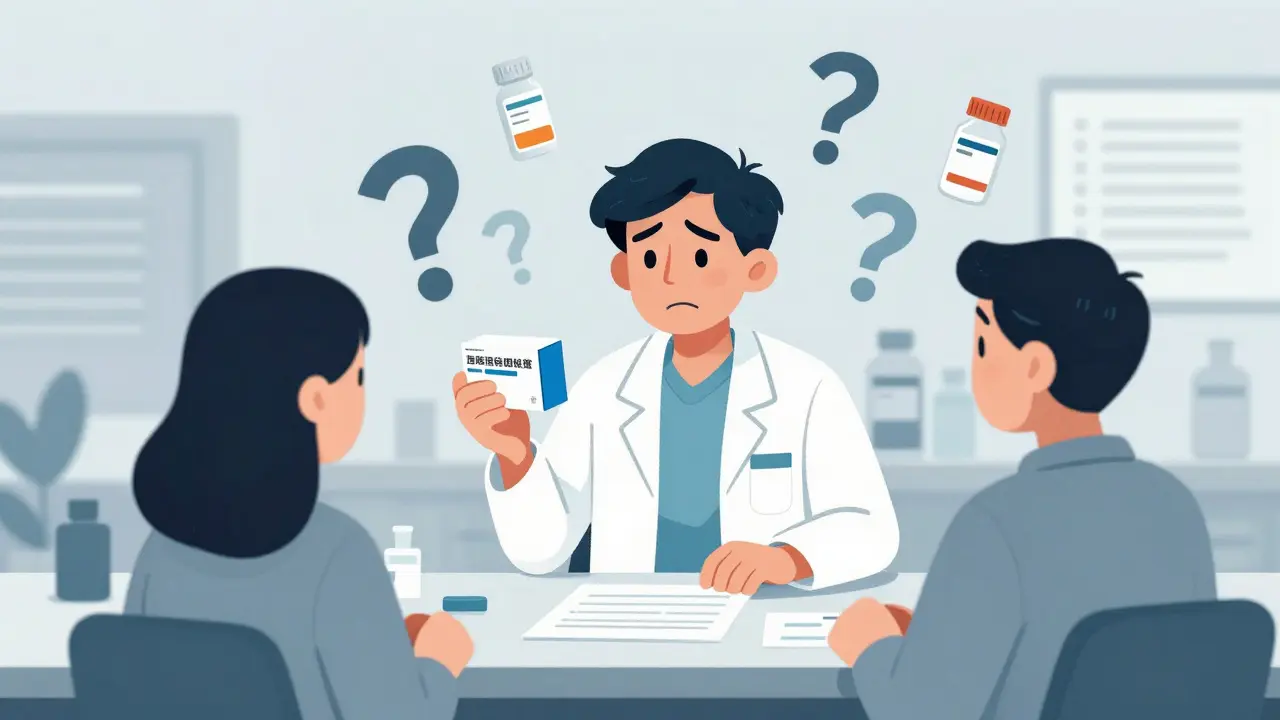
One of the biggest hurdles in biosimilar safety surveillance is traceability. When a patient has an adverse reaction, we need to know exactly which product they received. Was it the original reference biologic? Or one of three different biosimilars approved for that indication?
Without precise identification, safety signals get blurred. Dr. Philip Schneider, Professor of Pharmacy at the University of Southern California, warned in a 2020 FDA workshop that current spontaneous reporting systems may lack sufficient power to detect rare immunogenicity differences. He noted that detecting a 0.1% difference in immunogenicity would require post-marketing surveillance of at least 6,000 patients-a number easily lost in noise if product attribution is unclear.
This problem is exacerbated by substitution practices. In some jurisdictions, pharmacists can automatically substitute a biosimilar for a reference product without notifying the prescriber. A rheumatologist at Johns Hopkins Hospital shared on Medscape in March 2023: "I've had three cases where the pharmacy substituted the biosimilar without documentation, making adverse event attribution impossible-this is why I now document both the brand and the specific manufacturer."
To solve this, several countries are moving toward mandatory lot/batch number reporting. Spain implemented mandatory biosimilar identification in EHRs in 2020, improving adverse event reporting accuracy from 58% to 92%. The International Pharmaceutical Regulators Programme (IPRP) is proposing a global unique identifier system for biologics by 2026, similar to the UDI system used for medical devices. Pilot studies in Switzerland suggest this could reduce attribution errors by 73.5%.
Technological Innovations in Signal Detection
Technology is playing an increasingly vital role in enhancing biosimilar safety monitoring. Traditional manual review of adverse event reports is slow and prone to error. New tools powered by artificial intelligence (AI) and machine learning (ML) are changing the game.
The EMA launched an AI-powered signal detection system called VigiLyze, AI tool for automated signal detection in pharmacovigilance in 2022. It processes 1.2 million new case reports annually with 92.4% accuracy in identifying potential safety signals. This speed allows regulators to investigate concerns faster than ever before.
For pharmaceutical companies, implementing these technologies is costly but necessary. The Strategic Pharmacovigilance Checklist for Biosimilar Safety (2025) recommends using natural language processing (NLP) tools to analyze unstructured clinical notes. Setting up such a system typically takes 4-6 months and costs between $250,000 and $500,000 for mid-sized firms. Yet, the investment pays off in improved risk assessment and earlier detection of emerging issues.
Cloud-based solutions from providers like ArisGlobal and Oracle Health Sciences are helping smaller companies compete. These platforms reduce implementation time by 35-45% compared to building in-house systems. As the number of biosimilars grows, scalable tech infrastructure becomes essential-not just for compliance, but for genuine patient protection.
Practical Steps for Healthcare Providers
If you are a clinician or pharmacist working with biosimilars, here’s what you can do right now to contribute to better safety surveillance:
- Document the Specific Product: Always record the brand name and manufacturer, not just the generic name. If possible, include the lot or batch number.
- Report All Suspected Reactions: Don’t assume an event is unrelated just because it’s common. Immunogenicity reactions can present subtly. Report anything unusual.
- Educate Patients: Help patients understand the importance of keeping their medication packaging and informing providers if they switch products.
- Use Electronic Tools: Advocate for your hospital’s EHR system to support detailed biosimilar tracking. Ask IT departments if they’ve enabled fields for manufacturer and suffix codes.
- Stay Updated: Follow guidance from your national regulator (FDA, EMA, Health Canada) regarding updated reporting timelines and requirements.
A 2021 study in the Journal of the American Pharmacists Association found that only 37.8% of US pharmacists correctly identified the required elements for biosimilar adverse event reporting. Training matters. Simple awareness campaigns can significantly improve data quality.
Future Outlook: What Lies Ahead?
The landscape of biosimilar safety monitoring is evolving rapidly. By 2030, the World Health Organization predicts that current pharmacovigilance systems will require fundamental redesign to handle over 300 biosimilars targeting just 30 reference products in major markets. The volume of data alone will overwhelm traditional methods.
We’re likely to see greater harmonization across borders. The ICH’s standardized PSUR template (E2C(R2)) has already been adopted by 54 regulatory authorities. Future guidelines may mandate uniform product identifiers globally, eliminating confusion caused by regional naming differences.
Additionally, real-world evidence (RWE) will play a larger role. Instead of relying solely on post-marketing studies, regulators may accept data from electronic health records, registries, and patient-reported outcomes to assess long-term safety. This shift promises more dynamic, responsive oversight-but it demands higher standards for data integrity and privacy.
As biosimilars continue to expand access to expensive biologic therapies, our commitment to rigorous safety surveillance must grow alongside them. Only through precise tracking, transparent reporting, and advanced analytics can we ensure that cost savings never come at the expense of patient safety.
What is the main difference between biosimilar and generic drug safety monitoring?
Generic drugs are chemically identical to their brand-name counterparts, so safety profiles are assumed to be equivalent. Biosimilars, however, are large, complex biological molecules that cannot be perfectly replicated. Therefore, they require specialized monitoring focused on immunogenicity and precise product traceability to detect any subtle differences in safety compared to the reference biologic.
Why is immunogenicity a key concern for biosimilars?
Immunogenicity refers to the risk that a patient’s immune system will recognize the biosimilar as foreign and produce antibodies against it. This can neutralize the drug’s effect or cause allergic reactions. Because biosimilars are not identical to reference products, even minor structural variations could theoretically increase this risk, making it a primary focus of post-approval safety studies.
How do regulators distinguish adverse events between a biosimilar and its reference product?
Regulators rely on precise product identification. In the US, biosimilars have unique four-letter suffixes (e.g., -abp). In Europe and Canada, brand names and lot numbers are tracked. Healthcare providers must report the specific manufacturer and product name, not just the generic class. Without this level of detail, it is impossible to attribute an adverse event to a specific product.
What is the role of active surveillance in biosimilar safety?
Active surveillance, such as the FDA’s Sentinel Initiative, proactively searches electronic health records and insurance claims for safety signals rather than waiting for voluntary reports. This method is crucial for detecting rare adverse events that spontaneous reporting systems often miss due to underreporting or delayed submission.
Are biosimilars less safe than reference biologics?
No. Extensive pre-approval clinical trials demonstrate that biosimilars are highly similar to reference products with no clinically meaningful differences in safety, purity, or potency. Real-world data from Europe and Canada supports this, showing comparable risk profiles. Enhanced monitoring exists not because biosimilars are unsafe, but to confirm ongoing equivalence and catch any unforeseen issues early.